What an Effluent Treatment Plant in Cusco Must Achieve
An effluent treatment plant in Cusco should be selected by matching wastewater characteristics and required receiving-water or reuse quality to a complete treatment train. Packaged A/O treatment suits domestic sewage; DAF addresses oil, grease, FOG, colloids and suspended solids; and MBR combines biological treatment with membrane filtration where compactness and low-solids effluent are priorities. Membrane polishing may also be required for reuse, but the final process and discharge limits must be confirmed through local permits and site-specific sampling.
The plant should be defined by its treatment objective rather than by the equipment label. An industrial effluent pretreatment system may remove contaminants that interfere with biological treatment, while a packaged sewage treatment plant handles a domestic-sewage duty. Membrane polishing operates at a later stage, treating biologically treated effluent when the required reuse quality is stricter.
Three design questions therefore have to be answered separately: what contaminants enter the stream, what quality must leave the plant, and whether the final effluent will be discharged or reused. These questions determine whether screening, equalisation, biological treatment, solids separation, disinfection and advanced treatment are necessary. They also prevent a buyer from treating a separator or polishing unit as a complete treatment plant.
University of Twente research describes nanofiltration as a technology for polishing wastewater treatment plant effluent and identifies agricultural and indirect potable use as potential applications (Schrader, University of Twente, undated). That research supports the function of membrane polishing; it does not establish that a particular Cusco reuse application will be accepted. Reuse quality and treatment acceptance remain project-specific.
The accessible Cusco result concerns monitoring of effluent quality at the San Jerónimo wastewater treatment plant, but the supplied excerpt contains no monitoring values. It therefore cannot support a claim about current plant performance, applicable numerical limits or downstream conditions. Before selecting equipment, obtain the applicable discharge authorization, sewer acceptance conditions, reuse rules and required monitoring parameters from the competent authority, receiving utility or environmental authority. The project scope should also distinguish basic discharge treatment, industrial pretreatment and high-quality reuse.
Select the Treatment Train from the Wastewater Profile
Equipment selection should follow the sequence: characterise wastewater, confirm the permit target, remove bulk solids and interfering contaminants, provide biological treatment where required, polish or disinfect, then verify and monitor. No single unit should be selected from headline capacity alone.
For headworks, a GX rotary mechanical bar screen can protect downstream equipment by removing suspended solids, rags, plastics and fibrous debris. Where the industrial stream contains suspended solids, FOG, oil and grease, or colloidal matter, an industrial DAF pretreatment system is a candidate before biological treatment.
For domestic sewage, the WSZ underground integrated sewage treatment plant combines an anoxic/aerobic A/O biological process, sedimentation and disinfection in one buried unit; its documented flow range is 1–80 m³/h. Where biological treatment must be combined with compact membrane separation, the integrated MBR wastewater treatment system combines activated sludge with submerged PVDF membrane filtration; its documented capacity is 10–2,000 m³/day. An ultrafiltration pretreatment system is suited to stated duties involving bacteria, colloids and suspended solids ahead of RO or another polishing stage; its documented flow range is 2,000–40,000 L/h.
| Technology | Documented capacity | Primary project role | Decision still required |
|---|---|---|---|
| WSZ packaged A/O | 1–80 m³/h | Domestic sewage treatment with sedimentation and disinfection | Confirm wastewater type, peak flow, installation conditions and permit target |
| DAF | 4–300 m³/h | Removal of suspended solids, FOG, oil and grease, and colloidal matter before downstream treatment | Confirm contaminant profile, sludge handling and downstream biological suitability |
| MBR | 10–2,000 m³/day | Activated-sludge treatment combined with submerged PVDF membrane filtration | Confirm duty basis, effluent objective, membrane maintenance and operator capability |
| UF | 2,000–40,000 L/h | Bacteria, colloid and suspended-solids removal before RO or further polishing | Confirm feed quality, required pore-selection basis, backwash and pretreatment |
Representative sampling must establish pH, oil and grease, FOG, COD, BOD, total suspended solids, turbidity, conductivity, temperature and the flow profile. The sample review must also identify toxic or inhibitory compounds. These are required inputs; they should not be replaced by assumed thresholds or generic “industrial” values.
Compare WSZ, MBR and DAF for a Cusco Project
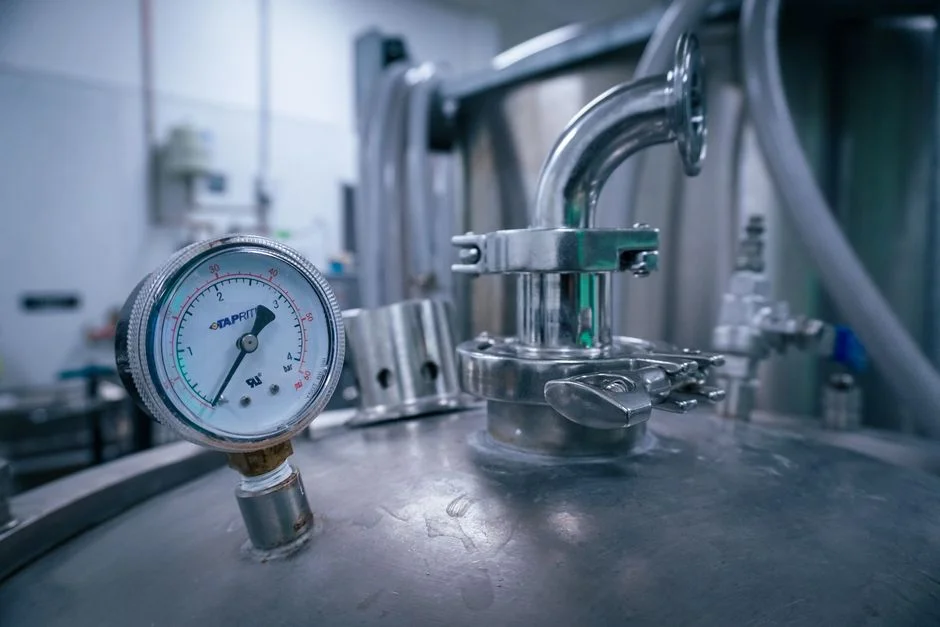
WSZ, MBR and DAF perform different functions and should not be compared as interchangeable products. WSZ is a packaged biological treatment option, MBR is a biological treatment and membrane-separation option, and DAF is primarily a solids and floatables separation step that may need downstream biological treatment.
| Option | Wastewater type and function | Configuration and project role | Unresolved commercial and design inputs |
|---|---|---|---|
| WSZ | Domestic sewage; anoxic/aerobic A/O biological contact oxidation, sedimentation and disinfection | Combined treatment in one buried unit; can be installed below grade or mounted on a trailer for mobile deployment. Documented capacity: 1–80 m³/h. | Required duty, flow variability, land availability, installation conditions, sludge handling, operator availability and maintenance capability |
| MBR | Municipal sewage, industrial process water and reuse applications; activated sludge with submerged PVDF membrane filtration | Combined biological treatment and membrane separation in a compact installation. Documented capacity: 10–2,000 m³/day. | Average and peak duty, effluent objective, membrane cleaning and replacement basis, controls, sludge handling and maintenance capability |
| DAF | Industrial streams containing suspended solids, FOG, oil and grease, or colloidal matter | High-efficiency separation stage, typically before downstream biological treatment. Documented capacity: 4–300 m³/h. | Contaminant composition, required separation performance, recovered-sludge handling, chemicals, energy, installation conditions and downstream process |
Capacity units must remain attached to their source basis. WSZ and DAF are documented in m³/h, whereas MBR is documented in m³/day; those values are not directly interchangeable without converting both to a common operating basis. The same discipline applies to UF, which is documented in L/h.
Footprint is a configuration issue, not a generic technology claim. WSZ can reduce above-ground congestion through below-grade installation; MBR combines biological and membrane duties within a compact system; DAF requires space for the separation equipment, its auxiliary systems and sludge handling. Land, access, installation and maintenance conditions must therefore be checked against the proposed arrangement.
Equipment selection is not permit approval. The receiving-water or sewer authority and the applicable Cusco and Peruvian requirements must confirm the final compliance basis. A supplier should identify its regulatory assumptions and unresolved dependencies rather than guarantee that every local requirement will be met.
Size the Plant from Verified Duty Data
Plant sizing must begin with a measured or defensible flow profile, not a catalogue maximum. The buyer needs average flow, peak flow, operating shifts, seasonal variation, storm or wash-water inflows and the required treatment duration. If the system serves multiple sources, their hydraulic and contaminant contributions should be documented separately before they are combined.
Representative influent sampling must come from the actual discharge streams. The design basis should identify whether the plant handles domestic sewage, industrial process effluent, combined drainage or a mixed stream. Both the flow and composition must align with the selected process function.
| Sizing step | Required input | Verification check |
|---|---|---|
| Establish hydraulic duty | Average and peak flow, shifts, seasonal variation, inflows and operating duration | Confirm all bids use the same flow unit and operating basis |
| Define wastewater composition | Representative source samples and process records | Confirm that the selected process addresses the documented contaminants |
| Convert capacity basis | Catalogue range in m³/h, m³/day or L/h | Do not compare or select against a headline capacity alone |
| Check process function | DAF separation duty or UF stated separation duty | Match the equipment function to the contaminant category without inventing performance limits |
| Complete the train | Screening, equalisation, pH control, biological treatment, solids handling, disinfection and polishing | Confirm upstream and downstream compatibility |
| Review supplier deliverables | Process basis, calculations, P&ID, data sheets, controls, commissioning and O&M documents | Confirm exclusions and responsibility for civil works, utilities and approvals |
DAF’s stated function is removal of suspended solids, FOG, oil and grease and colloidal matter. UF is stated to remove bacteria, colloids and suspended solids. These are separation duties, not universal guarantees. Project-specific calculations must establish whether the proposed configuration meets the required objective.
Request the process basis, sizing calculations, P&ID, equipment data sheets, materials of construction, control philosophy, commissioning plan, spare-parts list, operator training and O&M documentation. Submerged MBR specifications and selection criteria provide a useful reference for reviewing membrane-specific technical submissions. Do not publish assumed hydraulic loading rates, COD-removal efficiencies or regulatory limits unless those values have been calculated from the selected model and verified project data.
Plan Permits, Monitoring and Commissioning
Permitting should proceed in parallel with equipment selection because the discharge or reuse target determines the process basis. Obtain the applicable discharge authorization, sewer or receiving-water conditions, sampling points, monitoring frequencies and documentation requirements from the responsible authority.
Acceptance testing should be tied to the confirmed permit target and agreed influent basis. Specify sampling locations, instruments, calibration, data logging, test duration and witnessing responsibilities. Avoid broad performance language that cannot be reproduced with project samples.
The accessible San Jerónimo monitoring document did not expose monitoring values in the supplied excerpt. It cannot establish numerical acceptance criteria or current compliance. Wageningen University and Research has researched constructed wetlands for micropollutant removal from wastewater treatment plant effluent, but its 2022 thesis does not establish local Cusco limits or a default process requirement (Lei, Wageningen University and Research, 2022). Similarly, the University of Twente nanofiltration thesis supports membrane polishing and potential reuse applications, not proof that a specific Cusco discharge is compliant (Schrader, University of Twente, undated).
For proposals involving advanced treatment, review the appropriate pretreatment logic, including RO pretreatment for food-processing wastewater. This matters because an MBR or UF stage does not remove every potential membrane foulant and cannot replace proper upstream characterization.
Commissioning and O&M deliverables should address start-up, operator training, chemical or backwash requirements, sludge removal, spare parts, remote monitoring and preventive maintenance. For equipment with UV, treatment or disinfection duties, the review should also distinguish the electrical, control and hydraulic conditions affecting UV installation for wastewater treatment.
Every proposal needs an explicit scope boundary showing which process stages are supplied, which are excluded, and who remains responsible for civil works, power, controls, laboratory testing and regulatory approvals. This prevents a treatment-equipment price from being mistaken for the cost and responsibility of a complete, compliant plant.
Questions to Ask Before Ordering an Effluent Treatment Plant
A comparable supplier proposal should place design flow, wastewater type, treatment objective and applicable discharge or reuse basis in one scope table. Ask the supplier to state whether quoted capacity is average, peak or design duty. If bids use different units or operating assumptions, normalize them before comparing equipment.
Request the sizing calculation rather than accepting a catalogue range as the design. The calculation should connect measured flow and wastewater composition to the selected separation, biological or membrane function. Check materials of construction, automation, installation conditions, O&M consumables, maintenance intervals, operator training and commissioning responsibilities.
Ask which regulatory assumptions were used and which permit dependencies remain unresolved. A qualified supplier should state this without converting equipment selection into a guarantee of local approval. The plate-and-frame filter press and automatic chemical dosing system may appear as supporting items, but their inclusion should follow from the solids-handling and chemical-duty requirements rather than being added by default.
Cost comparisons should separate included equipment from civil works, energy, chemicals, sludge handling, laboratory testing, controls, utilities and replacement parts. No reliable project price can be stated without the wastewater analysis, duty basis, treatment objective, site conditions and scope boundary. Compare delivered functionality and completeness, not only headline flow rate.
Frequently Asked Questions
How do I size an effluent treatment plant in Cusco?
Establish average and peak flow, operating shifts, seasonal variation, wastewater composition and the required discharge or reuse objective first. Then convert the duty to a consistent basis before comparing WSZ at 1–80 m³/h, DAF at 4–300 m³/h, MBR at 10–2,000 m³/day and UF at 2,000–40,000 L/h. A supplier’s calculation should link those inputs to the selected process and site conditions.
How should I choose a wastewater treatment equipment supplier in Peru?
Normalize the bids around the same design duty, capacity unit, treatment objective, scope boundary, documentation, commissioning requirements and O&M obligations. Request the sizing calculation, P&ID, data sheets, materials, control philosophy, training and maintenance scope. If project-specific pricing is required, request quotations using the same wastewater data and exclusions.
What should I do if the available San Jerónimo monitoring document has no numerical results?
Do not derive discharge limits or assumed performance from the document title. Request the complete monitoring report and obtain current site-specific influent and effluent sampling. Confirm numerical requirements directly with the competent Cusco or Peruvian authority and the receiving utility or water body. Equipment selection does not replace permit review.
Is biological treatment or membrane polishing the right choice for industrial wastewater treatment in Cusco?
They usually serve different stages. Biological treatment addresses biodegradable organic matter; membrane polishing treats biologically treated effluent to meet a more demanding separation or reuse objective. UF can also act as membrane pretreatment before RO. The correct sequence depends on the contaminants, upstream pretreatment, permit target and reuse application, not on the membrane label alone.