
Why Penang resort wastewater cannot be sized by hotel category
A Penang hotel or resort in 2026 needs a property-specific wastewater treatment train, not a system selected from its resort category. The design basis must come from verified occupancy, room inventory, food-service operations, laundry, pools, wastewater characterization and the receiving route. A packaged A/O plant may suit a conventional biological treatment duty, while an MBR may be justified by reuse requirements or tighter solids control. The supplied research does not provide an authoritative per-guest wastewater flow, current Penang hotel discharge limits or a universal pretreatment threshold. Request those items from the designer, sewer authority and property operator rather than inserting unverified assumptions.
Start the brief with verified guest-room count, maximum occupancy, restaurant and bar seats, pool turnover, laundry load and operating hours. These variables determine the hydraulic and organic load; the property label does not. Hotel wastewater flow design also changes with apartment-style kitchens, washing machines, pools, spas and multiple food outlets. compare packaged WSZ, SBR and MBR systems for hotels for the broader technology context, but do not transfer another city’s capacity or regulatory basis to Penang.
Booking.com’s 2026 Penang property descriptions show washing machines and kitchenettes at apartment-style hotels, infinity pools at By The Sea and Marriott Executive Apartments, and numerous restaurants, bars and leisure facilities. PAN PACIFIC’s official PARKROYAL page likewise states that the resort has five restaurants and bars. These are evidence of diverse wastewater sources, not a universal flow factor. Before calculating peak demand, obtain the property’s current operating schedule and confirm which wastewater streams actually enter the sanitary system.
Map every wastewater stream before selecting equipment
Penang resort sewage treatment must begin with a source-by-source inventory because kitchens, laundries, pools and guest accommodation create different hydraulic and contaminant loads. Booking.com’s 2026 Penang listings include restaurants, bars, pools, spas, laundries, washing machines and kitchenettes. That diversity makes a single domestic-sewage assumption incomplete, particularly for apartment-style properties where guest-room wastewater may contain food preparation residues or laundry-derived fibres and solids.
Document each stream separately: guest rooms, staff areas, restaurants, bars, kitchens, pools, spas, laundry, back-of-house cleaning, stormwater-exposed entrances and landscape irrigation. Record flow sources, operating hours, retained volumes, seasonal variation and whether each stream is segregated or connected to a common sewer. This inventory should also identify grease traps, floor drains, lift pits, refuse-handling areas and other point sources that can create intermittent loading.
Commercial kitchen FOG and solids require local capture or pretreatment when testing confirms a material load. DAF pretreatment for FOG and suspended solids is technically relevant where oil, grease, suspended solids or colloidal material are confirmed in the influent. Its presence in a conceptual train is not proof that it is required; influent analysis and the available floor drainage must support that decision.
For rags, plastics, fibrous laundry material and other debris, a rotary mechanical bar screen may protect downstream pumps and biological processes. Do not assume pool or spa water enters the sanitary train. Check hydraulic separation, water chemistry, backwash or discharge arrangements and applicable local requirements first.
| Wastewater stream | Design information to verify | Potential treatment implication |
|---|---|---|
| Guest rooms and staff areas | Room count, occupancy, staff headcount and use pattern | Base sanitary flow and organic loading |
| Restaurants, bars and kitchens | Seats, meal periods, floor-drain routing and FOG testing | Local capture and possible DAF pretreatment |
| Laundry and washing machines | Loads per cycle, operating hours, lint and fibre risk | Screen, solids management and loading assessment |
| Pools and spas | Volume turnover, backwash, chemistry and hydraulic separation | Separate treatment or documented discharge route |
| Stormwater-exposed areas | Drainage design, rainfall entry and local controls | Prevention, diversion or dedicated treatment |
Turn occupancy and operating data into a design flow
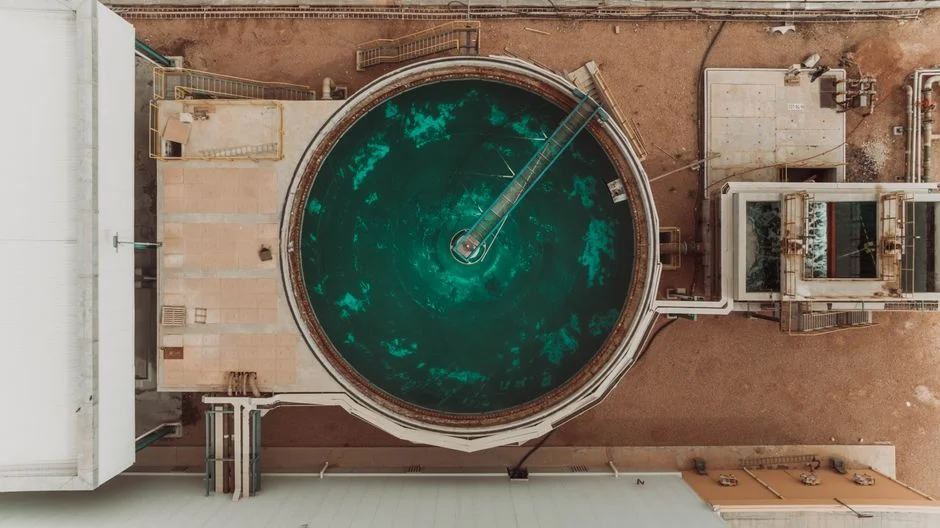
Hotel wastewater flow design requires separate calculations for average daily flow, peak-hour flow and short-duration operating events. Average daily flow can be developed from verified occupancy and approved wastewater-generation factors. Peak demand must then be tested against meal periods, morning showers, laundry cycles, check-out turnover, pool backwash and other coincident discharges. Maximum guest occupancy alone does not define the peak-flow basis.
Use hotel wastewater sizing inputs and peak-flow considerations as a workflow reference, not as a source of Penang design factors. The supplied research contains no numerical per-guest flow or peak multiplier for a Penang hotel. The designer should therefore state the selected flow basis, peak factor, retention assumptions, diurnal profile and event-flow assumptions explicitly for approval.
Wastewater characterization is a separate design stream. Request BOD, COD, TSS, ammonia, pH, FOG and flow measurements, with sampling locations and operating conditions documented. The Penang river study by OALib used dissolved oxygen, BOD, COD, TSS, ammonia and pH as its six Water Quality Index parameters, but it assessed river quality from October 2012 to January 2013. Those fields are useful as an analytical checklist; they are not hotel effluent acceptance criteria.
Test during representative operations, including occupied periods and relevant laundry or food-service events. A short sample can conceal daily variation, so the designer should explain sampling duration and whether the resulting loads are conservative for the selected equipment.
| Design input | Evidence required from the property | Engineering treatment |
|---|---|---|
| Average daily flow | Verified occupancy and approved generation factors | Calculate from documented assumptions |
| Peak-hour flow | Occupancy profile, meal periods, showers and event schedule | Test coincident demand |
| Event flows | Laundry cycles, pool backwash, kitchen discharges | Assess separately and for coincident loading |
| Wastewater quality | BOD, COD, TSS, ammonia, pH, FOG and measured flow | Set biological, pretreatment and solids-loading bases |
| Receiving route | Current authority criteria and connection conditions | Define treatment objectives and monitoring |
Compare packaged A/O, MBR and targeted pretreatment
Packaged A/O, MBR and DAF serve different functions: conventional biological treatment with integrated clarification and disinfection; biological treatment combined with membrane solids separation; and targeted physical removal of floatable or suspended material. Selection should follow the verified wastewater character, discharge route, reuse objective, footprint, maintenance capability, odour controls and operator availability.
A packaged A/O sewage treatment plant is the relevant candidate where conventional biological treatment, integrated sedimentation and disinfection, automated operation and below-grade installation are priorities. The supplied WSZ specification covers 1–80 m³/h. That is a screening range, not proof that any model matches the property’s verified flow or organic load.
A membrane bioreactor wastewater system should be selected where biological treatment must be combined with fine solids separation, reuse preparation or a constrained footprint. The supplied MBR specification covers 10–2,000 m³/day, filtration below 1 μm and a stated 60% smaller footprint than conventional systems. Treat the footprint statement as a relative product claim to investigate; civil works and the selected duty can change the final installation area.
DAF pretreatment for FOG and suspended solids is appropriate only when testing confirms oil, grease, suspended solids or colloidal material that needs removal. The supplied range is 4–300 m³/h across 13 standard models. Neither a membrane process nor a packaged biological plant removes the need for biological loading and solids characterization, and biological treatment does not solve excessive grease or debris loading by itself.
| Decision condition | Potential treatment response | Evidence needed before selection |
|---|---|---|
| Conventional biological duty and integrated clarification are required | Package A/O candidate | Average and peak flow, organic loading, footprint, below-grade conditions |
| Fine solids separation, reuse preparation or compact installation is required | MBR candidate | Target water quality, reuse end use, membrane maintenance, power and footprint |
| Testing confirms FOG, oil, suspended solids or colloidal material | DAF pretreatment candidate | Influent FOG and solids results, hydraulic flow, recovered-solids route |
| Rags, fibres, plastics or other debris are present | Mechanical screening candidate | Debris characteristics, extraction and disposal arrangements |
The supplied sources contain no Penang-specific comparison of cost, recovery rate, odour footprint or discharge performance. A defensible shortlist therefore depends on measured loads, local site conditions and confirmed authority requirements—not on a claim that one technology is universally superior.
Fit the treatment system around Penang resort site constraints
Site constraints must be fixed before equipment dimensions are accepted. Confirm available footprint, excavation access, groundwater and flood exposure, vehicle access, plant-room power, odour controls, noise limits, bypass provision and sludge-removal routes. In urban or serviced locations, establish whether gravity connection to a permitted sewer is available before proceeding with decentralized onsite wastewater treatment in Malaysia.
WSZ’s below-grade installation, with landscaping above, is an option where surface area and visual impact matter. The supplied product information also states that the system can be mounted on a trailer for mobile deployment. Neither arrangement removes the need for geotechnical review, groundwater assessment, access for maintenance and safe sludge removal.
MBR’s stated 60% footprint reduction is a relative comparison with conventional systems, not a site-specific promise. The supplier should provide the proposed arrangement, access clearances, equipment replacement route and civil-work footprint for the selected capacity.
For beachfront, urban or tropical resort sites, ask a local civil engineer to investigate saline groundwater, high water tables and flood resilience. These conditions are not quantified in the supplied research, so no depth, flood level or corrosion allowance should be invented. They become explicit design inputs if the site investigation finds them relevant.
Coordinate the treatment train with the property’s operation. Check whether excavation, drainage changes, odour-producing equipment or truck movements can occur during occupied periods. The civil design must also preserve access to septic, grease-trap, inspection and electrical components after landscaping is completed.
Build a compliant discharge and reuse strategy
Penang wastewater discharge requirements must be established before selecting the final process, because the receiving route defines the treatment objectives. The available route may be direct sewer discharge, an interim treatment plant discharging to an approved receiving point, or an on-site reuse system serving defined end uses. These are materially different design and compliance pathways.
Confirm current discharge criteria, sewer-entry conditions, sampling points, monitoring frequency, maintenance records and pretreatment requirements with the responsible Penang or sewer authority. The supplied research provides none of those project-specific limits. A supplier’s published treatment performance therefore cannot be treated as regulatory acceptance.
The OALib Penang study assessed 11 rivers against Malaysia’s Interim National Water Quality Standard from October 2012 to January 2013 and found none of the surveyed rivers clean. This is historical environmental context, not a current hotel permit or a receiving-water capacity assessment. It may motivate rigorous monitoring, but it cannot establish the property’s discharge obligations.
For hotel wastewater reuse, define the intended application first: irrigation, toilet flushing, laundry, cooling or another use. Obtain the applicable water-quality and public-health criteria for that specific application. MBR filtration may support reuse preparation, but the supplied claim of filtration below 1 μm does not by itself prove suitability for every reuse purpose.
Specify the sampling and compliance plan alongside the treatment process. Identify who samples, where samples are taken, which parameters are monitored, how results are recorded and what corrective action follows non-compliance. Hotel and resort treatment costs and compliance considerations provide a useful category framework, but Dallas requirements and costs must not be applied to Penang.
Plan sludge handling, automation and long-term operations

Treatment selection must include residuals, controls and maintenance obligations, not only inlet and outlet equipment. Estimate residual production after biological treatment, then define where excess sludge will be stored, dewatered, transported and received. A plate and frame filter press is one dewatering option; its suitability depends on residual characteristics, operating frequency, filtrate management and local disposal arrangements.
The supplied plate and frame filter press specification covers filtration areas from 1 m² to 500 m² with manual, hydraulic or fully automatic PLC-controlled operation. Match the operating mode to the hotel’s maintenance resources. A fully automatic mode does not remove the need for routine inspections, operator competence, spare parts or an accessible sludge-handling route.
Make automatic controls, alarm functions, remote supervision, power requirements, spare-parts availability and routine service access supplier deliverables. Confirm how treatment valves, filter media and other consumable parts will be ordered, stored and replaced without disrupting hotel operations.
Require startup support, operator training, a preventive-maintenance schedule and signed performance-test criteria. Do not publish an operating-cost estimate without local inputs for power, chemicals, sludge disposal, labour and membrane replacement. Those cost inputs are absent from the supplied evidence.
| Operational deliverable | Information required from supplier | Buyer check |
|---|---|---|
| Residuals management | Expected sludge characteristics, storage, dewatering and disposal route | Confirm receiving arrangement and access |
| Automation | Control philosophy, alarms, supervision and fail-safe arrangements | Test alarm response and local operability |
| Maintenance | Preventive schedule, consumables, spares and service response | Name responsible operator and access route |
| Commissioning | Test protocol, acceptance criteria, training and handover records | Make evidence a contractual condition |
| Operating cost | Local power, chemical, labour, sludge and replacement inputs | Price the actual site duty, not only equipment |
Issue a supplier-ready equipment and verification brief
A supplier-ready brief should provide verified daily flow, peak-hour flow, retained wastewater volume, influent analysis, required outlet quality, discharge route, reuse target and available footprint. Include seasonal occupancy, event flows, utilities and civil constraints. If an item is unknown, mark it as an open design item rather than allowing each bidder to assume a different value.
Ask each bidder to state its process flow, treatment-capacity basis, hydraulic-retention assumptions, equipment dimensions, materials, controls, utilities, performance guarantees, installation boundaries and excluded civil works. Require an itemized comparison of WSZ, MBR and any pretreatment train using the same verified inputs. A bid based only on a published product range is not comparable.
Use the supplied WSZ range of 1–80 m³/h, MBR range of 10–2,000 m³/day and DAF range of 4–300 m³/h only as preliminary screening boundaries. None proves that a candidate model fits the property. The final model must be checked against verified flow, loading, pretreatment needs, treatment objectives and site constraints.
| Brief item | Supplier response required | Acceptance evidence |
|---|---|---|
| Design basis | Flow, peak, loading, retention and capacity calculations | Engineer-reviewed calculation with assumptions |
| Process train | Complete treatment, pretreatment, disinfection and sludge route | Process flow and mass-balance summary |
| Site fit | Dimensions, access, utilities, civil interfaces and installation sequence | General arrangement and marked-up site plan |
| Performance | Outlet guarantees and test methods | Signed commissioning criteria and test records |
| Operations | Controls, training, maintenance, spares and warranty | O&M manuals, schedule and support commitments |
| Commercial exclusions | Itemized equipment, civil works, installation, commissioning and disposal costs | Clear quotation with exclusions stated |
Include acceptance tests, commissioning criteria, operator training, documentation and warranty support in the purchase specification. This creates a common basis for technical evaluation and prevents a lower equipment quotation from hiding civil, sludge, utility or compliance costs.
Frequently Asked Questions
What size wastewater treatment system does a Penang hotel need?
The capacity must be derived from verified occupancy, wastewater-generation assumptions, peak-hour demand, operating events and measured wastewater quality. The receiving route and available footprint then constrain the process selection. Do not size a Penang hotel from its star category or another property’s published equipment range; the supplier should demonstrate its selected model against the complete design basis.
Which treatment train should the supplier quote?
Request separate, itemized options for packaged A/O, MBR and any required pretreatment using identical inputs. Require each option to identify biological loading, hydraulic retention, equipment dimensions, pretreatment duty, sludge handling, utilities, civil boundaries and performance guarantees. Select the train that satisfies the confirmed wastewater character, discharge route, reuse objective and site constraints—not simply the option with the finest published filtration specification.
What Penang discharge and compliance information must be confirmed before ordering?
Obtain current discharge criteria, sewer-entry conditions, sampling requirements, monitoring frequency, pretreatment rules and permit procedures from the responsible Penang or sewer authority. The historical OALib river study, covering October 2012 to January 2013, is background evidence and not a current acceptance criterion. Make the confirmed authority requirements and agreed test protocol contractual conditions in the purchase order.
How should the buyer establish cost and budget for hotel wastewater treatment?
Request local quotations for equipment, installation, civil works, power, chemicals, operator labour, preventive maintenance, membrane or media replacement, sludge handling and final disposal. Also ask for the exclusions and assumptions behind each price. The supplied research contains no defensible Penang price range, so any budget should be built from site-specific quotations rather than an assumed per-unit rate.