
Which Treatment Fits Each EV Plant Wastewater Stream?
For EV and automotive plants in Tonawanda, equipment selection should begin with the wastewater stream rather than with a preferred technology. In 2026, use DAF for paint-booth, ED-coat rinse, and oil-dominated streams; use a lamella inclined-plate clarifier for coolant, metal-fines, and dense-solids streams; and combine them when buoyant and settleable contaminants are both material. The HydropureWater Buffalo EV/auto wastewater guide, published in 2026, reports paint-booth and ED-coat water at 200–2,000 mg/L FOG and 200–800 mg/L TSS, while stamping water reaches 500–5,000 mg/L FOG and 1,000–5,000 mg/L TSS. Parts-washing water is described at 500–2,000 mg/L TSS, moderate Zn, Ni, and Cr, and low oil. Final selection requires measured flow, pollutant data, current permit conditions, available space, and sludge-handling constraints.
The first engineering task is to segregate and characterize every source. A plant may have paint-spray, ED-coat, stamping, parts-washing, and ultrafiltration-reject streams with materially different behavior in one facility. Equipment selected from a combined average can underperform on the oily peak stream and overbuild for the dilute stream.
| Stream | Reported indicator | 2026 selection |
|---|---|---|
| Paint-booth and ED-coat rinse water | 200–2,000 mg/L FOG; 200–800 mg/L TSS; emulsified oil and paint solids | DAF for buoyant oil and light solids; add lamella polishing when dense settleable solids are also significant |
| Stamping water | 500–5,000 mg/L FOG; 1,000–5,000 mg/L TSS; metal fines and graphite | DAF primary with lamella polish, or lamella alone where oil has already been skimmed |
| Parts washing or phosphate coating | 500–2,000 mg/L TSS; moderate Zn, Ni, and Cr; low oil | DAF below 300 GPM; lamella above 300 GPM where floor space permits |
| ED-coat ultrafiltration reject | High TDS and paint solids, but low FOG | DAF with chemical conditioning; emphasize floc formation and sludge thickening rather than oil capture |
For a packaged solution, evaluate a packaged DAF system against a high-efficiency lamella clarifier. The decision should follow the dominant separation mechanism: bubble attachment for buoyant contamination and gravity separation for genuinely settleable solids.
Why DAF and Gravity Clarification Remove Different Pollutants
DAF removes contaminants by attaching conditioned particles to microbubbles, whereas gravity clarification depends on a density difference between solids and water. The HydropureWater Buffalo guide, published in 2026, states that a DAF pressurizes a clarified-effluent sidestream, typically 10–20% of total flow, at 60–80 psig. Air released into the flotation cell forms microbubbles that attach to flocculated solids and oil droplets, making them float for skimming.
Reported bubble sizes differ by generator. DAF Corporation’s Micro Bubble Generator specification gives 20–40 µm, while Clearwater Industries’ SigmaDAF material, dated 2026-04-27, gives 30–50 µm. These are flotation attachment mechanisms, not conventional aeration bubbles. Once conditioned, the floc remains at the surface long enough to be removed by a skimmer.
A lamella clarifier uses inclined plates to shorten the effective settling path. HydropureWater product data cited in the 2026 Buffalo guide gives a surface loading rate of 20–40 m/h and a footprint approximately 5–10 times smaller than a conventional clarifier. By contrast, the guide describes conventional clarification as relying on 1–3 hours of residence time for gravity settling. DAF residence time is approximately 3–5 minutes because flotation supplies the upward transport.
That distinction determines the oil-removal limit. The 2026 Buffalo guide reports 90–99% removal of free and emulsified oil by conditioned DAF, compared with approximately 30–60% for gravity alone on emulsified droplets. Emulsified oil can remain near-neutrally buoyant, so a lamella alone is not a credible primary unit for raw, high-oil paint or ED-coat water.
Compare Performance, Footprint, and Operating Requirements
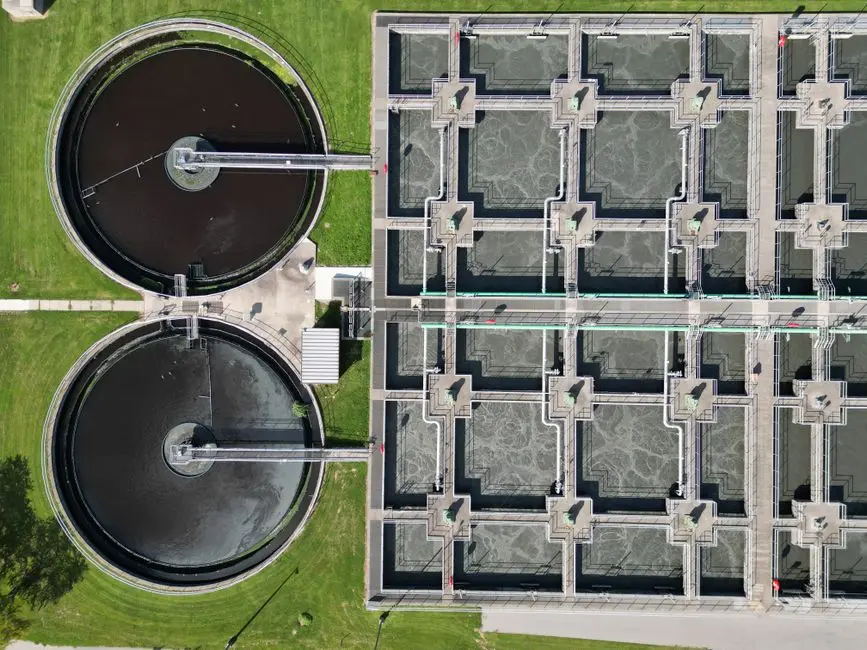
DAF offers shorter residence time and stronger treatment of oily or buoyant solids, while lamella treatment can offer better solids capture per unit area on dense material. The same 2026 Buffalo guide reports DAF TSS removal of 85–98% across the cited equipment classes, compared with 50–80% for lamella treatment of buoyant TSS and 80–95% for dense settleable TSS. These are equipment-class performance figures, not guarantees for a plant’s wastewater.
| Procurement criterion | DAF | Lamella clarifier |
|---|---|---|
| Primary mechanism | Microbubble attachment and skimming | Gravity settling on inclined plates |
| Residence time | Approximately 3–5 minutes | Conventional comparison basis of 1–3 hours |
| Reported TSS performance | 85–98% across cited classes | 50–80% for buoyant TSS; 80–95% for dense settleable TSS |
| Reported oil performance | 90–99% for free and emulsified oil | Approximately 30–60% for gravity alone on emulsified droplets |
| Installation | Approximately 15–25 ft² footprint in the supplied guide; packaged skid with minimal civil work | Approximately 5–10 times smaller than a conventional clarifier, but generally requires a basin or larger steel tank and more field erection |
| Utilities and maintenance | Air compressor around 5–10 kW at 200 GPM, 10–20% pressurized recycle, and chemical dosing | No compressor; generally higher polymer demand and periodic plate cleaning |
| Sludge route | Collection, conditioning, thickening, and optional dewatering | Collection, conditioning, thickening, and optional dewatering |
The utility comparison needs careful wording. HydropureWater lamella product data cited in the 2026 Buffalo guide states surface loading of 20–40 m/h and chemical consumption up to 30% lower than conventional clarifiers. Separately, that guide’s product comparison reports that lamella operation uses 30% or more polymer than DAF. These statements concern different comparison bases and should not be combined into one generic chemical-savings claim.
DAF utilities include compressed air, recycle pumping, controls, and chemical dosing. A packaged skid can shorten the installation path because the principal equipment arrives preassembled. A lamella may reduce plate-package area, but a poured basin, larger steel tank, foundations, access routes, and installation labor can shift the capital balance. Request an installed scope rather than comparing tank prices alone. Both technologies produce sludge that can be routed to a plate-and-frame filter press when the required dry-solids endpoint justifies dewatering.
Select the Right Equipment for Flow, Space, and Civil Work
Flow and installation tolerance determine whether a packaged DAF remains practical or whether a custom rectangular DAF and built-in-place lamella merit comparison. The 2026 Buffalo guide identifies approximately 100 GPM as the lower-flow threshold at which a skid DAF is the default when floor space is tight, and approximately 500 GPM as the point above which custom equipment and civil-cost comparisons become more important. These are selection thresholds, not universal sizing limits.
HydropureWater’s DAF catalog covers 4–300 m³/h across 13 standard models. A nominal flow range is therefore not enough for procurement: model selection must reflect peak hydraulic demand, contaminant loading, required hydraulic margin, and the plant’s physical envelope. For parts washing, the supplied selection rule is DAF below 300 GPM, or lamella above 300 GPM when floor space is available.
| Design input | What the bidder must establish |
|---|---|
| Flow | Hourly average, peak flow, drain-down demand, and expected variability |
| Pollutants | FOG, free and emulsified oil, TSS, metals, TDS, particle characteristics, and existing pretreatment |
| Process | Stream temperature, pH, chemical use, production shifts, and reuse target |
| Hydraulics | Required hydraulic margin, recycle arrangement, backwash or equalization requirements, and upset conditions |
| Site | Available footprint, floor loading, electrical service, access, drainage, and civil-work tolerance |
| Residuals | Sludge quantity, thickening route, dewatering interface, disposal destination, and reuse criteria |
The HydropureWater lamella product combines sludge recirculation, flocculation, and inclined-plate separation in one structure. The DAF configuration uses automatic skimming and microbubble flotation. Request an integrated skid scope covering controls, chemical conditioning, recycle, sludge withdrawal, utilities, and dewatering interfaces. A tank-only price does not provide a comparable installation basis.
Design for Tonawanda Cold-Weather and Pretreatment Conditions
Cold water requires a hydraulic correction, not an automatic equipment substitution. The 2026 Buffalo guide states that below 10 °C, viscosity rises about 25% relative to 20 °C design conditions. The result is a slower DAF rise rate and slightly reduced oil-droplet attachment. Its stated design response is a 10–15% hydraulic margin, insulation for the saturation tank, and potentially a 1–2 kW immersion heater when the skid is in an unheated enclosure below 4 °C.
For a lamella, cold water raises density and may improve settling slightly, but the viscosity penalty offsets much of that benefit. A covered basin may also be needed to prevent surface ice, reducing the apparent space advantage. These provisions should be identified explicitly in the proposal rather than left as an operating assumption.
Compliance must be verified for Tonawanda rather than transferred automatically from the Buffalo discussion. The 2026 Buffalo guide cites 40 CFR Part 403 and Buffalo Sewer Authority industrial-user limits around 100 mg/L oil and grease and 200 mg/L TSS. Those figures describe the Buffalo service area discussed in that source; they do not establish Tonawanda’s permit limits. A Tonawanda buyer must obtain the receiving POTW’s current pretreatment permit, local discharge limits, monitoring requirements, and any applicable state permit conditions.
For the equipment trial, require representative influent spanning the plant’s oil and solids conditions. Clean-water catalog performance does not demonstrate treatment of paint, metal fines, coolant sludge, or shifting production chemistry. The broader EV wastewater DAF versus clarifier guide reinforces the same need to verify site-specific wastewater rather than relying on generalized equipment claims.
Build the Chemical and Sludge-Handling Scope
Chemical conditioning determines whether the DAF captures emulsified oil and fine paint solids as floc. The 2026 Buffalo guide reports only 50–70% DAF removal without conditioning and recommends a cationic coagulant followed by an anionic flocculant for paint and ED-coat water. It gives starting ranges of 50–150 mg/L cationic coagulant and 1–5 mg/L anionic flocculant, but states that exact doses must be bench-tested for each shift.
Specify an automatic chemical dosing system coordinated through the PLC with flow, operating mode, pH, and chemical inventory. The dosing-scope request should define storage, metering pumps, mixers, calibration points, flow-paced or trim control, interlocks, and the method for recording dose. Bench testing should use plant wastewater across normal and peak production conditions rather than a single laboratory sample.
Include the residual train on the P&ID. Tank sludge withdrawal, equalization, conditioning, thickening, and the selected dewatering route are part of the treatment scope, not post-project additions. A plate-and-frame press may be appropriate when the required dry-solids endpoint justifies it. The 2026 Buffalo guide describes dewatering to 25–35% dry solids, but that outcome depends on incoming sludge and conditioning and should be treated as a target for verification, not a guaranteed composition.
Obtain vendor confirmation of sludge-generation basis, expected consistency, polymer demand, batch or continuous withdrawal, storage time, and compatibility with the selected disposal route. For procurement, compare the complete treatment train rather than the flotation tank alone.
Turn the Decision into a Procurement Checklist
A comparable proposal requires segregated stream data, performance criteria tied to representative influent, and a complete installed scope. The 2026 Buffalo guide supports a DAF-first branch for buoyant contamination, a lamella branch for dense settleable contamination, and a hybrid train where both material; it also identifies a DAF–lamella pairing when tramp-oil-skimmed coolant or metal fines represent more than approximately 30% of the total load.
- Require every wastewater source to be segregated and characterized for flow, FOG, TSS, metals, temperature, variability, and current treatment.
- Set stream-specific performance criteria and a guarantee format based on representative influent, not only a catalog TSS range.
- Request a P&ID, hydraulic balance, chemical-dose calculation basis, utilities estimate, control narrative, civil footprint, and installation schedule.
- Confirm whether the price includes the recycle loop, compressor, automatic dosing, sludge withdrawal, controls, and dewatering interface.
- Require cold-weather operating provisions and verify every discharge claim against the receiving authority’s current requirements.
- Document the final decision: DAF for buoyant contamination, lamella for dense settleable contamination, and a hybrid train when both are material.
| Bidder deliverable | Acceptance question |
|---|---|
| Stream characterization | Does each stream have measured flow, FOG, TSS, metals, temperature, and variability data? |
| Performance proposal | Is the criterion linked to representative plant wastewater and the selected stream? |
| Hydraulic design | Are peak flow, margin, recycle, equalization, and upset response documented? |
| Chemical scope | Are dose basis, bench work, pumps, controls, and storage included? |
| Installation scope | Are foundations, utilities, access, commissioning, and schedule defined? |
| Compliance evidence | Has the proposal been checked against Tonawanda’s actual POTW and permit? |
Frequently Asked Questions
Is a DAF cheaper than a lamella clarifier for a Tonawanda EV plant?
Not necessarily. A packaged DAF generally shortens field installation, while a lamella may require a basin or larger steel tank and more civil work. Ask each bidder for an installed scope covering foundations, utilities, controls, chemical equipment, sludge handling, commissioning, and schedule. The research provides no defensible dollar comparison for Tonawanda, so request site-specific quotations rather than relying on equipment prices alone.
How should a DAF be sized for automotive manufacturing wastewater?
Size from peak flow, FOG and solids loading, measured temperature, hydraulic margin, and the required effluent performance—not average flow alone. The 2026 Buffalo guide identifies skid DAF below approximately 100 GPM where space is tight and custom DAF or lamella comparison above approximately 500 GPM. Between those thresholds, require a model-specific hydraulic calculation and representative-wastewater trial.
When should a plant use DAF followed by lamella clarification?
Specify the hybrid train when the same stream contains significant buoyant oil and genuinely settleable solids, such as emulsified paint with metal fines or dense coolant sludge. The 2026 Buffalo guide specifically identifies DAF–lamella pairing when tramp-oil-skimmed coolant or metal fines exceed approximately 30% of total load. Verify that threshold against the plant’s stream balance rather than treating it as universal.
What chemical dosing and bench testing does reliable DAF operation require?
Bench-test the actual wastewater before fixing the operating recipe. The 2026 Buffalo guide gives starting ranges of 50–150 mg/L cationic coagulant followed by 1–5 mg/L anionic flocculant for paint and ED-coat streams, while warning that exact doses vary by shift. Specify an automatic chemical dosing system, and demonstrate coordinated coagulant, flocculant, and pH control with representative production samples.
Which permit and local limits must be checked before sizing equipment in Tonawanda?
Check the receiving POTW’s current industrial-user permit, local limits, monitoring rules, and surcharge provisions. The supplied 2026 Buffalo guide discusses 40 CFR Part 403 and Buffalo-area limits around 100 mg/L oil and grease and 200 mg/L TSS, but those are not proof of Tonawanda’s requirements. Obtain written confirmation from the receiving authority and incorporate the applicable limits into the vendor guarantee.