What treatment does a Chisinau data center actually need?
A Chisinau data center generally needs wastewater segregated into cooling-tower blowdown, sanitary sewage, and process wastewater, followed by a site-specific treatment train. The likely blowdown design is DAF or filtration, UF where required, and RO, with permeate controlled below 500 mg/L TDS, 30 mg/L COD, and 1,000 µS/cm conductivity for cooling reuse. RO typically recovers 75–90%; ZLD reaching at least 99% is needed only when sewer or brine-disposal constraints justify its higher cost. Final sizing requires measured blowdown flow, TDS, COD, TSS, silica, hardness, pH, cycles of concentration, and the permit or sewer limits in force.
The first design gate is stream segregation. Keep cooling-tower blowdown, sanitary sewage, process wastewater, floor drainage, and contaminated equipment washdown separate until their treatment objectives are established. Cooling blowdown may be recovered as tower makeup; sanitary sewage requires a biological route; floor drainage and washdown require contamination and discharge assessment.
The second gate is the destination. If recovered permeate can return as controlled cooling makeup, the design can emphasize dissolved-solids removal, scaling control, and biological safety. If the sewer permit governs the discharge, its TDS, conductivity, COD, TSS, pH, metals, biocide-residual, monitoring, and brine-acceptance requirements determine the required polishing.
The preliminary blowdown train is collection and equalization, then DAF pretreatment for cooling-tower blowdown or robust filtration for suspended solids and organics. Add an UF secondary barrier before RO where residual solids require it, followed by RO, post-treatment disinfection, and controlled permeate blending. Sanitary sewage should remain on a separate biological treatment route rather than being combined with the membrane recovery train.
HydropureWater reports data-center water consumption averaging 3–5 million gallons per MW of IT load annually, based on ASCE 2024 data in its 2026 cooling-blowdown guide. That is a consumption benchmark, not a treatment-sizing rule. No Chisinau sewer capacity, discharge permit, makeup analysis, or discharge tariff was supplied. Those are mandatory design inputs, not values to be assumed.
Build the Chisinau design basis from measured data
A Chisinau treatment train cannot be sized defensibly until the water balance and receiving constraints are measured at the site.
Request at least one year of hourly or monthly makeup, evaporation, blowdown, and potable-water data. Add measured blowdown flow and seasonal peak conditions; do not derive equipment capacity from the IT load or tower nameplate alone. The cycles of concentration should be calculated from the water balance and confirmed from measured conductivity or TDS.
Obtain source-water and blowdown analyses for TDS, conductivity, COD, TSS, pH, silica as SiO₂, calcium hardness as CaCO₃, alkalinity, chlorides, sulfate, LSI, oil and grease, and the complete cooling chemical program. The chemical program matters because biocide, corrosion-inhibitor, and scale-inhibitor residuals can affect membrane fouling, biological treatment, and discharge acceptance.
The supplied HydropureWater sources provide two different characterization sets. Its 2026 recycling guide gives typical cooling-blowdown TDS of 3,000–10,000 mg/L. Its separate 2026 cost guide gives TDS of 5,000–15,000 mg/L, COD of 100–500 mg/L, TSS of 50–200 mg/L, and pH of 8.0–9.5. Use measured results for design; do not average the two sources into an assumed range.
| Design input | What the buyer must obtain | Decision affected |
|---|---|---|
| Makeup and blowdown water balance | At least one year of operating records, measured flow, seasonal peak, evaporation, and cycles of concentration | Recovery flow, storage, pretreatment, RO, and ZLD capacity |
| Source and blowdown chemistry | TDS, conductivity, COD, TSS, pH, silica, hardness, alkalinity, chlorides, sulfate, LSI, oil and grease | Filtration, RO feed, scaling control, chemical compatibility |
| Discharge route | Permit or sewer limits, discharge point, permitted flow, monitoring frequency, and brine acceptance | RO versus ZLD and final polishing |
| Site utilities and climate | Power availability and tariff, thermal source, cooling-water availability, evaporation conditions, and water-source context | ZLD feasibility, cooling demand, and operating cost |
| Residue route | Sludge and salt classification, handling site, transport access, and approved off-site disposal route | DAF/MBR sludge, crystallizer, and final ZLD scope |
Conductivity is suitable for continuous control, but calibrate it against laboratory TDS before using it to operate a recovery system. HydropureWater’s 2026 guide gives a recycled-water conductivity target below 1,000 µS/cm.
Confirm the local hierarchy with the Chisinau sewer utility or environmental authority: discharge point, sewer ownership, permitted flow, TDS and conductivity, COD, TSS, pH, metals, biocide residuals, monitoring frequency, and brine acceptance. For ZLD, verify electrical supply, thermal source, cooling-water availability, evaporator and crystallizer siting, solid-residue classification, and the off-site disposal route.
Document local climate and water-stress factors without assuming a drought restriction or future permit condition that has not been verified for Chisinau. The regional data-center blowdown treatment framework illustrates how local discharge and reuse conditions should shape the design, but it does not establish Chisinau limits.
Keep cooling-tower chemistry and recovered-water quality under control
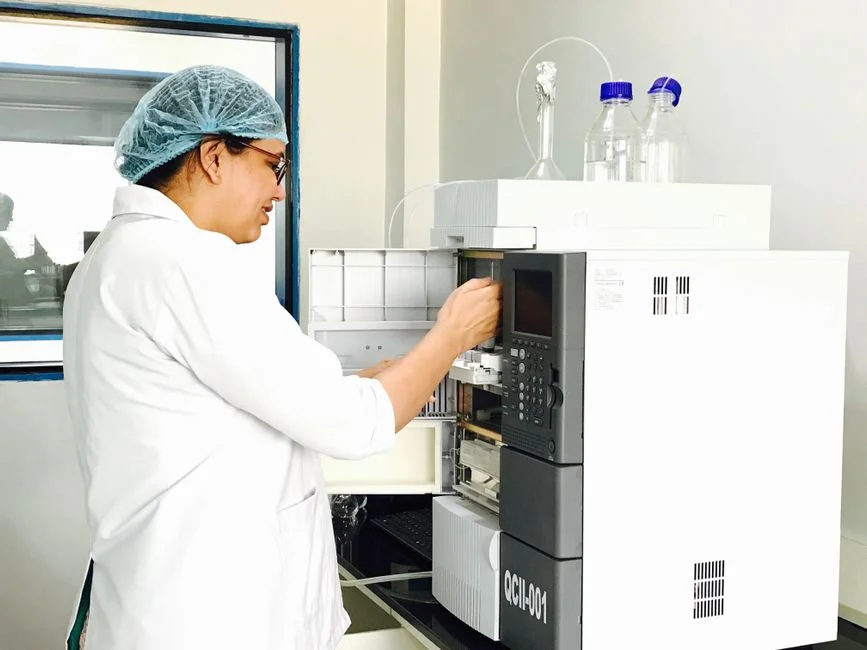
The cooling basin and the recovered permeate are controlled to different limits because the basin already concentrates dissolved solids.
ANSI/ASHRAE/ICC/USGBC/IES Standard 189.1-2017 Addendum i, approved by ANSI on 24 July 2019, sets the recirculating-water maximum at 2,050 ppm TDS, according to the supplied HydropureWater 2026 guide. This is a basin ceiling, not a recovered-permeate target.
The same addendum permits earlier blowdown when discharge TDS exceeds 1,500 mg/L or silica exceeds 150 mg/L as SiO₂. The supplied basin ceilings also include chlorides at 300 ppm as Cl, calcium hardness at 600 ppm as CaCO₃, alkalinity at 600 ppm as CaCO₃ or 500 ppm on passivated galvanized steel, sulfates at 250 ppm, and LSI of +2.8.
| Control location | Supplied limit or target | Engineering implication |
|---|---|---|
| Cooling basin | TDS maximum 2,050 ppm; early blowdown above 1,500 mg/L TDS | The basin can operate at higher concentration than raw-blowdown reuse water |
| Cooling basin | Silica 150 mg/L as SiO₂; chlorides 300 ppm as Cl | Silica and chloride require separate monitoring and control |
| Cooling basin | Calcium hardness 600 ppm as CaCO₃; alkalinity 600 ppm as CaCO₃, or 500 ppm on passivated galvanized steel | Material-specific limits must enter the water chemistry program |
| Cooling basin | Sulfates 250 ppm; LSI +2.8 | Scale tendency requires assessment beyond TDS alone |
| Recovered permeate | TDS below 500 mg/L; COD below 30 mg/L; conductivity below 1,000 µS/cm; preferably chloride below 150 mg/L | These are reuse targets for returned or blended makeup, not basin discharge limits |
Use continuous conductivity monitoring with periodic laboratory verification of TDS, silica, hardness, chloride, COD, and biological indicators. Maintain a disinfectant residual in the recycled loop and prevent biofilm on heat-transfer surfaces. HydropureWater’s 2026 guide prefers chlorine dioxide over chlorine because it remains effective against biofilms and Legionella at the higher pH common in recycled loops. A chlorine dioxide generator for recycled cooling water must still be evaluated for chemical demand, materials, safety, and site controls.
Manage Legionella risk under ASHRAE Standard 188 and applicable local building requirements, as stated in the supplied HydropureWater guide. Also determine whether the recovered water has a defined non-potable reuse status under Chisinau requirements; the supplied research does not establish that status.
Choose a pretreatment train that protects the membranes
Pretreatment should be selected from measured contaminant and scaling risks, not from a fixed equipment list.
Begin with equalization, suspended-solids removal, and control of oil and organics. HydropureWater identifies DAF as effective pretreatment for cooling-tower blowdown before RO because it removes material that can foul downstream membranes. Multi-media filtration or UF should follow when fill fines or residual solids remain after DAF; an UF secondary barrier before RO is then a defensible selection.
Include pH adjustment and antiscalant dosing for silica, calcium, and magnesium control. HydropureWater’s 2026 engineering guide states that unmanaged silica scaling can reduce membrane life by 60% within six months. This is a fouling-risk warning, not a Chisinau site prediction; verify the actual scaling tendency from water chemistry and membrane projections.
Use MBR only where measured biodegradable organics justify it. HydropureWater’s separate 2026 cost guide identifies MBR as a candidate when COD exceeds 300 mg/L and reports aeration demand of 3–5 kWh/m³. An MBR route for high-organic blowdown also requires assessment of biocide residuals because they can inhibit the biological process.
| Condition | Pretreatment decision | Downstream protection |
|---|---|---|
| Suspended solids, oil, or organics require removal | Equalization followed by DAF or filtration | Reduces membrane fouling and separates sludge for treatment |
| Fill fines or residual solids remain after DAF | Multi-media filtration or UF | Creates a secondary particulate barrier before RO |
| Silica, calcium, or magnesium scaling is indicated | pH adjustment and antiscalant; evaluate other control if projections require it | Limits irreversible membrane scaling |
| COD exceeds 300 mg/L | Assess MBR using biodegradable fraction and biocide compatibility | Reduces organic fouling ahead of RO |
| Biocide or corrosion-control residuals are incompatible | Revise upstream chemical program and confirm membrane compatibility | Protects membrane materials and biological treatment |
Route DAF or MBR sludge to dewatering and a confirmed disposal route. HydropureWater’s 2026 cost guide estimates sludge disposal at $0.05–$0.20 per gallon for pretreatment or ZLD systems. A plate-and-frame sludge dewatering system should be evaluated against the actual residue volume and receiving route.
Connect equipment selection to measured flow. HydropureWater’s DAF catalog covers 4–300 m³/h, while its UF catalog covers 2,000–40,000 L/h and accepts turbidity up to 300 ppm. These are catalog envelopes, not a recommended Chisinau duty; verify the measured peak, minimum flow, and future expansion against them.
Select RO, EDI or ZLD against the disposal constraint
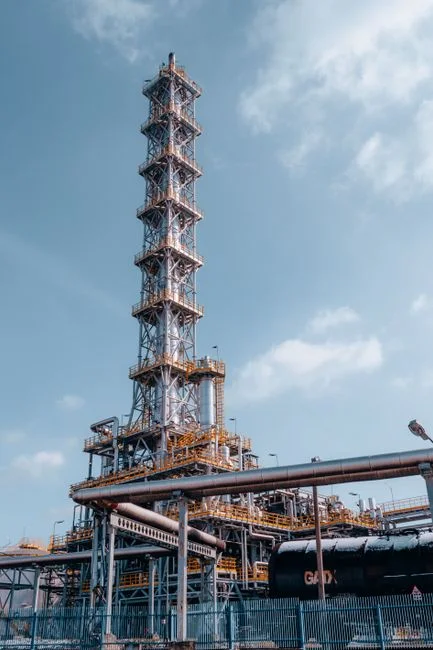
RO is the baseline recovery route unless the permitted disposal route makes its concentrate unacceptable.
HydropureWater specifies 75–90% recovery for cooling-blowdown RO and permeate below 500 mg/L TDS. An industrial RO blowdown-recovery system should be sized from measured feed flow, recovery target, scaling projections, and the required permeate blend rather than from MW load alone.
Add EDI or a secondary high-pressure RO stage only when the reuse specification requires lower ionic content. HydropureWater states that recovery above 95% generally requires EDI or another high-pressure RO stage. An EDI polishing system is therefore a quality-response option, not an automatic addition to every cooling-blowdown project.
Use ZLD when sewer TDS restrictions, prohibited brine discharge, or brine-hauling economics leave no acceptable route for RO concentrate. HydropureWater describes ZLD as membrane concentration followed by thermal evaporation and crystallization, reaching at least 99% recovery.
| Route | Supplied recovery basis | Energy basis | Decision condition |
|---|---|---|---|
| RO | 75–90% | 2–4 kWh/m³ | Use first when concentrate has an accepted sewer or disposal route |
| EDI or secondary high-pressure RO | Recovery above 95% generally requires added polishing | Not stated in the supplied research | Use for a stricter low-ion reuse specification |
| ZLD | At least 99% | 15–25 kWh/m³ | Use when no acceptable liquid-concentrate route exists |
| Membrane distillation | Potential low-grade waste-heat application | Not stated in the supplied research | Consider only after confirming usable waste heat and equipment maturity |
HydropureWater gives ZLD energy demand as 15–25 kWh/m³, compared with 2–4 kWh/m³ for RO. A higher recovery percentage therefore does not mean a lower cost. The local electricity tariff, thermal source, residue route, and operating hours must be included in the comparison.
Require a brine balance for every RO option: permeate to reuse, residual blowdown to the basin, and permitted concentrate discharge, with protected overflow and purge capacity. The RO-reject reuse and discharge configuration provides a process reference, but the Chisinau balance must reflect the actual tower and sewer route.
Compare dry coolers and air-cooled chillers as the non-recovery case. HydropureWater says closed-loop dry-cooler or air-cooled-chiller arrangements can reduce water consumption by up to 70% versus traditional evaporative towers, but sites with negligible evaporative makeup have little blowdown to recover.
Compare the budget and operating consequences
The cheapest-looking unit cost is not the defensible budget; the comparison must include pretreatment, concentrate disposal, power, chemicals, membranes, monitoring, and residue handling.
HydropureWater gives standard RO CapEx as $500–$1,500 per m³/day of capacity and full ZLD CapEx as $2,000–$4,000 per m³/day, depending on pretreatment complexity. These are benchmark unit rates, not Chisinau quotations.
For operating cost, use the supplied $0.50–$1.20/m³ RO benchmark and $2.00–$4.00/m³ evaporation-crystallization benchmark. For ZLD, use the wider $3.00–$5.50/m³ range because HydropureWater’s technology and system tables present narrower and wider bands; the company identifies the wider range as the safer budget.
| Cost or performance item | Supplied benchmark | Budget treatment |
|---|---|---|
| RO CapEx | $500–$1,500 per m³/day | Scale by measured capacity and actual pretreatment scope |
| ZLD CapEx | $2,000–$4,000 per m³/day | Use only if the disposal constraint justifies thermal treatment |
| RO OPEX | $0.50–$1.20/m³ | Adjust for local power, chemicals, labor, membrane, and cleaning |
| Evaporation-crystallization OPEX | $2.00–$4.00/m³ | Add system-level ZLD context from the wider $3.00–$5.50/m³ range |
| RO energy | 2–4 kWh/m³ | Price against the Chisinau tariff |
| ZLD energy | 15–25 kWh/m³ | Test sensitivity to power price and operating hours |
| RO membrane replacement | 3–5 years | Include in lifecycle cost |
| MBR membrane replacement | 5–7 years | Include only if MBR is selected |
| Monitoring and reporting labor | Approximately $20,000 per year | Planning benchmark only, not a Chisinau regulatory fee |
Budget for quarterly RO cleaning where required, annual cartridge pre-filter replacement, and routine DAF sludge handling. The supplied 2026 cost guide also assigns chemicals $0.10–$0.30/m³ on membrane routes; verify this against the selected chemical program.
Calculate return on investment from avoided potable water, avoided sewer discharge and surcharges, reduced cooling-water chemical use, and avoided future capacity cost. Do not import a generic payback period into a Chisinau business case; the local tariff and sewer-charge evidence were not supplied.
Report water and energy together. HydropureWater states that recycling 75% of blowdown can move WUE from a typical 1.8 L/kWh to below 1.2 L/kWh, while treatment power causes a small increase in PUE. This is a supplied benchmark relationship, not a site guarantee, so report both metrics in the investment model.
Turn the concept into a procurement and commissioning package
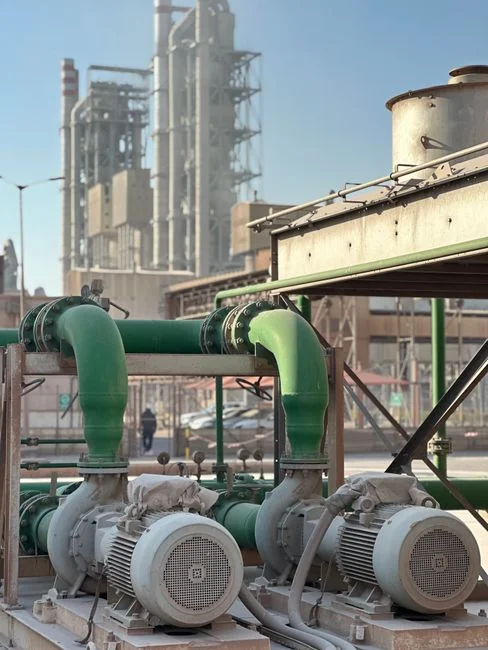
A controlled pre-FEED package should prevent equipment selection before the flow, chemistry, and disposal route are defined.
- Issue the sizing request with measured blowdown flow, TDS, cycles of concentration, makeup analysis, sewer limit, recovery target, and power tariff. These are the minimum inputs identified by HydropureWater.
- Obtain a signed water and mass balance covering makeup, evaporation, blowdown, permeate, reject, bleed, and product reuse.
- Define the end-use specification for each recovered-water stream, including the cooling-basin chemistry, permeate blend limits, biological control, and monitoring frequency.
- Require a brine balance and confirmed route for reject, overflow, sludge, and crystallized solids.
- Specify automatic conductivity, pH, differential-pressure, flow, and permeate-quality monitoring, with laboratory verification and calibrated control loops.
- Set FAT and SAT criteria around guaranteed permeate quality, recovery rate, specific energy consumption, availability, and documented cleaning procedures.
- Reserve space and utilities for higher recovery, additional UF duty, and a future thermal-concentration stage if the sewer limit tightens.
An automatic chemical-dosing system should be specified from the measured antiscalant, pH-control, and biocide requirements, not selected as a generic accessory. The treatment-parts, valves, and media schedule should identify materials compatible with the feed chemistry, oxidants, temperature, and pressure envelope.
Compare municipal reclaimed water with internal recovery using local potable-water prices, sewer charges, surcharges, delivered quality, and ownership responsibility. The supplied research says municipal reclaimed water is often discounted by 20–40% relative to potable water, but no Chisinau tariff was supplied; confirm the local offer rather than applying that percentage.
Document the selected discharge, reuse, and solid-residue routes so the owner, environmental consultant, and sewer utility can audit the same mass balance. A supplier should not close the gap between RO and ZLD with assumptions unsupported by the permit or site measurements.
Frequently Asked Questions
What treatment capacity does a Chisinau data center need?
The required capacity is the measured blowdown flow converted to m³/day, with seasonal peak and minimum operating flow established. HydropureWater reports a consumption benchmark of 3–5 million gallons per MW of IT load annually, based on ASCE 2024 data, but site-specific makeup and blowdown records determine equipment sizing.
Is RO or ZLD better for a Chisinau data center?
RO is normally the first option when the sewer or another permitted route can accept its concentrate. ZLD becomes more defensible when discharge restrictions block that route and its additional energy, capital cost, and residue handling are justified. Check the actual sewer limits and brine route before selecting the technology.
How much should a blowdown recovery system cost?
HydropureWater’s supplied benchmarks are $500–$1,500 per m³/day for RO and $2,000–$4,000 per m³/day for ZLD. For a Chisinau budget, request a quotation using measured design flow, local power tariff, pretreatment scope, membrane duty, monitoring requirements, and the confirmed residue-disposal route; the benchmarks alone are not a site price.
What water quality is needed to reuse blowdown as cooling makeup?
HydropureWater’s supplied targets are TDS below 500 mg/L, COD below 30 mg/L, conductivity below 1,000 µS/cm, and preferably chloride below 150 mg/L. Also verify silica, hardness, and biological indicators, because scaling and Legionella control remain separate acceptance issues.
What should be measured before selecting a supplier?
Request makeup and blowdown analyses, peak and average flows, cycles of concentration, the cooling chemical program, sewer limits, power price, recovery target, residue route, and guaranteed permeate quality and energy consumption. A supplier’s treatment proposal should then demonstrate how its equipment meets those measured inputs and the confirmed Chisinau discharge route.
Related Equipment
- DAF pretreatment for cooling-tower blowdown — specifications, capacity range, and technical data