What Wastewater Streams Does an Osaka Hotel or Resort Generate?
Hotel wastewater screening must start with the streams generated on site, because domestic sewage, food-service wastewater, laundry effluent, pool discharge and thermal water do not necessarily share the same treatment route. The Ritz-Carlton Osaka publishes a water footprint of 1,692.22 liters per room night, but that property metric is not a universal design flow. A defensible assessment begins by separating streams, then confirming their composition, variability and discharge or reuse destination.
Guest-room and public-area sewage normally form the core sanitary stream. Food-service wastewater may carry grease and solids; laundry wastewater may contain detergents, fibres and lint; pool discharge may require dechlorination or another controlled route. Onsen or hot-spring water is a separate screening issue. Hotel Hanshin Osaka states that its public baths use brown hot-spring water and that every room has an indoor hot-spring bath, according to Selected Ryokan’s 2026 property page. That configuration cannot be treated as ordinary domestic sewage.
Keep kitchen, laundry, pool and thermal streams segregated during preliminary design until sampling and operating information support a decision to combine them. Do not assign treatment performance or regulatory limits without project-specific data and confirmation from the relevant Osaka authority and sewer operator. The broader screening sequence is also set out in this hotel wastewater system selection in Surabaya.
| Wastewater stream | Screening focus | Preliminary engineering decision |
|---|---|---|
| Guest-room and public-area sewage | Occupancy-driven flow, diurnal peaks, solids and cleaning chemicals | Establish the base sanitary design flow |
| Food-service wastewater | Oil, grease, food solids, discharge timing | Assess local pretreatment and whether the stream can join the sanitary train |
| Laundry wastewater | Detergents, fibres, lint and batch discharge | Determine segregation, equalization and biological compatibility |
| Pool discharge | Chlorinated water, makeup rate and release frequency | Confirm treatment and any on-site reuse route |
| Onsen or hot-spring water | Thermal and mineral conditions, flow continuity and water chemistry | Assess dedicated screening and equalization before biological treatment |
Turn Property Data into a Site-Specific Design Basis
The Ritz-Carlton Osaka’s published water footprint of 1,692.22 liters per room night is a property-level screening indicator, not an Osaka design coefficient. The hotel’s official 2026 page reports the metric, alongside an 84.13 kg carbon footprint per room night. For early comparison between properties, it can help frame the scale of water use; it cannot substitute for measured flow data because wastewater generation, occupancy, irrigation, laundry, cooling and pool operations affect the relationship between water use and sewage flow.
Request a coordinated design-basis package covering:
- Measured or documented daily sewage flows and peak-hour behavior;
- Room inventory, guest occupancy, event attendance and operating schedules;
- Kitchen, laundry, pool and thermal-water discharge records;
- Water-using fixture data, makeup-water rates and any planned reuse demand;
- Available footprint, burial depth, access routes, electrical supply, drainage destination, odor constraints and sludge-removal route; and
- Operator availability, maintenance access and remote-monitoring expectations.
Peak demand may be driven by functions beyond overnight occupancy. The Ritz-Carlton Osaka’s official 2026 page states that its Grand Ballroom accommodates up to 1,500 guests and lists wedding receptions for up to 500 guests. Those event capacities demonstrate why banquet, conference and laundry flows should be considered separately; they are not wastewater design-flow coefficients.
Calculate sanitary, kitchen, laundry, pool and thermal-water flows independently, then select the intended combination, segregation or recycling arrangement. Do not allow the published liters-per-room-night figure to drive equipment selection without reconciliation against operating records. The packaged WSZ, SBR and MBR comparison for hotels provides a useful process-screening structure, but local data remain the controlling inputs.
| Design-basis input | Evidence needed | Why it affects selection |
|---|---|---|
| Sanitary flow | Measured flow records, occupancy and fixture data | Sets biological capacity and peak treatment requirements |
| Event flow | Attendance, function schedule and corresponding kitchen and laundry load | Tests peak-hour and equalization assumptions |
| Special streams | Sampling, makeup and discharge data | Determines pretreatment, segregation or reuse controls |
| Site constraints | Survey, utilities, access, burial depth and drainage route | Limits feasible plant configuration and installation method |
| O&M capability | Staffing, service access and sludge route | Tests whether automated or membrane-based equipment is practical |
Compare Packaged A/O, MBR and Dedicated Pretreatment
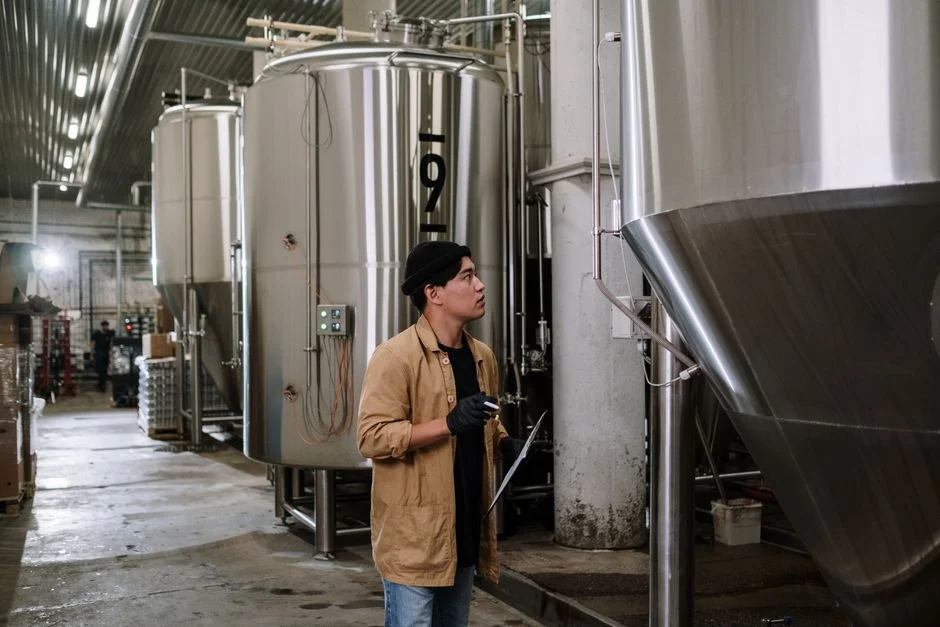
Process selection should follow discharge and reuse objectives, site constraints and operating responsibility rather than equipment sophistication. For ordinary sanitary sewage at a compact urban hotel, an underground package plant may reduce above-ground space demand. An underground A/O package sewage treatment plant can be considered when automatic biological treatment and a buried configuration suit the property.
The supplier’s WSZ product information describes anoxic and aerobic biological contact oxidation, sedimentation and disinfection in one buried unit. It states a capacity range of 1–80 m³/h and describes the plant as fully automated and requiring no operator. These are catalog claims and product limits, not a recommendation for an Osaka hotel. The selected unit must be matched to the calculated average and peak loads, power supply, burial conditions, maintenance access and sludge route.
An MBR membrane bioreactor for hotel wastewater reuse becomes more relevant when the project requires stringent solids separation, a constrained above-ground footprint or a defined reuse stream. HydropureWater’s 2026 MBR product information describes activated sludge treatment combined with submerged PVDF membrane filtration, filtration below 1 μm, a footprint stated as 60% smaller than conventional systems, and a capacity range of 10–2,000 m³/day. These figures describe the offered system and require verification against the supplier’s project-specific duty and layout.
Before selecting either process, compare them with sewer connection, gravity conveyance and other package options. MBR fit for purpose depends on the required reuse quality plus storage, disinfection, distribution and verification controls. For onsen water, evaluate screening, equalization and any necessary thermal or mineral-bearing treatment separately; the supplied research does not establish a validated treatment specification for that stream.
| Decision condition | Screen first | Key qualification |
|---|---|---|
| Ordinary sanitary sewage, compact site, no advanced reuse | WSZ, sewer connection, gravity conveyance and other package plants | Use calculated property loads, not product ranges |
| Advanced reuse or stringent solids separation | MBR and supporting reuse controls | Define endpoint quality, storage, disinfection and verification |
| Onsen or thermal water present | Dedicated pretreatment route | Confirm water chemistry and regulatory route before combining |
| Limited local operator capacity | Automated package option with service support | Clarify attendance, remote support and maintenance obligations |
Build a Treatment Train Around the Resort’s Highest-Risk Waste
The treatment train should remove the material most likely to damage the process before biological treatment. Fine screening is appropriate where wastewater contains rags, plastics or fibrous debris that could protect pumps, valves or downstream biological stages. HydropureWater’s GX rotary mechanical bar screen is described as equipment for municipal and industrial wastewater headworks. Its suitability still depends on the debris characteristics and selected screen size.
Dissolved air flotation should be evaluated only where removable oil, grease, free oil or suspended solids justify physical separation. The supplied DAF catalog covers 4–300 m³/h and identifies the equipment primarily for industrial or municipal pretreatment applications. That product range does not establish a need for DAF at a hotel; kitchen characterization should determine whether grease control is required.
For sludge dewatering, a plate-and-frame filter press may be relevant when routine sludge handling is a material operating issue. HydropureWater lists filtration areas from 1 m² to 500 m² and manual, hydraulic or automatic PLC operation. The choice depends on generated sludge volume, moisture target, operating labour and disposal route. The technical distinctions in this sludge-dewatering equipment guide should be reviewed alongside the property’s actual sludge characteristics.
Define the reuse endpoint before ordering final treatment. Irrigation, toilet flushing, laundry, cooling and potable reuse require different treatment and verification bases. The Ritz-Carlton Osaka’s official 2026 page reports Green Key certification and environmental commitments, including efforts to reduce environmental load. These are useful management benchmarks, but they do not specify the hotel’s wastewater process or establish the treatment needed for reuse.
Make the Supplier and Compliance Check Before Ordering
A bid should be checked against the same design basis used for process selection. Require the supplier to state the selected flow basis, peak-flow treatment method, capacity of each process stage, control philosophy, footprint, utility demand, installation conditions, commissioning scope and performance-test method. If any figure is missing, the supplier has not demonstrated that the offered equipment matches the property’s calculated demand.
Ask for written confirmation of the Japanese approvals, certifications, electrical requirements, technical documentation and local commissioning responsibilities applicable to the proposed package. Do not assume that equipment described as automated or complete is ready for direct installation in Japan. Confirm the route to the domestic sewage treatment equipment selection guide remains technical rather than jurisdictional: Osaka requirements must be verified for the actual site and discharge route.
The commercial submission should also identify sludge-management responsibilities, maintenance access, spare-parts availability, remote-control options, operator training, response times and local service support. Compare bids on installed scope and lifecycle duties rather than equipment price alone. The supplied research contains no Osaka hotel wastewater-treatment cost data, so any budget estimate must come from a site-specific quotation with clearly stated exclusions.
Compliance should be confirmed with the relevant Osaka authority and sewer operator, especially for segregated thermal water, discharge destination and reuse arrangements. The University of Michigan’s “Urban Water Supply in Japan: A Case Study of Osaka” emphasizes regional water-demand planning and the interaction between Osaka and surrounding water sources. The engineering implication for a hotel is analogous: treatment procurement should be evaluated within local infrastructure constraints rather than as an isolated equipment purchase.
Frequently Asked Questions
What size wastewater treatment system does an Osaka hotel need?
Size the system from measured or documented sanitary, kitchen, laundry, pool and thermal-water flows, including operating peaks. The Ritz-Carlton Osaka’s 1,692.22 liters per room night is only a property-specific screening reference; it cannot substitute for occupancy, fixture, event and flow data.
How much does hotel wastewater treatment cost in Osaka?
Request a site-specific quotation covering equipment, installation, civil works, utilities, controls, commissioning, sludge handling, training and service. The supplied research provides no Osaka hotel treatment price, so neither a quotation nor a cost range can be stated responsibly.
What are the Japan wastewater compliance requirements for a hotel?
Confirm the discharge route, treatment objectives, reuse conditions, approvals and documentation with the relevant Osaka authority and sewer operator. Requirements must be checked for the actual property because the supplied research provides no project-specific regulatory limits.
How should a wastewater-treatment supplier be selected?
Require documented sizing, peak-flow treatment, process performance, controls, installation scope, commissioning, sludge handling and local service support. A supplier should also identify which compliance and approval responsibilities it will assume and which remain with the owner or local contractor.