Why a National Categorical Limit Is Not Enough
EPA defines categorical pretreatment standards as uniform national limits on the quantity, concentration, or pollutant properties that may be discharged to a POTW by industrial users in specified categories (EPA, “Pretreatment Standards and Requirements—Categorical Pretreatment Standards,” accessed 2026-02). For plastics and rubber plants, Part 414 addresses plastics and resin manufacturing, Part 463 addresses rubber manufacturing, and Part 403 provides the general framework. These standards remain applicable even when the POTW lacks an approved pretreatment program or the industrial user has no individual permit. Pass through and interference remain separate obligations: a discharge can impair POTW operation or sludge use without first breaching a numerical limit. The receiving sewer authority and enforceable permit must therefore be identified before equipment selection.
| Requirement layer | What it establishes | Decision required |
|---|---|---|
| 40 CFR Part 403 | General pretreatment framework, including prohibited discharges, pass through, and interference | Determine whether the proposed discharge is prohibited or could impair the POTW. |
| 40 CFR Part 414 | Categorical standards for applicable plastics and resin manufacturing subcategories | Map the actual production activity to the correct subcategory. |
| 40 CFR Part 463 | Categorical standards for applicable rubber manufacturing subcategories | Identify whether the operation falls within tire, latex, or another applicable rubber category. |
| Local pretreatment limits | Numeric or narrative requirements reflecting the receiving POTW’s needs | Obtain the current limits from the identified Control Authority. |
| Industrial-user permit | Enforceable monitoring, reporting, sampling, and operating conditions | Use the current permit—not an older guide—as the site-specific compliance basis. |
EPA states that these technology-based standards apply regardless of whether the POTW has an approved pretreatment program or the nondomestic discharger has received a control mechanism or permit (EPA, categorical pretreatment standards page, accessed 2026-02). A Hegins-area buyer must not copy an unverified local limit from another municipality. The plastics and rubber pretreatment compliance guide provides broader context, but the receiving authority’s current documents remain necessary.
Build the Hegins Compliance File Before Choosing Equipment
The Hegins compliance file should begin with the discharge route, because a direct POTW connection, a discharge through another industrial user, and a different disposal route can change both the pretreatment path and the responsible Control Authority (HydropureWater, “How Do Plastics and Rubber Plants Meet Pretreatment Limits,” 2026-02). Verify the destination of every waste stream before assigning treatment equipment.
- Request the current industrial-user permit, approved local pretreatment limits, monitoring frequency, reporting deadlines, designated sampling point, analytical methods, bypass provisions, exclusions, and surcharge provisions from the Control Authority.
- Document products made, principal production steps, and separately regulated manufacturing activities. A description such as “plastics facility” is insufficient for selecting a categorical subcategory.
- Review 40 CFR Parts 403, 414, and 463 together with the current POTW permit and applicable state or local requirements.
- Resolve whether treatment must occur before discharge, how any exclusion applies, and where monitoring must take place.
The research supplied does not verify the receiving POTW for a Hegins-area plant, its pretreatment program status, or its current ordinance. Those points are open items—not gaps to fill with assumptions. The pretreatment due-diligence sequence for industrial plants illustrates the same need to identify the binding authority and permit before design work proceeds.
Keep the compliance file version-controlled: permit, approved local limits, applicable categorical subcategory, state and local requirements, production description, sampling plan, and permit correspondence should form one auditable record. Any conflict should be referred to the Control Authority in writing before a treatment train is guaranteed.
Turn the Production Floor into a Wastewater Design Basis
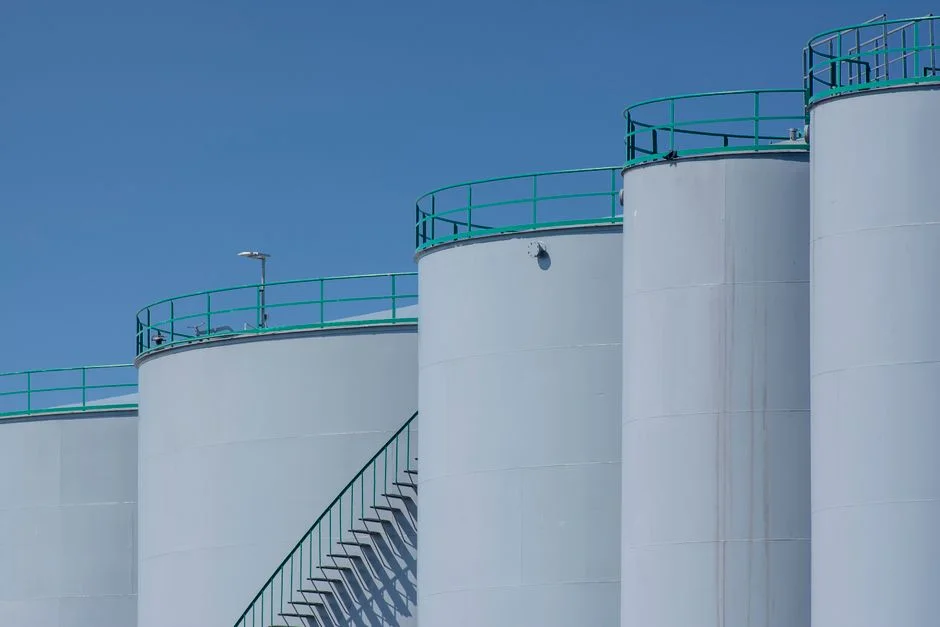
A plastics or rubber facility does not produce one uniform wastewater stream. EPA’s September 1995 sector profile identifies injection molding, extrusion, thermoforming, transfer molding, encapsulation, rubber-product manufacturing, and tire manufacturing as distinct production activities requiring source-by-source characterization (EPA sector profile, September 1995). Each drain should therefore be connected to its production operation and chemical inputs.
| Design stream | Potential design issue | Required evidence |
|---|---|---|
| Polymer wastewater | Stabilized oil, fillers, colloids, or variable chemical demand | Emulsion behavior, oil and grease, TSS, particle characteristics, and chemical inputs. |
| Latex process wastewater | Stabilized solids and process-chemical residues | Representative sampling by production condition and analysis for relevant organics and solids. |
| Rubber-process streams | Batch cleanup discharges and variable organic loading | Cleanup volumes, discharge sequence, batch chemistry, and peak-load measurements. |
| Wash water | Chemicals not represented in routine production samples | Source-by-source chemistry, flow, reuse or disposal route, and sampling frequency. |
Keep these streams separate until representative data justify combining them. Sample normal production, cleanup, the highest expected discharge condition, and each significant batch stream. Record flow, production status, chemicals in use, sampling location, and analytical method. The design dataset should address oil and grease, TSS, BOD, COD, pH, applicable priority pollutants, biodegradability, toxicity, and emulsion or colloid behavior where relevant.
Do not let a daily average hide a short cleanup or kettle-washing discharge. A manageable average can conceal the peak that determines whether equalization and downstream treatment are adequate (HydropureWater, “How Do Plastics and Rubber Plants Meet Pretreatment Limits,” 2026-02). The plastic manufacturing COD removal guide and rubber processing COD removal guide provide process-specific context, but site measurements must remain the design basis.
Match Each Waste Stream to Its Treatment Function
Each unit operation should answer a defined pollutant question, and the procurement file should connect every source stream to its treatment duty, selected equipment, residual route, and compliance evidence. Source reduction, chemical management, and stream segregation come first because avoidable loads should not be transferred into an end-of-pipe treatment train.
| Source wastewater | Required treatment function | Equipment decision | Residual route | Compliance evidence |
|---|---|---|---|---|
| Batch cleanup and intermittent process drains | Control hydraulic and concentration peaks | Equalization sized from actual batch volume, sequence, and peak flow | Sediment and equalization residuals | Level records, flow records, and operating log |
| Polymer wastewater with emulsified oil, fillers, or colloids | Remove oil, grease, floatable solids, and emulsified material | Industrial DAF system for polymer wastewater, supported by conditioning testing | DAF float collection, dewatering, and disposal | Representative influent and effluent analysis at the designated sampling point |
| Biodegradable dissolved organics | Remove residual BOD or COD after physical separation | Activated sludge or an MBR wastewater treatment system | Biological sludge collection and handling | Permit parameters, analytical results, and operating records |
| Residual suspended solids requiring a tighter barrier | Provide a defined solids separation or downstream-protection duty | Multi-media filtration or UF | Retained solids or backwash waste | Permit solids target and verified end-of-pipe results |
DAF is appropriate when the design duty includes free oil, grease, emulsified solids, fillers, or colloidal material. HydropureWater reports 60–90% oil-and-grease removal and 50–80% TSS removal on one pass for polymer-bearing streams; that equipment evidence remains subject to site-specific testing and permit criteria (HydropureWater, “How Do Plastics and Rubber Plants Meet Pretreatment Limits,” 2026-02).
Equalization should reflect the actual batch volume, production sequence, and downstream hydraulic capacity. Biological treatment should follow physical removal when biodegradable dissolved organics remain. DAF alone does not establish BOD or COD compliance.
Multi-media filtration and UF should be justified by a stated solids target and downstream-protection need. HydropureWater states that its UF configuration uses 0.03 μm hollow-fiber PVDF membranes, with automatic backwash and air scour (HydropureWater, equipment information accessed 2026-02). The selected duty and feed condition still require confirmation.
Define residuals before purchase. DAF float and biological sludge need collection, dewatering, and disposal provisions; otherwise the treatment train has no complete material balance.
Choose Between DAF, MBR and Final Polishing
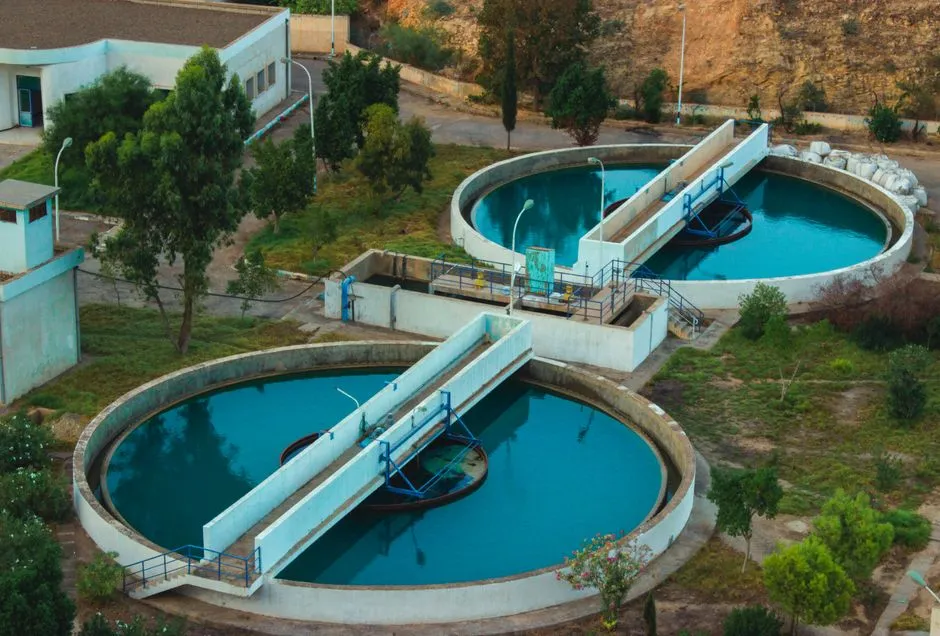
DAF, MBR, and UF solve different problems, so the permit and wastewater data—not catalog labels—must determine the comparison. DAF addresses emulsified oil, FOG, fillers, and colloidal solids. An MBR combines biological treatment with membrane solids separation, while UF supplies a defined fine-solids barrier.
| Option | Primary duty | Published equipment basis | Key procurement checks |
|---|---|---|---|
| DAF | Emulsified oil, grease, fillers, and floatable solids | HydropureWater reports 60–90% oil-and-grease and 50–80% TSS removal for polymer-bearing streams | Conditioning chemistry, peak flow, float removal, residuals, utilities, and site-test basis |
| MBR | Biological treatment with integrated membrane separation | HydropureWater describes activated sludge with submerged PVDF membranes, below 1 μm filtration, and a 60% smaller footprint than conventional systems | BOD/COD basis, feed condition, sludge yield, footprint, controls, redundancy, and utilities |
| UF | Fine solids or colloid separation | HydropureWater specifies 0.03 μm hollow-fiber PVDF membranes, 2,000–40,000 L/h capacity, up to 300 ppm input turbidity, automatic backwash, and air scour | Required particle target, turbidity, flow, pretreatment, backwash waste, controls, and redundancy |
HydropureWater’s MBR and UF figures are catalog or engineering-source claims, not guarantees for an uncharacterized Hegins-area discharge (HydropureWater, 2026-02). Compare scopes using average and peak flow, chemical demand, footprint, sludge quantity, utilities, controls, redundancy, residual handling, and O&M. The DAF alternatives engineering comparison provides a useful structure for that review.
Every guarantee needs a named design basis: the applicable permit, representative influent data, selected operating condition, and verified end-of-pipe performance. No equipment percentage by itself establishes discharge eligibility.
Prove Compliance at the Permitted Sampling Point
The designated sampling point determines whether the evidence represents the enforceable discharge. EPA’s pretreatment guidance places local-limit compliance at the industrial user’s end-of-pipe discharge where the user connects to the POTW collection system (EPA pretreatment guidance cited by HydropureWater, 2026-02). Physically verify the permit-defined point; for many plants it is downstream of treatment but upstream of recycle, zero-discharge return, or dilution.
- Use the permit’s sampling method and frequency, including flow-proportional or time-proportional composites where required.
- Identify the production condition represented by each sample, such as normal production, cleanup, or startup.
- Retain the chain of custody, analytical method, laboratory information, flow, production status, date and time, sampling location, and reporting record.
- Use continuous pH and flow monitoring for process control and early warning without assuming it replaces the required compliance sample.
HydropureWater reports that categorical industrial users commonly collect 24-hour flow-proportional composite samples at least twice per year for routine parameters, with monthly monitoring common during permit-renewal windows; the binding permit controls (HydropureWater, “How Do Plastics and Rubber Plants Meet Pretreatment Limits,” 2026-02). The industrial compliance evidence guide explains why sample provenance and production context must accompany analytical results.
Water reuse is an operational objective, not a substitute for compliance monitoring. If water returns to a process, the permitted sample must still represent the discharge route required by the permit.
Questions to Put in the Equipment Request for Proposal
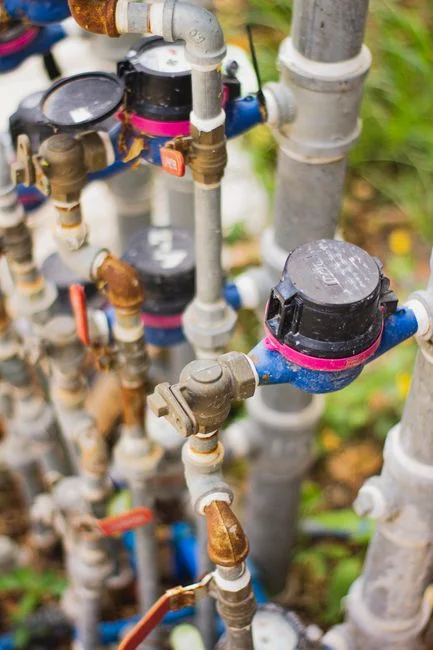
A comparable request for proposal should identify the site-specific design basis before asking for a treatment configuration. At minimum, require measured average flow, peak flow, batch-discharge behavior, pollutant loading, and the current permit limits used by the supplier.
- For DAF, request the wastewater characterization, design flow, chemical consumption, controls, float-removal arrangement, sludge handling, and utility demands.
- For MBR or UF, require the applicable analytical methods, performance basis, footprint, utility demand, controls, redundancy, backwash or sludge handling, and O&M assumptions.
- Separate capital cost, installation, utilities, chemical use, residual handling, and O&M from regulatory-compliance claims.
- Require the proposal to identify any missing permit, influent, batch-load, or residual-handling information as an open design item rather than substituting a generic assumption.
The DAF supplier checklist supports a comparable scope check, but the bidder must still work from the plant’s current permit and measured wastewater—not the checklist’s generic assumptions. A generic price is not defensible until flow, loads, permit duties, and residual routes are resolved.
Frequently Asked Questions
How much does it cost to treat plastics and rubber wastewater before sewer discharge near Hegins?
Request a site-specific capital and operating-cost breakdown rather than a generic unit price. The supplier should separately price equipment, installation, utilities, chemicals, residual collection and disposal, controls, and O&M using the current permit, measured flow, batch loads, and wastewater characterization. The supplied research does not establish a verified quotation for a Hegins-area plant, so no defensible price can be assigned without those inputs.
Which wastewater treatment system should a plastics or rubber plant select?
Select DAF when the wastewater contains emulsified oil, grease, fillers, or colloidal solids; add biological treatment when biodegradable BOD or COD remains; and select multi-media filtration or UF only against a stated solids target. Require the proposal to connect each production stream to its removal function and residual route rather than offering an unspecified complete system.
How should suppliers be evaluated for a Hegins-area pretreatment project?
Ask each supplier to state the measured average flow, peak and batch behavior, pollutant loading, permit limits, proposed treatment functions, utilities, controls, redundancy, residual handling, and O&M assumptions. Treat treatment-performance claims separately from regulatory conclusions. A credible bidder should identify missing permit, influent, or batch data as an open item and should support any guarantee with a defined test condition.
What compliance risk remains if the plant meets the Part 414 or Part 463 categorical limit?
Meeting a categorical numerical limit does not resolve pass through, interference, prohibited-discharge provisions, local pretreatment limits, narrative conditions, or permit monitoring duties. Check the current permit and approved local limits together with 40 CFR Parts 403, 414, and 463, and confirm compliance at the permit-defined sampling point.
How long will delivery, installation, and commissioning take?
The supplied research does not provide a verified delivery or commissioning period for this project. Request a project-specific schedule covering design confirmation, fabrication, permitting support, delivery, installation, operator training, performance testing, and acceptance testing. Identify any schedule dependency caused by missing permit data, wastewater testing, residual-handling decisions, or site-access constraints.
Related Equipment
- industrial DAF system for polymer wastewater — specifications, capacity range, and technical data