What Changes for Data Centers in Las Vegas
The Nevada Independent reported in September 2026 that Nevada has more than 70 data centers operating or planned, that the Southern Nevada Water Authority banned evaporative cooling for the region’s data centers in 2023, and that closed-loop systems can reduce water consumption by up to 70%. These conditions make cooling configuration and wastewater treatment interdependent. A Las Vegas data center needs a source-separated strategy for cooling blowdown, sanitary wastewater and any separate process wastewater, based on measured flows, water chemistry, the permitted discharge route and reuse targets—not a generic package-plant specification.
Lake Mead protection adds regional context. A 1976 UNLV Clark County report warned that increasing wastewater flows could aggravate algae blooms, oxygen depletion and water-treatment problems affecting Lake Mead and the Southern Nevada Water System. That document is historical, not a current permit standard, but it explains why water management in Southern Nevada cannot be evaluated only through a facility’s monthly water bill.
The practical consequence is that the data center cooling blowdown treatment methodology must be adapted to local scarcity, infrastructure and approval requirements. Every site still needs its own discharge characterization, discharge authority confirmation and measured water balance. This framework explains how to build those inputs without assuming that all Las Vegas facilities have identical limits, reuse rules or treatment needs.
Separate the Wastewater Streams Before Choosing Equipment
Source separation prevents a sanitary treatment problem from being mixed with a cooling-water chemistry problem. The Nevada Independent reported in September 2026 that roughly 80% of data-center water evaporates; the remaining liquid blowdown still requires a defined management route. A closed-loop cooling system, evaporative cooling system and hybrid configuration produce different discharges, so the cooling design must be established before treatment capacity is selected.
Genesis Water Technologies identifies concentrated dissolved solids, suspended matter and residual treatment chemicals in cooling blowdown, together with scaling, fouling and microbiologically influenced corrosion risks. These contaminants affect both the cooling equipment and the feasibility of reuse. Sanitary wastewater is a different treatment duty: Genesis describes it as generally low in biochemical oxygen demand and chemical oxygen demand but relatively high in suspended solids, making biological treatment, solids separation and disinfection the usual functional sequence.
Before issuing an equipment request, collect a stream inventory with the following minimum information:
| Planning category | Required flow information | Water-quality information | Decision before sizing |
|---|---|---|---|
| Cooling-tower or evaporative-system blowdown | Continuous, routine blowdown, high-temperature events, cleaning discharges and emergency dumps | Temperature, pH, conductivity, suspended solids, oil and grease where relevant, residual biocide and metals where applicable | Discharge, non-contact reuse or cooling make-up reuse |
| Sanitary wastewater | Daily and peak flows; staffing, visitor and domestic-process contributions | Suspended solids, biological oxygen demand, chemical oxygen demand, nutrients and disinfection requirements | Authority-approved treatment route and reuse destination |
| Separate process or equipment wastewater | Batch, continuous and upset-event flows | Contaminants specific to the process, including metals or cleaning chemicals where applicable | Source control, segregation or dedicated pretreatment |
Do not combine these streams without documenting the hydraulic and contaminant consequences. Sanitary wastewater can add a sustained biological load; blowdown can add salinity, treatment residuals and heat. A combined plant may look simpler, but its equipment must then handle every contaminant and flow variation.
Build the Water Balance Before Sizing Treatment Capacity
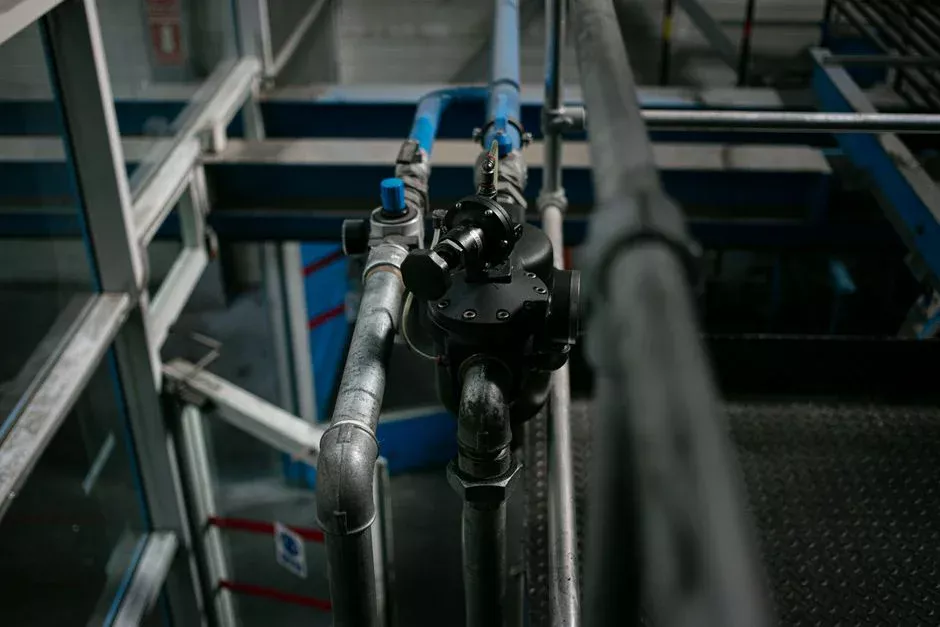
A quotient based only on average water use cannot establish peak treatment flow, equalization volume or credible reuse yield. Measure makeup water, evaporation, blowdown and sanitary wastewater separately, then reconcile the water balance over representative operating periods.
Cycles of concentration provide the initial theoretical relationship between makeup and blowdown. Genesis Water Technologies calculates blowdown at 25% of makeup-water volume at 4 cycles of concentration and 20% at 6 cycles. The same source reports that measured blowdown can exceed theoretical values by 15–30% because of unmeasured losses and emergency dumps. Those figures are source-specific operating findings, not a Las Vegas design allowance; verify them against site metering.
Hydraulic sizing must include routine blowdown, high-temperature operation, makeup surges, emergency dumps, cleaning discharges and sanitary flow peaks. Storage and treatment capacity should be tested against those conditions rather than against average daily demand alone.
| Water-balance input | Evidence required | Use in equipment sizing |
|---|---|---|
| Makeup water | Metered flow by source and operating period | Establishes the base water demand and the theoretical blowdown relationship |
| Evaporation | Measured or reconciled estimate | Distinguishes water consumption from water returning as liquid discharge |
| Blowdown | Continuous meter plus event records | Sets treatment flow, equalization and storage requirements |
| Sanitary wastewater | Daily flow and peak-period measurements | Sets biological treatment and disinfection capacity |
| Emergency and upset flows | Operational history and contingency procedures | Defines storage, redundancy and peak treatment provisions |
The Nevada Independent reported in September 2026 that Google said its large-scale Storey County facility used 1.5 million gallons in 2024, while City of Reno planning numbers forecast approximately 650,000 gallons annually for each of two smaller facilities. Those are separate examples at different scales and in different jurisdictions; they are not consumption rates for a Las Vegas facility. The operator must also identify whether cooling is evaporative, closed-loop, hybrid or supported by reclaimed water.
Match the Treatment Train to the Discharge Objective
Equalization and characterization precede every treatment train because variable flow and chemistry determine chemical demand, separator loading and biological performance. The selected train should then follow the required endpoint: compliant sewer discharge, internal reuse, potable-strength reuse or zero-liquid discharge.
For suspended solids, colloids, oil and grease and floating material, an industrial DAF wastewater treatment system is a physical pretreatment option. HydropureWater states that its DAF range covers 4–300 m³/h across 13 standard models and supports automatic skimming.
For bacteria, colloids and suspended solids where chemical addition is undesirable, hollow-fiber ultrafiltration provides a membrane barrier. HydropureWater states that its UF systems operate at 2,000–40,000 L/h, use 0.03 μm PVDF membranes, and provide automatic backwash and air scour.
Sanitary wastewater requiring biological treatment, membrane solids separation and a compact installation points to an integrated MBR wastewater treatment system. HydropureWater states that this range covers 10–2,000 m³/day and combines activated sludge with submerged PVDF membrane filtration. For a packaged biological alternative, HydropureWater states that its WSZ unit combines A/O contact oxidation, sedimentation and disinfection in a buried enclosure, with a stated capacity of 1–80 m³/h.
| Objective | Primary treatment function | Relevant equipment category | Key limitation |
|---|---|---|---|
| Remove suspended solids, colloids, oil and grease or floatables | Physical separation | DAF | Does not independently resolve dissolved salts or treatment residuals |
| Provide a barrier against bacteria, colloids and suspended solids | Membrane filtration without chemical addition | Hollow-fiber UF | Requires suitable feed chemistry and an appropriate pretreatment strategy |
| Treat sanitary wastewater biologically with membrane solids separation | Activated sludge followed by membrane filtration | Integrated MBR | Requires site-specific biological loading and disinfection criteria |
| Provide packaged biological treatment | A/O contact oxidation, sedimentation and disinfection | WSZ integrated plant | Site conditions, influent variability and installation constraints must be checked |
| Remove dissolved solids for high-concentration reuse | Reverse osmosis as a polishing step | Industrial RO | Requires feed-specific recovery and concentrate management |
Use an automatic chemical dosing system only where process chemistry requires it. The resulting dissolved-solids load must be included in downstream treatment. Dosing is not a substitute for removing oil, solids or floatables, and sewer discharge, reuse and zero-liquid discharge must not be treated as interchangeable objectives.
Make Blowdown Reuse Work at Las Vegas Scale
Blowdown reuse should begin with a defined water-quality endpoint, not with the assumption that every cooling stream is suitable for every use. Lower-risk candidates such as toilet flushing, equipment washing or landscape irrigation require chemistry review, confirmation of local rules and verification of end-use requirements.
Genesis Water Technologies reports that physical separation followed by targeted treatment can reduce makeup-water demand by 15–25% when treated blowdown is reused. That is a source-specific reported range, not a guaranteed saving for a Las Vegas data center. The site-specific water balance and treatment performance must demonstrate whether the objective is achievable.
Closed-loop blowdown-to-makeup reuse is more demanding. Before selecting it, evaluate dissolved solids, treatment residuals, biological stability, scaling tendency and achievable cycles of concentration. The recovered stream must meet the cooling system’s makeup chemistry requirements without transferring contamination or corrosion risk from the treatment process into the cooling loop.
The business case should include chemical consumption, energy, membrane or media maintenance, operator labor, residual disposal and monitoring. A water-savings estimate that omits those costs is incomplete.
For higher-concentration reuse, industrial reverse osmosis can provide a polishing step. HydropureWater states that its industrial RO systems can deliver ultra-pure permeate at recovery rates up to 95%. The actual recovery rate must be established from feed chemistry, concentration limits and concentrate-management requirements; the stated maximum is not a site design value. Supplier support for RO and UF membrane elements can be evaluated in the membrane and filter-element program.
Plan Monitoring, Compliance and Operations Before Ordering Equipment
The permit and reuse decision precedes equipment ordering because a treatment objective is not automatically an approved discharge requirement. The supplied research provides no current numerical Las Vegas discharge limits for this facility type. The buyer must obtain applicable sewer-discharge and reuse conditions from the authority having jurisdiction and document them in the procurement basis.
Monitoring should connect the cooling system to treatment performance. Track makeup, blowdown, evaporation, treated effluent and reuse, with conductivity, pH and suspended solids as an initial baseline. These measurements support cycles-of-concentration control, chemical optimization and mass-balance reconciliation.
Genesis Water Technologies defines a useful sequence: measure and baseline; optimize the existing system; upgrade chemical control; implement treatment and reuse; then evaluate advanced integration. The supplied source does not provide its publication date, so this sequence should be treated as an operational framework rather than a dated regulatory requirement.
| Planning area | Information to define before order | Acceptance or operating evidence |
|---|---|---|
| Permit and reuse | Authority having jurisdiction, discharge point, reuse destination and applicable conditions | Written approval and a permit-compliance monitoring plan |
| Equipment sizing | Design flow, influent ranges, temperature, duty cycle and future cooling changes | Supplier sizing memorandum tied to measured site data |
| Controls | Control philosophy, alarms, interlocks, bypass and shutdown response | Functional description, drawings and commissioning tests |
| Reliability | Redundancy, storage, peak-flow provisions and failed-equipment response | Contingency operating procedure |
| Commercial performance | Treated-water guarantees, chemical and energy consumption, maintenance, spares and service support | Documented guarantees and lifecycle cost inputs |
Define sampling points, alarms and shutdown procedures for abnormal chemistry, high suspended solids, equipment failure and emergency dumps. A bypass route should protect downstream infrastructure without becoming an undocumented discharge path.
Use a Site-Specific Procurement Decision Framework
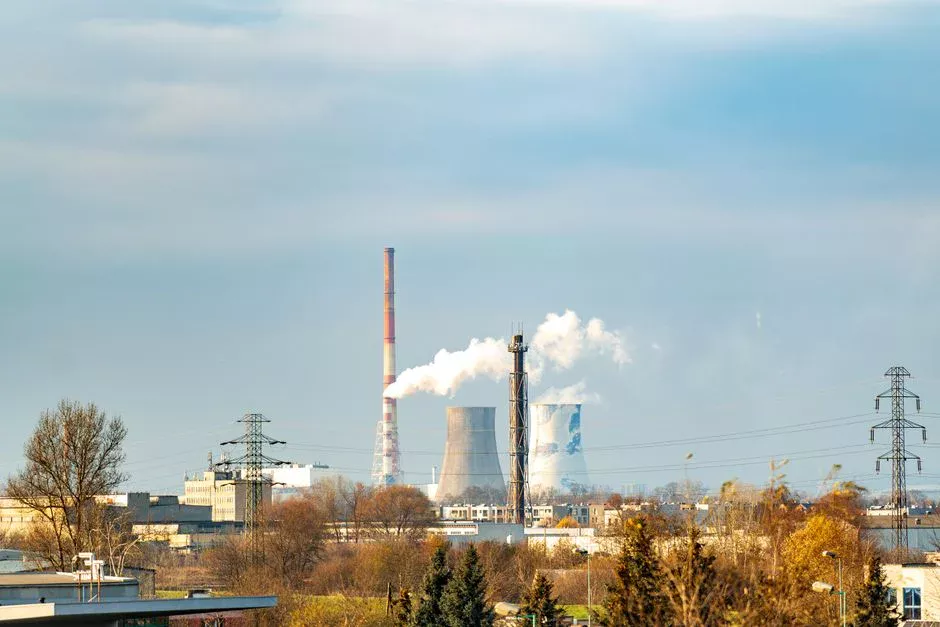
A defensible equipment selection begins with the discharge objective, then quantifies each stream and compares treatment routes by removal mechanism, footprint, operator skill, utility demand, residual generation and expansion potential.
- Define the endpoint: compliant sewer discharge, internal reuse, potable-strength reuse or another specified quality target.
- Measure separate flows, contaminant ranges, temperature, operating hours and anticipated cooling-capacity changes.
- Compare technically complete trains against the identified contaminants and required endpoint.
- Request at least two proposals stating flow basis, design influent and effluent quality, duty cycle, redundancy, controls, commissioning tests and lifecycle operating assumptions.
- Resolve permit, reuse and residual-management conditions with the relevant authorities.
Do not compare bids on flow or purchase price alone. A lower-priced system can become more expensive through excessive chemical use, fouling, membrane replacement, added polishing or operator-intensive operation.
| If the principal requirement is… | Evaluate first | Why |
|---|---|---|
| Oily or solids-bearing pretreatment | DAF | Targets physical contaminants before downstream separation |
| A no-chemical-addition filtration barrier | UF | Addresses bacteria, colloids and suspended solids through membrane separation |
| Biological treatment with membrane solids separation | Integrated MBR | Combines biological treatment and membrane separation |
| Packaged sanitary treatment | WSZ integrated plant | Combines biological treatment, sedimentation and disinfection in a packaged unit |
| Removal of dissolved salts for concentrated reuse | RO after appropriate pretreatment | Addresses a contaminant category that physical filtration does not remove |
| Disinfection as a final barrier | UV sterilization | Requires validation against the specified flow, transmittance and target |
The WSZ underground integrated sewage treatment system and UV water disinfection system should therefore be evaluated against actual sanitary-flow, biological, footprint and disinfection requirements—not treated as default attachments to a generic blowdown package.
Frequently Asked Questions
How much does wastewater and cooling-blowdown treatment cost for a Las Vegas data center?
The supplied research provides no valid Las Vegas equipment quotation. Ask suppliers to price measured peak flow, contaminant analysis, duty cycle, recovery target, utilities, chemical consumption, residuals, installation, controls, maintenance and commissioning. Compare lifecycle cost rather than accepting a flow-only price.
What flow and capacity should treatment equipment be sized for?
Size from measured makeup, evaporation, blowdown, emergency-dump, cleaning and sanitary-flow data. Include peak conditions and storage needs, and reconcile the measured balance with theoretical cycles-of-concentration relationships. Do not use average utility consumption or a generic facility flow rule as the design basis.
Which treatment route should a supplier demonstrate for cooling blowdown?
The supplier should demonstrate that its proposed removal mechanism addresses the measured contaminant: physical separation for relevant suspended solids or floatables, UF for a defined membrane barrier, and RO where dissolved-solids removal is required. Include design influent, treated-water criteria, fouling controls, recovery assumptions and acceptance tests.
How should a buyer manage permit and reuse compliance risk?
Obtain current discharge or reuse conditions from the authority having jurisdiction before finalizing equipment. Include those written conditions in the specification, monitoring plan, commissioning acceptance criteria and contingency procedures. A treatment objective does not establish legal approval to discharge or reuse.
Related Equipment
- integrated MBR wastewater treatment system — specifications, capacity range, and technical data