What Controls COD in Enzyme Manufacturing Wastewater
Enzyme manufacturing wastewater COD removal requires a stream-specific treatment train because fermentation broth, enzyme-recovery streams, CIP rinses, condensate and floor wash present different contaminant loads. Fermentation broth is the principal COD source: HydropureWater’s 2026 enzyme-manufacturing guide reports a scope-qualified range of 5,000–20,000 mg/L COD and 1–5% w/v total solids for fermentation broth and cell-free supernatant, depending on the organism. The train must remove suspended solids and recover protein where valuable, then address dissolved biodegradable material without compromising the product. UF supports clarification and physical COD reduction; it does not destroy COD or remove dissolved ions. MBR combines biological conversion with membrane solids separation. CIP rinse water requires separate handling because temperature, pH and surfactant chemistry differ from active process streams.
COD is an analytical proxy for oxidizable material, not a direct measurement of enzyme activity or recoverable product. Request total and soluble COD, BOD, TSS, residual substrate, protein, oils, surfactants and product-specific constituents for each source and production campaign. A single average can conceal the batch peaks that determine equalization, membrane area and biological loading.
Commercial wastewater enzymes may complement a biological stage by accelerating degradation of soluble organic fractions and improving the BOD/COD ratio. That is supplier guidance from Catalex Bio’s effluent-treatment enzyme page, available in 2026, rather than an enzyme-manufacturing performance guarantee. The proposed role is to condition biologically amenable wastewater before activated sludge or another biological process; it is not a substitute for segregation, solids removal or membrane separation.
The detailed enzyme-manufacturing UF design guide provides the appropriate starting point for separating the plant’s four wastewater streams before equipment selection.
Segment the Wastewater Before Selecting Equipment
Segmentation prevents hot cleaners, recoverable product, high-solids broth and dilute wash water from setting incompatible requirements on one membrane system. HydropureWater’s 2026 guide identifies four chemically and thermally distinct streams and assigns each a different primary duty.
| Stream | Reported conditions or contaminants | Primary engineering duty |
|---|---|---|
| Fermentation broth and cell-free supernatant | HydropureWater reports 5,000–20,000 mg/L COD and 1–5% w/v total solids for this fermentation-broth scope, depending on organism. | Remove cells and debris, recover residual protein where useful, and reduce COD entering biological treatment. |
| Enzyme-recovery retentate | Contains the enzyme product that must remain in the retentate. | Concentrate and recover product; minimize activity loss and product leakage into the permeate. |
| CIP rinse water | HydropureWater reports 50–80 °C, pH 1.5–12.5 and 0.1–1.0% surfactant. | Control temperature and chemistry, then polish colloidal surfactant and denatured protein without using a product-recovery membrane unnecessarily. |
| Process condensate and floor wash | Described by HydropureWater as low-COD but warm and intermittent. | Route through equalization and assess composition; do not let these dilute flows drive the main process-membrane specification. |
Fermentation broth contains suspended solids, cell debris, residual protein and soluble metabolites. These create different separation challenges: bulk solids require clarification, proteins can foul membranes and adsorb to sludge, while soluble metabolites may remain in the permeate. Enzyme-recovery retentate has a different objective. Its primary duty is product concentration, so membrane selection must follow enzyme mass, activity and acceptable permeate loss—not the broth COD duty.
CIP rinse water should remain segregated, especially when it contains hot acidic or caustic cleaner. Equalizing it with active recovery streams may increase thermal and chemical loading while diluting recoverable product. Conversely, combining low-COD condensate and floor wash with the broth can make the equalization basin more manageable without determining the main UF duty. Before using hollow-fiber ultrafiltration systems for enzyme wastewater, complete source-specific sampling and a water balance.
Build a Stream-Specific COD Treatment Train
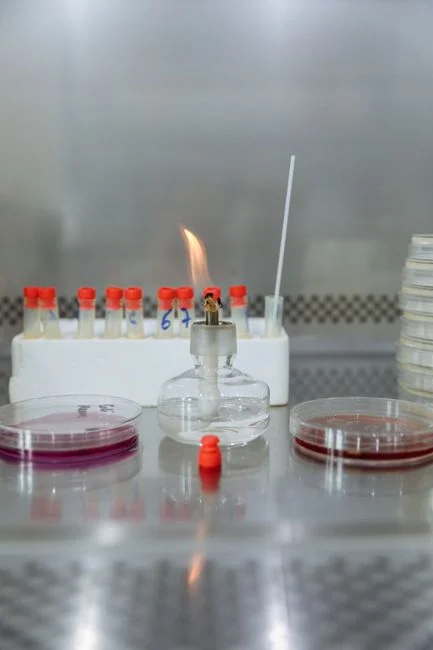
The treatment train should progress from source control to physical pretreatment, biological conversion and final solids separation. First segregate the streams, balance flow and load, control temperature and pH where required, and remove coarse solids. Do not mix hot, acidic or caustic CIP water with active enzyme-recovery streams. This protects the recovery duty and prevents one incompatible stream from defining every downstream unit.
Use DAF when suspended solids, colloidal material or oil and grease must be removed before biological treatment or membrane fouling becomes excessive. HydropureWater’s 2026 DAF catalogue covers 4–300 m³/h across 13 standard models. The equipment should remain stream-specific: a DAF selected for oily CIP rinse water is not automatically the correct pretreatment for fermentation broth or product recovery.
Position UF after bulk-solids control when physical clarification or residual-protein capture is required. UF separates cells, colloids and high-molecular-weight material by size exclusion; it does not chemically destroy dissolved COD. For streams headed to biological treatment, the UF permeate may reduce suspended solids and particulate COD entering the biological stage. For enzyme-recovery streams, the retentate is the product and the design objective changes accordingly.
Enzymatic pretreatment belongs ahead of activated sludge or another biological stage only after compatibility and process trials establish the required dose, pH, temperature and residual activity. Track soluble and total COD, BOD, the BOD/COD ratio and biological response. An enzyme blend cannot remove suspended solids, replace membranes or correct an inhibitory loading that has not been identified.
Where footprint and clarification are priorities, an integrated MBR wastewater treatment system combines biological treatment and membrane separation. HydropureWater specifies 10–2,000 m³/day for its MBR catalogue systems. That capacity range is a catalogue boundary, not a plant design; select the duty and size from peak flow, biodegradability, solids loading and required effluent quality.
For reuse, UF protects downstream RO by removing colloidal and organic foulants, but dissolved salts remain in the UF permeate. HydropureWater’s 2026 industrial RO information states recovery rates up to 95%. The selected recovery must still be validated against the complete feed chemistry, scaling risk and concentration management rather than adopted as a plant guarantee.
Match Ultrafiltration to the Treatment Objective
Ultrafiltration should be selected by separation duty, not by a general “COD reduction” label. HydropureWater’s 2026 guide assigns three distinct MWCO bands: 10–100 kDa for broth clarification and TSS/COD reduction with residual-protein recovery; 1–10 kDa when enzyme recovery and concentration are the product objective; and 50–100 kDa for CIP-water polishing.
| Objective | HydropureWater MWCO band | Material and operating consideration | Decision point |
|---|---|---|---|
| Broth clarification and residual-protein recovery | 10–100 kDa | Reported sustainable flux of 15–40 L/m²·h at 1–3 bar TMP. | Confirm product leakage, protein recovery and particulate COD removal during testing. |
| Enzyme recovery and concentration | 1–10 kDa | Standard PVDF hollow-fiber operation is reported at 0.5–3 bar TMP. | Base selection on enzyme mass and measured activity, not COD alone. |
| CIP-water polishing | 50–100 kDa | PVDF is suited to a lower-temperature duty; hot or chemically severe service may require another material. | Keep CIP separate and verify the cleaning chemistry against the membrane warranty. |
UF removes suspended solids, colloids, bacteria and high-molecular-weight proteins by size exclusion while allowing monovalent ions, sugars and small metabolites into the permeate. This limitation matters: a clean-looking UF permeate may still contain substantial soluble COD and dissolved salts.
Material selection depends on the actual cleaning and operating envelope. HydropureWater’s 2026 guide reports that standard PVDF tolerates pH 2–11 and temperatures up to 40 °C, while ceramic tolerates more than 60 °C, the full pH range, oxidizing cleaners and most solvents. It also reports ceramic elements at roughly 5–10 times the polymeric cost per square metre, with membrane life extending from a typical 5–7 years for polymeric systems to 10–15 years for ceramic. That is a lifecycle trade-off, not a universal recommendation. Hot CIP, extreme chemistry and solvent exposure can justify ceramic; broth-only duty may favor polymeric PVDF.
Fouling controls should follow the mechanism. Remove bulk solids before UF, use automatic backwash and air scour, and log TMP at constant flux. HydropureWater recommends triggering a chemically enhanced backwash when TMP rises 10–15% above the clean baseline. The membrane-element and spare-parts reference is useful for comparing replacement options, but the final selection must match the verified operating envelope.
When Enzymatic Treatment Adds Value
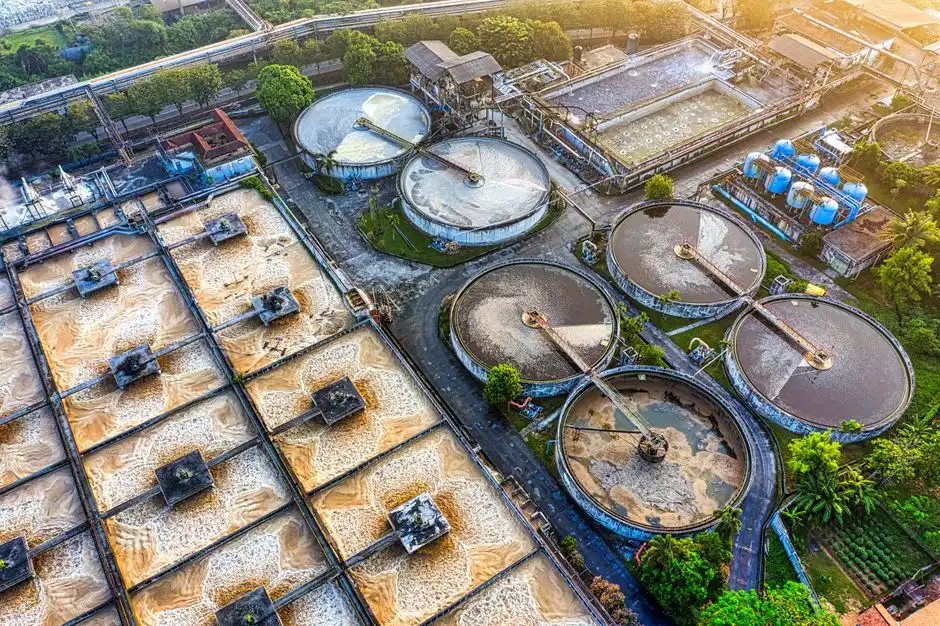
Wastewater enzymes add value only when the target fraction is biologically amenable and the remaining inhibitory load is understood. Catalex Bio’s 2026 effluent-treatment enzyme page describes multi-enzyme blends as accelerating biodegradation, improving the BOD/COD ratio and supporting more stable downstream biological treatment. These are supplier claims across industrial effluent applications, not verified removal guarantees for an enzyme plant.
The proposed role is pretreatment of soluble organic fractions, not clarification or desalination. Candidate streams may include a biologically compatible UF permeate after suspended solids and problematic product residues have been controlled. Enzyme dosing will not substitute for DAF or another solids-removal step, will not remove salts, and cannot be expected to correct nonbiodegradable COD without a separate process.
Run a side-by-side jar or bench trial with an untreated or no-enzyme control. Measure total and soluble COD, BOD, the BOD/COD ratio, sludge production, residual enzyme activity, pH and temperature throughout the trial. Include a biological response test; an apparent COD change in a closed jar does not establish stable treatment performance or recovered enzyme yield.
Two published results illustrate why operating conditions and feedstock matter. The South African Journal of Chemical Engineering study on textile and domestic wastewater found its highest simultaneous COD and color removal at initial pH 8.6 under anaerobic treatment. That result concerns textile and domestic wastewater, so it demonstrates the importance of pH and co-substrate conditions rather than proving enzyme-manufacturing performance. The Wasit University electrochemical study reported 99.5% COD removal and 12 kWh/m³ for a petroleum-wastewater case; that is an electrochemical result, not an enzyme or biological benchmark.
Use those studies to design questions for a site trial, not to populate guaranteed removal values. Establish dose, contact time, enzyme residual activity and any effect on downstream sludge or product reuse.
Choose the Discharge or Reuse End of the Train
The final treatment train depends on where the water goes and what the receiving system can accept. For municipal biological discharge, permit-specific COD, TSS, turbidity and pH criteria are the governing inputs. HydropureWater’s 2026 enzyme-manufacturing guide states that 10–50 kDa single-stage UF may support pretreatment for clarified broth and CIP streams, subject to site-specific verification. That is a possible configuration, not a universal compliance claim.
| Destination | Treatment scope | Required buyer check |
|---|---|---|
| Municipal biological discharge | Equalization, solids control and potentially UF pretreatment before biological treatment. | Current permit, sewer-acceptance conditions, soluble COD, BOD, TSS and batch peaks. |
| On-site reuse | UF followed by RO where dissolved ions must be removed; additional polishing only where the reuse specification requires it. | Intended reuse endpoint, conductivity, scaling species, fouling risk and concentrate route. |
| Zero liquid discharge | UF and RO can reduce liquid volume, but evaporation and crystallization require a separate solids and salt balance. | Complete salt characterization, scaling predictions, concentrate disposal, utilities and end-of-line sludge route. |
For on-site reuse, UF and RO perform different jobs. UF removes colloidal and organic foulants; RO addresses dissolved ions that UF cannot remove. The COD removal treatment train for protein-rich food wastewater provides adjacent industrial context, but the enzyme plant must still verify its own feed chemistry.
For zero liquid discharge, characterize salts and scaling species before selecting UF, RO, evaporation or crystallization. A low-scaling UF stage does not eliminate the need to manage the final concentrate or solids.
Build the project checklist around the current permit, sewer acceptance, intended reuse endpoint, batch variability, peak COD, complete water balance and end-of-line sludge route. Include interruption scenarios and the fate of concentrated enzyme or residual protein. An adjacent animal-feed wastewater treatment guide can inform adjacent-industry questions, but it does not replace site-specific wastewater data.
Specify, Pilot and Procure the Correct System
A defensible equipment specification starts with a source-resolved wastewater characterization campaign. Cover total and soluble COD, BOD, TSS, pH, temperature, conductivity, protein, oils, surfactants and relevant product residues across representative batches. Then require each supplier to identify the design flow, treatment objective, membrane or biological duty, footprint, utilities, controls, cleaning cycle and guaranteed performance envelope.
Pilot the critical uncertainty rather than accepting a generic removal claim. Membrane trials should expose representative broth or CIP water to the proposed material, flux, backwash and cleaning cycle; biological trials should establish degradability and enzyme-dose response; reuse trials should verify the endpoint chemistry. Do not infer guaranteed performance from the textile or petroleum case studies cited above because their feedstocks and treatment mechanisms differ.
Automatic chemical dosing is appropriate only where the train requires controlled pH adjustment, coagulation or specialty chemicals. HydropureWater’s 2026 product information describes PLC-controlled dosing for coagulants, flocculants, pH adjusters and specialty chemicals through an automatic chemical dosing system. Confirm reagent compatibility with recovered enzyme activity, membrane warranties and the waste or sludge route.
Check the final equipment proposal against influent testing, current permits and site-specific design values. That verification principle is consistent with HydropureWater’s 2026 enzyme-manufacturing article. Procurement should award separate duties to separate streams unless pilot data demonstrates that combining them reduces cost without increasing fouling, product loss, chemical demand or compliance risk.
Frequently Asked Questions
What is the best COD removal system for enzyme manufacturing wastewater?
There is no single best system because the four streams have different duties. A practical train usually begins with segregation and equalization, followed by solids control, stream-appropriate UF or DAF where needed, biological treatment for biodegradable soluble COD, and final clarification. UF provides physical separation rather than COD destruction, so a train containing UF still requires the biological or other final-treatment step needed to meet the discharge or reuse endpoint.
Should enzyme manufacturing wastewater use UF, MBR, DAF or biological treatment?
Use DAF where suspended solids, colloids or oily material threaten downstream biological treatment or membranes. Use UF after bulk-solids removal for clarification, particulate COD reduction or product recovery. Use MBR where biological conversion and membrane solids separation are combined. Use biological treatment for biodegradable soluble fractions, with commercial enzymes only as a tested pretreatment aid. The correct combination follows source characterization and the final effluent specification.
How should an enzyme plant size a UF system for COD reduction and protein recovery?
Size each UF loop from source-specific flow and batch peaks rather than total plant wastewater. For the clarification duty, HydropureWater’s 2026 guide gives 10–100 kDa as the working band for broth clarification, TSS/COD reduction and residual-protein recovery; for enzyme recovery and concentration it gives 1–10 kDa. Request flux and area calculations based on representative feed, expected fouling, cleaning cycles and recovery target, then verify them by pilot testing.
How much does an enzyme wastewater treatment system cost?
The supplied research provides no quotation for an enzyme-manufacturing wastewater treatment system, so a defensible price cannot be stated without project inputs. Request a quotation broken into segregation and equalization, solids removal, UF or DAF, biological treatment, reuse equipment, dosing controls, sludge handling, installation and validation. Require alternative stream-separated and combined-train scopes, stated utility assumptions, replacement costs and an exclusion list so the options can be compared consistently.
Can wastewater enzymes replace biological treatment or membrane separation?
No. Catalex Bio’s 2026 supplier guidance positions effluent-treatment enzymes as tools to accelerate biodegradation and improve the BOD/COD ratio. They do not replace solids separation, membranes for product recovery, biological conversion of all COD fractions, or dissolved-ion removal for reuse. A no-enzyme control trial should establish whether the enzymes add measurable treatment stability without compromising product activity, membrane fouling control or downstream reuse quality.