What Makes Animal Feed Wastewater Different?
Animal feed wastewater COD removal usually requires a sequenced treatment train rather than one universal machine. Equalize variable production and cleaning loads first, then remove suspended solids, fats, oils and grease, and colloidal organics before biological treatment. Aerobic or anaerobic biology removes the biodegradable fraction, while advanced oxidation may be needed for recalcitrant COD. Equipment sizing requires line-by-line sampling of flow, COD, BOD5, TSS, FOG, pH, temperature and discharge conditions because feed-mill effluent composition varies with production and cleaning operations.
COD, or chemical oxygen demand, measures the oxygen required to oxidize material in wastewater. In a feed mill, that oxidizable material can include soluble organics, suspended feed residues, biological material, fats, oils and grease, and cleaning chemicals. It is a bulk parameter rather than a compound-specific description: the same COD reading can contain fractions with very different biological and physical treatment behavior.
That distinction matters. Arvia Technology states that primary and secondary treatment typically remove around 75–85% of COD, while recalcitrant COD remains. In practical terms, the design must identify whether the limiting fraction is biodegradable, physically removable, inhibited by cleaning chemicals, or resistant to biological degradation. Results from meat processing, textile, petroleum and vegetable-oil wastewater should therefore be treated as technology references, not direct guarantees for an animal feed facility.
The design basis should come from production-line sampling rather than a single composite sample. Include normal production, start-up, shutdown, washdown, chemical cleaning and peak discharge periods, while separating streams that may require different treatment. A 2026 study by Kazemeyan and colleagues reported 65.7% COD reduction using Rhodotorula glutinis, but that result applies to sterilized vegetable-oil extraction wastewater under controlled laboratory conditions; it is not a feed-mill performance figure. A useful technology-specific reference can be found in the poultry processing wastewater COD removal comparison.
Build a COD Removal Train Around the Wastewater Sources
The auditable treatment sequence starts with source characterization and segregation, followed by equalization, solids protection, physical pretreatment, biological COD removal and targeted polishing. High-strength streams should be evaluated separately rather than automatically mixed with dilute washwater: combined flow may be too strong for a conventional aerobic reactor while becoming too dilute for efficient standalone anaerobic treatment.
- Characterize and segregate sources. Sample each production line, floor wash, equipment wash and cleaning operation separately before establishing the combined design flow and load.
- Equalize variable discharge. Use an equalization basin to buffer production peaks and cleaning shocks. Bristola gives 10–30% of average daily flow as an initial sizing guideline, but final volume must reflect measured peak flow, retention time, batch discharges and the intended damping duty.
- Protect downstream equipment. Install screening or solids removal before pumps and biological systems. A rotary mechanical screen can form part of this solids-control step.
- Remove FOG and colloidal material. Put DAF ahead of biology when suspended material, oil or grease could overload aeration or inhibit biological activity.
- Remove biodegradable COD. Select anaerobic, aerobic or combined biological treatment from the measured COD:BOD5 ratio, hydraulic load, treatment objective and operating constraints.
- Address residual COD. Introduce oxidation or other polishing only after pretreatment and biology have removed the bulk load and tests identify what remains.
| Stage | Primary purpose | Decision input |
|---|---|---|
| Source segregation | Prevent incompatible or high-strength streams from destabilizing the main train | Stream-by-stream flow, COD, BOD5, FOG and cleaning chemistry |
| Equalization | Buffer batch, cleaning and production peak loads | Hourly flow record, batch discharge volume and required retention time |
| Screening and solids removal | Protect pumps, aerators and membranes | TSS, particle size, screenings quantity and grit load |
| DAF and chemical conditioning | Remove FOG, suspended solids and colloidal organics before biology | FOG, TSS, COD, coagulation trial and sludge characteristics |
| Biological treatment | Remove the biodegradable COD fraction | COD:BOD5, temperature, pH, nutrient balance and SRT |
| Oxidation or polishing | Reduce resistant COD or meet the final effluent specification | Residual COD characterization, fouling risk and permit limit |
A DAF system for feed wastewater pretreatment can reduce the physical load entering biology. Chemical treatment should follow a process-specific recipe; Bristola identifies Fenton oxidation for one textile-wastewater application, but that evidence does not establish its suitability for feed-mill effluent.
Use DAF to Remove the Load That Slows Biological Treatment
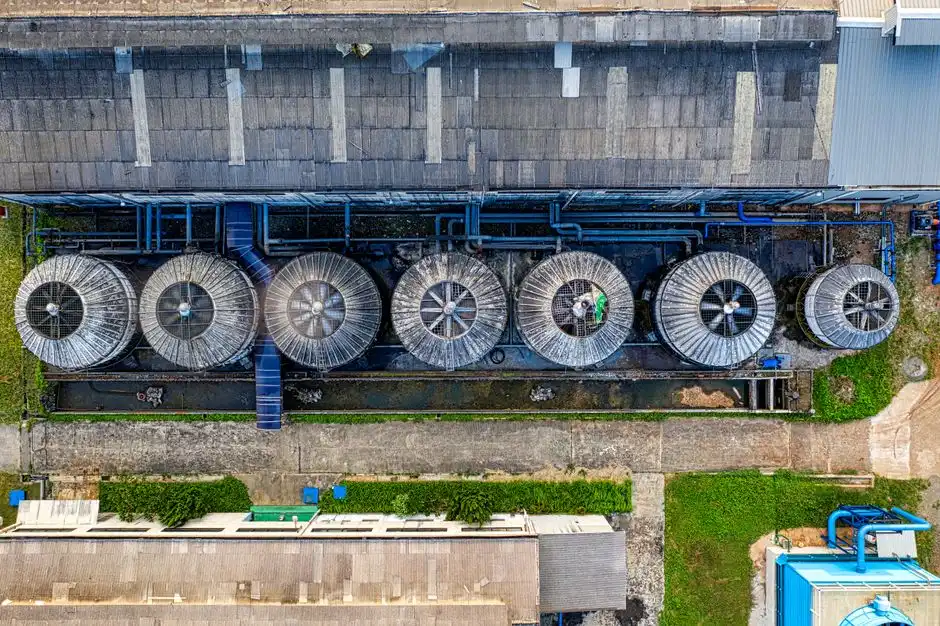
DAF is a physical separation step that removes suspended solids, FOG, oil and grease, and some colloidal material before biological treatment. It is not a stand-alone biological COD solution: without an appropriate process train, soluble biodegradable COD and recalcitrant compounds will remain.
Bristola reports that DAF combined with coagulation-flocculation achieved up to 90% COD removal and 98% TSS removal in meat-industry wastewater. This is an upstream meat-processing result, not an expected result for feed-mill effluent. Its engineering value is the sequence demonstrated: remove material that would otherwise burden aeration, improve downstream condition, and reduce the COD and solids entering biology.
HydropureWater’s catalog lists 13 standard DAF models with capacities from 4 to 300 m³/h. That is a catalog range for available equipment, not a recommended plant size. Selection requires the measured hydraulic profile, batch discharges, FOG and solids loading, and the required treatment duty.
| Supplier data to request | Why it matters |
|---|---|
| Pilot or full-scale FOG, TSS and COD results | Establishes removal under relevant wastewater conditions rather than clean-water performance |
| Hydraulic and contaminant loading rates | Shows whether the unit can handle peak flow and batch discharges |
| Chemical consumption | Supports operating-cost and dosing-system sizing |
| Skimming performance and sludge yield | Defines the recovered-solids handling requirement |
| Guaranteed duty points | Identifies the influent and effluent conditions on which the guarantee depends |
If coagulation, flocculation or pH adjustment is required, an automatic chemical dosing system should be specified around the tested recipe, storage requirements, duty cycle and controls interface. The critical procurement check is whether the DAF guarantee refers to measured feed-mill effluent or copied from another industry.
Choose Biological Treatment for the Biodegradable COD Fraction
The COD:BOD5 ratio is the first biological-screening test, not the final process-selection criterion. Bristola identifies a ratio below 2.2 as an indicator of biological treatability. Full analysis is still required because the ratio does not describe toxicity, nutrients, FOG, temperature or cleaning compounds.
For aerobic treatment, Bristola reports an optimum dissolved oxygen range of 2–4 mg/L. At DO below 1 mg/L, COD removal falls to 15–25%. Above 8 mg/L, reported energy use rises from 1.7 to 2.63 kWh/m³ with diminishing treatment returns. Aeration selection must therefore address both oxygen transfer and variable organic loading.
| Option | When it earns a place | Key design checks |
|---|---|---|
| Anaerobic treatment | A high-strength organic stream may benefit from anaerobic digestion, with aerobic treatment following for residual biodegradable COD | COD concentration and load, temperature, pH, alkalinity, methane management, SRT and inhibition; the research gives no universal concentration threshold |
| Aerobic treatment | The stream contains a biodegradable load suitable for controlled oxidation | DO, aeration demand, F:M ratio, SRT, temperature, pH and nutrient balance |
| MBR | Membrane separation, compact footprint or high-quality solids separation is required | Hydraulic load, membrane flux, fouling tendency, mixed liquor suspended solids, cleaning and waste handling |
Nutrients can constrain aerobic removal. Bristola gives a BOD:N:P mass ratio of 100:5:1; carbon-heavy food-processing streams may therefore require nitrogen and phosphorus supplementation. Chemical dosing equipment should be specified only after the required nutrient dose and operating variability are established.
HydropureWater’s catalog specifies an MBR membrane bioreactor for biological COD removal with a range of 10–2,000 m³/day and filtration below 1 μm. Those are product specifications, not proof that MBR is required. MBR earns its place where membrane separation or footprint constraints justify its additional operating demands.
Temperature cannot be ignored. Bristola states that microbial activity roughly doubles for each 10°C rise within the mesophilic range, with an optimum near 35°C. Supply pH, temperature, SRT and F:M data to the supplier so biological sizing reflects actual plant conditions.
Use Advanced Oxidation and Polishing for Residual COD
Advanced oxidation should answer a defined residual-COD problem, not substitute for missing pretreatment or biological capacity. Oxidant-based processes can convert resistant compounds into biodegradable intermediates before biology or oxidize recalcitrant material after the main biological stage. Bristola cites Fenton oxidation as one option.
Bristola reports 89% COD removal with Fenton oxidation on industrial textile wastewater at an operating cost of $10.55/m³. Both the wastewater scope and cost context are specific: this is not a feed-mill quotation or a transferable unit cost.
The academic study by Abbas and Asel provides a separate proof of principle for electrochemical treatment of petroleum wastewater. Under the reported conditions—initial COD of 710 mg/L, 10.5 V, 50 minutes and estimated energy consumption of 12 kWh/m³—COD removal reached 99.5%. The work used a 2-litre coagulation cell and petroleum refinery wastewater; it does not establish feed-mill performance.
| Question before buying oxidation or polishing | Required evidence |
|---|---|
| What residual COD remains? | Stage-specific COD testing and characterization of the remaining fraction |
| Can pretreatment reduce oxidation demand? | FOG, TSS, suspended solids and colloid data before biological treatment |
| Is polishing biologically sustainable? | Membrane-fouling test or site trial after bulk COD and TSS reduction |
| What discharge limit applies? | Confirmed permit or sewer authority specification |
Reverse osmosis or membrane polishing should follow bulk organic removal because residual COD and colloidal material increase fouling and operating burden. Bristola describes reverse osmosis as a polishing step rather than a standalone treatment for high-strength wastewater. A site-specific trial is the defensible route where FOG, cleaning chemicals or unknown recalcitrant compounds make transfer of literature performance unreliable.
Control Operating Risks That Can Defeat a Correct Design
Persistent COD non-compliance can result from poor sludge management, insufficient aeration, imbalanced nutrients or sediment accumulation even when the selected technology is suitable. Commissioning is only the beginning of performance control; operating variables and equipment condition must be managed continuously.
Sediment and grit can occupy 20–30% of total digester volume according to Bristola, reducing effective volume and hydraulic retention time. Resuspension during high-flow events can then produce an effluent COD spike. The equipment plan should include inspection access, sludge removal, sediment control and vessel-cleaning procedures. A high-efficiency sedimentation tank may support solids separation, but its hydraulic and contaminant duty must be matched to the train.
Sludge handling belongs in the initial design. Define expected solids production from DAF and biological treatment, characterize the sludge, identify thickening and dewatering requirements, and size the filter press from solids characteristics and batch cycle—not wastewater flow alone. The plate-frame filter press should therefore be evaluated as part of the residuals train.
- Monitor influent COD regularly across production and cleaning cycles.
- Test final effluent COD at the frequency required by the permit or receiving utility.
- Check DO, pH, temperature and nutrient balance as operating parameters, not occasional observations.
- Track sludge inventory, wasting rate, solids capture and vessel cleanliness.
- Review equalization performance during each batch discharge and production peak.
Equalization should damp the load that actually reaches biology. A basin selected only to smooth average flow will not control a concentrated cleaning discharge unless its volume and mixing behavior address that event. Record level, flow and COD through representative operating cycles and revise the control strategy if the buffer is ineffective.
Specify the System Before Requesting a Supplier Quote
A defensible feed-mill wastewater COD removal quotation starts with the wastewater and discharge basis, not a selected machine. Ask suppliers to expose their sizing assumptions and guaranteed duty points so equipment can be compared on the same technical basis.
| Required input | Minimum information required |
|---|---|
| Hydraulics | Average flow, peak flow, production schedule, batch-discharge volumes and equalization duty |
| Organic load | COD and BOD5 ranges, COD:BOD5 ratio and source-level sampling |
| Physical contaminants | TSS, FOG, particle size, grit and colloidal-organics data |
| Biological conditions | pH, temperature, nitrogen, phosphorus, SRT and F:M ratio |
| Compliance | Discharge destination, applicable permit, sewer authority requirements and sampling protocol |
| Residuals | Expected sludge yield, characteristics, handling route and disposal constraints |
Require each supplier to state the design basis, process sequence, equipment-sizing assumptions, guaranteed duty points, controls scope, chemical consumption, sludge yield, maintenance access and commissioning tests. Clarify whether performance guarantees apply to influent, final effluent or individual process stages. A plant-wide COD removal percentage should not be promised from generic feed-mill data alone.
Use a site-specific treatability trial when cleaning chemicals, mixed animal-feed residues, FOG or recalcitrant compounds make behavior uncertain. The trial should test the proposed sequence, not only an isolated chemical reaction. Ask whether the supplier has designed and operated comparable systems; the meat processing wastewater treatment design and soft-drink wastewater equipment-selection treatment train provide useful framework references, but neither substitutes for feed-mill sampling.
Finally, obtain the applicable local discharge or sewer limit and use the treated-effluent specification to set final equipment requirements. Bristola describes a range of global limits and states that no single national COD limit applies in the United States; the permit and receiving body govern the project. Equipment capability is not regulatory approval.
Frequently Asked Questions
What determines the cost of animal feed wastewater COD removal?
The main cost drivers are hydraulic capacity, COD load, FOG pretreatment, biological reactor size, oxidation requirements, sludge handling, controls and site-specific testing. Request a staged cost breakdown tied to each design input. No universal price is defensible because the research contains a textile Fenton cost example, not a feed-mill quotation, and the final cost depends on flow, composition, treatment objectives and site conditions.
How should DAF, biological and polishing capacity be sized?
Specify DAF, biological and polishing capacity only after average and peak flow, COD range, batch loads, FOG/TSS characteristics and permit limits are known. The flow record must include cleaning events, not merely average production discharge. Treat Bristola’s equalization guideline as an initial check, then calculate final volume from measured batch discharges, retention time and damping objectives.
What should procurement teams check before selecting a wastewater supplier?
Request wastewater-specific process data, comparable references, guaranteed influent and effluent duty points, controls scope, chemical use, sludge yield, maintenance access, commissioning tests and service responsibility. Where wastewater variability is high, require a site-specific trial before equipment selection. Generic COD removal percentages from another food-processing stream are not an adequate basis for acceptance.
Does a treatment design guarantee regulatory compliance?
No. A treatment train can be designed for a stated effluent target, but the permit, sewer authority or other receiving body determines the applicable limit and approval conditions. Confirm the local requirement before finalizing equipment duty points, monitoring, controls and operating procedures.
When is an MBR justified instead of conventional biological treatment?
MBR is justified when membrane separation, a compact footprint or high-quality separation provides sufficient operational value for the project. Compare that value with membrane cleaning, fouling control and reject handling. HydropureWater’s less-than-1 μm filtration and 10–2,000 m³/day catalog range describe available equipment, while the poultry processing wastewater COD removal comparison provides a broader technology framework—not a feed-mill guarantee.