
How Petroleum Wastewater Should Decide Between DAF and Clarification
For petroleum wastewater in Brookville, choose dissolved air flotation (DAF) when the primary objective is recovering free oil, FOG and floatable solids, provided chemical conditioning works. Choose a conventional or lamella clarifier when the stream mainly contains settleable solids and sedimentation is the proven treatment objective. DAF uses 30–50-micron microbubbles to lift conditioned particles for skimming, while clarification relies on gravity settling, including inclined-plate separation in lamella units. The defensible factory choice depends on measured wastewater characteristics, flow variability, conditioning, sludge handling and downstream treatment—not on equipment name alone.
The comparison should begin with a side-by-side characterization covering oil and grease, FOG, total suspended solids, settleable solids, flow, temperature, pH and production variability. A DAF may be the better primary separator when a significant fraction of the recoverable contaminants will float after conditioning. A clarifier may be stronger when the treatment objective is the settled-solids fraction and the stream does not justify a flotation package.
Petroleum facilities may need DAF as industrial pretreatment before biological, membrane or filtration stages; it is not automatically a complete treatment plant. The petroleum plant pretreatment limits guide provides a useful starting point, but Brookville-specific discharge, pretreatment or sewer requirements must come from the facility’s current permit and receiving authority. The supplied research contains no numerical Brookville limit, so none should be inserted into the purchase basis.
DAF and Clarifiers Separate Petroleum Contaminants in Different Ways
Dissolved air flotation is a physical/chemical treatment process in which microbubbles attach to conditioned particles so they can be skimmed from the water surface. EPA lists DAF among emerging wastewater technologies in Emerging Technologies for Wastewater Treatment and In-Plant Wet Weather Management (February 2008). EPA also warns that older technology evaluations should be supplemented with current, application-specific information because stated performance and cost may depend on vendor-supplied data.
Clearwater’s process description establishes the operating sequence: clean-water startup; recirculation of clarified water; pressurization and air saturation; pressure release in the flotation tank; microbubble attachment to conditioned oil, FOG and solids; flotation; surface skimming; and recovery of clarified water from below the float blanket. Clearwater states that its microbubbles measure 30–50 microns. The industrial DAF system for petroleum wastewater should therefore be evaluated on conditioning effectiveness and contaminant floatability, not simply on tank surface area.
Conventional clarification is fundamentally different. It separates material through gravity settling. A lamella clarifier adds inclined plates that shorten the effective settling path, improving the clarification of settleable solids within a compact separation structure. The high-efficiency sedimentation tank is the appropriate comparison when the principal objective is removing the settleable fraction.
DAF does not eliminate settling. Clearwater states that heavier solids settle into a bottom collection zone and are removed separately from the floated material. A properly selected DAF therefore handles two sludge streams: floatable oil/FOG sludge and settled solids. That distinction should appear in the equipment layout, sludge collection and downstream disposal plan.
Compare DAF and Clarifiers Against Factory Decision Criteria
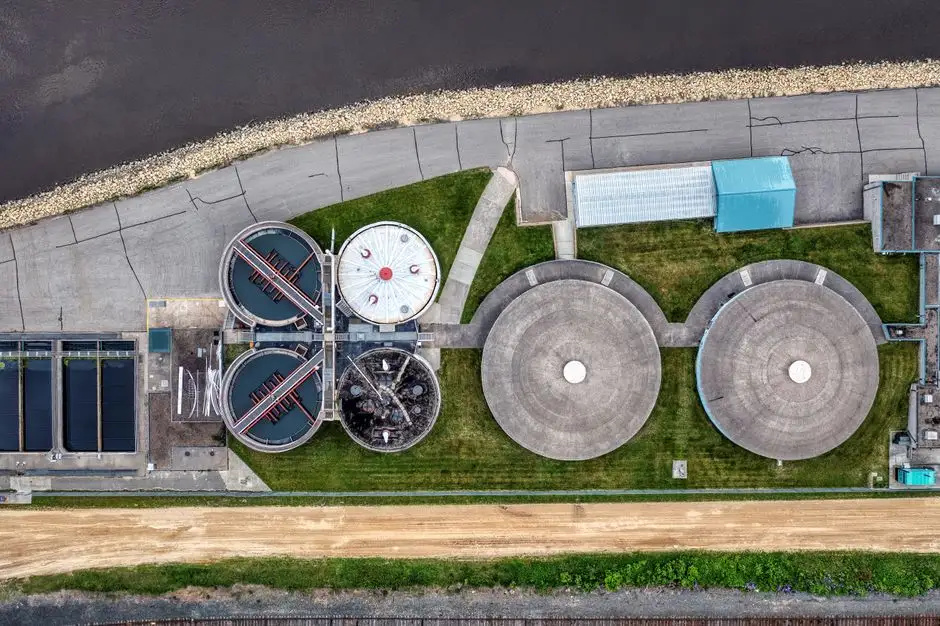
DAF has the stronger process rationale for floatable oil and FOG, while clarification has the stronger rationale for the settleable solids fraction; neither equipment category solves the entire petroleum wastewater train by itself.
| Criterion | DAF | Conventional or lamella clarifier | Procurement check |
|---|---|---|---|
| Free oil and FOG | Strong rationale when microbubbles attach to conditioned oil, FOG and flocculated material. | Light material may rise separately or carry over; performance depends on buoyancy and conditioning. | Require oil-and-grease and FOG data for the actual stream. |
| Settleable solids | Flotation removes floatable material; a bottom collection compartment also removes heavier settled solids. | Core separation mechanism; lamella plates shorten the effective settling path. | Require TSS, settleable-solids and solids-loading data. |
| Chemical demand | Normally uses coagulant, flocculant and often pH adjustment. | Can also benefit from chemical conditioning and is not chemical-free by default. | Compare chemical consumption using the same analytical and flow basis. |
| Hydraulic configuration | Clearwater reports a compact DAF arrangement for flows of 66 GPM or less on one skid and larger flows on a modular two-skid arrangement; this is configuration-specific, not a universal DAF threshold. | Capacity depends on the selected clarifier geometry and application calculation. | Ask every bidder to state design flow, hydraulic loading and treatment train configuration. |
| Footprint | Must include recycle, air saturation, conditioning and skid envelope, not just the flotation tank. | Lamella units are marketed as compact separation structures. | Compare installed utility and access space rather than tank footprint alone. |
| Materials | Clearwater states standard construction is 304SS, with 316SS, polypropylene and other materials available to client requirements. | Material selection depends on the wastewater chemistry and vendor design. | Require substantiated material recommendations for wetted parts. |
| Sludge | Produces floated oil/FOG sludge plus settled solids that require separate handling. | Produces a concentrated settled-solids stream, plus chemical sludge if conditioning is used. | Compare removal, storage, dewatering and disposal. |
| Automation | Clearwater’s compact package uses a PLC screen for chemical pumps, skimmer speed and sludge discharge. | Controls scope depends on the package and plant interfaces. | Review I/O, interlocks, alarms, historian integration and manual fallback. |
For automated DAF packages, screen the PLC-controlled chemical dosing system together with the separator. Verify that the skimmer, recycle system, sludge discharge and chemical controls operate as one package. If recovered oil or FOG must be managed separately, include the relevant plate-frame filter press or other dewatering method in the treatment-train comparison.
Select the Treatment Train Around Petroleum Wastewater Variability
The primary separator should be selected as part of an operating train, because variable petroleum flows can move untreated oil, FOG and solids across the plant faster than a fixed clarification zone can accommodate.
- Establish equalization and segregation before treatment.
- Control free oil and FOG at the source where practical.
- Adjust pH to the range established by the conditioning study.
- Apply the selected coagulant and flocculant through controlled mixing.
- Remove floatable material by DAF or settleable material by clarification.
- Remove and contain the resulting sludge stream.
- Apply biological, membrane or filtration treatment where required by the effluent objective.
EPA’s February 2008 report separates physical/chemical treatment from biological treatment, providing a useful boundary for the procurement package: the primary separator is not a substitute for downstream biological treatment. DAF can protect biological, membrane or filtration stages by removing floatable contaminants and suspended solids before those processes.
Flow equalization, control logic and operator response are therefore selection inputs, not accessories. Ask how each supplier handles production slugs, washdown flows, chemical dosing limits, high-solids events and temporary loss of compressed air or recycle-pump availability. The integrated MBR wastewater treatment system is relevant only as a possible downstream train; its suitability depends on the characteristics of water leaving the primary separator.
A paper titled Combining Dissolved Air Flotation (DAF) and Modified Moving Bed Biofilm Reactors (MMBBR) for Synthetic Oily Wastewater Treatment does not establish performance for this Brookville application. The supplied record contains only its title and a CAPTCHA page, not verified test results, so it should not be used as the design basis.
Size a DAF or Clarifier From Measured Wastewater Data
A defensible size comes from measured flow, contaminant loading and conditioning behavior; catalog capacity is only a screening reference.
| Required input | What the buyer must obtain | Why it affects selection or sizing |
|---|---|---|
| Hydraulic data | Average flow, peak flow, operating range and explanation of production and washdown variability. | Determines hydraulic treatment capacity, equalization needs and control response. |
| Contaminant data | Representative oil and grease, FOG, TSS, settleable solids, pH, temperature and relevant dissolved-constituent results. | Establishes whether flotation or settling is the primary mechanism and defines loading. |
| Conditioning data | Jar-test results for chemical type, dose, mixing intensity and contact time. | Defines achievable floc size, chemical demand and conditioning equipment. |
| DAF design data | Design flow, hydraulic loading, flotation area, solids capacity, recycle arrangement and startup method. | Confirms that the proposed separator handles the measured application. |
| Clarifier design data | Design flow, settling-area basis, plate configuration, solids capacity and sludge-removal design. | Confirms that the proposed unit handles the settleable fraction and selected loading. |
| Materials and controls | Wetted-material recommendation, controls scope, instruments, interlocks, alarms and control interface. | Defines corrosion, operability and plant integration risk. |
Clearwater specifically recommends jar testing to determine mixing time and conditioning behavior. It describes 15–45 seconds of flocculation-tube flash mixing, while noting that mix-tank contact time is variable and depends on the chemicals required. These are comparison points, not automatic Brookville settings.
HydropureWater’s catalog lists 13 DAF models with a stated range of 4–300 m³/h. Treat this as product-screening information only: the selected model must follow the supplier’s application calculation using the measured wastewater. Ask each bidder to state design flow, hydraulic loading, flotation area, solids capacity, recycle arrangement, materials, controls, sludge handling and startup method. If the bidding package does not contain the same inputs, the resulting sizes are not comparable.
Budget for Chemical, Utilities, Maintenance and Disposal
The procurement comparison must include operating costs because neither equipment purchase price nor treatment cost can be stated reliably without the wastewater and loading basis.
For DAF, request chemical consumption indexed to measured flow and contaminant loading. Include recycle-pump energy, compressed air, operator labor, inspections, critical spares and disposal of floated oil/FOG sludge and settled solids. For clarification, include flocculation chemicals, sludge removal, plate inspection, any sludge recirculation, operator labor and downstream dewatering or disposal.
Use the same wastewater-analysis basis for every supplier. Otherwise, a lower chemical bid may reflect a different influent assumption, while a higher bid may reflect broader controls or a more conservative materials recommendation. Ask vendors to identify maintenance intervals, wear parts, control-system support, recommended spares and limitations of each material under the expected petroleum wastewater chemistry.
No verified 2026 purchase-price range for comparable Brookville systems is included in the supplied research, so a fabricated range would distort the budget. The correct quotation request lists equipment, foundations and access, chemical storage, recycle and compressed-air connections, controls, electrical requirements, startup, training, performance testing, installation exclusions and downstream sludge handling separately.
Verify Supplier Claims and Brookville Compliance Before Ordering

The strongest bid is the one that exposes its design assumptions, test scope and regulatory basis rather than offering an unsupported performance guarantee.
- Request application-specific design calculations and the wastewater data used to produce them.
- Require material recommendations tied to the proposed stream and operating temperatures.
- Define controls scope, instruments, alarms, interlocks and interface responsibilities.
- Specify factory-acceptance testing and identify which performance tests are witnessed.
- Assign commissioning, operator training, startup chemicals and process-support responsibilities.
- Require relevant oil/FOG and TSS evidence under the proposed loading, without accepting a generic performance figure.
EPA’s February 2008 warning remains directly relevant: older technology assessments should be supplemented with current information, and manufacturer-provided results may lack full-scale verification. For that reason, distinguish independently verified data, operating references and supplier claims in the evaluation register.
Check the facility’s current Brookville discharge, pretreatment or sewer permit and confirm the applicable categorical or local requirements with the receiving authority. Use the DAF versus clarifier buyer guide to structure supplier questions, but do not transfer another facility’s limits or performance data into this project.
Startup arrangements also need contractual attention. Clearwater states that clean water must be accessible for DAF startup and describes a quick start-up procedure. Identify the clean-water source, tank fill method, recirculation-pump and air-saturation commissioning sequence, operator involvement and responsibility for off-spec startup effluent.
Frequently Asked Questions
What does a DAF or clarifier for petroleum wastewater in Brookville cost?
There is no defensible purchase-price range in the supplied research without a defined flow, wastewater analysis and treatment scope. Ask each bidder to quote equipment, chemical equipment, utilities, controls, installation, startup and training separately. Compare operating costs on the same measured flow and contaminant-loading basis, including chemicals, recycle-pump electricity, compressed air, labor, maintenance and sludge disposal. This produces a usable budget without assigning a generic treatment cost to an unmeasured stream.
How should a factory size a DAF or lamella clarifier?
Provide average and peak flow, operating range, oil and grease, FOG, TSS, settleable solids, pH, temperature, relevant dissolved constituents and representative production variation. Add jar-test results defining chemical dose and mixing requirements. HydropureWater’s 4–300 m³/h catalog range across 13 DAF models is a product-screening reference, not a design result; require the selected supplier to show its hydraulic, loading and solids-capacity calculation from the measured data.
Which supplier should be shortlisted for the treatment train?
Shortlist suppliers that provide application-specific calculations, substantiated material recommendations, complete controls documentation, factory-testing scope, startup support and relevant operating references for comparable wastewater. Require each bidder to identify sludge streams, utility demands, interfaces and excluded work. A lower equipment price is less significant when the bid leaves chemical conditioning, sludge handling or commissioning responsibility undefined.
What compliance risk should be checked before ordering?
Confirm the facility’s current permit and the receiving authority’s applicable categorical or local requirements before finalizing equipment performance expectations. The supplied research provides no numerical Brookville limit, so use the current permit rather than a generic discharge value. Record the governing constituent, averaging basis, monitoring requirements and pretreatment conditions, then ensure the selected train and supplier guarantee are tied to those requirements.
Related Equipment
- industrial DAF system for petroleum wastewater — specifications, capacity range, and technical data