What Changes When Panasonic Energy Takes Over a German Battery Plant?
Wastewater from a Panasonic Energy battery plant acquired in Germany should be handled as a source-separated industrial treatment problem, not as one undifferentiated discharge stream. Characterize cooling water, process wastewater, stormwater and hazardous laboratory or production wastes separately; then confirm the German permit and municipal sewer limits before selecting equipment. DAF suits suspended solids, oil and grease, FOG and colloidal material, while MBR suits biological treatment and low-turbidity reuse effluent. Panasonic’s 2026 technology announcement highlights nanoparticle-rich slurry, amine-containing organic nitrogen and metal-bearing process liquids as difficult targets. The comparable DeSoto, Kansas, expansion supports hydraulic-capacity and biological nutrient-removal planning, but German sizing must use site-specific data.
The first diligence question is ownership: which legal entity owns each stream, treatment asset, sampling point and discharge connection? The second is destination: where may the water legally go, and under which permit or sewer agreement? The third is asset condition: what treatment already exists, at what remaining capacity, and with which operational deficiencies? The fourth is evidence quality: whose flow and laboratory records are reliable enough to support the design basis?
Do not describe the proposed facility as a proven Panasonic-specific German design. News.Metal reported Panasonic’s proposed divestment of its European power and battery business, but the supplied research does not identify the acquired German plant, its flows, permit conditions, ownership boundaries or treatment assets. The battery plant expansion wastewater treatment guide therefore provides a framework, not a substitute for site diligence.
The DeSoto case is an operational benchmark, not German regulatory evidence. Axius Water reported that the new Panasonic manufacturing plant opened in 2025 and triggered expansion and modernization of the municipal wastewater treatment plant. Production ramp-up, the ownership change and possible future lines or tenants should therefore be explicit design scenarios. Historical average flow is not an adequate forecast when batching, cooling demand or production mix can change.
Build a Source-Separated Wastewater Mass Balance
A final composite sample cannot reveal whether a treatment failure will come from cooling blowdown, coating wastewater, cleaning chemicals or an isolated batch discharge. The mass balance should preserve the origin of each flow before equipment selection and preliminary sizing. The electronics and semiconductor wastewater treatment guide provides adjacent stream-characterization methods, while the cooling-blowdown treatment reference is useful for separating hydraulic demand from contaminant load.
- List every source, including cooling and process-water blowdown, electrode or coating production wastewater, cleaning and rinsing streams, stormwater, domestic sewage, and hazardous laboratory or production wastes.
- Attach average, peak and minimum flow to each source, including operating shifts, batch-discharge profiles, expansion phases and maximum permitted plant throughput.
- Record constituent mass loads and variability using source-specific samples across representative production and cleaning cycles.
- Reconcile the resulting water balance with metered inlet and discharge totals before issuing an equipment design flow.
The analytical program should cover suspended solids, oil and grease, FOG, pH, temperature, conductivity, COD, BOD, ammonia, total nitrogen, total phosphorus, metals and relevant toxicity indicators. Results must be tied to stream, sample point, production condition and date; otherwise, they are not a defensible design basis.
| Stream or issue | Diligence evidence required | Why it changes treatment selection |
|---|---|---|
| Cooling and process blowdown | Average, peak and minimum flow; temperature; conductivity; organic and solids loads; batch profile | Low organic content does not eliminate hydraulic capacity requirements |
| Electrode or coating wastewater | COD, BOD, nutrients, metals, pH, toxicity and particle distribution | Defines biological loading, recovery potential and pretreatment needs |
| Cleaning and rinsing | Chemical inventory, discharge timing, concentration and rinse reuse | Can create short-duration load peaks and incompatible residues |
| Stormwater and domestic sewage | Seasonality, flow profile, sanitary loading and permitted discharge route | May be combined hydraulically but requires different treatment objectives |
| Hazardous laboratory or production waste | Waste classification, chemical constituents and disposal acceptance criteria | May require a dedicated treatment or waste-management route |
Panasonic Environmental Engineering’s July 2026 announcement identifies materially different challenges: hard-to-coagulate liquids containing nanoparticles and slurry, and hard-to-decompose liquids containing organic nitrogen such as amines. Source sampling is therefore essential; a bulk COD value can conceal these fractions. Axius Water also showed in 2026 that much of DeSoto’s Panasonic contribution was relatively low-organic cooling water, yet its volume still required additional treatment capacity. Hydraulic and contaminant mass-load calculations must therefore remain separate.
Select the Permitted Discharge Route Before Buying Equipment
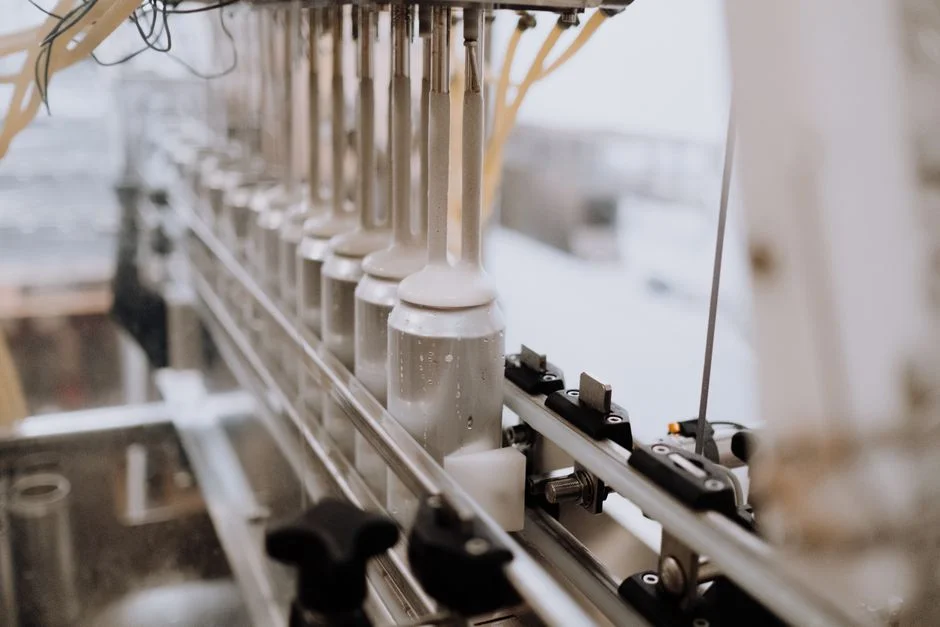
The permitted discharge route is a design gate, not a late commercial detail. A direct receiving-water discharge, municipal sewer discharge with industrial pretreatment, and on-site zero-discharge or reuse concept impose different hydraulic, analytical and residual-management requirements. The German site’s permits and receiving-system conditions must establish which route is available; the supplied research contains no site-specific German discharge limits.
For municipal discharge, obtain the local pretreatment permit, sewer acceptance criteria, allocated flow, prohibited discharges, monitoring obligations and change-of-control notification requirements. Review these before freezing equipment guarantees. The fabricated-metals pretreatment reference illustrates the type of discharge and performance interface that must be defined, not the limits applicable in Germany.
Transaction diligence should also establish who owns shared infrastructure and who funds upgrades. Define access rights, sampling responsibilities, capital-contribution rules, metering boundaries, operating responsibilities and contributions for future expansion. A treatment skid cannot cure an unresolved obligation to maintain a shared sewer connection or residue-disposal route.
Do not import Kansas requirements into a German compliance determination. The DeSoto case supports the engineering lesson that industrial growth can require added hydraulic capacity, biological nutrient removal, monitoring and expansion readiness. German compliance still depends on the local permit, direct-discharge authorization or sewer agreement. The relevant electronics and semiconductor comparison is the electronics and semiconductor wastewater treatment guide.
Resource recovery should remain an option under evaluation. Panasonic Environmental Engineering reported in July 2026 that RARELOOP went on sale in April 2026 and uses electrolytic technology to recover copper ions from waste liquid as reusable solid metal. A project decision still requires stream chemistry, recoverable-metal quantity, product quality, residue handling and lifecycle-cost data.
Match Each Wastewater Stream to the Right Treatment Step
A defensible train starts with protection of downstream equipment, then addresses the contaminants that determine biological loading, membrane compatibility or discharge quality. Equipment should be selected by function and stream chemistry, not by a generic battery-plant label.
Use screening to remove rags, plastics and larger solids before pumps, DAF or membranes. The GX Series rotary mechanical bar screen is intended for continuous municipal and industrial headworks duty. Confirm actual wastewater characteristics and installation constraints before specifying it.
Use DAF where suspended solids, oil and grease, FOG or colloidal material must be removed before biological treatment. An industrial DAF pretreatment system is a selection reference; the supplied range covers 4–300 m³/h across 13 standard models. That range does not establish the German plant’s capacity. Verify particle distribution, emulsified-oil behavior, chemical demand and required removal performance through representative testing.
Use MBR when biological treatment, compact installation, reliable solids separation or water-reuse objectives dominate. The integrated MBR wastewater treatment system combines activated sludge with submerged PVDF membrane filtration; the supplied specification states effluent below 1 μm filtration and capacity of 10–2,000 m³/day. Treatable organics, membrane fouling potential, nutrient requirements and residual handling must be confirmed before selection.
Route difficult chemistry separately where justified. Panasonic Environmental Engineering’s July 2026 announcement describes electrochemical coagulation and separation of nanoparticles and slurry with almost no chemicals, plus oxidation-reduction promotion and hypochlorous-acid generation for organic-nitrogen wastewater. RARELOOP provides a dedicated copper-recovery option, but its integration depends on actual stream chemistry.
Residuals are part of the treatment train. Assess sludge volume, solids characteristics, dewatering demand, chemical use and the receiving facility’s acceptance conditions. The plate-frame filter press is one dewatering option; it does not replace the required residual classification and disposal route.
| Treatment function | Primary application | Key design checks |
|---|---|---|
| Screening | Remove rags, plastics and larger solids | Flow range, solids loading, screen extraction and bypass provisions |
| DAF | Remove suspended solids, oil and grease, FOG and colloidal material | Particle distribution, emulsified oil, chemical demand and sludge characteristics |
| Dedicated metal recovery | Recover selected metal ions from a defined waste-liquid stream | Chemistry, recovery yield, recovered-metal specification, power and residue handling |
| MBR | Provide biological treatment and membrane solids separation | Treatability, nutrient balance, fouling controls, reuse quality and sludge production |
| Residual dewatering | Reduce sludge volume before authorized disposal | Solids characterization, cake moisture, filter capacity and destination acceptance |
Compare Industrial ETP, DAF and Municipal-Pretreatment Options
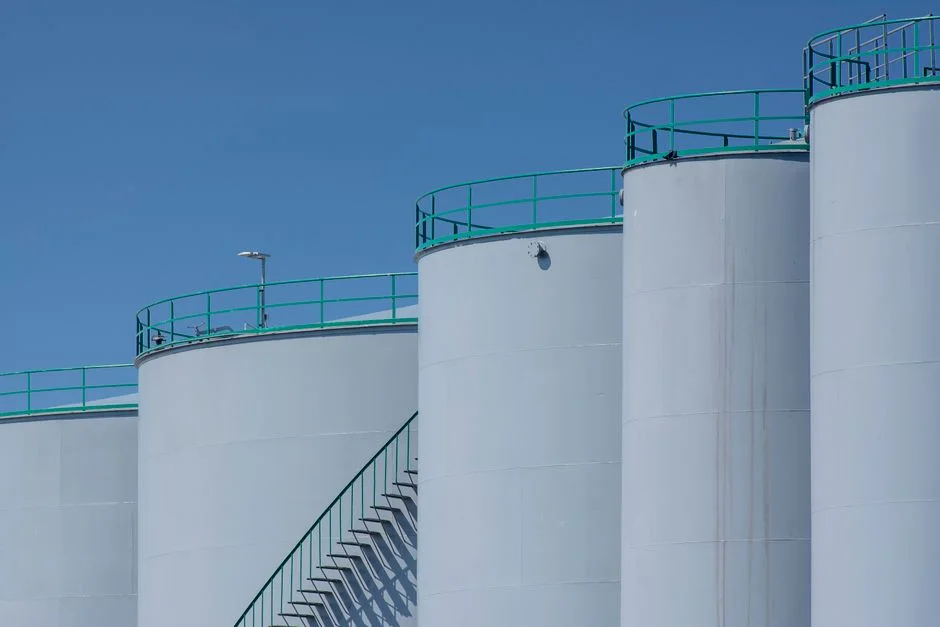
DAF is the appropriate front-end option when suspended solids, oil and grease, FOG and colloidal matter dominate the pretreatment duty. It can also operate as a stand-alone pretreatment stage when the permitted discharge objective is limited to those contaminants. Pilot or jar testing should establish performance on representative particles, emulsified oils and chemical demand before a final guarantee.
MBR is appropriate when biological treatment and reliable membrane separation are required within a compact installation, or when low-turbidity reuse is an objective. It should not be used as a generic solution for non-treatable industrial chemistry. Screens, DAF or another validated pretreatment stage must control substances that could foul the membrane or upset activated sludge.
Municipal pretreatment is justified when the sewer accepts the flow after required industrial treatment and shared treatment reduces lifecycle risk compared with owning a complete industrial effluent treatment plant. That choice still requires a defined pretreatment performance guarantee, flow allocation, monitoring, surcharge or rejection provisions and responsibility for failures.
A combined train is usually the correct answer for a multi-stream battery site. A common DAF stage may protect an MBR or biological process, while low-organic cooling water, metal-bearing process liquid, amine-containing wastewater and sanitary sewage may need distinct routes or equalization. The comparison must optimize treatment function and residuals rather than select one unit for the entire site.
| Route | Choose it when | Do not assume |
|---|---|---|
| DAF-focused pretreatment | Solids, oil and grease, FOG or colloidal material dominate; biological removal is not the main duty | That hydraulic and organic loads are interchangeable |
| MBR-based industrial ETP | Biologically treatable wastewater requires biological treatment, compact separation or reuse-quality effluent | That difficult metals, amines or nanoparticles can be left untreated |
| Municipal sewer pretreatment | The sewer accepts the industrial flow after the specified pretreatment and shared assets reduce lifecycle risk | That connection removes the buyer’s pretreatment, monitoring or liability obligations |
| Combined treatment | Different streams have different quality objectives or contaminants requiring separate controls | That a single flow-weighted composite adequately represents every stream |
The supplied DAF range of 4–300 m³/h across 13 models and integrated MBR range of 10–2,000 m³/day are useful selection references, not proof that either equipment range matches the unverified German site. The battery plant expansion wastewater treatment guide can support further comparison against the measured design basis.
Design Capacity and Nutrient Removal for Future Growth
Hydraulic design must reflect peak and batch-discharge conditions, not only average daily industrial flow. The mass balance should distinguish continuous cooling demand from scheduled cleaning or production discharges, then test storage, equalization and treatment trains against the resulting profiles. Nutrient removal must be sized from measured organic and nutrient loads rather than inferred from flow.
Axius Water reported in 2026 that the DeSoto expansion mirrored the original treatment approach and effectively doubled capacity. The project added blowers, advanced controls, denitrification, biological phosphorus removal, sensors, automated controls and real-time monitoring. These measures responded to both increased flows and Kansas requirements for full biological nutrient removal. The case also anticipated future industrial clients with potentially different influent characteristics.
That evidence supports checking current nutrient performance against future scenarios, but it does not establish German limits or German biological design assumptions. For a German acquisition, request the applicable nitrogen and phosphorus objectives from the permit or sewer authority and model the selected process against those conditions.
Automation should expose the operating variables needed for compliance and early warning. Axius Water reported that the upgraded DeSoto facility operates with one full-time operator who spends roughly 10–15 hours per week overseeing plant performance, supported by a part-time assistant. This is a reported staffing outcome for that facility, not a staffing guarantee for the German site. Operator availability, shift pattern, alarms, data export and local service response remain procurement criteria.
If reuse is required, define the end-use quality specification before selecting disinfection. The available chlorine-dioxide generator range includes compact manual units at 50 g/h and fully automated industrial systems at 20,000 g/h. Neither capacity nor chemistry should be selected without the required dose, residual, materials compatibility and control basis. Further procurement context appears in the industrial ETP supplier comparison and cost guide.
Turn the Acquisition into an Implementation Plan
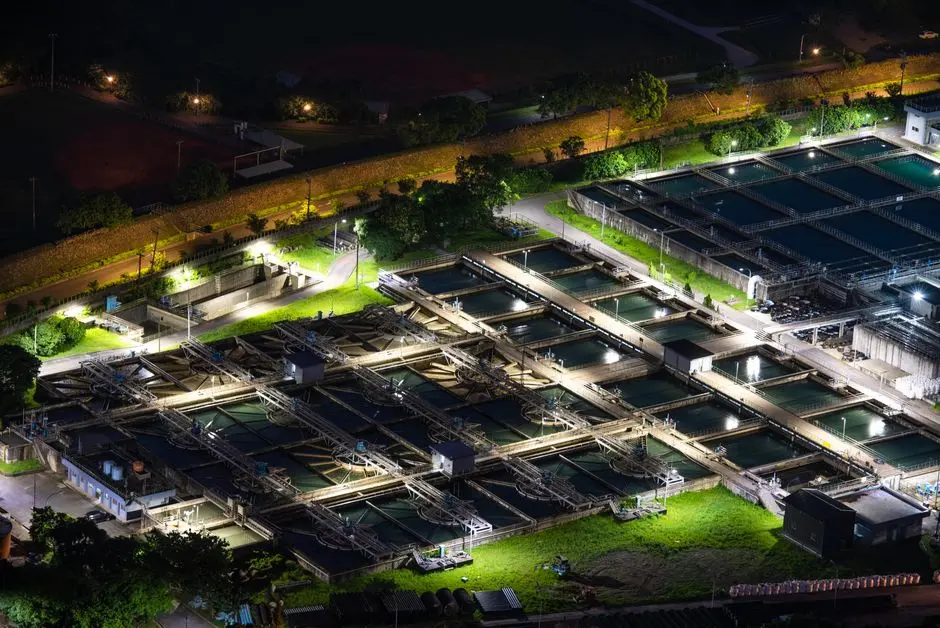
The acquisition should produce a staged implementation plan with technical, permit and commercial decision gates. Begin with documentary and measured evidence, then use pilot testing to close chemistry and performance uncertainties before suppliers guarantee a treatment train. The industrial ETP supplier comparison and cost guide can support quotation structure, while the battery plant expansion wastewater treatment guide provides a useful project-diligence reference.
Issue one integrated request for information covering flow records, source-specific sampling, chemical inventories, equipment condition, permit conditions, sewer agreements, shared-infrastructure contracts, residual routes and planned production changes. Set a deadline for missing data and identify which assumptions will govern each price. Do not allow bidders to substitute a generic battery-process profile for the acquired plant’s measured conditions.
Require every bidder to state its design basis, guarantee points, controls philosophy, reagent and sludge consumption, redundancy, maintenance access, operator training and performance-test method. Bids should identify which guarantees apply at average flow, peak flow and batch-discharge conditions, and what happens when influent chemistry falls outside the agreed envelope.
| Stage | Required output | Procurement decision |
|---|---|---|
| Acquisition diligence | Permit, ownership, flow, analytical and production-change dossier | Confirm permitted route and exclusions |
| Characterization and trials | Representative sampling, mass balance and relevant pilot or jar testing | Select unit processes and establish performance assumptions |
| Basic and detailed design | Hydraulic, process, control, civil, electrical and residual designs | Define supplier and owner scope |
| Procurement | Normalized technical-commercial offers with guarantee points | Compare lifecycle risk, not nominal capacity alone |
| Commissioning | Installation checks, training, performance testing and permit verification | Accept only against the agreed design basis |
| Operations | Monitoring, maintenance, residual tracking and expansion review | Update the design basis as production changes |
Where the schedule is compressed, use progressive review rather than fixed-price certainty without evidence. Axius Water reported in 2026 that collaboration among the engineer, contractor, town managers and technology provider supported early validation and delivery of the DeSoto expansion. The transferable lesson is iterative stakeholder alignment, not reuse of the Kansas design.
Treat metal recovery as a measured business option. Panasonic Environmental Engineering reported that RARELOOP launched in April 2026 and plans to extend recovery beyond copper to silver, tin and nickel. Before accepting revenue or avoided-disposal assumptions, require project-specific chemistry, recovery yield, product quality, energy demand, chemical use, residue handling and integration costs.
Frequently Asked Questions
How much should a buyer budget for wastewater treatment at the acquired Panasonic site?
The supplied research contains no Germany-specific project cost. Request measured flow, contaminant mass loads, permit route, treatment objectives, civil-work boundary, residual-disposal route and future-expansion scenario before comparing quotations. Each bidder should separate equipment, installation, controls, utilities, commissioning, monitoring, sludge handling and lifecycle costs so that omissions are visible.
Should the buyer choose DAF or MBR for the German battery plant?
Choose DAF when suspended solids, oil and grease, FOG or colloidal material are the controlling pretreatment duties. Choose MBR when biological treatment, compact separation or reuse-quality effluent dominates. Use a combined train where the source streams justify separate controls; the industrial DAF pretreatment system and integrated MBR wastewater treatment system are selection references, not a site-specific recommendation.
What must be verified before a supplier sizes equipment for the acquired plant?
Require stream-by-stream average and peak flows, batch profiles, source-specific analytical results, permit and sewer limits, chemical-use restrictions, residual-disposal routes and production-expansion plans. Also confirm the design flow, guarantee envelope, redundancy and performance-test conditions in writing. Without these inputs, a nominal m³/h figure has no reliable engineering meaning.
Can the Kansas Panasonic WWTP expansion be used as a German design template?
No. The DeSoto case supports the lessons of added hydraulic capacity, biological nutrient removal, automation and expansion planning, but it does not replace a German permit or site-specific design-basis review. German limits, sewer requirements, ownership arrangements and stream chemistry must be established independently.