What EV and Automotive Wastewater Changes the Equipment Choice
EV and automotive factories in Rogers should choose DAF when wastewater contains emulsified oil, FOG, or fine, low-density solids; choose clarification when the dominant load is heavy, readily settleable solids above about 1,000 mg/L TSS. A 2026 HydropureWater comparison reports 92–97% TSS and 95–99% FOG removal for DAF, compared with 80–90% TSS removal for clarifiers, while clarifiers generally cost less to operate. The choice must still be based on stream-by-stream testing, peak flows, available space, chemical dosing, sludge handling, and Rogers-area sewer limits—not the equipment name alone.
Start by separating the wastewater. Body-shop and paint wash water may carry emulsified oil, FOG, paint solids, and pretreatment chemicals. Die-cast, machining, and metalworking streams may contain free oil, nonbiodegradable cutting oil, metal fines, glass media, or suspended abrasives. Floor and vehicle washes add grit and wash chemistry; process rinses can be highly variable; stormwater can introduce sediment and runoff pollutants; and sanitary flow should remain outside an industrial pretreatment selection calculation unless the receiving authority specifies otherwise.
Do not assume these streams should be combined. Request a wastewater flow diagram, batch schedules, production-day peak flows, storm-flow conditions, source-by-source sampling results, and proposed discharge routing. This approach also supports EV factory wastewater treatment design for an expansion.
Compliance begins with the receiving sewer authority. Under 40 CFR 403.5(c), each POTW with a pretreatment program must establish local limits; therefore, the applicable numeric thresholds for Rogers must come from that authority rather than a generic federal concentration.
Match Each Wastewater Stream to a Treatment Method
DAF is the stronger starting candidate when FOG exceeds 200 mg/L or fine, low-density TSS falls in the 50–500 mg/L band; a clarifier or sedimentation tank is more appropriate when TSS exceeds 1,000 mg/L and the solids are heavier and readily settleable, according to HydropureWater’s 2026 comparison guide.
The mechanisms are different. DAF attaches fine bubbles to oil and particles so they float for skimming. A clarifier uses gravity to settle solids into underflow sludge. Ecologix’s selection guide states that DAF can remove 95% of oils and greases in a food-processing application where a clarifier achieved 70% on the same stream. That example is not an EV guarantee, but it illustrates why emulsified oil belongs in the DAF evaluation.
For automotive streams, evaluate DAF where the oil is emulsified or fine solids resist gravity separation. Include a lamella clarifier for heavy-solids wastewater when settling performance and compact plate-area capacity are priorities. A hybrid DAF–clarifier train is appropriate when oil recovery must precede solids settling: Ecologix describes the combination as a way to address complex streams by pairing DAF oil removal with clarifier sedimentation.
Use the screening thresholds to form a test plan, not to write a guarantee. Jar-test representative samples, identify the controlling contaminant, and require supplier-specific performance guarantees under the expected batch and continuous-flow conditions.
| Stream or contaminant | Screening indicator | Initial treatment direction |
|---|---|---|
| Paint wash or emulsified oil | FOG above 200 mg/L; emulsified oil | Evaluate an industrial DAF system for EV wastewater, supported by jar tests |
| Fine paint solids or low-density particles | Fine TSS in the 50–500 mg/L band | Evaluate DAF with chemical conditioning |
| Metal fines, glass media, or heavy settleable solids | TSS above 1,000 mg/L with heavier particles | Evaluate a lamella clarifier for heavy-solids wastewater |
| Mixed oil and heavy-solids flow | Both contaminant classes control performance | Evaluate DAF followed by clarification |
Compare Performance, Footprint, Energy, and Sludge
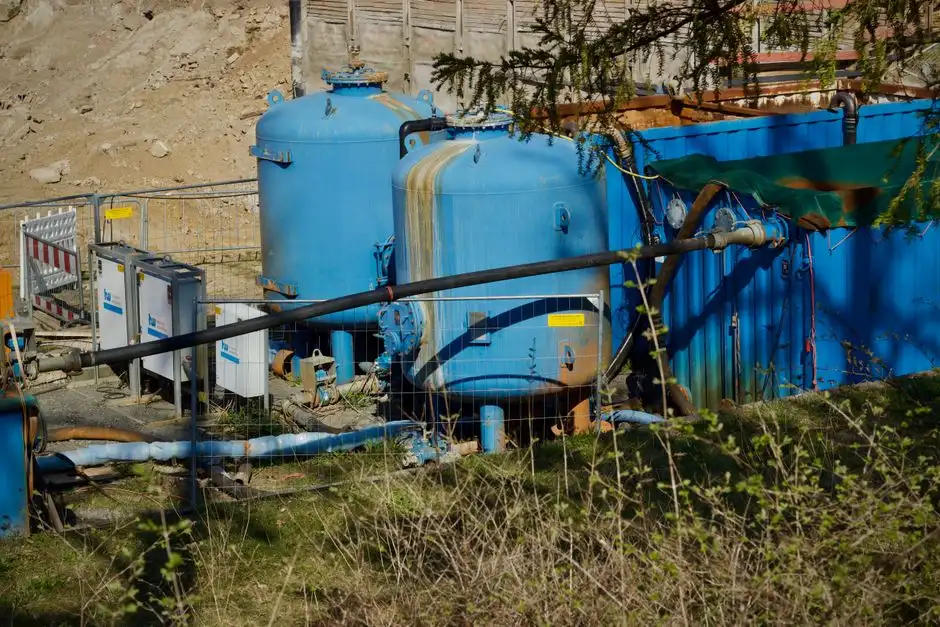
DAF offers higher reported solids removal and a smaller hydraulic footprint than conventional clarification, but it adds air-saturation equipment, chemical conditioning, and a float that can be more difficult to dewater.
HydropureWater’s 2026 comparison, citing an EPA 2024 basis, reports DAF TSS removal of 92–97% at hydraulic loading rates of 5–15 m/h, compared with 80–90% for clarifiers. For DAF, the same guide gives a footprint of 0.2–0.5 m²/m³/h and retention of 10–30 minutes. For clarifiers, it gives 0.5–1.0 m²/m³/h and two to four hours of retention.
The operating comparison is equally important. HydropureWater’s 2026 guide reports DAF energy use of 0.2–0.5 kWh/m³ and chemical cost of $0.05–$0.20/m³. Clarifiers use 0.1–0.3 kWh/m³ and $0.02–$0.10/m³ of chemicals. Those figures describe the comparison bands, not a guaranteed Rogers operating cost; actual utility rates and reagent doses must be entered into the project model.
Residuals require separate evaluation. HydropureWater’s 2026 comparison states that DAF float typically contains 2–5% solids by weight, while clarifier underflow is usually 0.5–2%. The float may be more voluminous on a dry-solids basis and can carry entrained air. Require bidders to define dewatering method, expected solids concentration, chemical demand, and disposal route. For a constrained plot, account for the DAF footprint advantage alongside the compressor, saturator, recycle equipment, controls, and residual handling.
HydropureWater’s lamella clarifier specification gives a surface loading rate of 20–40 m/h and states that chemical consumption can be up to 30% lower. Treat lamella clarification as an option for settling solids, not as an interchangeable substitute for DAF for emulsified FOG.
| Procurement parameter | DAF | Clarifier |
|---|---|---|
| TSS removal reported by HydropureWater, 2026 | 92–97% | 80–90% |
| Hydraulic loading | 5–15 m/h | 1–3 m/h |
| Footprint | 0.2–0.5 m²/m³/h | 0.5–1.0 m²/m³/h |
| Retention | 10–30 minutes | 2–4 hours |
| Energy use | 0.2–0.5 kWh/m³ | 0.1–0.3 kWh/m³ |
| Chemical cost | $0.05–$0.20/m³ | $0.02–$0.10/m³ |
| Residual concentration | Float typically 2–5% solids | Underflow usually 0.5–2% solids |
Because both residuals require downstream handling, compare the complete system rather than the tank alone. A plate-and-frame filter press and an automatic chemical dosing system may affect the comparison through solids dewatering and reagent-control scope.
Compare Five-Year Cost Instead of Equipment Price
A DAF purchase can be economically weaker than a clarifier when oil removal, plot space, or avoided sewer charges do not justify the added operating and residual-handling costs.
HydropureWater’s 2026 normalized comparison gives DAF CAPEX of $150–$400/m³ treated and five-year total cost of ownership of $1.50–$4.50/m³ treated. The same comparison gives clarifier CAPEX of $80–$200/m³ treated and five-year TCO of $0.80–$2.50/m³ treated. These are published comparison bands, not quotations for a Rogers plant. Actual bids depend on flow, wastewater characteristics, civil construction, utilities, controls, and residual handling.
The business case should quantify avoidable sewer surcharges, compliance exposure, downtime, chemical use, sludge disposal, and the value of reclaimed floor space. A lower equipment invoice can still be the more expensive option if it misses the controlling local limit. The broader cost basis used in an industrial wastewater treatment cost breakdown illustrates why lifecycle inputs must be separated rather than bundled.
Require each bidder to provide separate five-year estimates for electricity, chemicals, operator labor, maintenance, sludge dewatering, disposal, and equipment replacement. Then apply Rogers utility rates, the receiving authority’s fee structure, and plant-specific operating schedules.
| Published comparison band | DAF | Clarifier |
|---|---|---|
| CAPEX per m³ treated | $150–$400 | $80–$200 |
| Five-year TCO per m³ treated | $1.50–$4.50 | $0.80–$2.50 |
| Commercial status | Published 2026 comparison, not a project quotation | Published 2026 comparison, not a project quotation |
Build a Rogers Factory Pretreatment Decision Tree
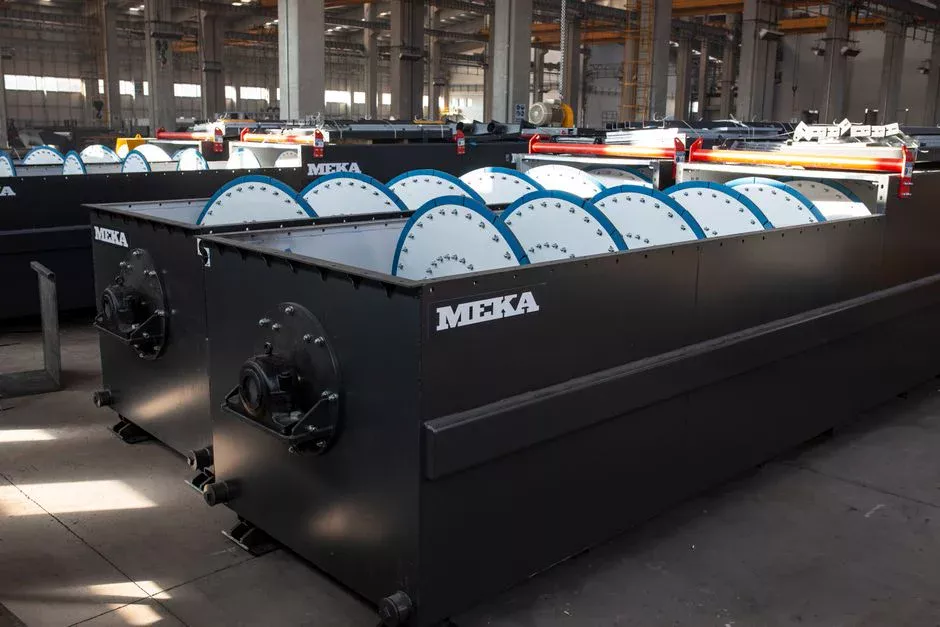
Begin with source-by-source characterization, then move through hydraulic screening, local-limit checks, treatment testing, and commercial comparison in that order.
- Characterize each stream. Measure TSS, FOG, COD, BOD, pH, temperature, particle size, relevant metals, and flow variability. Separate continuous flow from batch discharges and identify stormwater and sanitary exclusions.
- Screen the dominant contaminant. Use FOG above 200 mg/L or fine, low-density TSS in the 50–500 mg/L band to prioritize DAF evaluation. Use TSS above 1,000 mg/L with heavier solids to prioritize clarification.
- Check treatment-critical conditions. HydropureWater states that salinity above 10,000 mg/L and temperatures above 40°C can impair DAF bubble performance. Verify whether process chemistry or seasonal conditions create either condition.
- Test clarification hydraulics. Uneven flow or poor inlet distribution can short-circuit a settling zone and carry solids over despite adequate tank volume. Specify inlet-flow controls, baffles or distributors, sludge withdrawal, and an outlet TSS test.
- Define the discharge route. Under 40 CFR 403.5(b)(6), petroleum oil, nonbiodegradable cutting oil, and mineral-oil products are barred in amounts that cause interference or pass through. Obtain applicable numeric limits from the receiving authority.
- Issue a common RFP. Require normalized peak and batch flows, removal or effluent targets, footprint, utility rates, chemical assumptions, residual-solids concentration, controls scope, guarantees, commissioning tests, and maintenance support.
Jar testing should establish reagent doses and float or sludge behavior. For mixed or variable EV manufacturing streams, use pilot testing before final sizing and include manufacturing wastewater pretreatment compliance requirements in the test protocol. Chemical feed equipment should be evaluated as part of the treatment guarantee rather than as an accessory.
Specify the Treatment Train for Reliable Startup and Operation
A successful procurement converts the selected treatment objective into enforceable startup, operating, and maintenance requirements.
For DAF, specify chemical feed, pressure saturation, recycle flow, float-skimming control, sludge drawdown, instrumentation, and access for weekly air-device cleaning. For clarification, specify flow distribution, sludge collection, rake or lamella access, and controls that prevent uneven flow from causing short-circuiting. The supplied research distinguishes removal of free oil by gravity skimming from DAF treatment of emulsified oil, so require the supplier to state which mechanism applies to each proposed stream.
If pretreatment will feed biological treatment, MBR, or reverse osmosis, include the downstream constraint in the performance test. DAF float carryover or clarifier solids carryover can affect downstream equipment, so treating the primary unit in isolation does not establish train reliability. The 2026 hollow-fiber MBR design criteria should be consulted where biological treatment follows pretreatment.
Frequently Asked Questions
How much does DAF or clarification cost for an EV factory in Rogers?
HydropureWater’s 2026 comparison gives DAF CAPEX of $150–$400/m³ treated and five-year TCO of $1.50–$4.50/m³; clarifier CAPEX is $80–$200/m³ and five-year TCO is $0.80–$2.50/m³. These are not Rogers quotations. Request bids using peak and batch flow, source-by-source wastewater data, utility rates, chemical assumptions, residual handling, controls, construction, and commissioning scope.
How should a Rogers factory size and select a treatment supplier?
Size from peak and batch flows, not average flow alone. Require suppliers to use the same wastewater characterization, hydraulic basis, footprint constraint, utility rates, controls scope, residual-solids assumptions, commissioning tests, and performance guarantees. A pilot or documented jar-test program should establish chemical demand and float or sludge stability. Confirm delivery schedule, local service capability, spare-parts strategy, and training before award.
Which technology should handle paint wash and emulsified oil?
Prioritize DAF testing when the controlling contaminant is emulsified oil, FOG above 200 mg/L, or fine low-density solids. Require the supplier to distinguish free oil from emulsified oil and verify performance with representative wastewater. If heavy solids also dominate, evaluate DAF followed by clarification rather than relying on one unit for both contaminant classes.
What compliance risks should be included in the equipment specification?
Separate federal pretreatment prohibitions from numeric site limits. Under 40 CFR 403.5(b)(6), petroleum oil, nonbiodegradable cutting oil, and mineral-oil products are barred in amounts that cause interference or pass through. Under 40 CFR 403.5(c), each POTW with a pretreatment program must establish local limits. Obtain the applicable Rogers-area limits from the receiving authority and write them into performance tests and guarantees.