Industrial wastewater treatment Johannesburg costs for chemical-intensive trains typically run ZAR 8–15/m³ of treated wastewater. Package and custom plants commonly span ZAR 2M–20M+ in capital, with payback often 3–7 years where reuse offsets potable purchase. Industrial waste water treatment in gauteng centres on Johannesburg’s mixed mining, food, chemical and textile loads. Municipal sewer acceptance rules differ from water-resource discharge limits at the same site.
Industrial Wastewater Treatment Johannesburg Costs by Capacity
Capital cost for an industrial ETP in Johannesburg scales with flow and technology, and small package plants at 50–200 m³/day typically cost ZAR 2M–5M. Custom ETPs at 500–2,000 m³/day commonly sit at ZAR 10M–20M, and advanced MBR trains at 1,000–5,000 m³/day for reuse often require ZAR 15M–30M.
Chemical-intensive DAF and dosing trains typically operate at ZAR 8–15/m³ including reagents, power and sludge disposal. Biological MBR or activated-sludge trains often run ZAR 5–10/m³, dominated by aeration energy and membrane cleaning. A 2024 food plant case in City Deep reported a 40% cut in water purchase, equal to ZAR 3.2M/year, by reusing MBR permeate on cooling towers.
Financing levers cited for Johannesburg projects include GreenCape’s Industrial Water Efficiency Fund, which offers up to ZAR 10M at 8% interest. Johannesburg Water reuse capital rebates of 10–20% also appear in project briefs. Section 12L energy-efficiency tax incentives may apply where MBR energy baselines qualify. For a broader comparison, industrial facilities can compare Johannesburg’s wastewater treatment costs to Brisbane’s 2025 benchmarks.
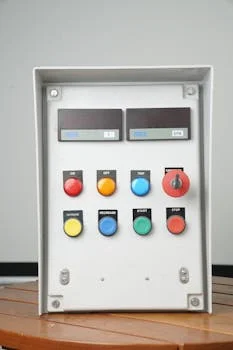
| System Type & Capacity | Capital Cost (ZAR, 2025) | Typical Operating Cost (ZAR/m³) | Key Cost Drivers |
|---|---|---|---|
| Small Package Plant (50-200 m³/day) | 2M – 5M | 8 – 15 | Equipment, installation, basic chemicals |
| Custom ETP (500-2,000 m³/day) | 10M – 20M | 8 – 15 | Custom design, civil works, advanced controls, chemical usage |
| MBR System (1,000-5,000 m³/day) | 15M – 30M | 5 – 10 | Membrane costs, energy for aeration/pumping, membrane cleaning chemicals |
| Sludge Dewatering (Ancillary) | 500K – 2M | 200 – 500 (per m³ sludge) | Equipment, polymer, energy, disposal fees |
What do MBR systems cost in South Africa?
MBR capital for 1,000–5,000 m³/day reuse plants in Johannesburg typically ranges ZAR 15M–30M installed. Operating costs often sit at ZAR 5–10/m³ from aeration, permeate pumping and membrane cleaning chemicals. Energy use commonly falls near 0.8–1.2 kWh/m³ under industrial MBR duty. Payback improves when municipal water at ZAR 12–20/m³ is displaced and fine exposure of ZAR 50K–2M/year is avoided.
What do disinfection costs typically cover?
Disinfection of piping, tanks, structures and equipment typically covers chemical or thermal sanitising agents, labour, temporary isolation valves, rinse-water handling and verification sampling after construction or maintenance. Budget share is usually a few percent of mechanical installation on package plants, but rises when food-grade or pharma hygiene protocols require documented kill steps and hold times. Confirm the biocide and residual limits with Johannesburg Water before rinse water enters the sewer.
How Is the Johannesburg Industrial Effluent Tariff Charged?
On-site operating cost is not the municipal sewer bill. The City of Johannesburg Item 03C tariff annexure prints C = R1,495.18 and T = R1,630.56 inside a cent-per-kilolitre formula. Punitive adders apply when total chromium exceeds 20 mg/L, mineral FOG exceeds 50 mg/L, or vegetable FOG exceeds 200 mg/L. Where the previous half-year averaged under 100 kilolitres (100 m³) a month, the stated charge is R52.85 per kilolitre unless those punitive terms apply (City of Johannesburg, Item 03C).
The same annexure grants a 10% rebate when discharge is limited to specified hours. A 15% rebate applies when flow is balanced over seven days, if the half-year average exceeded 50 kilolitres a month. Those rebates are tariff mechanics, not a waiver of Schedule D or of a NEMA Section 28 duty. Most plants we price in Johannesburg still budget the full ZAR 8–15/m³ on-site band and keep the sewer charge on a separate line.
When the by-laws are breached, the annexure assesses pH on the lowest value and metals plus FOG on peak values over a six-month window, even if volume in that window was low. A single bad shift can therefore set the surcharge. Ask for shift composites rather than one grab before you lock a dosing rate.
What Does Compliant Treatment Require in Johannesburg?
Johannesburg industrial plants must pretreat to City sewer acceptance limits before discharge to works such as Olifantsvlei and Goudkoppies. Water-resource discharges follow National Water Act General Authorisation limit values. DAF typically removes 92–97% of FOG and TSS on food loads. MBR can reach <1 NTU turbidity at about 60% less footprint than conventional activated sludge for reuse.
Most plants we size for Olifantsvlei and Goudkoppies acceptance treat the sewer limit as the design guarantee. The general-limit table stays on the file for any reuse tap off the same train.
Johannesburg’s Industrial Wastewater Challenge: Why Compliance Isn’t Optional
In 2024, 18% of industrial facilities in Johannesburg failed surprise wastewater inspections, leading to enforcement actions (City of Joburg Environmental Health Report, 2024). Mining sites face acid mine drainage and dissolved metals. Food processors generate high BOD, COD and FOG. Chemical plants discharge toxic organics with sharp pH swings.
Textile mills release dyes and surfactants that municipal works are not designed to polish. Most food plants we walk in Gauteng fail the sewer test on a Friday FOG peak, not on the weekly average.
A chrome plating plant in Germiston faced a ZAR 1.2M fine in 2023 for exceeding hexavalent chromium limits that were cited locally at less than 0.1 mg/L. According to the National Water Act General Authorisation wastewater limit values (DWAF Government Gazette), the general limit for dissolved chromium (VI) to a water resource is 0.05 mg/L. Earlier site guidance often used 0.1 mg/L as a working hexavalent target.
Water scarcity raises the reuse case. The city’s 2025 Strategic Plan targets meeting 30% of industrial water demand through treated effluent reuse. Industrial effluent that enters Johannesburg’s six primary wastewater works must stay within acceptance criteria, because those plants are sized mainly for domestic sewage. For province-wide context on industrial wastewater treatment across Gauteng, compare municipal acceptance rules with catchment-discharge duties before you freeze a process train.
Johannesburg’s Wastewater Discharge Limits: NEMA, Johannesburg Water, and Industry-Specific Standards
Johannesburg compliance depends on the discharge pathway, because sewer Schedule D and a water-resource general authorisation are not the same limit set. NEMA remains the duty-of-care and enforcement framework, including NEMA Section 28 remedies. Numerical water-resource limits sit under the National Water Act General Authorisation tables, not a “NEMA 2022” effluent schedule. Johannesburg Water Services Bylaws Schedule D sets sewer acceptance concentrations that are often higher than water-resource general limits because the municipal works provide further treatment.
According to the National Water Act General Authorisation (DWAF Gazette / WISA FS061), water-resource general limits include COD 75 mg/L after algae removal and suspended solids 25 mg/L. The same tables set pH 5.5–9.5, soap/oil/grease 2.5 mg/L, ammonia as N 6 mg/L, and dissolved cyanide 0.02 mg/L. Earlier guidance used pH 6–9, oil and grease <10 mg/L, ammonia <10 mg/L, and cyanide <0.1 mg/L. According to City of Johannesburg Water Services Bylaws Schedule D, sewer FOG limits are <50 mg/L mineral and <200 mg/L vegetable, and total chrome is 20 mg/L with cyanide at 20 mg/L as CN.
Industry permits still add sector-specific metals, colour and VOC controls. Facilities discharging over 500 m³/day usually need continuous monitoring. Smaller plants typically submit quarterly accredited laboratory results. Non-compliance can trigger fines cited in practice at ZAR 50K–2M, shutdowns, and director liability under NEMA Section 28 pathways.
What Volume Does the General Authorisation Still Cover?
GN 665 in Government Gazette 36820 of 6 September 2013 allows discharge of up to 2 000 m³ of wastewater on any given day into a water resource that is not listed. It applies only outside the areas excluded in paragraph 2.2, and the notice was issued under section 39 of the National Water Act 36 of 1998. Check those exclusions before you treat 2 000 m³ as an available route for your effluent. A larger daily volume is outside the clause we read.
WISA fact sheet FS061 still points readers to Government Gazette 20526 of 8 October 1999 for the printed general and special tables. Use FS061 as a pointer to that 1999 notice, not as a substitute for GN 665. Most plants we review still paste the older sheet into the design basis and then miss the 2 000 m³ daily ceiling.
| Parameter | NEMA 2022 General Limits | Johannesburg Water Bylaws (Example: Germiston Industrial Zone) | Typical Impacted Industries |
|---|---|---|---|
| pH | 6 – 9 | 6 – 9 | Chemicals, Mining, Textiles |
| Total Suspended Solids (TSS) | < 25 mg/L | < 25 mg/L | All industrial sectors |
| Chemical Oxygen Demand (COD) | < 75 mg/L | < 75 mg/L | Food Processing, Chemicals, Textiles |
| Biochemical Oxygen Demand (BOD) | < 20 mg/L | < 20 mg/L | Food Processing, Abattoirs |
| Oil & Grease | < 10 mg/L | < 5 mg/L | Food Processing, Automotive, Metalworking |
| Ammonia (as N) | < 10 mg/L | < 10 mg/L | Chemicals, Food Processing |
| Total Chromium | < 0.5 mg/L | < 0.5 mg/L (Hexavalent: < 0.1 mg/L) | Metal Plating, Tanning |
| Cyanide | < 0.1 mg/L | < 0.1 mg/L | Mining, Metal Finishing |
Use the table as the historical working sheet many Johannesburg plants still quote. Overlay NWA General Authorisation and Schedule D values above when you set permit and design guarantees.
Industrial Wastewater Compliance Fines Johannesburg Plants Should Budget
Industrial wastewater compliance fines Johannesburg plants meet in practice are commonly cited at ZAR 50K–2M, plus shutdowns and director exposure under NEMA Section 28. A chrome plating plant in Germiston faced a ZAR 1.2M fine in 2023 for exceeding hexavalent chromium limits that were cited locally at less than 0.1 mg/L. The general limit for dissolved chromium (VI) to a water resource remains 0.05 mg/L in the General Authorisation tables used above. Repeat Schedule D breaches on metals or FOG usually move faster than a single laboratory outlier.
The sewer surcharge is not the same instrument as that fine. Item 03C still bills peak chromium above 20 mg/L and peak mineral FOG above 50 mg/L across a six-month window. Most plants we audit in Germiston and City Deep get the first cost hit from that surcharge, not from a criminal count. Keep SANAS-accredited records, because the file is what Johannesburg Water asks for when the notice arrives.
A City of Johannesburg Water Services By-law workshop draft lists Schedule D chrome as Cr at 20 mg/L and cyanide as CN at 20 mg/L. Treat that workshop text as a reading of Schedule D, not as a new gazette. Design guarantees should follow the permit in hand. Use the General Authorisation numbers where the outfall is a water resource rather than the sewer.
Industrial Waste Water Treatment in Gauteng: Matching Process to Effluent
Selecting industrial waste water treatment in gauteng starts with a full effluent characterisation for BOD/COD, TSS, FOG, pH and metals, then mapping primary, secondary and tertiary stages to sewer or reuse targets. High-FOG food and abattoir streams suit Dissolved Air Flotation. DAF achieves 92–97% TSS removal and 85–90% FOG removal under EPA 2023 benchmark conditions for flotation pretreatment. HydropureWater offers advanced DAF systems for Johannesburg’s high-FOG industrial effluents where oil and grease drive non-compliance risk.
Most abattoir and rendering plants we size on the East Rand put DAF ahead of biology, because a FOG spike otherwise blinds the downstream stage.
When reuse quality is required in mining or textile plants, Membrane Bioreactor systems combine biological treatment with membrane filtration. MBR effluent can reach less than 1 NTU turbidity with over 99% pathogen removal, at about 60% less footprint than conventional activated sludge on constrained Joburg sites. Integrated MBR systems for Johannesburg’s water reuse and compliance needs are used where cooling-tower or process-water makeup is the economic driver.
Chemical dosing handles pH correction and metal precipitation for chemicals and mining. PAC or ferric chloride is typically dosed at 50–200 mg/L as coagulant, with polyacrylamide flocculant to build settleable or floatable flocs. Precise, PLC-controlled chemical dosing is offered by HydropureWater for Johannesburg’s heavy metal and pH compliance. Compact satellite flows can also use an Underground Package Sewage Treatment Plant (WSZ Series) where civil footprint and odour control dominate the brief.
Sludge dewatering cuts haulage mass. Plate-and-frame presses typically reach 30–40% dry solids. Screw presses typically yield 20–25% dry solids. Dewatering capital often sits at ZAR 500K–2M, with O&M around ZAR 200–500/m³ of dewatered sludge under local polymer and disposal tariffs.
| Technology | Primary Application | Key Benefits | Typical Effluent Quality Achieved | Footprint Comparison |
|---|---|---|---|---|
| Dissolved Air Flotation (DAF) | FOG, TSS, Colloidal Solids removal (Food Processing, Abattoirs, Metal Finishing) | High FOG/TSS removal (92-97%), rapid separation, produces denser sludge. | TSS < 25 mg/L, FOG < 10 mg/L | Moderate |
| Membrane Bioreactor (MBR) | High-quality effluent for reuse, BOD/COD reduction (Mining, Textiles, Pharmaceuticals) | Near-reuse quality (<1 NTU turbidity), high pathogen removal (>99%), small footprint (60% less than CAS). | BOD < 5 mg/L, COD < 20 mg/L, TSS < 1 mg/L | Compact |
| Chemical Dosing Systems | pH adjustment, heavy metal precipitation, coagulation/flocculation (Chemicals, Mining, Electroplating) | Precise control of pH, effective removal of dissolved metals, enhances solids separation. | Meets specific heavy metal limits (e.g., Cr < 0.5 mg/L), pH 6-9 | Small to Moderate (ancillary system) |
Equipment Selection Framework: How to Choose the Right System for Your Johannesburg Facility
Selecting an industrial wastewater treatment system for a Johannesburg facility needs a fixed decision sequence so compliance, O&M and capital stay aligned. Skipping characterisation is the most common root cause of undersized pretreatment.
Step 1: Characterise your effluent. Run accredited tests for BOD, COD, TSS, FOG, pH, metals and pathogens on representative shifts, not a single grab. Step 2: Define goals. State whether the duty is sewer compliance only, partial reuse, footprint cut, or lowest 10-year O&M.
Step 3: Match goals to technology. High FOG points to DAF, and reuse-quality water points to MBR. Metals and pH imbalance point to chemical precipitation. Comparing DAF and sedimentation costs can also inform decisions, as detailed in this engineering breakdown.
Step 4: Evaluate suppliers. Ask for Gauteng references, spare-parts lead times and permit support history. Step 5: Request pilot testing. A DAF pilot typically runs 2–4 weeks.
An MBR pilot often needs 6–8 weeks under real temperature and load swings. Common mistakes include underestimating sludge disposal at ZAR 800–1,500/ton, ignoring MBR power at 0.8–1.2 kWh/m³, and skipping operator training. Compare pilot data with Dissolved Air Flotation (DAF) systems and MBR Membrane Bioreactor systems before you freeze the duty.
Metals and pH trains should be checked on Automatic Chemical Dosing systems before award, because a dose error shows up as a Schedule D exceedance.
| Effluent Characteristic / Goal | Recommended Technology | Primary Benefit |
|---|---|---|
| High FOG & Suspended Solids | Dissolved Air Flotation (DAF) | Efficient physical separation, high removal rates for FOG/TSS. |
| Need for Water Reuse / High Quality Effluent | Membrane Bioreactor (MBR) | Produces very high-quality effluent, low turbidity, pathogen removal. |
| Heavy Metals / pH Imbalance | Chemical Dosing & Precipitation | Precise pH adjustment, effective removal of dissolved metals. |
| High Organic Load (BOD/COD) | Biological Treatment (e.g., MBR, Activated Sludge) | Breaks down organic pollutants biologically. |
| Space Constraints | Membrane Bioreactor (MBR) | Compact footprint compared to conventional biological systems. |
What Should a Johannesburg Plant Lock before Award?
A Johannesburg award checklist locks the discharge pathway before equipment is priced. Confirm pathway as sewer Schedule D or water-resource GA. Record peak and average flow in m³/day. Capture FOG and metals peaks by shift.
Price sludge disposal in ZAR/ton before you compare tenders. Check power for 0.8–1.2 kWh/m³ if MBR is shortlisted. Plan a 2–8 week pilot. Lock spare parts and operator training before award.
Who this is for: plant engineers and EPC teams sizing Pretoria–Johannesburg industrial pretreatment or reuse. Who should look elsewhere: potable bulk supply projects without an industrial effluent brief.
Next step: send a recent laboratory suite and the sewer or reuse limits with a Johannesburg effluent sizing request so a process engineer can shortlist DAF, MBR or dosing trains.
Frequently Asked Questions
What are the penalties for non-compliance with Johannesburg Water’s wastewater bylaws?
Penalties can include fines commonly cited at ZAR 50K–2M, mandatory plant shutdowns, and criminal exposure for directors under NEMA Section 28 duty-of-care actions. Severity scales with pollutant load, repeat offences and whether the sewer or a water resource was affected. Continuous exceedances of Schedule D metals or FOG usually trigger faster enforcement than single laboratory outliers. Keep accredited monitoring records ready for Johannesburg Water audits.
How much does it cost to treat 1 m³ of industrial wastewater in Johannesburg?
Operating cost typically ranges ZAR 8–15/m³ for chemical-intensive DAF and dosing trains, and ZAR 5–10/m³ for biological MBR or activated-sludge systems under Johannesburg industrial tariffs. Drivers are reagent dose, aeration energy, sludge haulage at ZAR 800–1,500/ton, and membrane cleaning chemicals. Capital amortisation is separate and depends on the ZAR 2M–30M installed range by capacity.
Can I reuse treated wastewater in my Johannesburg facility?
Yes, non-potable reuse for irrigation, cooling towers and selected process makeup is practised when effluent meets Johannesburg Water quality and monitoring conditions. MBR trains are often selected because they can deliver <1 NTU turbidity and strong pathogen removal for cooling duty. Facilities need written approval, metering and ongoing sampling. Potable reuse is a separate, higher regulatory path and is not covered by standard industrial pretreatment permits.
What’s the difference between DAF and MBR for food processing wastewater?
DAF is a physical-chemical floatation step that targets FOG and suspended solids, often achieving 92–97% TSS and 85–90% FOG removal ahead of biology. MBR is a biological plus membrane stage that removes dissolved organics and produces reuse-grade clarity. Food plants commonly place DAF first, then biology or MBR, rather than choosing only one unit. For regional regulatory contrast, see how Johannesburg’s wastewater challenges compare to Saudi Arabia’s industrial sector.
How do I get my Johannesburg wastewater treatment system NEMA-aligned?
NEMA alignment means proving duty-of-care controls, not hanging a separate “NEMA certificate” on the skid. You still need the correct water-use or municipal discharge authorisations, EIA where triggered, and SANAS-accredited monitoring against your permit limits. Report incidents that may harm water resources to the responsible authority. Maintain design, O&M and laboratory files so audits can show continuous control.