What the Choice Means for a Bauxite Operation
For bauxite wastewater in the United States, MBR and conventional activated sludge can both provide biological treatment, but they are not equivalent substitutes. MBR replaces secondary clarification with membrane separation, enabling compact installations, higher mixed-liquor suspended-solids concentrations, and potentially better solids capture for reuse. Its disadvantages include membrane fouling, maintenance, replacement, and aeration or pumping energy. Conventional activated sludge is often simpler to operate and may be preferable where land is available and discharge limits do not require high-quality solids separation. The correct choice depends on flow variability, acidity and alkalinity, suspended solids, dissolved metals, reuse targets, and the complete upstream and downstream treatment train.
An MBR is not a treatment objective by itself. It is an activated-sludge process with microfiltration or ultrafiltration replacing the secondary clarifier. Conventional activated sludge retains biomass in the aeration basin and separates it in a clarifier. In both cases, biological treatment addresses compatible organic load; neither automatically establishes compliance for dissolved metals, acidity, salts, or other regulated constituents.
A bauxite project should therefore answer three separate questions: Is biological treatment appropriate? How should solids be separated? What additional operations are needed before discharge or reuse? Relevant inputs include average and peak flow, suspended-solids variability, acidity and alkalinity, the dissolved and total metal fractions, the discharge route, available footprint, reuse target, operator capability, and future expansion.
The supplied evidence supports general MBR configuration comparisons, not universal treatment performance or cost for U.S. bauxite sites. The 2026 MBR cost and selection guide provides general background, while site-specific characterization remains the basis for selection.
How Bauxite Wastewater Changes the Evaluation
Suspended solids, settleable solids, acidity, alkalinity, and the dissolved and total metals fractions must be characterized before comparing an MBR with a clarifier-based system. Membrane separation retains biomass and suspended material, but it does not establish that dissolved metals will meet the applicable discharge or reuse specification. A membrane can therefore provide the solids-separation function while leaving the metals-treatment function unresolved.
The process logic should be built in sequence:
- Establish equalization and characterize flow and load variability.
- Apply coarse screening and solids removal where needed to protect downstream equipment.
- Control pH and alkalinity where required by the wastewater and biological treatment.
- Use biological treatment only where the organic and metal loadings are compatible with the selected biology.
- Separate solids with an MBR or conventional clarification.
- Provide residual treatment needed for the selected discharge or reuse endpoint.
| Decision input | Why it affects the treatment train | Information required before selection |
|---|---|---|
| Hydraulic and load variability | Changes equalization, reactor loading, membrane flux, and fouling exposure. | Flow-duration data and a representative sampling program. |
| Suspended and settleable solids | Determines pretreatment needs, biological solids inventory, and separation requirements. | Total suspended solids, settleable-solids profile, particle-size data, and grit or mineral assessment. |
| Acidity and alkalinity | Can constrain biological treatment and affect precipitation and chemical demand. | Acidity, alkalinity, pH, hardness where relevant, and buffering behavior. |
| Dissolved and total metals | Distinguishes dissolved contamination from solids-associated metals and identifies whether additional removal is required. | Site-specific analytical suite by water fraction and discharge or reuse pathway. |
| End use | Sets the required solids, metals, salt, and constituent quality. | Permit, sewer authority requirements, or written reuse specification. |
The 2025 Separation and Purification Reviews article, The Role of Membrane Separation in Bioleaching Process, reports that ceramic membranes in a rotating drum reactor can improve oxygen supply and solid content; one example reduced reaction time by 25%. That is bioleaching evidence, not a general MBR performance guarantee for bauxite wastewater. It shows why configuration-specific data must not be transferred indiscriminately. Buyers should obtain site-specific testing and permit information rather than assume generic removal efficiency, chemical dose, or regulatory limits.
MBR and Conventional Activated Sludge Side by Side
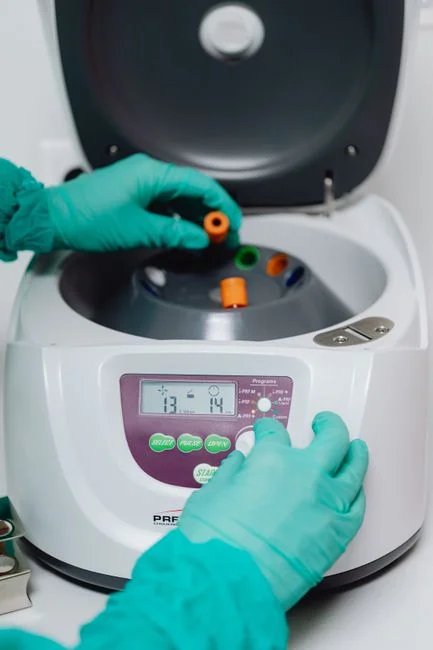
An MBR trades the secondary clarifier for membranes, higher retained solids, and a smaller solids-separation footprint, while adding fouling, cleaning, replacement, and specialist-maintenance obligations. Conventional activated sludge retains those obligations but replaces membrane-specific risk with clarifier settling, sludge handling, and recirculation performance.
| Evaluation item | MBR | Conventional activated sludge |
|---|---|---|
| Solids separation | Membranes retain biomass and suspended material; no secondary clarifier is required for that function. | Secondary clarifier separates sludge from clarified water. |
| Footprint | Can reduce the footprint because membrane separation replaces the clarifier. | Requires aeration, clarifier, sludge-handling, and recirculation areas. |
| MLSS references | The supplied overview reports submerged MBR values of 12,000–20,000 mg/L, while another description gives immersed MBR at 4–12 g/L. | The same overview describes traditional systems around 2.5–3.5 g/L. |
| Hydraulic retention time reference | The supplied overview reports typical MBR HRT values of 3–10 hours. | The supplied research does not provide an equivalent CAS HRT range. |
| Operating risk | Fouling affects transmembrane pressure, energy demand, cleaning frequency, and availability. | Clarifier performance depends on settling, sludge inventory, and hydraulic conditions. |
| Maintenance | Requires air scouring, backwashing, chemical cleaning, membrane inspection, and replacement reserves. | Avoids membrane cleaning and replacement, but requires clarifier and sludge-system maintenance. |
| Reuse potential | Solid separation can support process-water reuse, subject to separate treatment and verification of dissolved constituents. | Clarified effluent may need filtration or other polishing before reuse. |
The MLSS figures have different scopes and should not be combined into one rule. Likewise, the overview’s hydraulic-retention-time range is a general MBR reference, not a design value for a bauxite site. The submerged and side-stream energy figures show why configuration matters: the supplied overview states that submerged configurations can use up to two orders of magnitude less energy than side-stream systems and reports side-stream operation as low as 0.3 kWh/m³ of product. Neither figure is a universal MBR energy guarantee.
Submerged systems use aeration-driven scouring and integrate separation with the reactor. Side-stream systems separate the reactor and membrane train, allowing reactor and membrane sizing to be handled independently and potentially simplifying module access at smaller industrial scales. For a broader mining-wastewater comparison, see the broader mining-wastewater MBR comparison.
Choose the Process Train by Reuse and Compliance Objective
The selected endpoint determines which unit operations are necessary. An MBR’s membrane can improve solids separation, but dissolved salts, residual metals, and other contaminants require separate evaluation. A reuse decision must therefore be written against the complete treatment train, not against membrane filtrate quality alone.
| Discharge or reuse objective | Decision path | Key unresolved issue |
|---|---|---|
| Direct discharge | Characterize, equalize, pretreat as needed, treat biologically if suitable, then separate solids and apply residual treatment where required. | Whether the complete train satisfies every constituent in the applicable permit. |
| Controlled discharge to a sewer or treatment authority | Obtain the receiving authority’s limits and pretreatment conditions before fixing the process train. | Whether additional local treatment, monitoring, or flow controls are required. |
| Process-water reuse | Use membrane solids separation as one part of the train, then evaluate constituent-specific treatment and reuse compatibility. | Residual metals, salts, scaling potential, and process fitness for the intended reuse. |
| Higher-quality reuse | Add and validate the polishing steps required by the reuse specification. | Whether the additional energy, capital, and operating burden is justified. |
Submerged MBR emphasizes aeration-driven scouring and compact integration. Side-stream MBR separates the reactor and membrane and can facilitate module access at smaller industrial scales. The manufacturer’s integrated submerged MBR wastewater treatment system specifies filtration below 1 μm, a footprint 60% smaller than conventional systems, and application flows from 10 to 2,000 m³/day. These are manufacturer specifications, not independent benchmarks for U.S. bauxite wastewater.
As a module-selection example, the DF-series submerged PVDF MBR membrane modules use 0.1 μm flat-sheet membranes, offer 80–225 m² configurations, and list 32–135 m³/day output with integrated aeration for scouring. Product output is not a substitute for sizing from measured flow, wastewater characteristics, target quality, and supplier design calculations.
Build the Fouling and Operating Risk Case
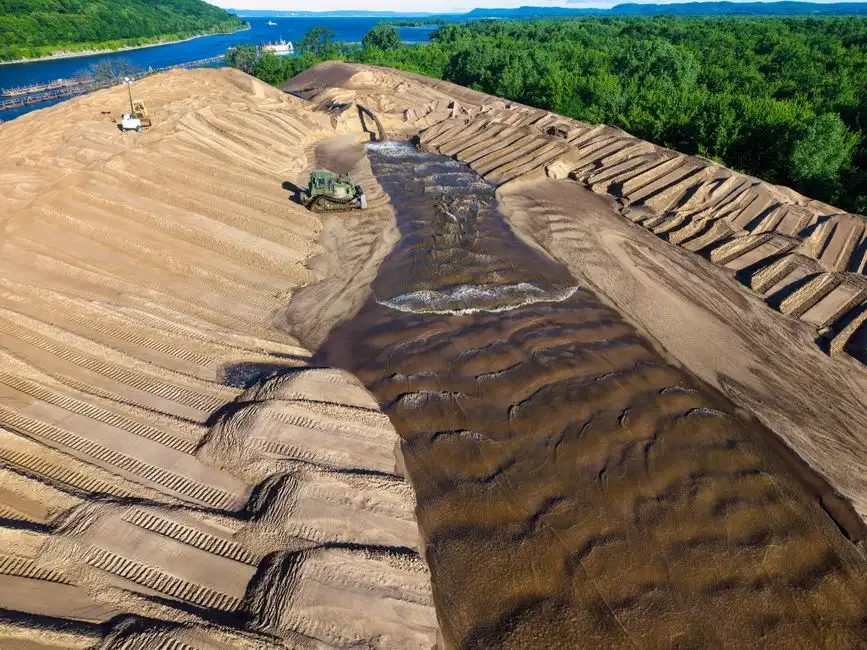
Membrane fouling is the critical MBR operating issue because it affects transmembrane pressure, energy use, cleaning frequency, and plant availability. The supplied overview identifies air scouring, backwashing, chemical cleaning, and optimization of hydraulic retention time and flux as control measures. No credible selection should assume that one control strategy will handle every bauxite wastewater condition.
Bauxite flows may contain variable suspended solids, changing biology, temperature effects, mineral precipitates, and shifting alkalinity. Those changes can alter mixed-liquor characteristics and deposit behavior on the membrane. The design basis should therefore include representative solids, biological stability data, and the anticipated formation of metal-bearing precipitates after pH or alkalinity control.
For a submerged system, access to modules may require removal from the reactor and transfer to an offline cleaning tank. Aeration must provide mixing, oxygen transfer, and membrane scouring while maintaining the required biomass concentration. A side-stream system isolates membrane modules from the reactor and uses pumping to create shear; it also needs controlled solids return, additional aeration for scouring, and attention to pump energy and fouling consistency.
Maintenance planning must compare module replacement logistics, cleaning chemicals and recovery testing, instrumentation, spare-parts strategy, operator competence, and the consequences of downtime. A mineral-intensive stream can make membrane cleaning more demanding than the generic MBR description suggests. Pilot testing should expose the representative stream to the intended flux, hydraulic conditions, and biological operating cycle. Any fouling guarantee must state the tested wastewater, operating envelope, cleaning method, and recovery criterion.
Compare Total Cost Without Hiding Uncertainty
A defensible comparison separates capital equipment from life-cycle costs and avoids assigning a universal price per cubic metre when no bauxite-specific U.S. cost basis is available. The supplied research provides no site-specific capital or operating cost for U.S. bauxite treatment, so any procurement estimate needs a defined design flow, water-quality basis, and endpoint.
| Cost element | MBR comparison point | Conventional activated sludge comparison point |
|---|---|---|
| Civil works | May reduce clarifier-related civil works, while the reactor, membrane area, basins, and access provisions remain. | Includes the secondary clarifier and associated structures. |
| Equipment | Adds membranes, modules, aeration or pumping, instrumentation, and cleaning provisions. | Includes clarifier, sludge handling, and recirculation equipment. |
| Operations | Includes energy, chemical cleaning, labor, module replacement, and availability risk. | Includes aeration, sludge handling, settling performance, and any later filtration needed for reuse. |
| Residuals | Assess sludge concentration, dewatering, disposal, or beneficial-use route. | Assess settled-sludge volume, dewatering, disposal, or beneficial-use route. |
| Uncertainty | Model membrane life, cleaning frequency, energy, and residual changes. | Model settling variability, sludge handling, footprint, and downstream polishing. |
Request itemized offers on the same flow and water-quality basis. Each offer should identify membrane replacement timing, cleaning assumptions, sludge handling, power demand, operator labor, disposal route, and performance guarantees. A ten-year life-cycle sensitivity analysis should test energy prices, labor, cleaning frequency, membrane life, residual-disposal cost, and future reuse value. The wastewater treatment capacity calculation guide can support the flow basis, but catalog capacity cannot replace site-specific design work.
A Practical Decision Framework for U.S. Bauxite Sites
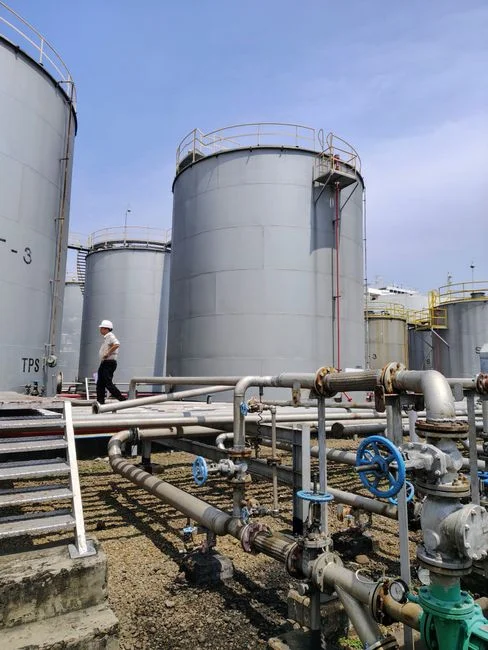
A staged process prevents equipment selection from outrunning characterization. First screen the wastewater; then test feasibility; pilot the critical risks; solicit performance-based offers; and select the train that meets the endpoint with the least justified complexity.
- Screen the wastewater. Establish flow-duration curves, suspended and settleable solids, acidity, alkalinity, metals, temperature, and variability. Define the sewer, discharge, or reuse endpoint.
- Test biological feasibility. Determine whether the organic and inorganic load is biologically compatible. Identify where pH adjustment, solids removal, oxidation, precipitation, filtration, or desalination is required.
- Pilot critical risks. Evaluate solids separation, biomass response, membrane flux, fouling tendency, cleaning recovery, and effluent quality under representative variability.
- Procure against performance. Require guarantees for flow, solids removal, membrane flux or normalized permeability, cleaning frequency, module replacement, energy, availability, and demonstration against the applicable compliance pathway.
- Apply the complexity test. Choose conventional activated sludge when it meets the required quality and footprint with less maintenance risk. Choose MBR when high solids separation, compact installation, reuse readiness, or expansion justifies the added controls and specialist support.
For U.S. sites, compliance evidence must come from the permit or receiving authority. The U.S. mining-plant sewer pretreatment limits discussion provides relevant context, but it does not replace the site’s approved limits or the complete train’s performance demonstration. Expansion decisions should retain future flow, characterization, and reuse flexibility in the initial layout.
Frequently Asked Questions
Should a budget-constrained bauxite site select MBR or conventional activated sludge?
Select conventional activated sludge if it can meet the permit or reuse specification within the available footprint. Compare itemized bids on equal flow and quality bases, including clarifier civil works, sludge handling, aeration, downstream filtration, energy, labor, and disposal. Select MBR only when its quantified solids-separation, footprint, reuse, or expansion benefits outweigh membrane cleaning, replacement, and specialist-maintenance costs. The supplied research provides no bauxite-specific universal price, so require a site-specific lifecycle estimate.
What information should a supplier be required to guarantee?
Require guarantees tied to the characterized wastewater and design envelope: design flow, applicable effluent quality, membrane flux or normalized permeability, cleaning frequency, cleaning-recovery criteria, module replacement assumptions, energy demand, equipment availability, and sludge quantity or characteristics. Also require disclosure of operating limits and pilot evidence. A manufacturer’s general capacity or filtration claim is not a guarantee for U.S. bauxite wastewater.
How should treatment capacity be determined for bauxite wastewater?
Size from measured flow duration, suspended-solids variability, acidity and alkalinity, metals, temperature, the target water quality, and representative pilot results. The supplier should document its design calculations, membrane area, reactor volume, hydraulic and solids-loading assumptions, pretreatment requirements, and peak-flow provisions. Product-catalog output does not establish the required capacity or confirm that the wastewater is biologically treatable.
Does an MBR membrane establish compliance with metal limits?
No. MBR membranes retain biomass and suspended material, but compliance for dissolved metals and other constituents must be demonstrated for the complete treatment train under the applicable permit or sewer requirements. Obtain the governing limits, identify the constituent fractions, test residual treatment as needed, and include sampling and compliance documentation in procurement scope.