What LG Energy Solution’s German expansion changes for wastewater planning
Wastewater from an LG Energy Solution battery-plant expansion in Germany should be managed as segregated, source-specific streams—not as one mixed effluent. Route oily or solids-rich process water through pretreatment such as DAF; treat soluble, biodegradable streams separately with biological systems; use MBR or equivalent polishing where high-quality effluent or reuse is required; and dewater the resulting sludge before disposal. Design for variable production and verify German site-specific discharge, groundwater and trade-waste requirements before equipment selection. The supplied research does not confirm a specific LG expansion site, permit or discharge limit, so final requirements must come from the relevant authorities.
That evidence boundary matters because the expansion location, approval date, wastewater flow and permit are not established by the supplied sources. Planning assumptions must therefore be labelled as such and converted into design requirements through project-specific investigation. A useful starting point is the German market context: Clean Energy Wire reported that grid operators issued 1,937 battery-storage connection agreements in 2025, covering 54.2 GW and 142.4 GWh. By 1 April 2026, transmission-grid operators had issued 64 agreements for about 24.7 GW and 55.4 GWh, according to Clean Energy Wire.
Those figures indicate industrial momentum, but they do not determine wastewater-treatment capacity for an LG Energy Solution battery plant. Grid-storage agreements are not production-line forecasts and cannot substitute for a site wastewater audit. The relevant questions are which manufacturing steps will expand, which cleaning and rinse regimes will operate, how utilities will change, and what flow and contaminant peaks will occur.
The planning basis should therefore cover future-state production, design flow, required effluent quality, reuse targets, available footprint, sludge route, utility demand and approval schedule. Each production line, cleaning regime, utility system and storage area should be examined separately because capacity growth can alter both peak flow and contaminant composition. The source-to-treatment framework for CATL’s battery gigafactory in Germany applies to the same engineering questions, but neither company’s site should be treated as evidence for the other’s permit.
Segment every wastewater stream before selecting equipment
A complete stream inventory is the controlling document for wastewater treatment design because combining streams can make otherwise manageable contaminants dilute, concentrate or chemically incompatible. Source segregation should be established before equalization or treatment equipment is specified.
Begin with every discharge associated with cell or electrode production, including process rinse wastewater, electrolyte- or solvent-bearing water, cleaning solutions and equipment washing. Include floor washings, oily runoff, cooling or blowdown, domestic sewage, stormwater and separately controlled hazardous-waste streams. Do not assume that floor water and stormwater have the same quality or legal route.
| Stream group | Characteristics to establish | Planning treatment decision |
|---|---|---|
| Process rinse and cleaning wastewater | Flow variability; pH; suspended solids; COD or BOD; dissolved metals; salinity; toxicity; recovery potential | Separate by production activity and contaminant profile before selecting physical, biological or membrane barriers |
| Floor washings and oily equipment runoff | Oil and grease; suspended solids; colloids; cleaning chemistry | Contain and pretreat before biological or polishing stages where required |
| Cooling and blowdown | Flow regime; heat and conductivity; chemical additives; discharge destination | Assess recovery, segregation and discharge options independently from process rinses |
| Clean stormwater | Runoff catchment; contamination controls; rainfall variability | Grade and isolate from contaminated process areas through containment and isolation valves |
| Domestic sewage and hazardous waste | Conventional sewage characteristics or waste classification and compatibility | Keep outside the industrial process-water balance unless a permitted combined route is established |
Request at least one full production-cycle wastewater audit from LG Energy Solution or the engineering contractor. Representative sampling should cover normal production, cleaning, maintenance and upset conditions rather than relying only on equipment-vendor estimates. The process-area owner’s wastewater characteristics and acceptance criteria become the inputs to the treatment train.
Where the supplied research gives no concentrations or flows, the correct response is not to insert generic ranges. The audit must establish them. For equipment selection, use mechanical screening where the stream audit identifies removable solids, but do not treat screening as a substitute for oil, soluble-organic or dissolved-metal treatment. Source segregation, containment and representative data determine the technology; generic battery-process descriptions do not.
Route treatment through a source-appropriate process train
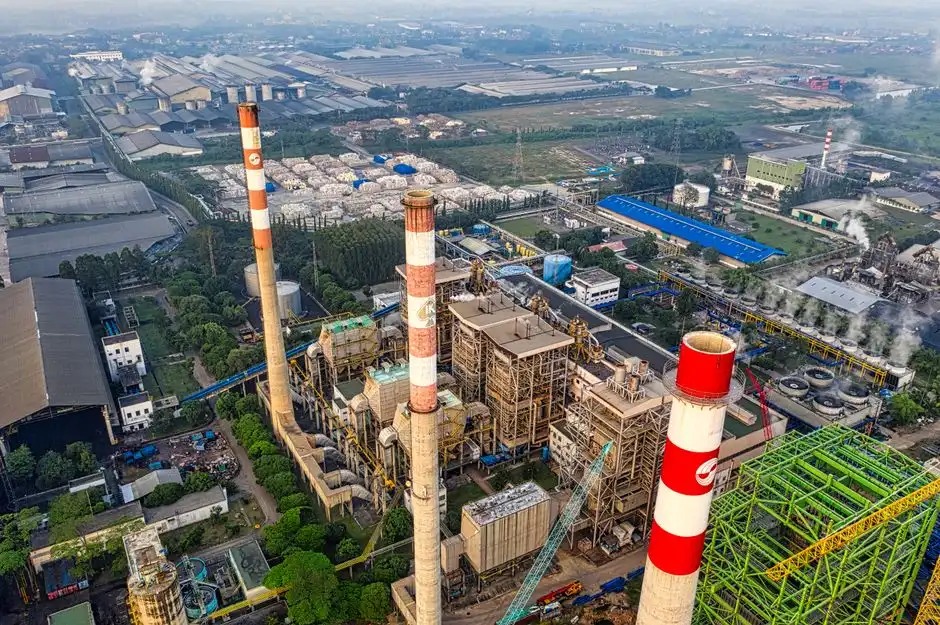
A battery-manufacturing wastewater train should follow a defined sequence: source segregation, equalization and flow control, physical pretreatment, biological treatment where applicable, filtration or polishing, disinfection where required, and reuse or discharge, with sludge handling running in parallel.
Physical pretreatment is not one barrier for all contaminants. Use dissolved air flotation for oil-, solids-, FOG- or colloid-prone streams where reliable removal is needed before biological treatment or membrane polishing. HydropureWater specifies 4–300 m³/h across 13 DAF models; those values are product-selection bounds, not proof of adequate capacity for an LG expansion.
Use an integrated MBR wastewater treatment system where biological treatment must be combined with membrane solids separation, compact installation or near-reuse-quality effluent is required. HydropureWater lists MBR capacities of 10–2,000 m³/day and filtration below 1 μm. The relevant flow, feed quality, required outlet and operating envelope must still be demonstrated in a hydraulic and contaminant mass balance.
| Treatment stage | Primary function | Decision trigger |
|---|---|---|
| Source segregation and containment | Prevents incompatible dilution and keeps contaminated runoff separate | Source audit identifies distinct production, cleaning, utility and drainage systems |
| Equalization and flow control | Buffers production and cleaning peaks; supports stable dosing and biological loading | Variable flow or variable concentration is demonstrated |
| Physical pretreatment | Removes suspended solids, oil, grease, FOG or colloids | Audit shows contaminants that could overload downstream stages |
| Biological treatment | Reduces biodegradable dissolved organics | Stream characteristics and outlet objectives justify biological removal |
| Filtration or membrane polishing | Provides solids separation or final particulate control | Required effluent or reuse quality cannot be met by upstream stages |
| Disinfection | Controls relevant microbial indicators | Reuse application or applicable requirements establish the need |
| Sludge handling | Stabilises and dewaterates concentrated treatment residuals | DAF sludge, biological excess sludge and chemical residuals are included in the mass balance |
Disinfection must be decided as a separate function based on the reuse application and applicable requirements, not assumed to be automatic for every discharge route. Chemical dosing should be tied to actual feed variability and control strategy. The wider literature provides technology context rather than plant-specific criteria: the 2024 Sustainability review, DOI 10.3390/su16219231, discusses constraints of conventional storage systems and the expanding role of lithium-ion systems.
Equalization and treatment must accommodate production changes, maintenance washing and cleaning events. The P&ID should show bypasses, isolation points, sludge-return or wasting arrangements and the consequence of each upset. Any automatic chemical dosing should follow from a verified pollutant inventory and control narrative, not from a general assumption that more chemical improves treatment.
Design sludge, monitoring and reuse around the expansion
Expansion wastewater design is incomplete unless concentrated solids, instrumentation and water recovery are included at the same time as the liquid treatment train. DAF float, biological excess sludge and chemical residuals must appear in the mass balance from project outset because they affect equipment selection, storage, dewatering and final disposal obligations.
Match dewatering equipment to the selected solids route. HydropureWater’s plate-and-frame filter-press range is 1–500 m², with manual, hydraulic and fully automatic PLC-controlled operation. Selection depends on sludge generation rate, solids characteristics, cake-handling route, operating schedule and permitted destination. See also the sludge dewatering sizing guide for the expanded plant when comparing alternatives.
| Design item | Information required | Engineering response |
|---|---|---|
| Sludge quantity and properties | Source-by-source solids generation; solids concentration; chemical residuals | Balance treatment and dewatering duty with the selected handling route |
| Monitoring | Audit-identified pollutants; applicable permit; process-control variables | Define sampling points, automatic controls and alarm responses |
| Wastewater reuse | Contaminant profile; process-water quality; compatibility with receiving equipment | Separate non-contact utility reuse from higher-quality applications and verify compatibility |
| Expansion adaptability | Battery chemistry, process changes and expansion phasing | Use modular treatment, accessible connections and reserved capacity |
Monitoring should follow the pollutants established by the stream audit and the applicable permit, with automatic control where changing flow or concentration could destabilise the process. Reuse should be evaluated only after contaminant and process compatibility are demonstrated. A clearer effluent does not automatically make it suitable for rinsing or another process function.
Request battery chemistry, planned process changes and expansion phasing directly from the plant owner. The treatment train should remain adaptable rather than being fixed around one initial production configuration. For additional treatment routes, review electrocoagulation options for battery manufacturing wastewater only after the stream audit establishes the contaminant and mass-balance case.
Compare treatment options before issuing an equipment tender
Equipment selection should compare each route against the actual treatment objective rather than headline throughput. DAF, MBR and integrated biological systems differ in contaminant removal, footprint, automation, sludge production, reuse quality, operator workload and expansion flexibility.
HydropureWater’s DAF capacity of 4–300 m³/h and MBR capacity of 10–2,000 m³/day are product-selection bounds. Neither can replace a hydraulic and contaminant mass balance, nor can either establish performance for a stream whose flow, peak load or contaminants remain unknown.
| Tender comparison | Questions the buyer must answer | Required supplier evidence |
|---|---|---|
| DAF pretreatment | Which oil, solids, FOG or colloidal load must be removed before downstream treatment? | Mass balance, hydraulic profile, outlet guarantee, sludge projection, utility consumption and control narrative |
| MBR or integrated biological treatment | Is biological removal justified, and what solids separation and outlet quality are required? | Feed envelope, guaranteed outlet values, membrane arrangement, aeration demand, sludge yield and O&M assumptions |
| Complete treatment route | Do equalization, pretreatment, biological treatment and polishing collectively cover the duty? | P&ID, performance guarantees, FAT or SAT plan, chemical use, sludge route and controls integration |
| Commercial and execution risk | Can the supplier meet the project schedule and support the system locally? | Delivery schedule, local service capability, reference performance evidence and clearly stated exclusions |
Compliance risk, delivery constraints, local service capability, controls integration and measured performance references should be mandatory tender-response items. The buyer should request a mass balance, guaranteed outlet values, hydraulic profile, utility consumption, chemical and sludge projections, control narrative, FAT or SAT plan, and O&M assumptions.
Do not select a system solely by throughput. Verify that pretreatment, equalization and polishing provide the complete duty for the relevant battery-process stream. The MBR and conventional activated-sludge comparison for mining wastewater in 2026 illustrates the kind of technical comparison required, but its application to battery manufacturing must be justified by the wastewater audit rather than transferred automatically.
Implement the wastewater expansion in controlled stages
Implementation should proceed from characterization to verified operation, with design decisions traceable to plant evidence.
- Characterise the sources: conduct representative sampling across a full production cycle, including production, cleaning, maintenance and abnormal conditions.
- Define the process flow: develop the treatment train and complete hydraulic and contaminant mass balances for average and peak conditions.
- Confirm the approvals: establish German site-specific permit, groundwater and trade-waste routes with the competent authorities; the supplied research does not provide those site-specific requirements.
- Procure against performance: define guarantees, utility and sludge projections, controls requirements, FAT or SAT provisions, delivery constraints and O&M assumptions in the tender.
- Commission under monitoring: complete site acceptance testing, operator training and controlled start-up, with expansion capacity retained through modular design and accessible connections.
- Verify and optimise: document deviations between the original wastewater audit and actual production, then use a planned sampling and optimisation programme to verify performance.
This staged sequence prevents an expansion from becoming a wastewater bottleneck. It also creates an auditable record showing whether treatment performance follows the original design basis or requires corrective action as production changes.
Frequently Asked Questions
What discharge standards apply to LG Energy Solution’s battery-plant wastewater in Germany?
The supplied research does not identify a specific LG Energy Solution expansion location, approval or permit, so it cannot establish plant-specific discharge standards. The project team must request the applicable permit conditions from the relevant German authorities and verify requirements for direct discharge, indirect discharge, groundwater protection and trade-waste handling. Equipment guarantees should then be written against those confirmed outlet and sludge criteria rather than against assumed generic limits.
Should wastewater from a battery plant in Germany be treated with DAF, MBR, or both?
Use DAF where the wastewater audit identifies oil, grease, FOG, suspended solids or colloids that require removal before downstream treatment. Use MBR where biological treatment with membrane solids separation is justified and the required effluent quality or reuse application warrants it. Both may form one train, but the combination should follow from the source-to-treatment map rather than a default equipment recipe.
How should an engineer size treatment equipment for an LG Energy Solution expansion?
Size the complete train from the audited stream flows, peak production and cleaning conditions, contaminant loads, equalization duty and confirmed reuse or discharge objectives. Apply the DAF and MBR capacity figures only after checking whether they fit the calculated hydraulic and contaminant duty. Obtain the future production schedule, chemistry changes and expansion phasing so variable loads and modular growth are included.
What should a wastewater-equipment supplier provide to reduce compliance and delivery risk?
Require a mass balance, guaranteed outlet values, hydraulic profile, utility consumption, chemical and sludge projections, control narrative, FAT or SAT plan, O&M assumptions, delivery schedule and evidence of local service capability. Also request measured performance references and confirmation that pretreatment, equalization and polishing are included. These checks test whether the supplier is offering a complete process duty or only a headline treatment unit.
How much does an expansion wastewater-treatment system cost, and what drives the budget?
The supplied research contains no quotation or project cost for an LG Energy Solution German expansion, so a defensible price cannot be stated. Buyers should request a budgetary quotation broken into treatment equipment, equalization, pumping, chemical dosing, sludge dewatering, reuse infrastructure, controls, civil works, installation, commissioning, permit-related engineering and O&M. The quote should identify exclusions and the design flows, effluent criteria, reuse target and sludge route on which its price is based. Compare bids against that common scope rather than headline equipment rates.
Related Equipment
- DAF system for battery-plant wastewater pretreatment — specifications, capacity range, and technical data