What Denpasar Data Centers Must Confirm Before Selecting Treatment
A Denpasar data center needs treatment sized from its actual cooling water balance, not IT load alone, and separate systems for continuous cooling-tower blowdown (CTBD) and intermittent construction fill-and-flush wastewater. The treatment objective then follows confirmed chemistry, reuse requirements, sewer acceptance and concentrate-disposal constraints. At four cycles of concentration, a 2026 reference indicates approximately 25–30% of makeup water becomes blowdown. No supplied research confirms Denpasar water chemistry, sewer limits, AMDAL conditions or a concentrate route, so these inputs must be verified before equipment is ordered.
The same IT load can produce different water demand under evaporative, hybrid and closed-loop cooling. Provide bidders with the proposed IT load, cooling architecture, design wet-bulb data, operating profile, ramp-up sequence and cooling criticality during grid disturbances. The cooling designer must reconcile circulating flow, evaporation, drift, blowdown, commissioning losses and expected reuse.
Obtain representative source-water analyses covering TDS, hardness, alkalinity, silica, chloride, sulfate, temperature and turbidity. These parameters control scaling, membrane selection, chemical compatibility and achievable recovery. CTBD cannot be characterized reliably from generic literature values alone.
| Design input | Decision supported | Denpasar status |
|---|---|---|
| Cooling architecture, operating profile and ramp-up sequence | Makeup demand, evaporation, CTBD flow and commissioning losses | Not supplied for a Denpasar project |
| Makeup-water analysis | Scaling, fouling, antiscalant demand and membrane selection | Requires site sampling |
| Receiving-WWTP limits, available capacity and written consent | Whether treated CTBD can be discharged | Requires utility confirmation |
| AMDAL, sewer route, landfall and permitted concentrate route | Discharge, storage, reuse and waste-handling constraints | Requires authority confirmation |
| Construction cleaning chemicals and flushing sequence | Separate treatment and acceptance plan for commissioning wastewater | Requires commissioning methodology |
Request written receiving-WWTP consent covering temperature, pH, TDS, hardness, silica, suspended solids and biocide residual, together with available hydraulic capacity. Confirm separately whether construction fill-and-flush water is covered; operational CTBD approval should not be presumed to cover it. The AMDAL, sewer access, landfall, concentrate route and construction-wastewater conditions remain project-specific unresolved inputs. A related Pontianak data-center blowdown treatment framework provides a useful evidence-request structure, while the Indonesian wastewater and cooling-blowdown treatment guide shows why local permit terms must be verified rather than inferred.
Build the Cooling Water Balance and Size CTBD Correctly
CTBD must be calculated from the selected cooling system’s circulating flow, evaporation, drift and operating cycles of concentration. IT load is a heat input, not a direct wastewater-flow parameter. The final design must reconcile freshwater demand, expected CTBD recovery, process loads, operating hours, construction flushing and any non-cooling water demands.
Genesis Watertech’s 2026 reference reports that a cooling tower operating at four cycles of concentration loses approximately 25–30% of makeup water through blowdown. This is a benchmark condition, not a Denpasar design factor. The final flow must be recalculated because closed-loop operation, operating hours, process loads and reuse can materially change the result.
The same 2026 source gives preliminary CTBD characteristics of 1,200–6,000 mg/L TDS, four to eight times makeup-water concentration, and 10–50 mg/L suspended solids. These figures are suitable only for initial technology comparison. They are not Denpasar measurements and should not be inserted into a water balance without representative analysis.
| Water stream or parameter | 2026 reference or calculation basis | Design treatment |
|---|---|---|
| Operational CTBD | Calculate from circulation, evaporation, drift and cycles of concentration | Size the continuous recovery or discharge train |
| Makeup-water loss at four cycles | Approximately 25–30% of makeup water; Genesis Watertech, 2026 | Recalculate for the final cooling design |
| Preliminary CTBD TDS | 1,200–6,000 mg/L; Genesis Watertech, 2026 | Replace with site analysis |
| Concentration factor | Four to eight times makeup-water concentration; Genesis Watertech, 2026 | Confirm through operating and chemistry data |
| Preliminary CTBD suspended solids | 10–50 mg/L; Genesis Watertech, 2026 | Use to frame pretreatment, not final sizing |
| Construction fill-and-flush water | Intermittent; depends on pipework volume, cleaning chemicals and flushing sequence | Characterize and approve separately |
Schedule construction flushing against commissioning milestones and document the cleaning chemicals actually used. If sewer acceptance is uncertain, specify temporary treatment or licensed haul-off rather than presuming a CTBD discharge route covers the event. Keep construction wastewater separate in the process flow diagram, sampling plan, storage allowance and commissioning acceptance test.
Choose the Treatment Objective Before Choosing the Equipment
Cooling-tower makeup reuse, controlled sewer discharge and zero-liquid discharge are different objectives with different treatment trains. Genesis Watertech’s 2026 reference gives 60–85% reuse for suitable cooling-tower makeup-reuse configurations. That is a planning range, not a guaranteed Denpasar recovery rate; permeate must satisfy the cooling chemistry and displace freshwater within the signed water balance.
Discharge compliance means treating CTBD to the receiving utility’s confirmed limits and available capacity. Sewer connection remains a consent question, not a default. If reuse quality is not required for cooling, process water, irrigation or washdown may be alternatives only after their site-specific quality requirements and acceptance conditions are verified.
Zero-liquid discharge should follow from a confirmed no-discharge constraint or binding corporate objective. It is not automatically justified by high water demand. The lifecycle assessment must compare freshwater and reuse scenarios using the actual electricity source, treatment energy, chemical use and freshwater displacement.
| Objective | Primary decision test | Operational requirement |
|---|---|---|
| Cooling makeup reuse | Can permeate quality displace freshwater safely? | Reliable pretreatment, membranes, controls and cooling-chemistry compatibility |
| Controlled sewer discharge | Has the receiving utility confirmed limits and capacity? | Continuous monitoring and a demonstrable discharge route |
| Process-water or washdown reuse | Can the receiving process accept the specified quality? | Application-specific treatment and contamination controls |
| MVC or thermal recovery | Do sewer constraints and energy supply justify thermal treatment? | Reliable power, heat rejection, operators and maintenance access |
| Full ZLD | Is no liquid discharge a confirmed requirement? | Residual solids handling, higher energy demand and outage strategy |
Open Engineering’s 2026 life-cycle assessment found that the wastewater scenario had about twice the global warming potential of the freshwater case, with treatment energy explaining roughly 80% of the difference; UF+RO energy use grew to more than five times the freshwater case. Higher cycles of concentration reduced blowdown and chemical consumption in the same study. These findings make grid emissions and reuse-water life-cycle assessment relevant to the tender rather than optional sustainability commentary.
For every option, price standby power, treatment availability during grid disturbances, operator capability, maintenance access and recovery from power loss. A treatment plant that cannot operate when cooling is required does not provide a resilient solution.
Match the Treatment Train to CTBD Chemistry
Start with water reduction and source control: evaluate closed-loop or hybrid cooling, leakage control, heat-exchanger optimization, side-stream filtration and the lowest practical cycles of concentration that protects cooling equipment and receiving infrastructure. The multi-media filtration equipment is relevant to solids control, but it does not remove dissolved salt or establish a discharge route.
Select membranes from the confirmed contaminants and reuse target. UF is appropriate for suspended solids, colloids and biological material before RO, or as a standalone treatment where these contaminants dominate rather than dissolved salts. The proposed hollow-fiber ultrafiltration pretreatment must be matched to actual feed quality, flux, backwash requirements and cooling chemistry.
Genesis Watertech’s 2026 reference reports RO recovery of 50–85% and permeate TDS of 10–50 mg/L. Use RO when silica, hardness or accumulated treatment chemicals must be removed to support reuse or discharge compliance. Its proposed industrial RO blowdown reuse system should be specified only after makeup and CTBD analyses establish scaling risk and required permeate quality.
NF is appropriate where hardness and sulfate dominate and silica permits. Genesis Watertech reports NF recovery of 70–85%, with permeate TDS at 30–50% of feed TDS. IDE-TECH reports that conventional brackish RO typically reaches 75–80% recovery before scaling becomes unmanageable. Membrane antiscalant treatment, pH control and biocide neutralization must therefore follow the confirmed chemistry rather than a generic chemical program.
For a high-recovery concept, IDE-TECH describes membrane separation combined with controlled salt precipitation. Its reported case achieved around 95% recovery and approximately 1 mg/L permeate silica. These are vendor-reported figures from a specific application, not a Denpasar guarantee. Confirm energy demand, precipitate handling, chemical compatibility and local operating support.
| Condition | Treatment implication | Residual route to define |
|---|---|---|
| Suspended solids and biological material are the principal concern | UF or appropriate pretreatment | Retained solids and backwash waste |
| Silica, hardness or treatment chemicals constrain reuse or discharge | RO with chemistry-specific antiscalant and pH control | Brine disposal, further concentration or crystallization |
| Hardness and sulfate dominate and silica permits | NF may reduce membrane complexity | NF concentrate and solids |
| No liquid discharge is required | Membrane concentration plus evaporation and crystallization | Classified solid residue and authorized disposal |
| Sewer acceptance is confirmed but capacity is constrained | Recovery followed by controlled discharge | Residual discharge volume within consent |
Every design must identify one residual route: authorized sewer discharge, MVC or another concentrate treatment, secure brine storage and authorized haul-off, or crystallization for a confirmed ZLD case. Site selection should use the RO and UF replacement membrane elements only after the installed membrane make and operating envelope are known.
Compare Reuse, Discharge, MVC and ZLD Commercial Trade-offs
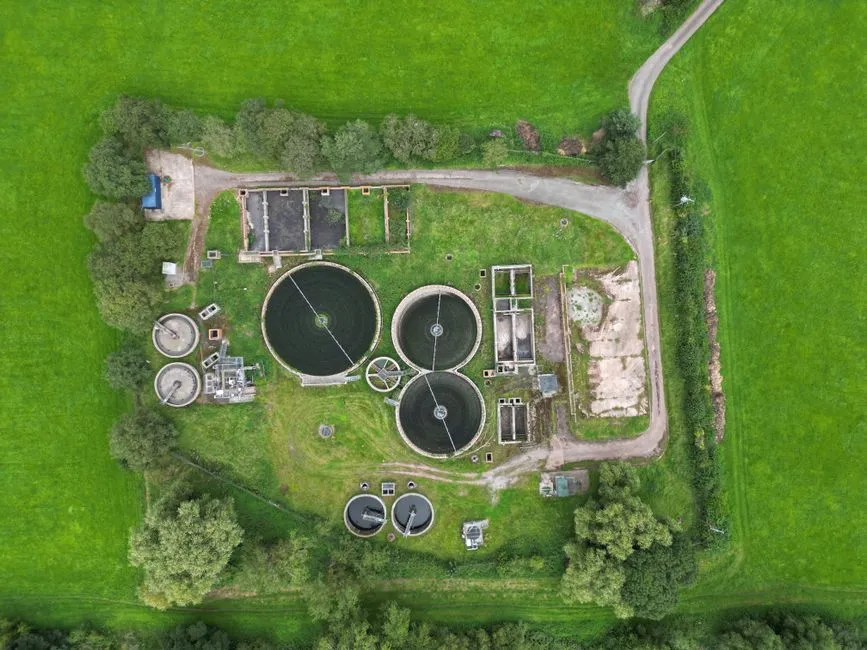
Compare complete routes rather than headline recovery. Side-stream filtration addresses circulating-water solids; UF/RO can produce reusable permeate; controlled discharge depends on utility consent; MVC concentrates residual brine; and full ZLD adds evaporation and crystallization. Each route creates a different capital, energy, operator, maintenance and permit burden.
| Route | 2026 US reference benchmark | Key commercial issue |
|---|---|---|
| Side-stream filtration | $50,000–$200,000 | Filtration capacity, solids handling and effect on cycles of concentration |
| RO reuse system | $250,000–$500,000 for a 50,000 GPD system | Feed chemistry, recovery, membrane replacement and brine route |
| MVC unit | $1–3 million for a 10,000–30,000 GPD system | Electrical demand, cooling system, scaling and operators |
| Full ZLD | $3–8 million | Thermal load, crystallization, solids classification and outage resilience |
These are HydropureWater’s 2026 US reference ranges, not Denpasar quotations. They indicate order of magnitude only and should not be converted into a local budget without a site-specific offer. Mandatory quotation fields include Indonesian freight, taxes, civil works, PLN electrical interface, local commissioning, monitoring, preventive maintenance, membrane replacement, filter elements, chemicals, energy and concentrate management.
Genesis Watertech’s 2026 reference reports MVC recovery of 95–98%, distillate below 10 mg/L TDS and energy consumption of 15–25 kWh per 1,000 US gallons of distillate. These are technology-reference values, not a Denpasar energy guarantee. Require the bidder to state the design basis, local power tariff assumptions and treatment availability during grid disturbances.
Use a sequence rather than selecting the most complex equipment first:
- Reuse CTBD where tested permeate can safely displace freshwater and the cooling system can accept the chemistry.
- Use controlled discharge where the receiving utility has confirmed limits, capacity and acceptance.
- Consider MVC where sewer constraints and reliable electricity justify further concentration.
- Reserve full ZLD for a verified no-discharge requirement or binding corporate objective.
Related technical detail is available in the treatment valves, filter media and ancillary equipment scope, but no commercial comparison is complete until every residual stream and local interface has a named price.
Issue a Denpasar Tender That Prevents Design and Compliance Gaps
The pre-order package must contain a signed water balance, representative makeup and CTBD analyses, receiving-utility correspondence, AMDAL assumptions, process flow diagram and P&ID. These documents convert open assumptions into explicit design constraints. The RO system specifications and selection guide can support specification review, but it cannot replace project chemistry or permit evidence.
Require each bidder to state design CTBD flow, operating basis, recovery, permeate quality, concentrate route, Indonesian freight, PLN interface, local commissioning, monitoring scope and priced exclusions. Also require equipment performance guarantees, membrane warranties, chemical-compatibility statements, expected membrane and filter lead times, and evidence of local spare-parts availability.
Assess local commissioning and clean-in-place support separately from global manufacturer experience. The supplier should identify the Indonesian service partner, named commissioning personnel, response arrangements, operator training and membrane-cleaning support.
- Submit the water balance, analyses, permit correspondence and P&ID as a common tender basis.
- Require a process description that reconciles recovery, concentrate, storage and final discharge or reuse.
- Include a power and outage study covering standby power, control restart, treatment availability, operators, preventive maintenance and remote support.
- Require a commissioning protocol for continuous CTBD and construction wastewater, including sampling points, acceptance tests and disposal records.
- Compare bids on the same flow, water-quality, performance, warranty and priced-exclusion basis.
A bidder that cannot identify the concentrate route, local support arrangement or commissioning acceptance method has not closed the project’s principal design and compliance gaps. The Shivaji Nagar data-center treatment framework offers another comparison point for structuring these procurement gates.
Frequently Asked Questions
How much should a Denpasar data center budget for cooling blowdown treatment?
Use HydropureWater’s 2026 US ranges only for an order-of-magnitude allowance: $50,000–$200,000 for side-stream filtration, $250,000–$500,000 for a 50,000 GPD RO system, $1–3 million for a 10,000–30,000 GPD MVC unit and $3–8 million for full ZLD. They are not Denpasar prices. Request quotations that separately price freight, taxes, civil works, PLN connection, local commissioning, membranes, chemicals, monitoring, maintenance and concentrate disposal.
Should the project buy UF, RO, NF, MVC or full ZLD before obtaining CTBD analysis and sewer consent?
No. Use the confirmed chemistry and disposal objective to select the process: UF for particulate and biological control, RO where dissolved silica, hardness or treatment chemicals must be removed, NF where hardness and sulfate dominate and silica permits, MVC where concentrated residue requires thermal recovery, and ZLD only for a confirmed no-discharge requirement. Written sewer consent and representative CTBD analysis are procurement gates, not post-order details.
How is cooling-tower blowdown flow sized without using IT load as the design basis?
Calculate CTBD from the selected cooling system’s circulating flow, evaporation, drift and cycles of concentration, then reconcile it with freshwater demand, operating hours and expected reuse. Genesis Watertech’s 2026 reference reports approximately 25–30% of makeup water lost as blowdown at four cycles, but the final Denpasar design must use the approved cooling calculation and site data.
What should a Denpasar supplier guarantee in its technical and commercial offer?
Require guarantees for design CTBD flow, recovery, permeate quality, concentrate quantity and final route, together with equipment performance, membrane warranties, chemical compatibility, membrane and filter lead times, local spare-parts availability and commissioning support. Also price Indonesian freight, PLN interface, local operator training, monitoring, preventive maintenance and all exclusions. These checks reduce reliance on global supplier capability that may not exist locally.
Can construction fill-and-flush water be discharged to the same sewer as operational CTBD?
Do not assume so. Construction wastewater can contain cleaning chemicals, corrosion inhibitors, biological residue or metals and should be characterized from the flushing procedure. Obtain written acceptance covering that wastewater separately; if confirmation is unavailable before flushing, include temporary treatment, secure storage or licensed haul-off in the commissioning plan.