Which packaged sewage treatment plant fits a Hanoi housing development?
For a Hanoi housing development, a buried A/O packaged plant is usually the practical starting point when the objective is dependable domestic sewage treatment with a compact footprint and landscaping above the unit. HydropureWater's buried WSZ A/O sewage treatment package combines anoxic/aerobic biological contact oxidation, sedimentation and disinfection in one underground package rated from 1–80 m³/h. An integrated MBR membrane bioreactor is the stronger alternative when finer solids separation or water reuse justifies its added complexity; its stated range is 10–2,000 m³/day. The final choice depends on verified design flow, sewer connection, ground conditions, effluent destination and confirmed authority and operator responsibilities.
Why Hanoi projects need a collection-to-disposal design
The World Bank found that only 10% of the urban wastewater described in its December 2013 status analysis was treated and safely collected.
That figure is historical, but the system lesson remains relevant: a treatment unit does not create a functioning sewerage service by itself. The same December 2013 Vietnam Urban Wastewater Review reported that investment in treatment facilities had not always been accompanied by appropriate collection systems.
For a housing developer, this means the project boundary must include more than the packaged plant. Confirm the household connections, local sewers, drainage crossings and final effluent route. The World Bank review identified several sources of dilution or alteration in combined systems: missing household connections, partial organic-matter decomposition in septic tanks, drainage-canal infiltration and rainwater runoff. Each can change hydraulic and organic loading before sewage reaches the treatment package.
Hanoi also has established centralized infrastructure. The World Bank reported that the Kim Lien and Truc Bach wastewater treatment plants were commissioned in 2005. That history does not prove that a particular development has a usable sewer connection, but it establishes that centralized and decentralized concepts must be assessed together rather than treating a package as the default solution.
Before comparing equipment, obtain:
- a drainage and sewer plan showing the development catchment, public mains and any available connection;
- confirmation of the drainage outfall or approved receiving destination;
- the identity of the utility or authority responsible for the receiving infrastructure; and
- an assessment of whether the proposed collection system is separate or affected by stormwater.
The framework in this article treats the treatment, collection and disposal design as one procurement question. It follows the logic of packaged sewage treatment plant sizing for housing developments, but Hanoi’s authority, sewer and site information must govern the local decision.
Buried A/O or MBR: compare the treatment packages
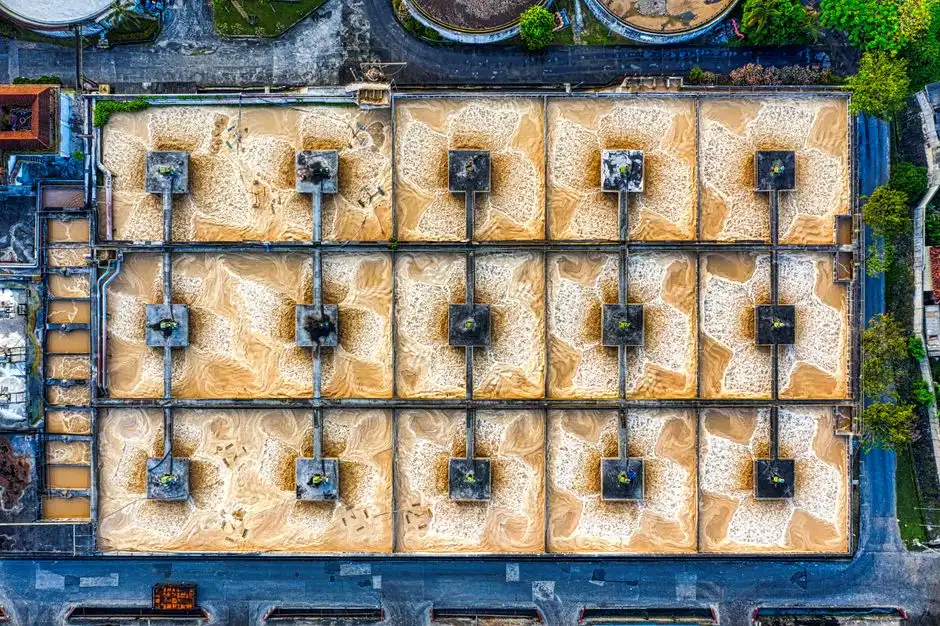
The WSZ offers a buried biological-treatment route, while the MBR adds membrane separation to activated sludge and should be selected against a defined treatment or reuse objective.
| Decision item | WSZ buried A/O package | Integrated MBR |
|---|---|---|
| Process scope | Anoxic/aerobic biological contact oxidation, sedimentation and disinfection in one buried package | Activated sludge combined with submerged PVDF membrane filtration below 1 μm |
| Stated capacity | 1–80 m³/h | 10–2,000 m³/day |
| Installation character | Single buried unit with landscaping above | More equipment-intensive treatment train for municipal sewage, process water or reuse applications |
| Principal operating tasks | Aeration, biological solids management, sediment removal and disinfection | Activated-sludge management plus membrane operation and maintenance |
| Selection logic | Compact siting and standard domestic treatment dominate | Fine solids separation, reuse or a more advanced process objective dominates |
The WSZ process is intended for residential communities where a compact buried installation matters. The buried WSZ A/O sewage treatment package places its treatment stages below grade, leaving the surface available for landscaping. It remains a biological plant: the operating team must maintain aeration, remove settled and biological solids, manage residuals and service the disinfection stage.
The integrated MBR membrane bioreactor combines activated sludge with submerged PVDF membrane filtration. Membrane separation makes it relevant where the project brief requires finer solids separation or reuse. The tradeoff is greater process complexity: membrane condition, cleaning access and replacement provisions must be incorporated into the operating plan.
Neither description establishes compliance with a current Vietnamese discharge requirement for the proposed Hanoi site. The project-specific permit, sewer connection conditions and receiving-water requirements must be reviewed before technical selection. If screening is identified as necessary for upstream protection, evaluate a rotary mechanical bar screen separately; it does not replace biological capacity or clarify the discharge route.
Size the plant from verified wastewater flows
A defensible capacity selection starts with a verified wastewater profile, not the number of housing units or a catalogue range.
Ask the design team to document occupancy, water-use assumptions and the resulting average daily, peak and minimum operating flows. The supplied research provides no per-person wastewater flow factor, so this article does not infer one. The WSZ catalogue range of 1–80 m³/h is a selection envelope, not a development design flow. Similarly, the MBR range of 10–2,000 m³/day must not be converted into a chosen duty without confirmed inputs.
| Input to obtain | Why it changes selection | Evidence required from the bidder |
|---|---|---|
| Wastewater flow profile | Defines average, peak and minimum operating conditions | Stated design flow and the basis used for each operating case |
| Waste quality | Identifies biological and separation requirements | COD, BOD, TSS, total nitrogen, temperature, detergent and grease assumptions, plus relevant commercial contributions |
| Collection behavior | Accounts for dilution and altered loads described by the World Bank | Assumptions for household connections, infiltration, stormwater and septic-tank discharge |
| Authority basis | Prevents equipment selection from bypassing the reviewing party | Confirmation of the required design basis and reference to the applicable connection conditions |
| Occupancy profile | Links capacity to seasonal and staged development | Operating response to occupancy changes and any phased-capacity provisions |
The World Bank’s December 2013 review specifically associated missing household connections, septic-tank decomposition, drainage-canal infiltration and rainwater runoff with dilution in combined systems. The developer should therefore distinguish untreated sewer flow from rainfall or infiltration entering the proposed inlet works.
Issue the flow profile and treatment objectives to bidders in a common basis. Ask each supplier to state whether its quoted capacity is average, peak or defined on another basis, and to identify any operating constraints outside that basis. Only convert between m³/day and m³/h as a unit calculation, not as a substitute for engineering design.
Check the site before choosing a buried package

Ground conditions, groundwater and maintenance access can eliminate a buried concept before process selection is completed.
Require a site-specific geotechnical assessment covering soil, groundwater and excavation conditions. The supplied research does not establish a permissible excavation depth, bearing value or groundwater threshold, so those criteria must come from the project’s geotechnical engineer and reviewing authority rather than a generic product rule.
Map the proposed package, access routes, lifting points, electrical supply, control-cable routes, odor controls and stormwater separation before fixing the footprint. Confirm that landscaping can remain above the buried unit without obstructing chambers, vents or access covers. Maintenance and sludge removal must also be possible under normal operating conditions; otherwise, compare an above-ground arrangement or another treatment architecture.
Assess noise, odor and visual effects in relation to nearby homes, roads and open spaces. These are design constraints to resolve through the site plan and authority consultation, not unverified regulatory limits.
For the MBR route, add membrane replacement, cleaning and access requirements to the electrical, control and maintenance reviews. A membrane package may solve a treatment-objective problem while creating a heavier site and service burden.
Screen only where a defined upstream need exists. If solids or debris could compromise the biological package, the rotary mechanical bar screen should be evaluated by its own process duty and installation requirements.
Confirm approvals, sewer connection and ownership
The November 2004 Hanoi case study identified SADCO as the centralized agency responsible for sewerage and drainage, but the buyer must reconfirm the current organization and approval route.
The Decentralised wastewater management in Vietnam – a Hanoi case study, published in November 2004, is historical evidence of institutional arrangements, not a statement of the law in 2026. It described SADCO’s role and distinguished responsibilities among ward, district and city structures. Current confirmation is therefore essential before contracts are placed.
Obtain current written answers to these questions:
- Will the development connect to a public sewer, use a decentralized terminal facility, or discharge to another approved destination?
- Which authority or utility owns the collection network, treatment plant, sludge, outfall and monitoring obligations?
- What connection, discharge, commissioning and operating conditions apply?
- Which party owns each asset and signs off performance?
Build a stakeholder map covering the developer, sewer utility, ward and district authorities, the relevant approving bodies and any delegated operator. A 2019 Hue dissertation based on 29 semi-structured stakeholder interviews found that ineffective communication, weak leadership, asynchronous administration and limited budgets hindered sustainable implementation. Although that research concerned Hue rather than Hanoi or a legal requirement, it supports a practical procurement lesson: assign responsibility before award.
Require bidders to support the approval package with process documentation, drawings and test information. Do not treat a product description as proof of a current permit. Effluent quality, monitoring, sampling and acceptance criteria should follow the written conditions issued for the project.
Build the procurement decision matrix
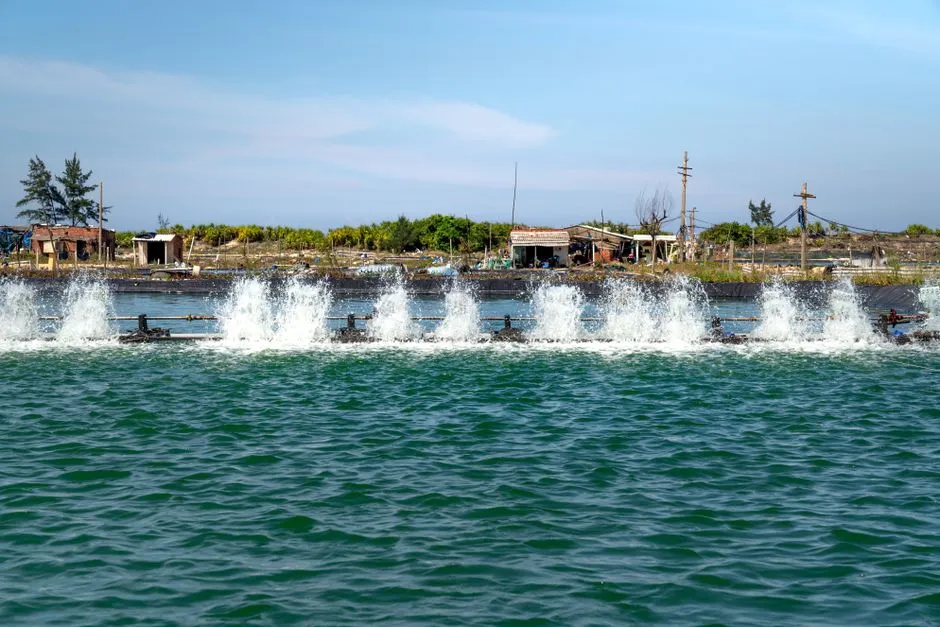
Supplier selection should be weighted by project constraints and long-term operability rather than equipment price alone.
Apply weighted criteria for verified flow capacity, treatment objective, footprint, sewer strategy, constructability, automation, local service support, operator requirements, sludge handling and documentation. Adjust the weights with the developer, consultant and prospective operator before receiving quotations. This prevents one supplier from redefining the basis of comparison.
| Weighting area | Question for every bidder | Evidence required |
|---|---|---|
| Process and capacity | Does the offered process address the verified flow, wastewater quality and reuse objective? | Design basis, process description and performance documentation |
| Installation boundary | What is included between collection, treatment, effluent disposal and power supply? | Drawings, bill of quantities and explicit exclusions |
| Commissioning | How will startup, testing and acceptance be demonstrated? | Commissioning plan, sampling points and acceptance records |
| Long-term operation | Who maintains the plant and supplies replacement parts? | Training, spare parts, warranty, local service capability and O&M support |
| Residuals | How will sludge and screenings be stored, removed and disposed of? | Residual quantities, handling plan and disposal responsibilities |
Ask for separate line items for civil works, installation, electrical works, commissioning, training, spare parts, warranty and O&M support. Identify exclusions, particularly the sewer connection, inlet works, effluent pumping, laboratory access, sludge transport and disposal, and power connections. A site-specific quotation is required; the supplied research provides no defensible Hanoi equipment price or local installation-cost percentage.
Select the WSZ when the weighted result favors compact integration, buried installation and domestic treatment. Select MBR when advanced separation, reuse or more demanding process objectives dominate. Neither route should advance until exclusions and operating ownership are explicit.
Long-term affordability belongs in the matrix. Everant Journals’ Housing Affordability Trap and Labor Mobility: Evidence From Vietnam’s Urban Development used data from 525 urban residents and identified housing affordability as the strongest positive influence on labour mobility. It does not set an O&M budget, but it reinforces why dependable operation should be evaluated for residents and the operating budget rather than treated as an afterthought.
Commission the plant with collection and operations
Commission the treatment package, incoming sewers, controls and discharge route as one operational system.
- Confirm design inputs: freeze the approved flow profile, wastewater characteristics, operating cases and acceptance criteria.
- Inspect collection works: check connections, gradients, inlet structures, isolation points and stormwater entry before introducing wastewater.
- Test equipment: wet-test the plant and verify valves, aeration, instrumentation, controls, alarms and power-failure response.
- Start biological operation: establish the biological process and confirm sludge and sediment management arrangements.
- Demonstrate treatment: verify disinfection where included and collect representative influent and effluent samples under the agreed procedure.
- Balance flows: reconcile incoming sewer flow with available treatment capacity and confirm the response to seasonal occupancy changes.
The commissioning plan should identify test methods, sampling points, responsible parties, acceptance evidence and unresolved defects. It should also explain how incoming flow is controlled during wet commissioning and biological startup.
Transfer an O&M manual covering aeration, sludge removal, disinfection service, controls, power interruption, laboratory support and maintenance access. For MBR, add membrane cleaning, condition monitoring and replacement responsibilities. If sludge dewatering is required, evaluate a plate and frame sludge filter press using measured sludge quantity and moisture condition rather than adding it automatically to the package scope.
Review performance after the agreed operating period using the influent and effluent monitoring plan. For automated plants, the SCADA architecture for automated wastewater treatment can inform control and alarm design, but it does not replace process verification. Do not promise numerical effluent performance that has not been established for the project’s influent, equipment and permit conditions.
Frequently Asked Questions
How should a packaged sewage treatment plant be sized for a Hanoi housing development?
Require verified wastewater flows based on occupancy and water use, then ask each supplier to state its average, peak and minimum operating design basis. Include COD, BOD, TSS, total nitrogen, temperature and relevant commercial contributions. Do not infer plant capacity from the number of homes or from the WSZ and MBR catalogue ranges alone.
Which supplier offers the best fit: a buried A/O package or an MBR?
Compare process scope, verified design flow, site footprint, installation boundary, commissioning evidence, documentation, local service capability and long-term operating obligations. Choose the buried A/O concept when compact integration and domestic treatment dominate; choose MBR when fine solids separation or reuse is a defined requirement and the buyer can support the added membrane-operating complexity.
What inputs are needed for a defensible Hanoi package-plant price?
Request a site-specific quotation based on verified flow, treatment objectives, civil and electrical works, transport, access, power connection, commissioning, sludge handling, laboratory support, training, spare parts and O&M. No Hanoi equipment price or installation-cost percentage is supported by the supplied research, so budget comparison must use itemized bidder quotations rather than an assumed generic price.
What compliance and connection conditions should be obtained before purchase?
Ask the relevant Hanoi authority or sewer operator for current written discharge and sewer-connection conditions, including the receiving destination, sampling requirements and asset and operating responsibilities. Reconcile the current institutional route with the historical case evidence, and require the supplier’s process documentation and test information without treating it as a permit.
Related Equipment
- rotary mechanical bar screen — specifications, capacity range, and technical data