Determine Which Discharge Rules Apply
Pulp and paper plants near Tampa generally meet sewer-discharge requirements by first identifying the applicable EPA categorical pretreatment standard under 40 CFR Part 430, then applying City of Tampa local limits and Florida pretreatment rules. The mill reduces wastewater load at its source, removes suspended solids with clarification or dissolved-air flotation, treats biodegradable organics biologically, and uses polishing or advanced treatment when permit conditions require it. Compliance also depends on monitoring every permit parameter, retaining records, and responding promptly to exceedances. The exact limits depend on the mill’s process, categorical subcategory, sewer authority, and discharge permit.
EPA incorporates pulp, paper, and paperboard effluent guidelines into NPDES permits for direct dischargers, which discharge pollutants to waters of the United States. Indirect dischargers discharge to a publicly owned treatment works and are addressed through pretreatment permits or other control mechanisms. The distinction controls the compliance path: a mill discharging to the City of Tampa system should not evaluate its obligations as though it holds a direct-discharge NPDES permit. EPA identifies regulated pollutants by pulp and paper subcategory, so the mill’s actual process and products—not simply the phrase “pulp and paper”—determine the applicable categorical standard. The EPA Effluent Guidelines source lists kraft, soda, sulfite, semi-chemical, groundwood, deink, purchased-pulp, paperboard, tissue, specialty-paper, and other subcategories.
Identify the receiving authority before selecting equipment. Confirm whether the discharge enters the City of Tampa system or another POTW with its own local limits, pretreatment permit, monitoring requirements, and enforcement procedures. Tampa defines local limits as specific limits developed to implement the general and specific discharge prohibitions in 40 CFR 403.5(a)(1) and (b), according to the City of Tampa’s 2021 Discharge and Industrial Pretreatment Standards.
Then combine four documents into one compliance basis: the EPA categorical pretreatment standard, applicable local pretreatment limits, the industrial-user permit conditions, and Florida pretreatment requirements. For mass-based categorical standards, ask the control authority whether an equivalent concentration or mass limit may be imposed under 40 CFR 403.6(c) and Rule 62-625.410(4) F.A.C. The City of Tampa’s 2021 standards state that the Director may use that mechanism when local discharge factors differ fundamentally from those considered by EPA. A useful regulatory review is shown below.
| Decision item | Evidence to obtain | Why it controls the decision |
|---|---|---|
| Discharge route | Direct discharge or discharge through a sewer to a POTW | Determines whether NPDES or pretreatment mechanisms apply. |
| EPA subcategory | Process, raw material, products, and production description | EPA regulates pollutants by subcategory, not by industry label alone. |
| Receiving authority | POTW name, permit, local limits, and enforcement procedures | The authority controls authorization and local pretreatment limits. |
| Combined limit set | Categorical standard, local limits, permit conditions, and Florida requirements | The most restrictive applicable requirement governs the design basis. |
| Mass or concentration | Discharge factors and the control authority’s determination | Tampa cites 40 CFR 403.6(c) and Rule 62-625.410(4) F.A.C. for an equivalent limit where applicable. |
For comparison with another facility-specific pretreatment workflow, see How Pulp & Paper Plants Near Tampa Meet Sewer Limits in 2026.
Characterize the Wastewater Before Choosing Equipment
Pulp and paper mill wastewater properties vary with process, raw material, recirculation, and water use, so equipment sizing must start with production data rather than a single clean-water sample. The academic review “Wastewater Treatment and Reclamation: A Review of Pulp and Paper Industry Practices and Opportunities” identifies pollutant formation in wood preparation, pulping, pulp washing, screening, paper-machine, coating, and especially bleaching operations. It identifies BOD, COD, suspended solids, color, toxicity, and absorbable organic halides as relevant concerns. The permit parameter list, however, comes from the applicable categorical standard, local limits, and industrial-user permit.
Map each wastewater source, collect representative data across normal production, startups, shutdowns, product changes, cleaning cycles, and batch discharges, and measure pH, temperature, suspended solids, oil and grease where applicable, and soluble pollutant concentrations. Use flow together with concentration to calculate mass loading. Concentration by itself does not establish compliance with a mass-based limit.
Water balance is part of the wastewater characterization. The academic review reports up to 70 m³ of wastewater per metric ton of paper and approximately 70% of industry water intake used as process water. Those figures describe industry-wide conditions, not a guaranteed design value for a Tampa mill. Account for internal recycle, batch operations, and the effect of water conservation on contaminant concentration.
Upstream controls can reduce both load and flow sent to end-of-pipe treatment. The review identifies process-water recycling, dissolved-air flotation, filtration save-alls, and other internal purification practices. Evaluate these before treating them as optional polish: they can reduce biological loading, solids carryover, water demand, and treatment volume.
| Characterization activity | Required inputs | Engineering output |
|---|---|---|
| Source mapping | Wood preparation, pulping, washing, screening, paper-machine, coating, and bleaching flows | Wastewater-generation inventory and sampling plan |
| Representative monitoring | Flow and concentration across operating conditions | Mass-loading and variability profile |
| Quality screening | BOD, COD, TSS, color, toxicity, AOX, pH, temperature, and oil and grease where applicable | Pollutant-control objectives linked to the permit |
| Water balance | Freshwater intake, process-water reuse, batch operations, and discharge flow | Source-control and reuse opportunities |
Build a Treatment Train That Controls the Right Pollutants
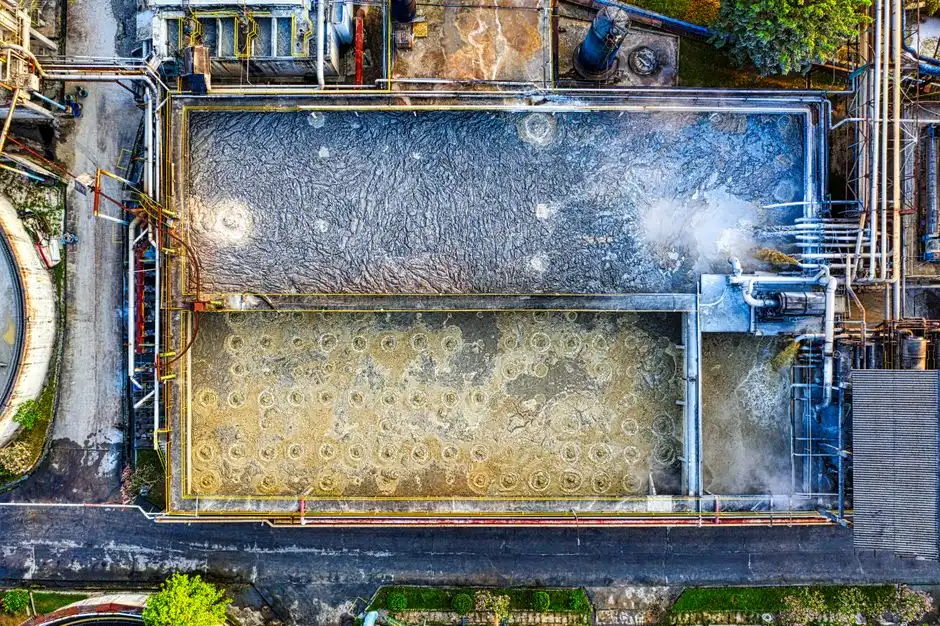
Primary clarification followed by activated sludge is a widely implemented conventional treatment configuration in the pulp and paper industry, according to the academic review. That sequence separates functions: clarification or DAF removes suspended and floatable material, while biological treatment addresses biodegradable organic loading. Additional treatment should be selected against a verified permit objective rather than added because a technology is available.
- Control at the source. Evaluate process-water recycling, save-all filtration, segregation of high-strength streams, and chemical-use controls before sizing end-of-pipe equipment.
- Equalize variable flow and load. A mill batch can change wastewater composition and flow. Equalization protects downstream biological and solids-removal systems, but its required volume must come from measured operating data.
- Remove solids and floatables. Use primary clarification for settleable material or DAF where floatable solids and the wastewater characteristics justify it. For a DAF selection, see the Cavitation Air Flotation Energy Efficiency: 2026 Optimization Guide.
- Treat biodegradable organics biologically. The academic review identifies activated sludge as conventional treatment and anaerobic biological stages as an option where higher-level removal is needed.
- Add targeted polishing. Advanced oxidation, bioreactors, and membrane filtration can provide supplementary removal when the permit objective or wastewater chemistry requires it. The MBR versus conventional activated-sludge comparison provides a useful framework for clarifying biological and membrane objectives.
A clarification unit relies on solids settling; DAF relies on flotation and associated solids capture. Neither automatically removes dissolved biodegradable organics, color, or toxicity. Membranes provide a defined separation barrier, but the design must address fouling, chemistry, recovery, cleaning, and concentrate handling. Chemical conditioning should follow testing: the academic review identifies coagulants, flocculants, filter aids, and optimized biological cultures as operational tools rather than universal substitutes for process control.
| Treatment function | Primary objective | Design evidence | Main operating risk |
|---|---|---|---|
| Source control and equalization | Reduce load and variability | Water balance, batch records, flow and concentration profile | Under-sized equalization or incompatible stream segregation |
| Primary clarification | Remove settleable solids | Feed-solids basis, settling data, sludge route | Carryover and variable sludge settling |
| DAF | Remove suspended and floatable material | Feed characteristics, flotation basis, solids handling | Hydraulic or feed-solids overload |
| Activated sludge | Remove biodegradable organics | Organic loading, settling and solids-management basis | Shock loading and poor sludge settling |
| Advanced treatment or membranes | Meet a specific residual pollutant objective | Pilot or justified performance data, fouling and recovery data | Cleaning demand and reject-stream management |
The academic review’s practical performance test is useful: final effluent must meet discharge limits, while both the treatment plant and mill must operate reliably and stably. Nominal equipment capacity alone does not demonstrate either outcome.
Match Each Treatment Stage to a Measurable Objective
Each treatment stage should have an acceptance objective tied to a permit parameter, intermediate-process control, or verified contaminant concern. A device should not be credited with removing a pollutant merely because its general technology description implies broad treatment.
For solids-removal equipment, demonstrate solids capture, clarified-water quality, sludge yield, skimming behavior, and performance across the verified feed range. For biological systems, evaluate organic-load removal, pH control, nutrients where applicable, settling behavior, and response to shock loading. For membranes, track transmembrane-pressure behavior, cleaning demand, permeate quality, recovery, and chemical-cleaning waste.
Commission the complete train with combined monitoring. An intermediate result does not establish final compliance if downstream treatment or dilution changes the final effluent. Document the design basis, pilot results where available, acceptance criteria, bypass controls, and contingency response. These records support permit review, operator training, and future equipment decisions.
| Stage | Commissioning objective | Records required |
|---|---|---|
| Clarification or DAF | Verified solids capture and acceptable clarified or floated-solids performance | Feed characterization, operating logs, solids balance, sludge records |
| Biological treatment | Stable organic-load removal and acceptable solids settling | Influent-effluent data, pH records, biomass observations, upset log |
| Membrane | Permeate objective with defensible fouling and cleaning assumptions | Pressure trend, flux basis, recovery, cleaning history, reject records |
| Complete train | Final effluent meeting the applicable limit set | Combined monitoring, calibration evidence, operating stability, deviation response |
For additional context on membrane procurement, the 2026 industrial membrane-technology outlook can help frame the questions an engineering team should ask. A pulp and paper DAF system proposal should make the same permit linkage explicit.
Turn Monitoring Into a Defensible Compliance Program
Tampa’s significant-noncompliance framework turns repeated monitoring results into an enforceable escalation structure. The City of Tampa’s 2021 Discharge and Industrial Pretreatment Standards define chronic violations as cases in which 66% or more of all measurements taken during a six-month period exceed a numeric pretreatment standard or requirement by any magnitude, including instantaneous limits.
The same standards define a Technical Review Criteria violation when 33% or more of measurements for each pollutant over six months equal or exceed the numeric limit multiplied by the applicable TRC. Tampa assigns a TRC of 1.4 for BOD, TSS, and total oil and grease, and 1.2 for other pollutants except pH. These are screening thresholds, not alternative permit limits; every applicable limit must still be met.
Build the monitoring plan from the categorical pretreatment limits, Tampa local limits, narrative prohibitions, mass limits, concentration limits, pH, temperature, monitoring frequency, and reporting requirements. Use automatic or continuous monitoring where the permit or process risk justifies it, and laboratory analysis where grab or composite sampling is specified. Trend mass loading as well as concentration because changing flow can alter sewer loading even when concentration appears stable.
Maintain an auditable record set: chain-of-custody forms, calibration evidence, laboratory reports, operating logs, chemical-use records, bypass notifications, and corrective actions. Escalate repeated deviations before they become chronic or TRC violations.
| Compliance signal | Tampa criterion | Required operational response |
|---|---|---|
| Chronic violation | 66% or more of measurements over six months exceed a numeric standard or requirement | Review recurring process causes, controls, analytical records, and corrective-action status. |
| TRC violation | 33% or more of measurements for a pollutant over six months reach or exceed the applicable TRC multiplier | Escalate investigation before the six-month screening pattern is established. |
| Reporting violation | Required report not provided within the stated period | Confirm submission and correct the reporting-control process. |
| Interference or pass through | Violation determined by the control authority to contribute to POTW interference or pass through | Document load reduction, source control, and operational changes. |
Tampa’s 2021 standards also address missed reports, inaccurate reporting, missed compliance milestones, emergency authority, and violations that cause interference or pass through. The operational lesson is straightforward: a single reading is not the compliance program. Trend review, immediate deviation response, and retained evidence determine whether the mill can demonstrate control.
Prepare for Equipment Selection, Installation, and Permit Review
Procurement should begin with one controlled process basis, not separate equipment narratives. Issue suppliers the verified flow range, pollutant concentrations, required removal objectives, operating pH and temperature, available footprint, electrical supply, sludge route, reuse-water target, and receiving-authority requirements. Identify which parameters the proposed equipment will control, what treatment remains downstream, and how performance will be demonstrated.
Compare automatic controls, redundancy, chemical and energy demand, maintenance access, instrument requirements, operator training, and the consequences of an upset. For DAF proposals, require a clear feed-solids and hydraulic basis. For membrane proposals, require membrane area, flux design basis, recovery, cleaning assumptions, and reject or backwash management.
Plan tie-ins, bypass prevention, sampling points, secondary containment, and commissioning tests before delivery. A broader equipment-selection example appears in What Industrial ETP or DAF System Does a San Antonio Factory Need?. For chemical addition, require the bidder to justify dosage control against jar or pilot testing; a PLC-controlled chemical dosing system still needs a defensible process basis.
| Bid package item | Information to require | Decision enabled |
|---|---|---|
| Process basis | Verified flow, concentrations, objectives, pH, temperature, footprint, utilities, sludge route | Comparable technical and commercial proposals |
| Performance commitment | Parameter-specific removal objective and demonstration method | Acceptance testing |
| Operability | Controls, redundancy, instruments, maintenance access, training | Reliability and staffing assessment |
| DAF or membrane basis | Feed-solids and hydraulic basis; or area, flux, recovery, cleaning, and reject management | Capacity validation |
| Installation and compliance | Tie-ins, sampling, containment, bypass prevention, commissioning tests | Permit readiness and safe startup |
Frequently Asked Questions
Can a DAF unit alone meet all Tampa pretreatment limits?
No general conclusion can be drawn from the technology alone. DAF addresses suspended and floatable material, but the applicable categorical standard, Tampa local limits, and permit may also address biodegradable organics or other pollutants. The complete treatment train must be mapped to the specific limit set, with final combined monitoring demonstrating compliance. The academic review supports clarification, DAF, biological treatment, and supplementary technologies as complementary functions rather than universal substitutes.
What data does a supplier need to size treatment equipment?
Request representative flow and concentration ranges, production and batch schedules, wastewater characteristics, applicable permit limits, operating pH and temperature, reuse objectives, and downstream treatment requirements. Include source-control assumptions because recycling and save-all filtration can change both load and flow. The academic review identifies process, raw material, recirculation, and water use as major drivers of wastewater variability.
How should a mill choose between clarification, DAF, biological treatment, and membranes?
Match each process to the function it can perform. Clarification and DAF handle solids; biological treatment addresses biodegradable organics; membranes provide a defined solids-removal barrier and may address specific residual objectives. Use representative wastewater data, pilot evidence where available, fouling and sludge-management information, and the receiving authority’s requirements—not a generic claim that one process is universally superior.
What happens if the mill repeatedly exceeds pretreatment limits?
Tampa’s 2021 standards define chronic noncompliance when 66% or more of measurements over six months exceed a numeric standard or requirement. A TRC violation occurs when 33% or more of measurements for a pollutant over six months equal or exceed the numeric limit multiplied by the applicable TRC: 1.4 for BOD, TSS, and total oil and grease, and 1.2 for other pollutants except pH. Corrective action should begin before those screening thresholds are reached; missed reports, inaccurate reporting, and interference or pass through are separate compliance risks under the same framework.
How can a mill reduce treatment cost without weakening compliance?
Start with source control, water reuse, chemical optimization, and targeted polishing. The academic review identifies process-water recycling, DAF, filtration save-alls, and internal purification as ways to reduce pollutant load and wastewater volume sent to end-of-pipe treatment. Do not replace required compliance stages without verified performance data; ask each bidder to identify the permit parameters its equipment controls and any downstream treatment still needed. Obtain quotations on the verified process basis rather than relying on an unsupported generic price or capacity assumption.