What Domestic Sewage Treatment Means for Curitiba Projects
Domestic sewage treatment in Curitiba usually means choosing between a centralised sewer connection, a decentralised biological treatment package and a membrane bioreactor system. A full-scale Curitiba plant studied by Research Square processes approximately 440 L/s of domestic sewage using UASB reactors and serves more than 250,000 inhabitants. For smaller or constrained sites, the underground package sewage treatment plant combines anoxic/aerobic biological contact oxidation, sedimentation and disinfection in one buried unit rated from 1–80 m³/h. Final selection depends on verified flow and load data, effluent requirements, land availability, sludge handling, maintenance access and confirmation from the responsible authority.
Domestic sewage treatment covers wastewater originating mainly from residential, commercial and similar domestic uses before it is discharged to a receiving destination or considered for further reuse. It is not synonymous with a municipal wastewater treatment plant: the technology, operating responsibility and discharge route must be defined for the project.
A municipal connection transfers wastewater into a public collection and treatment system. An on-site plant keeps the treatment train within the property boundary and leaves the owner responsible for process performance, routine operation, maintenance, sludge handling and compliance. These are different procurement scopes even when the wastewater originates from the same type of building.
Research Square’s full-scale Curitiba case confirms that centralised UASB infrastructure exists at municipal scale. It does not establish that capacity is available to a particular development, or that sewer connection is technically or commercially preferable at its location.
For a site with constrained space, phased occupancy or uncertain connection timing, a MBR membrane bioreactor system may offer a different balance of compactness, solids separation and reuse potential. The proper choice begins with the receiving route and verified wastewater characterisation, not with the technology name.
Curitiba Context: Municipal Systems, UASB and Decentralised Alternatives
Curitiba has established municipal treatment infrastructure, but the existence of a plant does not prove immediate connection availability for every site. UtilityRadar’s directory lists six wastewater treatment plants in Curitiba and identifies six records linked to SANEPAR. These entries are useful as infrastructure references, not as confirmation of network capacity, service boundaries, connection timing or charges for an individual address.
The strongest direct operational evidence is the Research Square study, “Convolutional Neural Network for Methane Prediction in Anaerobic Reactors of Domestic Sewage.” Its model was trained on high-resolution operating data from a full-scale wastewater treatment plant in Curitiba employing UASB reactors. The plant processes approximately 440 L/s of domestic sewage and serves a population exceeding 250,000 inhabitants, according to Research Square.
That study used sewage flow rate, COD, TSS and VSS as model inputs. For equipment selection, these measurements provide a practical minimum initial data set: hydraulic flow establishes treatment scale, while COD, TSS and VSS help characterise the organic and solids load. The study also identifies temperature, pH and real-time effluent measurements as additional variables for future modelling.
The procurement implication is important: average flow alone cannot establish a sound treatment duty. A package selected from average daily flow may still be undersized around discharge peaks or exposed to a more concentrated influent than assumed.
Decentralised sewage treatment becomes relevant when connection timing, distance, land availability or project phasing makes a local treatment package more practical. It still requires engineering review, a defined effluent destination, an acceptable sludge route and confirmation of the applicable authority requirements. The WSZ underground package is one such approach, not a substitute for site-specific evaluation.
Packaged A/O, MBR or Municipal Connection
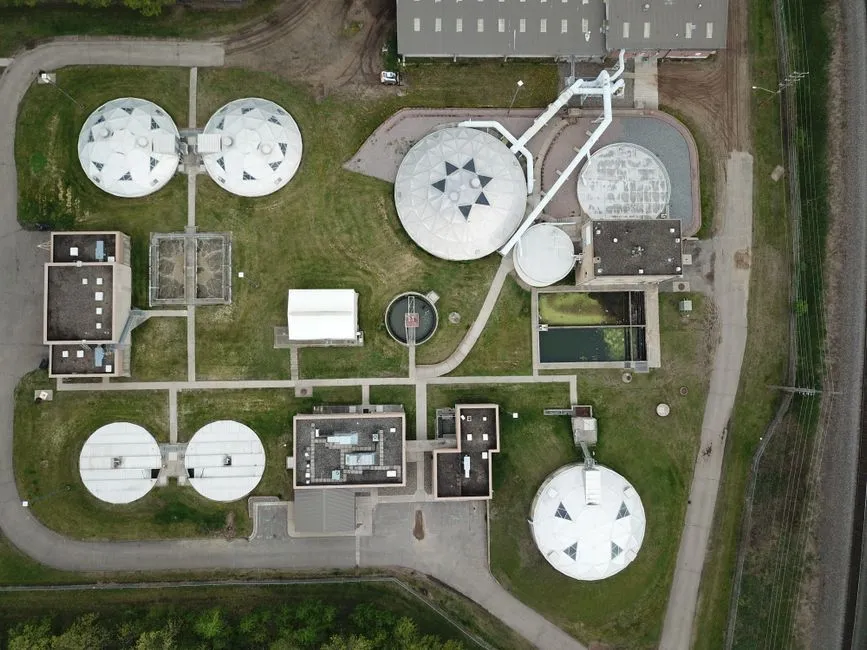
The three principal routes differ in who owns the treatment assets, how solids are separated, how much space is required and where the project’s performance risk sits. The comparison below uses only the verified specifications in the supplied product catalogue; it does not establish project-specific effluent performance or costs.
| Decision factor | WSZ packaged A/O | MBR system | Municipal connection |
|---|---|---|---|
| Treatment architecture | Anoxic/aerobic biological contact oxidation, sedimentation and disinfection in one buried package | Activated sludge with submerged PVDF membrane filtration | Treatment and solids handling occur within the public network |
| Verified capacity | 1–80 m³/h | 10–2,000 m³/day | Not established by the supplied research; authority confirmation required |
| Physical arrangement | Single buried unit; the catalogue also identifies trailer mounting for mobile deployment | Stated footprint is 60% smaller than conventional systems | Off-site network and municipal plant; on-site connection works still require definition |
| Primary design emphasis | Integrated biological treatment, settling and disinfection for appropriate decentralised flows | Effective solids separation and compact installation, particularly where reuse is a project objective | Transfer of wastewater, subject to network availability and connection requirements |
| Project responsibility | Owner must define operations, maintenance, sludge handling and discharge controls | Owner must define membrane cleaning, replacement planning, sludge handling and controls | Utility retains treatment operation, subject to the applicable service agreement and charges |
The WSZ configuration is an integrated anoxic/aerobic biological contact oxidation, sedimentation and disinfection package. Its catalogue range is 1–80 m³/h. It is suited to projects where a single buried unit and an integrated process are preferred, provided the influent and site conditions fall within the verified design basis.
The MBR architecture combines activated sludge with submerged PVDF membrane filtration below 1 μm and is rated from 10–2,000 m³/day. The catalogue states that its footprint is 60% smaller than conventional systems. That makes MBR a strong candidate where effective solids separation, compact installation or reuse potential is important, but the technology should not be selected without load data, membrane cleaning provisions and a confirmed reuse or discharge specification.
A municipal connection avoids operating a biological reactor and membrane system on site, but eligibility, connection standards, contribution charges and available capacity must be confirmed with the responsible authority. Infrastructure records do not replace a site-specific connection review.
Headworks and sludge equipment must also be allocated where needed. The GX rotary mechanical bar screen belongs in a duty where continuous screening is justified, while the plate and frame filter press can address sludge dewatering where its filtration-area range of 1–500 m² is appropriate to the sludge characteristics.
Process Flow from Influent to Final Discharge
Effective treatment requires the designer to trace each contaminant stream through the proposed process, including the solids and sludge that remain after the liquid phase is treated.
The WSZ train begins with preliminary influent handling, followed by anoxic/aerobic biological contact oxidation, sedimentation and disinfection within the integrated package. The final hydraulic arrangement remains a detailed-design issue because incoming peak flow, solids characteristics and installation constraints determine how the stages should be configured.
The MBR train uses activated sludge followed by submerged PVDF membrane filtration. Biological treatment and solids separation are therefore integrated: the activated sludge stage treats the soluble and particulate load, while the membrane module separates retained solids from the liquid stream. Membrane cleaning, permeate handling and replacement planning belong in the operating concept rather than being added after procurement.
The Research Square study provides a useful input checklist for process modelling and control. It used sewage flow rate, COD, TSS and VSS, and recommended incorporating temperature, pH and high-resolution real-time effluent measurements in future work. Although the study concerned methane prediction, its emphasis on multiple operating variables supports a broader engineering lesson: equipment selection should not rely only on average flow.
Preliminary treatment may need to protect downstream biological stages from solids, rags, plastics and fibrous debris. Where continuous-duty screening is required, the GX rotary mechanical bar screen should be evaluated as headworks equipment. Its suitability depends on the influent screening duty and integration with the selected treatment route.
Sludge generation, storage and dewatering must be included in the process balance. The plate and frame filter press offers filtration areas from 1–500 m², according to the verified HydropureWater catalogue, but sludge characteristics and the required dewatering outcome must determine whether it fits. Dewatering is a treatment objective, not a substitute for a stable sludge inventory and disposal route.
Disinfection and reuse are separate decisions. The receiving-water or reuse requirements must be confirmed before selecting a disinfection arrangement or designing for non-potable reuse; the supplied evidence does not establish a universal chlorine dose or reuse standard for a Curitiba project.
Size the System from Verified Project Inputs
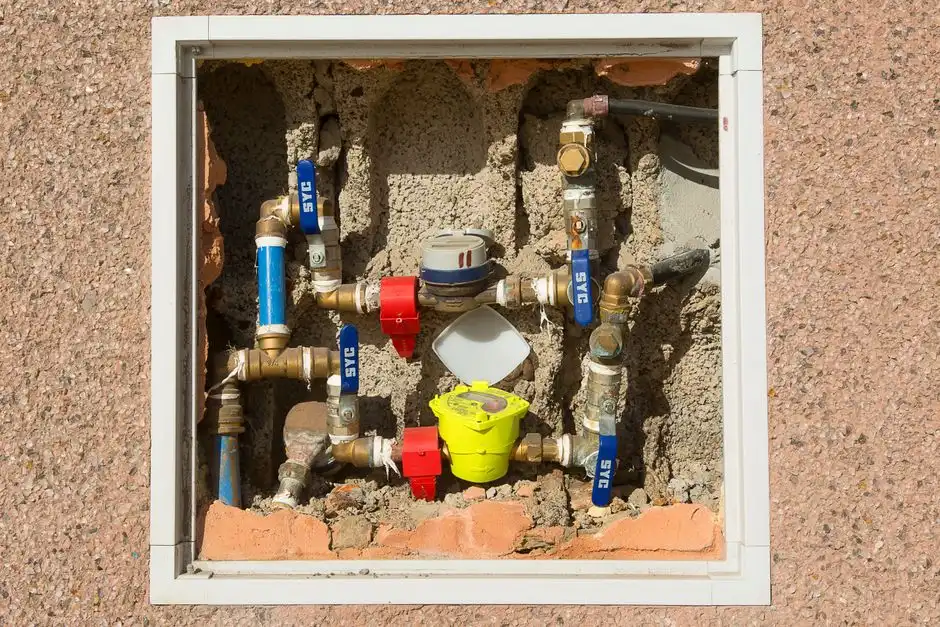
Correct sizing begins with measured and projected wastewater flow and load, not with a catalogue capacity. The supplied research provides equipment boundaries and local operating variables, but it does not supply a universal design rule for a Curitiba site.
Request current and projected average, peak and minimum flows, including the occupancy or operating assumptions behind each value. The approximately 440 L/s processed by the Curitiba UASB plant illustrates the distinction between a municipal hydraulic scale and a decentralised project scale; it is not a sizing parameter for another facility.
Obtain COD, TSS and VSS characterisations because Research Square used these parameters in its analysis of the full-scale Curitiba plant. Where available, ask for temperature, pH and real-time effluent measurements, reflecting the same study’s recommendation for future methane-prediction work. A sampling plan should identify the period, sampling points and laboratory methods so that suppliers compare equivalent data.
| Required input | Why it affects selection | Evidence or confirmation needed |
|---|---|---|
| Average, peak and minimum flow | Establishes hydraulic capacity, equalisation needs and treatment-stage loading | Current flow records and projected occupancy or operating scenario |
| COD, TSS and VSS | Characterises organic and solids loading | Representative sampling and laboratory results |
| Temperature and pH | Provides process context beyond flow and bulk load | Site measurements where available; Research Square identifies both as useful additional variables |
| Non-domestic inputs | Tests whether domestic sewage assumptions are valid | Fats, oils and grease, soaps, industrial inputs and stormwater-entry information |
| Site and discharge constraints | Controls installation and compliance feasibility | Footprint, burial depth, access routes, power, noise, effluent destination, sludge route and authority requirements |
Domestic sewage assumptions may not remain valid at hotels, hospitals, factories or mixed-use developments. Ask the designer to identify restaurant waste, trade effluent, industrial inputs, septic-tank discharges, surface-water entry and other sources that could change hydraulic or organic loading.
Also confirm available footprint, burial depth, equipment-access routes, power supply, noise constraints, effluent destination, sludge-disposal route and local authority requirements before comparing package layouts. The WSZ range of 1–80 m³/h and MBR range of 10–2,000 m³/day are selection boundaries from the verified catalogue, not design calculations.
Build a Supplier-Ready Technical Scope
Comparable proposals require the same design basis, assumptions and scope of supply. A capacity statement without its hydraulic and organic loading basis is not a technically comparable offer.
Require each supplier to state the design flow and load, treatment process, rated operating range, operating mode, footprint, installation depth, power demand, automation scope and commissioning method. Also require process-flow drawings, equipment schedules, control narratives, O&M requirements, a sludge balance and reference projects under comparable wastewater and site conditions.
| Technical item | Minimum response required | Buyer check |
|---|---|---|
| Design basis | Flow, COD, TSS, VSS, wastewater sources and future scenario | Ensure every proposal uses the same verified inputs |
| Process and equipment | Flow diagram, process stages, equipment schedule and controls | Trace influent, treated liquid, sludge, filtrate and drainage |
| Installation | Footprint, depth, access, power and utility requirements | Match the surveyed site and construction access route |
| Operations | O&M tasks, operator training, monitoring, spares and support | Identify who performs each task and how support is provided |
| Performance and handover | Commissioning method, acceptance tests and documentation | Confirm the test basis and required handover records |
For an MBR proposal, request the membrane material, filtration specification, cleaning strategy and replacement plan. The verified MBR membrane bioreactor system specification is submerged PVDF with filtration below 1 μm; proposals should be checked against the actual project duty rather than accepted from the headline specification alone.
For a packaged A/O proposal, confirm the integrated anoxic/aerobic, sedimentation and disinfection configuration and the stated 1–80 m³/h range of the WSZ underground package sewage treatment plant. Ask the supplier to identify which performance data correspond to comparable applications.
Clarification should also cover guarantees, spare parts, operator training, remote support and service response. Where those items affect commercial evaluation, request them as separately priced and defined scope elements rather than accepting unqualified statements.
Choose, Verify and Commission the Treatment Route
A defensible treatment decision follows a staged sequence: establish connection feasibility, characterise the wastewater, compare routes on a common basis and then develop the selected design through installation and handover.
- Confirm sewer availability. Approach the relevant Curitiba authority or utility for network availability, connection requirements, service boundaries, contribution charges and the status of capacity at the proposed connection point.
- Characterise the wastewater. Establish average, peak and minimum flows, COD, TSS and VSS, then obtain temperature, pH and other information where available. Document non-domestic inputs and stormwater entry.
- Compare the three routes. Assess municipal connection, packaged A/O and MBR against footprint, process complexity, reuse objectives, sludge handling, maintenance access, construction constraints and owner responsibilities.
- Request concept designs. Give each supplier the same verified design basis and discharge assumptions. Check process flow, capacity, equipment, controls, sludge disposition and installation arrangements against the project scope.
- Complete detailed design and handover. Resolve regulatory requirements, construction planning, commissioning, operator training, monitoring, spare parts and operating documentation before acceptance.
Three decisions should remain visible throughout this sequence. First, municipal connection is not automatic: it remains valid only when the authority confirms service availability and the project can meet connection requirements. Second, packaged A/O and MBR should not be ranked from average flow or footprint alone; organic load, solids separation, reuse objectives, sludge handling and maintenance access change the result. Third, the authority and receiving destination determine the discharge basis, so treatment selection and permitting must be coordinated rather than separated.
The supplied research does not establish current Curitiba discharge limits, capital costs or operating costs for any route. Those items must be obtained for the specific project, including its design flow, wastewater composition, treatment objectives, installation conditions, receiving destination and authority requirements.
Frequently Asked Questions
What is the best domestic sewage treatment system for a project in Curitiba?
There is no universally best system. Select a municipal connection where the authority confirms network availability and acceptable connection terms; consider packaged A/O for an appropriate decentralised duty requiring an integrated biological, settling and disinfection train; consider MBR where effective solids separation, compact installation or reuse potential justifies the additional process requirements. The decision must use the same verified flow, load, site and discharge data for every option.
How much does a packaged sewage treatment plant cost in Curitiba?
The supplied research provides no current project pricing, so a reliable quotation cannot be stated here. Request a cost breakdown based on the confirmed design flow, wastewater characterisation, selected process, footprint and burial depth, installation requirements, power and controls, commissioning, sludge handling, training, spares and support. Ask suppliers to identify exclusions and recurring costs separately rather than comparing headline package prices.
Should I choose a WSZ package or an MBR system?
Choose WSZ when its integrated anoxic/aerobic contact oxidation, sedimentation and disinfection configuration fits the verified duty and the project needs a buried package within its 1–80 m³/h range. Choose MBR when the duty fits its 10–2,000 m³/day range and effective solids separation, compact installation or reuse potential is important. Compare both using the same influent data, footprint, sludge route, maintenance assumptions and confirmed effluent requirements.
Can a residential or commercial site in Curitiba connect to the municipal sewer?
Possibly, but the site cannot be deemed connectable from the existence of municipal plants alone. UtilityRadar identifies six Curitiba wastewater treatment plants and six records linked to SANEPAR, while the Research Square case documents a full-scale UASB plant serving more than 250,000 inhabitants. Neither source confirms capacity at a particular address. Obtain network, boundary, timing, technical and charge confirmation from the responsible authority before reserving the route in the design.
What wastewater data should I provide before requesting equipment sizing?
Provide current and projected average, peak and minimum flow, plus representative COD, TSS and VSS results. Include temperature and pH where available, and identify fats, oils and grease, soaps, industrial inputs and stormwater entry. Supply the available footprint, burial depth, access routes, power supply, effluent destination, sludge-disposal route and authority requirements so suppliers can size and configure equipment against a common project basis.