
Which Treatment Train Fits a Tacoma Pulp Mill?
For a Tacoma pulp and paper mill, MBR is the stronger candidate where solids control, a compact layout, variable biomass settleability, or reuse warrants physical membrane separation; conventional activated sludge remains credible where wastewater is stable, land is available, and the existing clarifier-based train can meet the applicable permit or reuse target. MBR does not replace activated-sludge biology—it adds membrane separation, membrane aeration, cleaning, fouling control, and maintenance. The decision therefore depends on Tacoma discharge requirements, time-resolved mill data, pilot results, and lifecycle costs.
The first screening rule is straightforward. If the mill needs a reliable solids-retention barrier, has limited laydown space, or is evaluating water reuse, MBR deserves formal evaluation. If the biological load is stable, the site has room for aeration and clarification, and the existing secondary clarifier can meet the applicable requirements, retaining or rehabilitating conventional activated sludge may deliver lower implementation risk.
That decision cannot be made from flow or nominal capacity alone. Buyers need the current discharge authorization or sewer-pretreatment requirements, the intended reuse specification, time-resolved flow and composition, temperature, available footprint, sludge-disposal route, and staff operating capability. The research packet contains no Tacoma-specific permit limits and no pulp-and-paper-specific loading limits, so local criteria and site data must be verified before design.
Use the MBR cost per m³ guide as a framework for gathering comparable cost inputs, not as a source of Tacoma pricing or generic removal guarantees.
How MBR and Conventional Activated Sludge Differ
Conventional activated sludge separates microorganisms from treated wastewater by gravity settling in a secondary clarifier, while an MBR retains biomass with membrane filtration after biological treatment. Elsevier’s 2021 review, as characterized in the supplied research, identifies the MBR as the integration of activated-sludge treatment with membrane filtration—not a replacement for activated-sludge biology.
Replacing a clarifier with membranes changes the operating problem. The buyer must reassess pretreatment, controls, cleaning, redundancy, bypass provisions, and fouling exposure rather than assume that those requirements disappear. An MBR may simplify the physical treatment train, but it does not remove the biological process or make wastewater variability irrelevant.
MBR is particularly relevant where solids control and reuse make pathogen and solids separation important. The supplied academic source describes stricter discharge requirements and improved hygienic quality as reasons to consider membrane technology in sensitive sites and reuse applications. It does not establish a Tacoma discharge threshold or guarantee mill-specific effluent quality.
| Decision element | Conventional activated sludge | MBR |
|---|---|---|
| Biological treatment | Uses microorganisms to reduce biodegradable organics. | Uses the same fundamental biological approach before membrane separation. |
| Solids separation | Secondary clarifier separates biomass by gravity settling. | Submerged membranes provide a physical solids-retention barrier. |
| Principal operating issue | Biomass settleability, clarifier hydraulics, sludge wasting, and polishing requirements. | Membrane fouling, scour aeration, cleaning, controls, and membrane replacement exposure. |
| Footprint relevance | Requires space for aeration, clarification, and possible polishing. | May reduce equipment footprint, subject to the selected configuration. |
| Evidence limitation | No Tacoma-specific performance guarantee is available in the research packet. | No Tacoma-specific permit threshold or mill-specific removal guarantee is available in the research packet. |
For an initial process scope, review the integrated MBR membrane bioreactor, but keep manufacturer specifications separate from verified site performance.
Pulp-and-Paper Wastewater Changes the Operating Risk
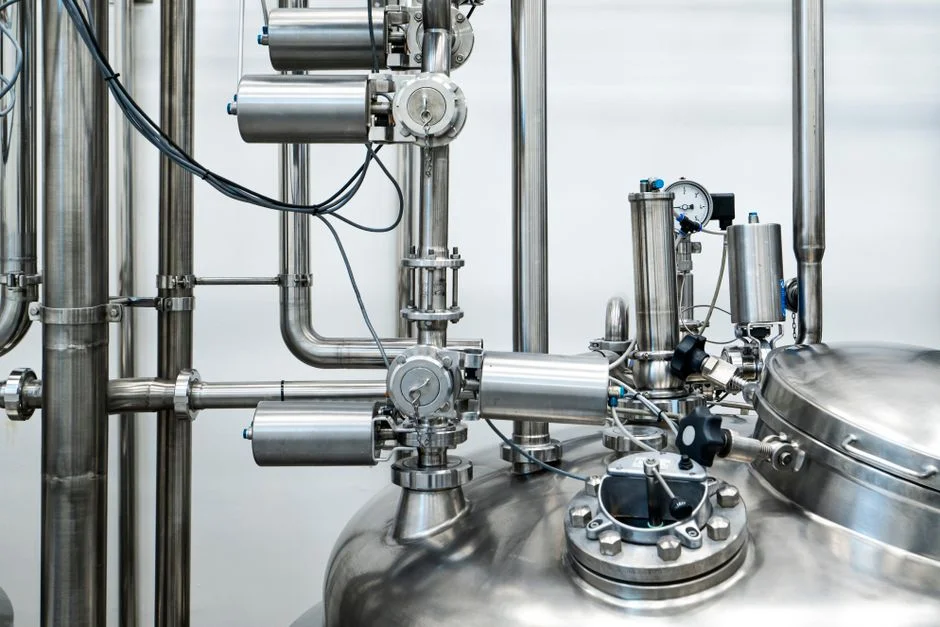
Pulp mill wastewater treatment must be designed around changes in flow and wastewater composition rather than a single laboratory average, according to the supplied HydropureWater pulp-and-paper comparison dated 2026. The same source says pulp-and-paper-specific biological loading limits are unavailable, so neither reactor sizing nor membrane area should be assigned from generic industrial ranges.
The minimum characterization set should include time-resolved COD, BOD, TSS, color, temperature, and flow. Daily composite samples can describe the broad load, but they can conceal production swings, washwater events, and short-duration peaks. Sizing must consider both peak hydraulic throughput and mass loading; the supplied comparison specifically identifies peak hourly flow as an MBR sizing input.
Solids, fibers, FOG, and colloidal material can increase membrane fouling exposure. Depending on characterization results, DAF pretreatment for pulp and paper wastewater may need evaluation, but it should not be preselected as a guaranteed solution. Equalization, screening, primary clarification, and DAF should be compared according to the contaminants actually present.
CAS effluent solids performance depends on clarifier operation and biomass settleability. MBR separates solids physically, which can reduce sensitivity to settling behavior, but membrane performance still depends on biological treatment, pretreatment, and operating control. The DAF pretreatment for pulp and paper wastewater should therefore be treated as a characterized pretreatment option rather than a default component.
For preliminary screening only, the supplied 2026 comparison gives MBR flux references of 10–25 LMH and mixed-liquor suspended solids of 8,000–12,000 mg/L. It expressly links those values to wood furnish and pretreatment, so final values must come from the actual mill regime, vendor design, and pilot data.
MBR Advantages, Costs, and Fouling Exposure
HydropureWater’s verified product catalog describes submerged PVDF filtration below 1 μm and a 60% smaller footprint than conventional systems for its integrated MBR configuration. These are manufacturer-specific, configuration-dependent claims; the footprint comparison is not evidence that every MBR installation occupies 60% less land than every CAS alternative.
The supplied DF module data provide a more concrete procurement starting point: 0.1-μm flat-sheet elements, an integrated aeration box for scour, 80–225 m² membrane-area configurations, and 32–135 m³/day per module. These figures define offered module configurations, not the number of modules required for a Tacoma mill. The mill’s hydraulic and mass-loading basis remains controlling.
MBR generally has a higher total cost of ownership than CAS because membrane aeration consumes energy and periodic chemical cleaning adds consumables, according to the supplied 2026 comparison. No generic cost-per-m³ value should be inserted because energy, sludge handling, cleaning frequency, pretreatment, and replacement exposure are site-specific.
| Bid item or performance disclosure | Why the buyer needs it |
|---|---|
| Net flux and membrane area | Confirms hydraulic capacity under the stated wastewater basis. |
| Scour aeration and relaxation cycle | Shows how the bidder controls membrane fouling between cleaning events. |
| Cleaning interval and chemical demand | Allows comparison of consumables, labor, production interruptions, and fouling response. |
| Permeability trend and replacement provision | Exposes whether performance is sustained over the projected operating regime. |
| Specific energy and blower duty | Supports lifecycle-cost comparison against CAS aeration and any polishing requirements. |
| Waste-sludge concentration and dewatering route | Prevents membrane conversion from obscuring downstream disposal costs. |
Membrane fouling was the principal MBR implementation obstacle identified by the 2021 review cited in the supplied research. Pilot evidence should cover scour aeration, relaxation, cleaning intervals, chemical demand, and permeability trends. Numeric permeability-loss and operational-failure percentages appearing in another supplied commercial page depend on a citation that was not independently accessible, so they should not be repeated as verified findings.
Use the DF MBR membrane bioreactor module and the MBR cost per m³ guide to frame those disclosures. See also the MBR versus activated sludge decision framework for comparable RFQ discipline, not mining wastewater design values.
When Conventional Activated Sludge Remains the Better Buy
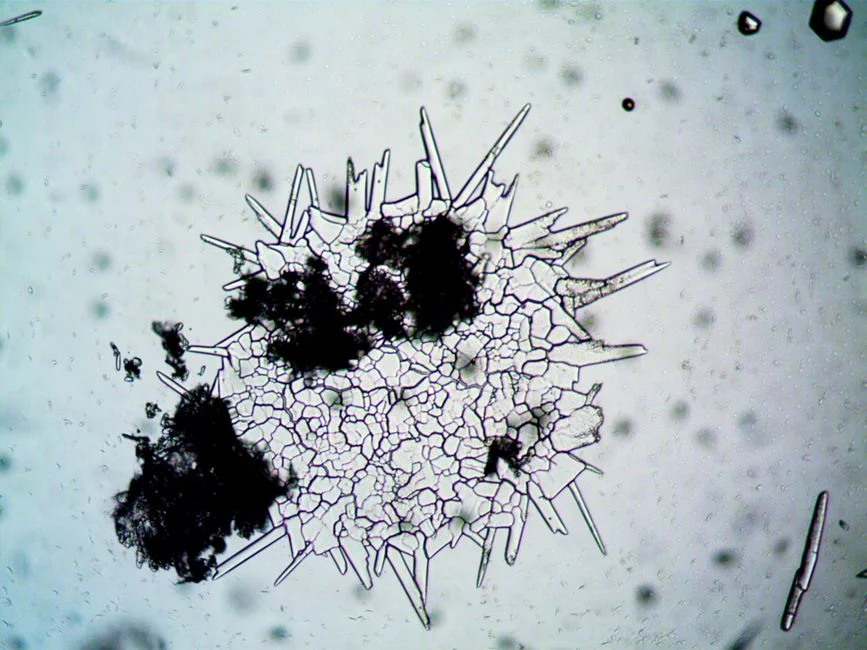
CAS remains the better buy when wastewater is stable, sufficient land is available, the biological process and clarifier are well operated, and the applicable permit or reuse target can be met without additional polishing. In that case, adding membranes introduces aeration, cleaning, controls, and replacement obligations without a demonstrated process need.
The operating trade is not simply “lower cost.” CAS avoids membrane aeration, chemical cleaning, and membrane replacement, but it remains exposed to settling deterioration, bulking, sludge concentration limits, and clarifier hydraulic constraints. Any tertiary treatment needed to meet the reuse or discharge objective must remain in the lifecycle comparison rather than being treated as a hidden consequence of CAS.
Sludge handling can change the ranking. Compare waste-sludge concentration, polymer use, dewatering requirements, disposal route, and applicable tariff for both alternatives. Neither dilute CAS sludge nor concentrated MBR sludge is automatically cheaper; the site’s dewatering and disposal arrangements determine the result. The plate-and-frame filter press is relevant where either train sends waste sludge to mechanical dewatering.
If an existing CAS plant performs reliably but the issue is settling capacity, aeration, equalization, or sludge separation, a clarifier and process rehabilitation trial may be more proportionate than a technology conversion. Compare biological mixing, aeration, settling, sludge separation, and polishing against MBR flux, fouling tendency, scouring, cleaning, and effluent stability using the same wastewater and treatment objectives.
A Decision Framework for Tacoma Buyers
A defensible Tacoma selection requires five documented steps, with the same influent, pilot, and lifecycle-cost basis applied to both alternatives.
- Define the basis of design. Establish average and peak flow; 24-hour composite and time-resolved COD, BOD, TSS, color, and temperature; the applicable Tacoma discharge or sewer criteria; and any reuse target. Do not substitute generic biological loading limits for mill data.
- Evaluate equalization and pretreatment. Determine whether screening, DAF, primary clarification, or another step is needed to control fiber, FOG, solids, and hydraulic surges before comparing the biological trains.
- Pilot on the same wastewater. For CAS, evaluate mixing, aeration, settling, sludge separation, and polishing. For MBR, evaluate biological response, net flux, fouling tendency, scouring, cleaning, and effluent stability. Use the same objectives and analytical schedule.
- Request comparable commercial data. Require module area and count, redundancy, specific energy in kWh/m³, blower duty, net flux, cleaning frequency, membrane life under projected conditions, waste-sludge concentration, controls, alarms, bypass philosophy, and reference installations.
- Compare lifecycle cost. Include equipment, installation, equalization, pretreatment, aeration, membrane cleaning or replacement, chemicals, sludge handling, disposal, staffing, downtime, and the value of avoided tertiary treatment or expanded footprint.
| Evaluation gate | Evidence required | Decision treatment |
|---|---|---|
| Local compliance and reuse | Current authorization, sewer requirements, and reuse specification. | Reject any bid that assumes limits not confirmed for the mill’s discharge route. |
| Wastewater basis | Time-resolved flow, COD, BOD, TSS, color, and temperature data. | Require identical data and loading assumptions from every bidder. |
| Process proof | Side-by-side pilot results on the same wastewater. | Compare measured objectives, fouling, cleaning, and operability. |
| Commercial completeness | Installed scope, energy, cleaning, redundancy, sludge route, controls, and references. | Normalize proposals before lifecycle-cost comparison. |
| Ownership cost | Suppliers’ priced capital and operating assumptions tied to pilot results. | Do not accept generic treatment-cost-per-m³ figures as a bid. |
The review should end with a documented selection rationale: the verified local criterion, the wastewater basis, pilot performance, fouling and maintainability findings, lifecycle cost, and unresolved risks. If the evidence remains tied, retain the familiar CAS train while resolving the identified constraint; do not use technology preference as a substitute for proof.
Frequently Asked Questions
How should a Tacoma mill compare MBR and CAS pricing?
Request installed lifecycle bids based on identical mill wastewater, peak flow, pretreatment scope, reuse target, and sludge-disposal assumptions. The supplied research provides no Tacoma-specific mill CAPEX, OPEX, or cost-per-m³ values, so the buyer should request each bidder’s energy demand, membrane cleaning and replacement assumptions, chemical use, staffing, downtime, sludge handling, and disposal pricing. Use the MBR cost per m³ guide to identify the missing cost lines, not to insert a generic price.
Which supplier disclosures are essential before selecting an MBR?
Require the proposed membrane area and module count, net flux, redundancy, scour-aeration and relaxation regime, cleaning interval and chemicals, specific energy in kWh/m³, blower duty, membrane-life basis, controls, alarms, bypass philosophy, and comparable references. Also require pilot evidence from the mill’s actual wastewater. Manufacturer specifications describe offered equipment; they do not substitute for site performance.
When does CAS remain preferable to MBR?
Retain CAS when the wastewater is stable, land is available, the biological train and secondary clarifier are well operated, and the verified discharge or reuse requirement can be met without added polishing. A targeted clarifier, aeration, equalization, or sludge-separation rehabilitation may then address the actual constraint without adding membrane aeration, chemical cleaning, and replacement obligations.
Should a pilot determine the Tacoma technology choice?
Yes, when the bid relies on disputed performance, reuse quality, fouling control, or difficult solids separation. Test MBR and CAS on the same wastewater and against the same treatment objectives. Record biological response, solids separation, flux, permeability, cleaning demand, sludge production, energy use, and effluent stability; then incorporate those results into the lifecycle-cost comparison.