
What Changes When Petroleum Wastewater Is the Feed
For petroleum wastewater in Mulga, MBR is usually the stronger option when a facility needs compact equipment, low suspended-solids effluent, reuse potential or retrofit space is limited. Conventional activated sludge may be more economical when the wastewater is biodegradable, flow is stable, land is available and discharge or reuse limits do not require membrane-quality separation. The better choice depends on oil and grease, toxicity, biological loading, variability, solids handling and the receiving requirement. A petroleum-specific pretreatment train should be evaluated before either biological process is selected.
The first engineering task is to separate streams by origin, flow, concentration and variability. Refinery, petrochemical and terminal operations can combine clean runoff, wash water, tank-bottom water, oily floor washings and process effluent that behave very differently. Screening a blended flow can hide the source of toxicity, oil excursions or loading peaks.
For each stream, record oil and grease, free and emulsified oil, suspended solids, pH, temperature, toxicity, COD, BOD, nutrients and identified refinery-specific contaminants. Distinguish readily biodegradable petroleum material from compounds that may inhibit biology or pass through the biological train. The final destination also needs definition: direct discharge, pretreatment at a POTW, process reuse or a tighter reuse application changes the required clarification, filtration and downstream polishing.
DAF is a potential pretreatment option when suspended solids, FOG, oil and grease or colloidal material must be removed. The HydropureWater DAF range is 4–300 m³/h across 13 models and includes petrochemical applications, according to the verified HydropureWater product catalog. The range is screening information, not a Mulga design guarantee. For application context, see how petroleum plants meet sewer limits.
| Characterization item | Engineering question | Decision effect |
|---|---|---|
| Stream origin and flow | Which sources are continuous, batch or variable? | Defines equalization and pretreatment duty. |
| Oil and grease | Is oil free, emulsified or present as FOG? | Determines whether upstream removal is required before biology or membranes. |
| Organic and nutrient load | What are COD, BOD, nitrogen and phosphorus conditions? | Sets biological capacity and supplemental nutrient requirements. |
| Biocompatibility | Is there toxicity, inhibition or refinery-specific contamination? | May require source control, dilution, acclimation or pilot testing. |
| Destination | Is the final use discharge, POTW pretreatment or reuse? | Sets the solids-separation and polishing basis. |
Before comparing biological systems, obtain representative analytical data and a measured flow and load basis. Where emulsified oil or toxicity remains uncertain, do not treat upstream removal as an assumed step.
How the Two Treatment Trains Work
Conventional activated sludge separates treated water from biomass by gravity settling, while an MBR combines biological treatment with membrane separation. The practical difference is therefore the solids-separation step and the operating controls around it.
The conventional activated sludge train is:
- Equalization and petroleum pretreatment.
- Biological treatment in an activated-sludge reactor.
- Secondary clarification by gravity settling.
- Removal, storage or further treatment of settled sludge.
The activated-sludge secondary clarifier must deliver the required suspended-solids condition while handling the biomass inventory and settleability produced by the selected biological loading and wasting strategy.
The MBR train is:
- Equalization and petroleum pretreatment.
- Activated-sludge biological treatment.
- Membrane separation of retained biomass from treated water.
- Permeate collection.
- Management of concentrated solids and rejected material.
The membranes retain biomass; they do not replace biological degradation or upstream removal of oil, grease and inhibitory contaminants. The academic review The Advancement in Membrane Bioreactor Technology, published by the National Center for Biotechnology Information in 2023, describes membrane separation as part of the MBR process rather than a substitute for biological treatment. The academic study Study of activated sludge viability and reactivity in membrane bioreactor, published by Agence Bibliographique de l’Enseignement Supérieur, connects MBR treatment with improved effluent hygiene and reuse-sensitive applications.
For petroleum projects, that operating distinction matters. Excess oil and grease can foul the membrane surface and interfere with biological treatment. High solids can increase membrane loading, while variable organic loads can change mixed-liquor solids and oxygen demand. Equalization and pretreatment therefore remain upstream engineering requirements for both alternatives.
The HydropureWater integrated MBR membrane bioreactor combines activated sludge treatment with submerged PVDF membrane filtration. Its use should be evaluated as a complete biological-and-separation train, not as a membrane package added to an untreated refinery wastewater stream. The MBR wastewater membrane bioreactor cost per m3 in 2026 guide provides an equipment-screening framework, but a Mulga selection still requires site flow, load, pretreatment and effluent criteria.
Head-to-Head Performance and Operating Trade-Offs
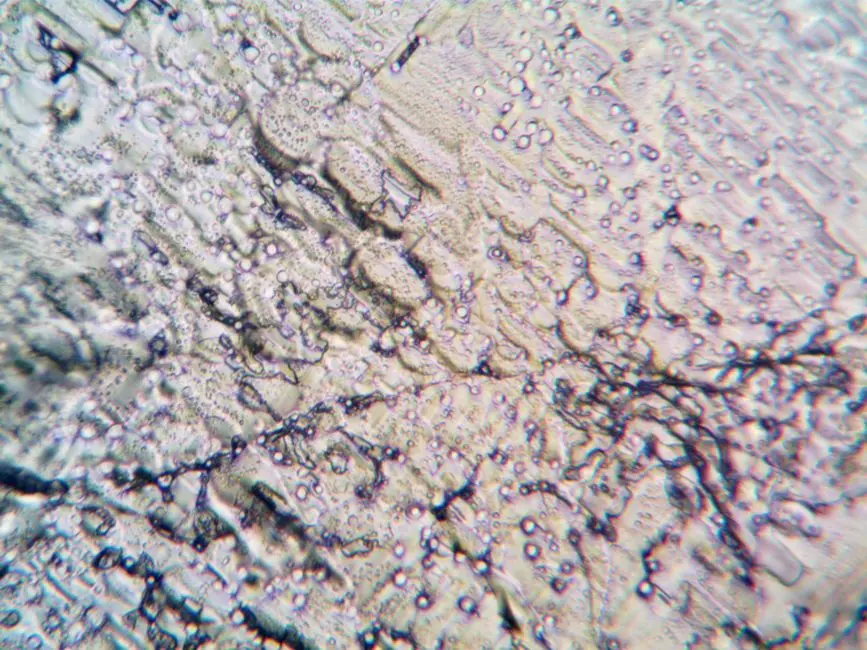
MBR earns its footprint advantage when fine solids separation, reuse readiness or constrained site area justifies membrane operation; CAS can remain the more practical process when land is available and gravity clarification reliably meets the receiving requirement. The comparison below is a pre-design screening basis, not a performance guarantee for petroleum wastewater in Mulga.
| Evaluation item | Conventional activated sludge | MBR | Pre-design basis |
|---|---|---|---|
| Biological treatment | Activated sludge with gravity solids separation | Activated sludge with membrane solids separation | Compare process loads, oxygen demand and sludge-production assumptions. |
| Solids separation | Secondary clarifier performance | Membrane separation | Apply the actual discharge or reuse criterion. |
| Footprint | Requires aeration, settling and sludge-handling area | Can reduce equipment-area requirements | Include equalization, pretreatment, piping, access and solids handling. |
| Process control | Biologic controls, sludge wasting and clarifier operation | Those controls plus membrane aeration and transmembrane-pressure management | Assess staffing and alarm response. |
| Retrofit suitability | May require clarifier and basin area | Potentially suitable for modular, space-constrained retrofits | Confirm structural, access and utilities constraints. |
| Reuse readiness | Depends on clarification and downstream polishing | Provides a stronger separation basis | Determine whether additional treatment is still required. |
| Residuals | Waste activated sludge | Concentrated biomass or sludge side stream | Compare handling, storage and disposal routes. |
The verified HydropureWater product catalog states that its integrated MBR occupies 60% less footprint than conventional systems. That is a manufacturer comparison, not a Mulga site guarantee. The same catalog specifies filtration below 1 micrometer, which supports fine solids separation but does not establish dissolved-petroleum contaminant removal. The catalog also lists a production range of 10–2,000 m³/day; a site flow calculation is required, and flow range alone is not a flow-by-flow selection tool.
CAS can be financially attractive where land is available and required effluent is readily achieved, but the supplied research does not provide a universal cost advantage or cost per cubic metre for Mulga. MBR adds membrane aeration, transmembrane-pressure management, fouling controls, cleaning and replacement considerations. Those items belong in the lifecycle evaluation even when the biological reactor is energy-efficient or space-efficient.
Choose MBR or CAS Using a Petroleum-Site Decision Framework
A defensible selection requires six linked checks, beginning with whether equalization and petroleum pretreatment can produce a sufficiently stable and biologically compatible feed. If that gate fails, neither biological system should be advanced without resolving the upstream problem.
- Confirm biological compatibility. Determine whether pretreatment can control oil, grease, suspended solids, pH, toxicity and feed variability enough for reliable biological treatment.
- Test the required solids separation. Ask whether gravity clarification alone can meet the discharge, sewer or reuse condition. Compare the receiving sensitivity and any downstream filtration requirement.
- Evaluate site constraints. Compare available area, future expansion, equipment access, installation staging and utility routing. MBR is most compelling where footprint is restricted or a modular retrofit is needed.
- Compare operating complexity. Include membrane cleaning and replacement planning alongside biological controls, sludge handling, instrumentation, electrical demand and operator attention.
- Build total-cost-of-ownership inputs. Request current Mulga quotations covering equipment, pretreatment, energy, chemicals, labor, membrane replacement and residual disposal. Do not substitute a generic price for a project-specific quotation.
- Pilot when uncertainty remains. Use a pilot or side-by-side design test if wastewater variability, toxicity or emulsified oil remains unresolved. Include biological acclimation and membrane fouling behavior in the test plan.
| Decision condition | Indicative direction | Required proof before award |
|---|---|---|
| Footprint-limited retrofit or fine solids separation required | Advance MBR | Site layout, pretreatment basis, membrane module arrangement and guaranteed effluent basis. |
| Stable biodegradable load, available land, gravity clarification meets criteria | Retain CAS as credible option | Clarifier performance evidence, sludge-handling plan and lifecycle cost comparison. |
| Emulsified oil, toxicity or variable feed remains uncertain | Resolve uncertainty before selection | Representative analysis and pilot results for the proposed wastewater. |
| Reuse requires additional treatment beyond membrane separation | Compare treatment trains, not just MBR and CAS | Final-use water-quality criteria and downstream polishing scope. |
The practical decision rule is conditional: select MBR when the required solids separation, reuse quality or site constraints justify membrane complexity; retain CAS when load and effluent targets are stable, land is available and pretreatment supports reliable biological treatment. The broader comparison in the MBR versus conventional activated sludge framework can support the method, but the wastewater characterization must remain petroleum-specific.
Equipment Sizing and Supplier Questions for Mulga
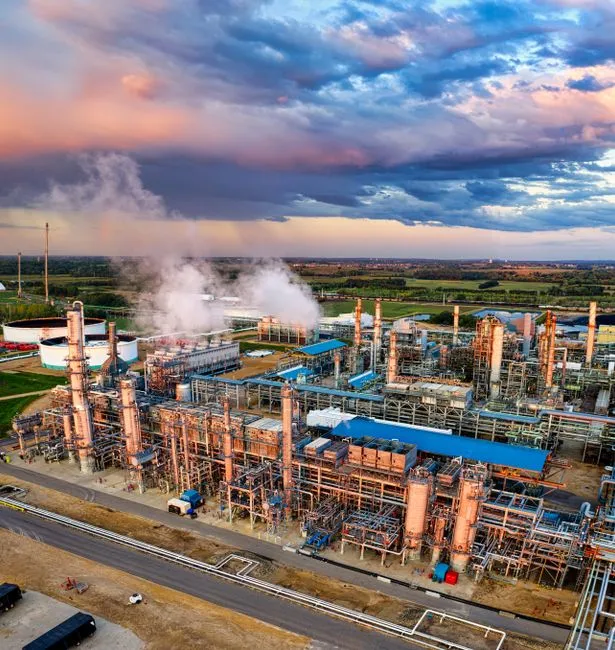
Suppliers should size equipment against measured hydraulic flow and contaminant loading, not nameplate production alone. A hydraulic average can conceal batch discharges, and a design flow does not establish COD, oil, toxicity or nutrient capacity. Request the sizing basis, duty assumptions and treatment train behind every offered number.
For MBR bids, request membrane material, pore size, module area, design production range, cleaning method, aeration arrangement, controls and expected replacement interval for the proposed wastewater. Ask how oil carryover, suspended solids, temperature and biological loading affect cleaning frequency and membrane life.
The HydropureWater DF flat-sheet catalog lists 0.1-micrometer membranes, 80–225 m² configurations, 32–135 m³/day production and 10–20× lower energy consumption than external cross-flow systems. These are catalog values, not demonstrated petroleum-wastewater outcomes for Mulga. Compare flat-sheet and hollow-fiber configurations against available tank geometry, module handling, access, fouling behavior and operating controls.
| Supplier question | Response required for comparison | Reason |
|---|---|---|
| What flow and load were used for sizing? | Measured basis, peak condition and allowance for pretreatment | Prevents selection from nameplate flow alone. |
| What membrane and aeration arrangement is offered? | Material, pore size, area, cleaning method and control philosophy | Defines fouling-control and maintenance scope. |
| What pretreatment is assumed? | Equipment, performance duty and feed limits | Protects the biological and membrane systems. |
| What is the performance guarantee? | Parameters, test method, duration and remedy | Creates an enforceable technical basis. |
| What are the utilities and residuals? | Electrical demand, chemicals, concentrate and sludge handling | Supports lifecycle and permitting review. |
| What is the local service plan? | Spare parts, replacement plan and response arrangements | Tests operability after commissioning. |
Evaluate the integrated MBR’s 10–2,000 m³/day range and 60% footprint claim only as preliminary screening values. For module-level requirements, review the DF membrane bioreactor module and membrane and filter-element options. Also assess membrane replacement cost optimization. Both technologies need a solids-handling plan: MBR shifts more solids into a concentrate stream rather than eliminating them.
Frequently Asked Questions
Is MBR usually more expensive than conventional activated sludge for a petroleum plant in Mulga?
Not necessarily, and the supplied research provides no universal cost advantage or Mulga cost-per-m3 value. Request current quotations covering equipment, pretreatment, energy, chemicals, labor, membrane replacement and residual disposal for the measured flow, load and effluent basis. Compare those inputs over the supplier’s stated equipment life rather than accepting a generic MBR premium or CAS saving.
Can an MBR treat petroleum wastewater without DAF or another pretreatment system?
Do not rely on that assumption. Membrane separation retains biomass but does not perform biological degradation or replace upstream oil, grease, solids and toxicity control. Demonstrate that the proposed pretreatment produces a biologically compatible feed and protects the membranes; otherwise include pretreatment in the equipment scope.
What flow is suitable for HydropureWater’s integrated MBR?
The verified HydropureWater product catalog lists 10–2,000 m³/day. Final sizing requires measured hydraulic flow, contaminant loading, pretreatment performance, variability and required permeate quality. The catalog range is a screening boundary, not a recommendation for every flow within it.
Should a petroleum wastewater project pilot before choosing MBR or CAS?
Yes, when waste composition varies substantially, toxicity is uncertain, emulsified oil is present or the choice depends on biological acclimation and membrane fouling behavior. Define the pilot’s analytical methods and decision criteria before comparing results, including solids separation, biological response, cleaning demand and solids production.
Related Equipment
- DAF pretreatment for oil and grease — specifications, capacity range, and technical data