Start With the Effluent and Its Final Destination
An industrial wastewater treatment plant in Fortaleza should be selected around the wastewater composition, verified flow, discharge destination and reuse objective—not around a named technology. The process train may combine screening, equalization, biological treatment, separation, polishing and disinfection, with DAF, MBR, UF or RO added only where their contaminant-removal functions are needed. Local evidence is still limited: a 2026 ACS Omega study examined industrial-effluent conditioning for green hydrogen, not routine factory discharge.
Begin with a source-separated wastewater inventory covering flow, pH, suspended solids, oil and grease, COD, BOD, nutrients, dissolved salts, toxicity and relevant industrial contaminants. Separate production streams, wash water, cooling water, laboratory drains and sanitary wastewater where practical because mixing them can obscure the load requiring treatment.
Map the final destination before selecting equipment. Direct discharge to a receiving water, discharge through a sewer, permitted reuse or substitution into a process stream each creates a different treatment objective and compliance basis. For a major industrial development, the scale of planning is illustrated by industrial wastewater planning for a Mexican gigafactory.
The ACS Omega paper, published 10 February 2026 by researchers at the State University of Ceará and partners, modeled an off-grid system in northeastern Brazil using industrial effluents for electrolysis. It supports local reuse thinking, but its green-hydrogen application should not be treated as evidence that one train will suit a food processor, chemical plant or mixed commercial-industrial site in Fortaleza.
Record seasonal, shift and batch-discharge variation before fixing equalization, biological or polishing capacity. The supplied research provides no locally supported flow range for industrial effluent in Fortaleza, so representative site sampling and production records are required rather than an assumed design flow.
Build the Right ETP Process Train
Each ETP stage should protect the next process from a contaminant it cannot remove effectively. The train normally runs from screening and headworks through equalization, pH or chemical conditioning, solids separation, biological treatment where applicable, secondary separation, tertiary polishing, disinfection and monitoring. The exact sequence depends on the contaminant class and final use.
- Screen and equalize: remove gross material, balance flow and buffer batch discharges before treatment.
- Condition and remove floatables: adjust pH or dose coagulants when required, then use an industrial DAF system where suspended solids, oil, grease or colloidal material would impair later stages.
- Treat biodegradable load: apply biological treatment only when the wastewater characteristics and operating conditions support it.
- Separate solids: use clarification or membrane separation according to the required solids concentration and reuse objective.
- Polish and disinfect: apply UF, RO or another barrier only where the required effluent quality justifies it.
A dairy-effluent configuration presented by the American Society of Mechanical Engineers provides one concrete sequence: screening, chemical coagulation, DAF, sequential batch reactor, multi-effect distillation, RO and disinfection. It was modeled for 360 m³/day at a small dairy operation in Dubai, so its flow and reuse context should not be transferred to Fortaleza.
| Stage | Primary job | Decision condition |
|---|---|---|
| Screening and equalization | Remove gross material and buffer variation | Required when flow, solids or batch discharges are variable |
| pH or chemical conditioning | Prepare wastewater for separation or biological treatment | Selected from influent chemistry and coagulation or pH tests |
| DAF | Separate suspended solids, FOG, oil and colloids | Justified where floatables or colloidal solids threaten downstream equipment |
| Biological treatment | Remove biodegradable organics | Used only where wastewater characteristics support the biological process |
| MBR or secondary separation | Separate solids after biological treatment | Selected from required solids level, footprint and reuse quality |
| UF | Remove suspended solids, colloids and microorganisms without coagulants | Requires upstream control of solids and membrane feed quality |
| RO | Reject dissolved salts and other dissolved contaminants | Requires biological treatment and effective membrane pretreatment |
| Disinfection and monitoring | Control residual organisms and demonstrate compliance | Included according to the discharge or reuse requirement |
UF removes bacteria, colloids and suspended solids without chemicals, but its performance depends on upstream solids control. The supplied UF specification accepts inlet turbidity up to 300 ppm. RO addresses dissolved contaminants rather than suspended solids, so biological treatment and membrane pretreatment remain central to reliable operation.
Reuse does not remove the need for final treatment and disinfection. The Pici Campus study evaluated resistance characteristics in treated effluent, reinforcing the need to validate the residual microbial profile instead of assuming that any treatment train produces a stable result.
Choose DAF, MBR, UF or RO by Job

DAF, MBR, UF and RO should be selected by contaminant class and required product water, not by headline capacity. DAF is a physical separation step for suspended solids, FOG, oil and grease, and colloidal material. MBR integrates biological treatment with membrane filtration. UF provides a chemical-free solids-removal barrier, while RO rejects dissolved contaminants.
| Technology | Best-defined job | Supplied specification | Principal design caution |
|---|---|---|---|
| DAF | Remove suspended solids, FOG, oil and grease, and colloidal material | 4–300 m³/h across 13 standard models | Its hydraulic capacity does not establish guaranteed effluent quality |
| Integrated MBR wastewater treatment system | Combine biological treatment and membrane separation where reuse potential is valuable | Filtration below 1 micron; 60% smaller footprint than conventional systems; 10–2,000 m³/day | Requires a suitable influent design basis and membrane-fouling controls |
| 0.03 micron ultrafiltration system | Remove suspended solids, colloids and microorganisms, or protect RO | 0.03 micron PVDF membranes; 2,000–40,000 L/h; turbidity up to 300 ppm; automatic backwash and air scour | Upstream solids removal remains necessary |
| RO | Reject dissolved salts or other dissolved contaminants | Recovery rates up to 95%; PLC-controlled automated operation | Feed quality and pretreatment determine reliable performance |
Use the following decision sequence:
- If the principal problem is oil, grease, floatables or colloidal solids, test whether DAF is required.
- If biodegradable organics must be removed and membrane-separated biological effluent has reuse value, compare MBR with conventional biological treatment.
- If the objective is a solids and microorganism barrier without coagulants, assess UF.
- If dissolved salts or other dissolved contaminants control reuse quality, assess RO after biological treatment and suitable pretreatment.
No one technology is a universal replacement. A comparison of MBR and conventional activated sludge should be resolved against effluent targets, wastewater chemistry, operating resources and site constraints—not simply reuse potential.
Size the Plant from Verified Site Data
Effective ETP sizing must cover peak hydraulic load, average hydraulic load, organic loading, operating hours, equalization turnover and the selected treatment train. Average flow alone can conceal production peaks, cleaning discharges and concentrated batch effluent. The proposal should show how each unit responds across the expected operating envelope.
| Design input | Buyer must establish | Why it changes the selection |
|---|---|---|
| Hydraulic profile | Average, peak, batch and reuse flows | Defines equalization, treatment throughput and storage turnover |
| Organic and solids load | COD, BOD, suspended solids, oil and grease | Determines biological loading and separation duty |
| Chemical characteristics | pH, salts, nutrients, toxicity and industrial contaminants | Determines pretreatment, biological suitability and polishing |
| Operating basis | Operating hours, shifts, maintenance windows and redundancy | Determines whether units can run in parallel and accept downtime |
| Product-water demand | Reuse flow and required effluent quality | May require UF or RO rather than final clarification alone |
The product boundaries are MBR at 10–2,000 m³/day, DAF at 4–300 m³/h and UF at 2,000–40,000 L/h. These are catalog limits, not recommendations for a Fortaleza installation. A supplier should select a configuration within its stated range and show how the verified site envelope fits it.
Where flow or concentration varies materially, include equalization and batch-discharge controls in the design. Obtain representative samples across relevant production and discharge conditions before finalizing equipment sizing. The supplier should also define fouling indicators, cleaning access, redundancy, controls and membrane or element replacement planning as part of the base scope.
Request details of membrane and filter-element replacement planning, including the interface between replacement consumables, spare holding, cleaning chemicals and operator responsibilities. A nominal throughput is not enough if the plant cannot sustain output during cleaning or a failed train.
Plan Local Permits, Reuse and Operational Risk
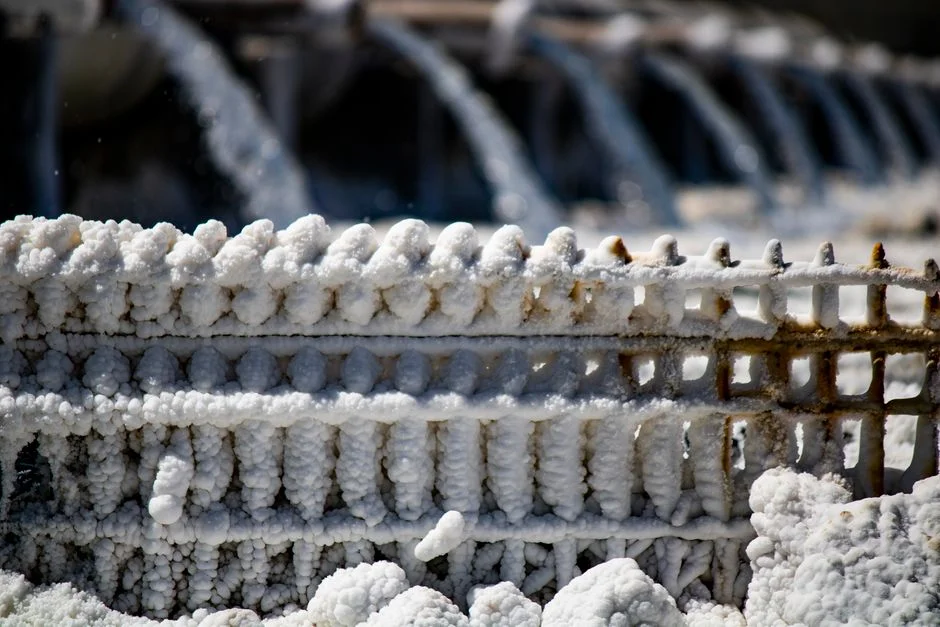
The discharge authorization must be resolved against the actual receiving authority, discharge point, industrial category, sewer system and receiving water. Confirm applicable permit conditions, monitoring analytes, sampling points and reporting requirements with the relevant authority before approving the final treatment train.
The US EPA effluent-guidelines concept is only a general reference. EPA states that its industrial-category regulations are based on treatment performance and control technologies, but those documents do not replace authorization applicable to a project in Fortaleza. A buyer should avoid assuming that a named technology or product specification establishes local compliance.
The 2026 ACS Omega study should also be used within its modeled scope. It reported 486.8 m³/year of conditioned effluent, with 27% reaching the electrolyzer, 27.54 kgH₂O/kgH₂, 75.90 kWh/kgH₂ and an estimated 10.99% emission reduction. These figures describe the modeled green-hydrogen system, not a performance guarantee for factory ETP equipment.
Commissioning should validate microbial performance and residual disinfection rather than rely on equipment-name claims. The Pici Campus study tested 12 Bacillus strains against sodium hypochlorite at different contact times and against five antibiotics. Where a disinfection barrier is required, define dose, contact conditions, monitoring method and operating responsibility in the permit and commissioning plan.
Operational readiness also requires backup power, chemical and reagent availability, membrane maintenance, monitoring instruments, calibrated alarms, trained operators and a documented response to abnormal loads. The treatment objective and reuse case should be confirmed with the authority and the plant’s technical team before equipment procurement.
Turn Supplier Quotes into Comparable Proposals
A comparable quotation must define the design basis, guaranteed outcome and ownership boundary—not just equipment names and headline price. Require each bidder to identify design flow, influent limits, treatment objective, process stages, equipment materials, controls, utilities, installation boundary and commissioning tests.
| Proposal item | Information to request | Reason for comparison |
|---|---|---|
| Design basis | Verified flow and concentration assumptions, operating hours and variability | Shows whether the quotation addresses the actual site |
| Performance guarantee | Guaranteed effluent parameters, test methods and sampling conditions | Separates demonstrated performance from product capacity |
| Process and equipment | Flow diagram, datasheets, materials, controls and utilities | Makes technical scope and exclusions visible |
| Membranes | Membrane specification, cleaning method, operating range and replacement interface | Links equipment selection to long-term operating cost and access |
| Installation | Civil works, piping, electrical, drainage, utilities and site interfaces | Prevents omissions from being treated as extras |
| Commissioning and O&M | Tests, training, routine inspection, chemicals, spares and support | Defines what is needed to operate and maintain the plant |
Ask what site performance data supports the proposed configuration. Separate product capacity from guaranteed effluent quality: none of the UF, DAF, MBR or RO catalog ranges independently demonstrates compliance with a local permit.
For commercial comparison, request an itemized capital scope and a complete O&M scope covering inspections, membrane or media maintenance, controls, chemicals, spare parts, operator training and technical support. This avoids comparing a bare equipment price with a proposal that includes installation, commissioning and operating obligations.
The industrial ETP and DAF selection framework provides a useful structure for checking that the selected train matches the contaminant and treatment objective, but local data and authorization must still govern the Fortaleza decision.
Frequently Asked Questions
What flow capacity does an effluent treatment plant in Fortaleza need?
Calculate capacity from verified average, peak, batch and reuse flows. Catalog boundaries include DAF at 4–300 m³/h, MBR at 10–2,000 m³/day and UF at 2,000–40,000 L/h, but none can be selected without site data. Ask the supplier to show its selected configuration against the complete verified flow profile.
Is an MBR or conventional activated-sludge system the better choice?
Choose based on influent characteristics, effluent targets, reuse value, footprint and operating resources. An MBR combines biological treatment with membrane filtration below 1 micron and supports reuse potential; conventional activated sludge may remain appropriate where simpler treatment and lower process complexity are sufficient.
What should be included in an industrial ETP supplier quotation?
Request the design basis, process flow, guarantees, equipment datasheets, utilities, controls, installation scope, commissioning tests, O&M requirements and replacement-part support. Make the supplier identify exclusions, warranty conditions and evidence supporting the proposed site performance.
When is UF preferable to RO?
UF is preferable when the objective is to remove suspended solids, colloids and microorganisms without coagulants or to protect RO. RO is required when dissolved contaminants and salts must be rejected. In either case, upstream treatment and membrane-feed quality must be included in the design.
What compliance risks matter most in Fortaleza?
The main risks are unresolved discharge authorization, an unsuitable treatment train, unrepresentative influent sampling, inadequate disinfection and omitted monitoring or maintenance obligations. Confirm the receiving authority and applicable requirements before procurement, and include verification tests in the commissioning plan.