Pecos Sewer Pretreatment Is Not the Same as Produced-Water Discharge
Petroleum bulk plants near Pecos meet pretreatment limits by complying with the receiving POTW’s industrial-user permit and local limits at the sewer connection, not by designing around a universal Pecos concentration ceiling. EPA defines local limits as site-specific numeric or narrative discharge limits, including best management practices, that protect the POTW, sludge, and receiving waters from pass through and interference. Operators must characterize oily wastewater, segregate sources, remove free oil, polish emulsified oil, and document results using permit-required sampling and reporting. Any produced-water surface-discharge permit reviewed by TCEQ is a separate regulatory pathway.
The controlling documents depend on the discharge route. A bulk plant sending process wastewater to a POTW must examine the industrial-user permit, the POTW’s local-limit requirements, and applicable federal and state pretreatment provisions. EPA explains that prohibited discharges, categorical standards, and local limits are related but distinct elements of pretreatment regulation. A storage terminal also should not assume that it has the same industrial-user status as a refinery or fuel-blending operation.
Texas state permitting for treated oil and gas wastewater released to surface waters is a different regulatory pathway. A 2024 Inside Climate News report described applications for produced-water discharges in the Pecos River watershed and stated that TCEQ would set pollutant-specific limits. That report does not establish sewer limits for petroleum bulk plants. Do not transfer a produced-water permit condition or a generalized benchmark into a POTW treatment design without written confirmation from the authority issuing the applicable requirement.
Start with the physical discharge point. Identify the receiving sewer and POTW, determine whether the facility is an industrial user, obtain the written instrument governing the connection, and confirm the sampling point. The companion guide to how petroleum plants meet sewer limits provides a broader pretreatment framing, but the Pecos-area engineer must still resolve the local permit and site data.
Build the Compliance Basis from the Receiving POTW
The enforceable requirement is the permit or equivalent control mechanism issued for the facility’s sewer discharge. Request the current industrial-user permit, local-limit ordinance or control mechanism, applicable BMPs, monitoring schedule, reporting forms, sampling point, and enforcement history. Confirm whether the facility is a categorical industrial user, significant industrial user, or another regulated industrial user.
EPA’s Local Limits Development Guidance, published by the U.S. Environmental Protection Agency on 2021-06-25, identifies five steps for developing maximum allowable headworks loadings, or MAHLs: determine pollutants of concern; collect and analyze data; calculate MAHLs for each pollutant; designate and implement local limits; and address collection-system concerns. The guidance is advisory rather than a regulation. For an industrial discharger, obligations are determined by the permit or equivalent control mechanism issued by the POTW or by regulatory requirements, and the controlling permit prevails over guidance.
For a load-based requirement, obtain the flow basis, averaging period, units, monitoring method, and any mass-versus-concentration conditions stated in the permit. EPA’s guidance addresses oil and grease in its MAHL chapter, but that does not establish the applicable parameter or limit at a Pecos-area plant. Confirm whether the permit names oil and grease, HEM, or another analytical surrogate and the required method.
- Obtain the governing POTW documents.
- Confirm industrial-user classification and applicable prohibited-discharge provisions.
- Translate every requirement into a measurable design and monitoring criterion.
- Record unresolved terms in an assumptions register with an owner and deadline.
- Obtain written confirmation before finalizing the treatment basis.
| Compliance input | Information to obtain | Engineering consequence |
|---|---|---|
| Industrial-user status | Classification and governing permit or control mechanism | Determines applicable requirements and approval route |
| Local limits | Named pollutant, limit, units, averaging period, and method | Defines the treated-water performance objective |
| MAHL-based load limit | Flow basis, mass allocation, and concentration conditions | Links discharge flow to allowable pollutant loading |
| BMPs and prohibitions | Required containment, segregation, inspection, and operating controls | Defines civil, operating, and recordkeeping scope |
| Monitoring and reporting | Sample point, type, frequency, laboratory method, and deadline | Creates the compliance-evidence protocol |
| Open assumptions | Responsible person, required test, and decision date | Prevents unverified terms entering an equipment specification |
The DAF versus clarifier guide for petroleum wastewater is useful for comparing treatment functions, but it cannot replace the POTW’s written requirements.
Characterize the Waste Before Choosing Equipment
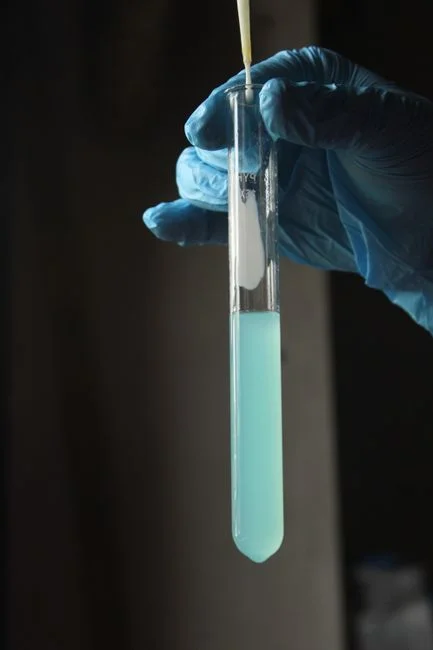
Equipment selection begins with a stream-by-stream mass balance, not a catalog capacity. Inventory tank-bottom water, API or coalescer dumps, loading-arm drip, vehicle wash-rack wastewater, hydrostatic-test water, stormwater contacting product-handling areas, and oily condensate. Record peak instantaneous flow, daily flow, batch volume, dump duration, operating schedule, and expected slug frequency.
Characterize free oil, emulsified oil, suspended solids, colloids, pH, and any petroleum hydrocarbons named by the permit. These conditions determine whether gravity separation is sufficient, whether flotation is required, and whether chemical conditioning is justified. The industrial ETP and DAF selection guide provides a broader framework, but the final basis must come from current influent testing and a process-engineering mass balance.
A 2026 commercial article from HydropureWater identifies HEM as the federally used proxy for fats, oils, and grease under 40 CFR 401.16 and EPA Method 1664A. That identification does not prove that the receiving POTW requires HEM, does not establish a universal limit, and should not replace the method stated in the facility’s permit.
Distinguish free oil from emulsified oil. A gravity separator, API separator, or corrugated-plate interceptor can control separable free oil. Emulsified droplets require a different removal mechanism and may require site-tested conditioning chemistry. Obtain representative samples across dump and wash-rack operations rather than relying on one composite or a nominal equipment curve.
| Waste characteristic | Question the buyer must answer | Treatment implication |
|---|---|---|
| Free oil | Is oil separable or attached to solids? | Consider API, CPI, or other primary separation |
| Emulsified oil | Are droplets stabilized by surfactants or solids? | Evaluate DAF with site-tested conditioning |
| Suspended solids and colloids | What solids load accompanies the oily stream? | Set solids and flotation loading from measured data |
| Flow pattern | What are the peak flow, batch volume, and dump duration? | Size for dump conditions, not average flow alone |
| Petroleum hydrocarbons | Which BTEX, TPH, or other parameters are locally regulated? | Define analytical targets and any polishing need |
| pH and dosing demand | How does chemistry vary during operation? | Determine whether chemical adjustment is required |
Petroleum bulk-plant waste is site-specific. Select parameter ranges only after sampling, and do not infer compliance performance from nominal equipment descriptions.
Segregate, Separate, and Polish the Wastewater
Each treatment stage should perform a defined function. Segregate clean stormwater from product-contact wastewater so hydraulic capacity, chemical use, and sampling are driven by industrial streams requiring pretreatment. Then remove bulk free oil before flotation; this sequence prevents a large oil slug from overwhelming downstream flotation equipment.
Use a covered oil-water separator, API separator, or corrugated-plate interceptor as the primary free-oil-control stage when its verified performance envelope matches the stream. Treat these units as separation steps, not as universal emulsified-oil removal guarantees.
Use DAF as a polishing stage for suspended solids, FOG, oil and grease, and colloidal matter after upstream free-oil removal. HydropureWater’s 2026 commercial DAF catalog describes 13 standard models spanning 4–300 m³/h, using micro-bubble technology and automatic skimming for industrial wastewater, including petrochemical applications. Those catalog values describe offered equipment; the selected unit still requires a site-specific hydraulic and loading basis.
Where emulsified oil or colloids prevent adequate separation, evaluate PLC-controlled dosing of a coagulant, flocculant, demulsifier, or pH adjuster. HydropureWater’s 2026 commercial article describes its automatic chemical dosing systems as skid-mounted, pre-wired, factory-tested, and designed for coagulants, flocculants, pH adjusters, and specialty chemicals. The dose must come from jar testing or another site-supported study, not a generic feed rate.
Use biological or adsorptive polishing only when the permit and waste analysis show that the physical train cannot meet a named pollutant requirement. Neither is an automatic substitute for oil removal. Maintain design allowance for dump events and variable chemistry, then state the verified basis in the final proposal rather than relying on generic operating claims.
| Treatment function | Applicable condition | Equipment to evaluate | Evidence required |
|---|---|---|---|
| Source segregation | Clean runoff is mixed with industrial wastewater | Separate piping, containment, and controlled dump valves | Site drainage map and segregation verification |
| Primary oil separation | Significant separable free oil is present | API separator, CPI, covered oil-water separator | Representative oil characterization and verified performance data |
| Flotation polishing | Emulsified oil, suspended solids, or colloids remain | industrial DAF system for petroleum wastewater | Flow, load, chemistry, and treated-water test basis |
| Chemical conditioning | Waste chemistry prevents reliable separation | automatic chemical dosing system for wastewater conditioning | Site-tested dose and operating-control range |
| Advanced polishing | A named limit remains unmet after physical treatment | Biological or adsorptive process | Permit linkage and pollutant-specific pilot or design data |
Prove Compliance with Permit-Based Monitoring and Records
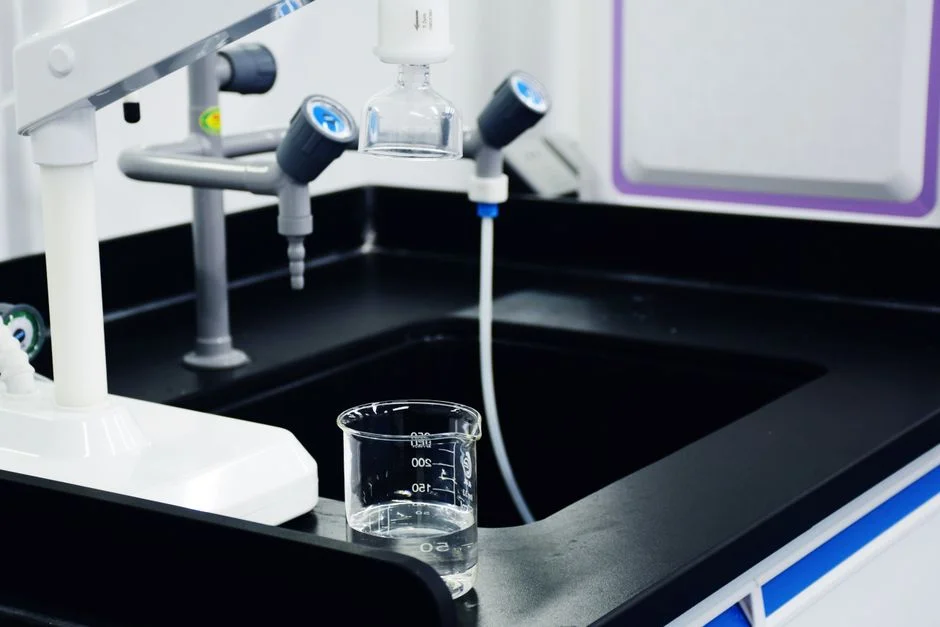
The compliance sample must represent the wastewater delivered to the POTW collection system. EPA states that POTWs impose local limits at the industrial user’s end-of-pipe discharge, meaning the point of connection to the collection system. Use the frequency, sample type, averaging period, analytical method, flow measurement, and reporting deadline stated in the industrial-user permit or control mechanism.
A HydropureWater commercial article dated 2026 suggests daily visual free-oil inspection, weekly TSS grabs, monthly HEM composites, and flow-proportional BTEX/TPH composites where locally required. These are planning examples only; they are not universal federal requirements and should not be adopted unless the applicable POTW instrument calls for them.
Maintain flow-meter calibration records, chain-of-custody documentation, laboratory reports, bypass and dump logs, chemical-use records, operating parameters, and corrective-action records. Equipment run time and automatic skimming cycles show operation, not compliance. The required evidence is the permit-authorized sample and its report.
Establish an escalation procedure before commissioning. It should identify the responsible operator, required notice, retesting rules, and corrective action for an exceedance, upset, bypass, or missed sample. The effluent treatment plant engineering guide offers a broader operating framework, but the receiving POTW’s documents control.
| Evidence item | What it must demonstrate | Procurement or operating check |
|---|---|---|
| Representative sample | Wastewater delivered to the collection system was sampled | Confirm location, access, and sample type against the permit |
| Laboratory report | The named parameter was measured by the required method | Verify method, units, averaging period, and reporting deadline |
| Flow record | Mass loads and discharge conditions are defensible | Check calibration status and linkage to sample records |
| Operational log | Dumps, bypasses, chemistry, and equipment status were controlled | Reconcile events with samples and operator entries |
| Corrective-action record | Exceedances received the required response | Test the escalation procedure during an internal drill |
Make the Equipment Decision on Compliance Risk and Total Cost
Compare bids against the written permit and site-specific basis of design. Require each bidder to state the design waste stream, measured flow basis, pollutant loading, upstream pretreatment, duty cycle, treated-water objective, and sampling point used to demonstrate performance. Without those inputs, a nominal capacity or outlet value is not a compliance guarantee.
Separate guaranteed outlet requirements from equipment acceptance values. A DAF’s ability to remove suspended solids, FOG, oil and grease, and colloidal matter does not itself demonstrate compliance with a POTW concentration limit. The guarantee must identify the permit parameter, analytical method, sample type, averaging period, and compliance point.
Compare installed and lifecycle costs, including civil work, chemical delivery, controls, operator attention, recovered-oil or sludge handling, energy, maintenance, and monitoring. Evaluate the supplier’s ability to provide a duty-based proposal, commissioning protocol, performance test, operating manual, spare-parts plan, and support for permit documentation. The cost framework in the 2025 wastewater treatment plant cost breakdown can structure the comparison, but it does not supply a valid Pecos-area quotation.
Do not publish or accept a universal oil-and-groase concentration ceiling unless it comes from the applicable permit or a verified design basis. Set the treated-water objective from the written requirement and site-specific study, including the required averaging and sampling methodology. That discipline prevents an equipment purchase from becoming the assumed source of the compliance standard.
Frequently Asked Questions
How do I determine which pretreatment limits apply to a petroleum bulk plant near Pecos?
Identify the receiving POTW, the facility’s industrial-user classification, the applicable permit category, and all written local-limit documents. Ask the POTW to confirm prohibited discharges, BMPs, monitoring requirements, and whether the bulk plant is treated as a categorical or noncategorical user. Do not substitute a TCEQ produced-water surface-discharge permit for a sewer requirement.
Is a DAF system sufficient for petroleum bulk-plant wastewater?
It may be suitable as a polishing unit for emulsified oil and suspended solids, but adequacy depends on the characterization, upstream free-oil removal, flow and load, chemistry, and POTW permit. Require bidders to demonstrate performance against the named permit parameter at the compliance sampling point rather than relying on a general oil-removal claim.
How should pretreatment equipment be sized for a tanker or tank-bottom dump?
Use measured and design peak flows, dump duration, batch volume, oil loading, expected variability, and verified equipment performance. Average daily flow alone will not represent the slug condition. Request the data and assumptions behind every hydraulic and pollutant-loading proposal.
What cost information should I request before comparing wastewater treatment suppliers?
Request a site-specific quotation broken into equipment, civil work, chemical storage and delivery, controls, electrical work, commissioning, performance testing, maintenance, operator training, and monitoring support. Ask the supplier to identify exclusions and recurring operating costs; no defensible price can be stated without the waste flow, loading, permit objective, and installation scope.
How can an operator avoid a wastewater compliance failure?
Secure written permit limits and BMPs, segregate sources, characterize the waste, control dump and upset conditions, monitor at the required point, preserve defensible records, and maintain a written exceedance-response plan. Review the supplier and compliance requirements before equipment selection using the practical framework in the guide to meeting sewer limits near an industrial site.