What Electrocoagulation Removes from Anodizing Wastewater
An electrocoagulation system for anodizing wastewater uses electrical current to dissolve sacrificial iron or aluminum electrodes. The generated metal ions react with contaminants to form insoluble flocs that can be separated by settling or filtration. In mixed anodizing-coating wastewater, Water Environment Research reported 2025 removal efficiencies of 94.5% for COD, 98.5% for aluminum and 85.0% for sulfate. These results apply to that study’s wastewater and operating conditions, not to every anodizing stream or discharge permit.
Electrocoagulation therefore belongs inside a treatment train rather than operating as a complete wastewater plant. It can create metal hydroxide flocs, destabilize contaminants and capture them in separable solids, but downstream clarification or filtration remains necessary. pH adjustment and polishing may also be needed. Buyers comparing an electrocoagulation system for anodizing wastewater should review industrial COD and BOD removal technologies only as part of the broader process assessment.
Mixed anodizing streams can contain organic loads, aluminum and other metals, sulfate, acidity and variable suspended solids. Characterization must therefore establish how source streams vary across production and cleaning cycles. Mixed anodic and acidic streams also require a compatibility review covering electrode behavior, corrosion risk and treatment sequencing. The 2025 study did not establish a universal mixing ratio, chemical-dose range or corrosion allowance for anodic aluminum coating wastewater.
Sulfate deserves separate attention because high removal efficiency does not necessarily mean compliant discharge. A process can remove most of the incoming sulfate while leaving enough residual concentration to exceed an applicable limit. Equipment selection should therefore be based on treated concentration against the receiving authority’s requirements, not percentage removal alone.
Anodizing Wastewater Performance Compared with Electrooxidation
The 2025 mixed-wastewater study found that electrocoagulation outperformed electrooxidation for sulfate, the contaminant that separated the two processes on compliance. Water Environment Research reported model correlation coefficients above R² 0.95 for every response, and validation experiments supported the comparison.
| Response | Electrocoagulation removal | Electrooxidation removal |
|---|---|---|
| COD | 94.5% | 90.8% |
| Aluminum | 98.5% | 92.0% |
| Sulfate | 85.0% | 72.0% |
All results above come from Water Environment Research, “A Multivariate Approach for the Treatment of Mixed Anodizing Coating Wastewater by Electrochemical Processes,” published in September 2025.
The process comparison is more informative than a generic claim that electrochemical treatment removes metals. The study used wastewater generated by the anodizing-coating industry and systematically varied initial pH, applied current and electrolysis time. It also used Box-Behnken design, response-surface analysis and ANOVA to optimize the two processes. These factors make the evidence application-specific rather than transferable from clean, single-contaminant model water.
Most importantly, the study found that electrooxidation did not meet the applicable sewer discharge standard for sulfate despite achieving 72.0% sulfate removal. Electrocoagulation achieved 85.0% sulfate removal and was identified as more effective for that objective. The compliance result demonstrates why a supplier’s percentage-removal table is insufficient: the buyer also needs initial and final sulfate concentrations, the applicable limit and confirmation that the complete treatment train met the standard.
The evidence does not make electrocoagulation a universal guarantee. Feed chemistry, scaling, electrode condition, hydraulic variation and downstream solids capture can change full-scale results. A project should use the study as the anchor for a site-specific trial rather than as a substitute for pilot testing.
The Treatment Process from Electrodes to Solids Separation
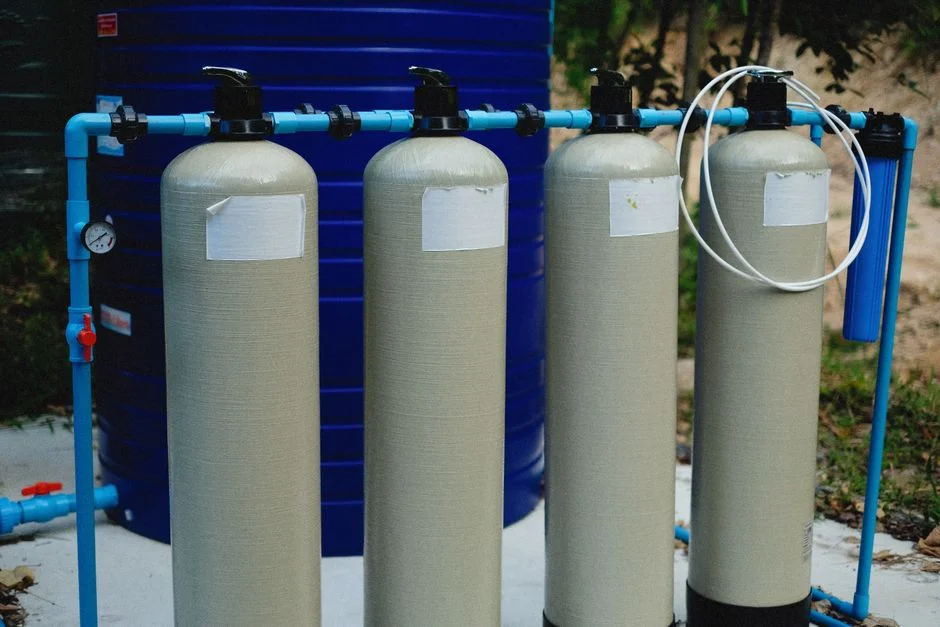
A practical treatment train must remove both dissolved contaminants and the solids generated while removing them. An electrocoagulation cell converts electrical energy and electrode material into coagulant species; it does not by itself deliver a solids-free or compliant effluent.
- Characterize representative wastewater and balance source flows.
- Equalize the stream and prepare its initial pH.
- Apply electrocoagulation using the validated electrode and current arrangement.
- Condition the flocs where required.
- Separate suspended solids by clarification, flotation or filtration.
- Provide final polishing or compliance treatment where necessary.
- Manage and dewater the resulting sludge.
In the electrocoagulation cell, sacrificial electrodes dissolve under current. Iron or aluminum ions then form coagulant species that precipitate or destabilize contaminants, producing metal hydroxide flocs. Those flocs must then be removed physically. Conductivity affects the electrical behavior of the cell; a 2017 West Virginia University study found that higher basic conductivity could reduce the voltage required for electrocoagulation.
A DAF system for electrocoagulation floc separation is a candidate when the stream contains suspended solids, oil and grease, or colloidal material. A plate and frame filter press for electrocoagulation sludge can then dewater coagulated solids where its filtration capacity and operating mode match the pilot results. The available DAF catalog spans 4–300 m³/h across 13 standard models; that is a catalog range, not a recommendation for every anodizing line.
Critical Parameters to Pilot-Test
The 2025 anodizing-wastewater study identified initial pH, applied current and electrolysis time as the three variables systematically varied during optimization. Those should anchor a pilot matrix because they directly reflect the mixed anodizing wastewater for which evidence is available.
| Pilot input | Why it must be tested | Required reporting |
|---|---|---|
| Initial pH | It affects coagulant formation and contaminant behavior. | Setpoint, variation and treated COD, aluminum and sulfate results. |
| Applied current | It influences reaction rate, electrode consumption and energy demand. | Current, current density, treatment time and electricity consumption. |
| Electrolysis time | It determines treatment duration and part of the energy demand. | Residence time and performance at each tested condition. |
| Conductivity | It affects voltage requirements and electrical behavior. | Feed conductivity and corresponding voltage. |
| Electrode spacing | Its effect must be established for the actual cell and wastewater. | Spacing tested and associated removal and energy results. |
| Initial metal concentration | Metal loading affects treatment and electrode behavior. | Initial and final aluminum and other relevant metals. |
The 2025 study used Box-Behnken design, response-surface analysis and ANOVA; all model correlation coefficients exceeded R² 0.95. Validation experiments then supported the reported comparison. A project pilot should preserve that rigor where practical and include at least the three primary variables above.
Current density also requires attention because the 2017 West Virginia University zinc study identified it as critical to both removal efficiency and energy consumption. That study’s results are transferable operating evidence, not anodizing guarantees: it reported more than 99.5% zinc removal at 50 mg/L within 20 minutes at 0.35 kWh/m³, and highly similar removal at 250 mg/L after 50 minutes at 0.88 kWh/m³. It found neutral pH favorable for zinc removal in its model system, while electrode spacing was not significant in that case.
Ask suppliers to test actual mixed-metal wastewater rather than relying only on single-metal synthetic water. Every result should disclose electrode material, current density, treatment time, pH and energy consumption. An automatic chemical dosing system for pH control may be required, but its dosing basis should come from the wastewater characterization and pilot mass balance. Electrode life, minimum current density and guaranteed energy consumption should not be specified without anodizing-specific test evidence.
Choosing Electrodes and Evaluating Energy Consumption
Electrode choice affects coagulant generation, solids production, electrical demand and residual-metal handling. Iron and aluminum are common sacrificial electrode materials, but neither can be treated as the default for mixed anodizing wastewater.
| Procurement item | Information required from the supplier | Acceptance basis |
|---|---|---|
| Electrode material and arrangement | Material, geometry, spacing and intended cleaning or replacement method. | Performance on representative anodizing wastewater. |
| Applied current | Average and peak current, current density and control method. | Documented operating range from pilot testing. |
| Electrolysis time | Treated residence time and flow-control arrangement. | Hydraulic and batch-cycle testing. |
| Electrical demand | Average and peak power plus calculation boundary. | Includes cell and defined auxiliary loads. |
| Electrode consumption | Consumption assumption, replacement criteria and maintenance interval. | Supplier test result; otherwise explicitly provisional. |
| Aluminum loading | Impact of added aluminum on sludge quantity, characteristics and residual management. | Measured solids generation and residual-metal assessment. |
For wastewater already containing aluminum, added aluminum coagulant may increase solids loading or alter sludge characteristics. Iron may create a different solids matrix. The supplied research does not establish a universally preferred electrode material for anodizing wastewater, so the comparison should be empirical and tied to discharge and sludge-disposal requirements.
Electrical demand must also be separated from removal performance. The 2017 West Virginia University zinc study showed higher energy use between its reported 50 mg/L and 250 mg/L test conditions, but those results cannot be converted into an anodizing-system guarantee. Require an energy model stating flow rate, average and peak demand, wastewater chemistry, target removal, applied current, electrolysis time and the calculation boundary. Ask separately for electrode-consumption assumptions, replacement criteria and maintenance intervals. If those fields have not been tested, leave them provisional rather than accepting generic figures.
Integrate Solids Separation, pH Control and Sludge Dewatering
Electrocoagulation creates the flocs that determine downstream hydraulic and solids-handling requirements. Without separation, contaminant removal achieved in the cell may not appear in the treated discharge.
| Process stage | Design consideration | Buyer’s required input |
|---|---|---|
| DAF solids separation | Candidate for suspended solids, FOG, oil and grease, and colloidal matter. | Feed solids, oil content, pilot separation performance and selected DAF capacity. |
| Plate-and-frame dewatering | Candidate for dewatering coagulated sludge. | Sludge properties, target solids content, filtration area and operating mode. |
| pH adjustment and dosing | May be required before or after electrochemical treatment. | Site-specific chemical mass balance and control sequence. |
| Final compliance verification | The complete treated stream must be sampled against the applicable route. | Local discharge or sewer limits, including sulfate, and laboratory results. |
The available DAF catalog range is 4–300 m³/h across 13 models; it should not be treated as a universal sizing rule. The available plate-and-frame filter-press configurations include filtration areas from 1 m² to 500 m² and manual, hydraulic or automatic PLC operation. Those are available equipment ranges, not evidence that any configuration will dewater a particular anodizing sludge correctly.
pH integration requires a defined sequence. Initial pH may be prepared before the electrochemical cell, while residual adjustment may be needed after separation. PLC-controlled dosing can handle coagulants, flocculants, pH adjusters and specialty chemicals, but chemical quantities and controls must follow site-specific testing.
The final checkpoint is the complete treated stream, not the cell outlet. Sample after solids separation and any polishing step, then compare each relevant parameter—including sulfate—with the applicable local discharge or sewer requirement. The supplied research does not provide a universal sulfate limit, so the applicable authority must supply the compliance basis.
A Supplier and Compliance Decision Framework
A defensible equipment selection requires five linked decisions; skipping characterization or treating removal percentage as compliance leaves a material procurement risk.
| Decision stage | Required evidence | Rejection trigger |
|---|---|---|
| 1. Characterize | pH, conductivity, COD, aluminum, sulfate, other metals, flow profile and batch consistency. | Generic feed data without sampling dates or stream composition. |
| 2. Pilot | Representative mixed anodizing wastewater; COD, aluminum and sulfate results, treated concentrations, electricity and sludge generation. | Only synthetic single-metal results are offered. |
| 3. Check compliance | Final treated concentrations compared with the applicable local discharge or sewer limits. | Sulfate is omitted, or only removal percentage is reported. |
| 4. Audit the train | Electrode arrangement, power supply, controls, conditioning, solids separation, pH integration, sludge handling and instrumentation. | The electrocoagulation cell is quoted without downstream separation or sludge handling. |
| 5. Establish the operating boundary | Mass and cost balance for electricity, electrodes, chemicals, sludge handling and maintenance. | Energy assumptions, electrode life or operating costs are undisclosed. |
Step 1 establishes whether the proposed process can handle the actual stream and production variation. Step 2 tests the unit rather than accepting laboratory claims from unrelated water. Step 3 converts performance into a compliance decision. The audit in Step 4 checks whether the proposed equipment forms an operable treatment train, including equalization, pH preparation, floc conditioning, solids removal, final treatment and sludge management.
Step 5 prevents hidden operating costs. The energy boundary should specify whether auxiliary pumps, mixing, DAF, dosing and controls are included. Sludge costs should reflect measured generation and the selected dewatering route. Where final disposal depends on metal content, require a solids characterization rather than assuming that electrocoagulation neutralizes disposal risk.
Reject any proposal that relies on synthetic single-metal water, conceals energy assumptions, guarantees performance using percentage removal without final concentrations, or excludes sulfate from treated-water analysis. For broader solids-handling decisions, the supplied guide on chromium-removal engineering specifications illustrates why contaminant-specific final concentrations matter, but it does not establish sulfate limits or anodizing-system performance.
Frequently Asked Questions
What removal performance should I expect from an electrocoagulation system for anodizing wastewater?
For the mixed anodizing-coating wastewater studied by Water Environment Research in September 2025, electrocoagulation removed 94.5% of COD, 98.5% of aluminum and 85.0% of sulfate. These are application-specific study results, not universal guarantees. Your design basis should be the final treated concentrations measured during a site-specific pilot.
How should I size the system when only the wastewater flow rate is known?
Flow rate alone is insufficient. Testing must establish pH, conductivity, COD, aluminum, sulfate and other relevant metals, flow variation, batch consistency, initial pH, applied current, electrolysis time and resulting sludge generation. The flow profile then determines hydraulic and peak-demand requirements, while the pilot results determine electrical loading and downstream separation capacity.
What should I require when selecting an electrocoagulation supplier?
Require a pilot on representative mixed anodizing wastewater, complete treated-water analyses including sulfate, electricity consumption, sludge generation and all operating conditions. Also request the electrode arrangement, energy-calculation boundary, electrode-consumption assumptions, replacement criteria and maintenance provisions. Percentage removal from synthetic single-metal water is not an adequate qualification package.
What will an electrocoagulation system cost for anodizing wastewater?
The supplied research provides test-specific zinc energy data but no price for an anodizing electrocoagulation system. Request an itemized operating-cost model covering electricity, sacrificial electrodes, pH and other chemicals, sludge handling, maintenance and electrode replacement. For capital pricing, provide the characterized feed, flow profile, pilot results, duty cycle and required treatment train so that comparable quotations can be evaluated.
Does high contaminant removal prove that the wastewater can be discharged?
No. Removal efficiency and legal discharge compliance are separate decisions. The 2025 study found that electrooxidation removed 72.0% of sulfate but did not meet the applicable sewer discharge standard for sulfate. Confirm the final treated-stream concentrations against the limits issued by the applicable local authority or sewer authority, including sulfate, and document the sampling point after all treatment and solids-removal stages.