What an electrocoagulation system does in electroplating wastewater
An electrocoagulation system for electroplating wastewater can remove dissolved metals by generating coagulant in situ with sacrificial electrodes, then converting metal ions into separable hydroxide flocs. It is not a complete treatment or compliance guarantee because separation, sludge handling, pH control, monitoring, and contaminant-specific treatment remain necessary. Published results are condition-specific: an iron-electrode study of actual electroplating effluent reported 79% zinc and 99% chromium removal at pH 9 after 30 minutes, while a separate nickel study used aluminum and copper electrodes in a 500 mL batch reactor (Iskender Akkurt; Djaenudin et al., 2018). Industrial selection should therefore be based on site-specific chemistry and pilot performance.
The core reaction requires a direct-current power supply, reaction tank, sacrificial anode, cathode, mixing, and controlled water chemistry. Downstream, those metal-bearing flocs need solids separation, sludge dewatering, and final effluent verification. A supplier offering only a reaction cell has not offered a complete electrocoagulation treatment train.
Performance figures apply only to their tested conditions. The 79% zinc and 99% chromium removals came from actual electroplating effluent treated with iron electrodes at pH 9 for 30 minutes, not from a universal operating envelope (Iskender Akkurt). They cannot be transferred directly to a different plating facility, electrode configuration, flow regime, or wastewater matrix.
Stream segregation is a critical engineering decision because plating baths, acids, alkalis, oils, cleaning chemicals, and metal-bearing rinses can behave differently. The automatic chemical dosing system for pH control may support the treatment train, while online heavy-metals monitoring for electroplating wastewater can support verification and process control. Neither replaces laboratory analysis or a representative-water study.
How the treatment process works from metal ions to sludge
Metal removal is completed only when generated solids are separated and the treated water is verified. A practical process flow is:
- Characterize and segregate the stream: identify metals, speciation, pH, conductivity, suspended solids, alkalinity, organics, and plating-bath leakage.
- Adjust pH: establish the chemistry required for the selected electrodes and target metals.
- Apply electrocoagulation: pass the conditioned water through the electrode chamber under controlled current or voltage and mixing.
- Generate metal hydroxide flocs: sacrificial anode material supplies coagulant while the cathode supports hydrogen evolution; the exact reactions depend on electrode chemistry and wastewater conditions.
- Separate solids: remove the flocs before discharge or reuse.
- Dewater sludge: recover and characterize the concentrated metal-bearing solids.
- Verify final effluent: test against the applicable discharge or reuse requirements.
The sacrificial anode is the source of coagulant; it is not interchangeable with the cathode in every treatment application. Iron produces iron-based coagulant, while aluminum produces aluminum-based coagulant. Hydroxide generation, destabilization, and precipitation or adsorption of target metals then create flocs that must remain in the solid phase through separation.
This is where many laboratory comparisons become misleading. The iron-electrode study found its reported zinc and chromium optimum at pH 9 after 30 minutes, showing that pH and contact time cannot be treated as independent guarantees (Iskender Akkurt). The Djaenudin et al. study examined a different metal, initial concentration, reactor, electrode pair, pH, and operating objective in 2018. These variables must be re-established for the actual effluent.
A lamella clarifier for electrocoagulation solids separation can be evaluated where its flocculation and inclined-plate configuration suits the selected solids. A plate and frame filter press for metal sludge dewatering after electrocoagulation can then reduce sludge volume before characterization and disposal.
Cyanide-bearing or otherwise complex streams require a preliminary challenge check. The supplied research does not establish universal performance for every bath chemistry, so cyanide presence, competing ions, and organic ligands should be identified before pilot design. Treating an uncharacterized mixture as if it were a single-metal effluent creates unnecessary acceptance risk.
Published operating conditions and removal results
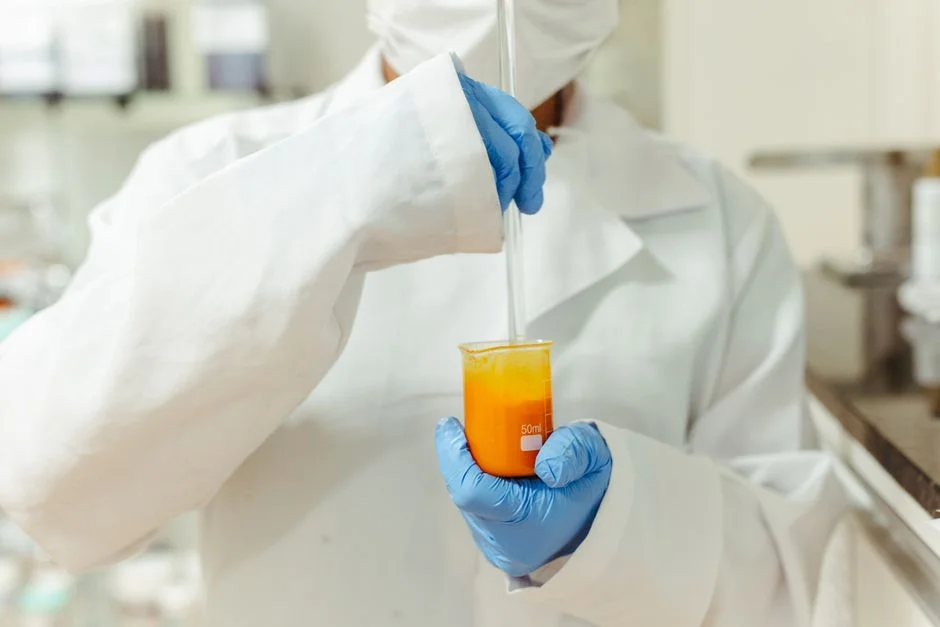
The available studies show two distinct experimental approaches, and their results should not be merged into a generic performance claim. Djaenudin et al. used a 500 mL laboratory batch reactor with an aluminum anode, copper cathode, electroplating wastewater at pH 7, and an initial nickel concentration of 10.55 ppm. The investigation varied direct-current voltage at 5, 7.5, and 10 VDC and operating time at 30, 60, and 90 minutes, reporting the optimum at 5 VDC for 76.5 minutes (Djaenudin et al., 2018).
The iron-electrode study used actual electroplating effluent and examined pH and treatment time. At pH 9 and 30 minutes, it reported 79% zinc removal and 99% chromium removal, with electrode consumption of 1.07 kg/m³ and energy consumption of 25 kWh/m³ (Iskender Akkurt). These values are study benchmarks, not commercial guarantees.
| Study | Wastewater and reactor | Electrodes and conditions | Reported result |
|---|---|---|---|
| Djaenudin et al., 2018 | Electroplating wastewater; 500 mL batch reactor; initial nickel 10.55 ppm; pH 7 | Aluminum anode and copper cathode; 5, 7.5 and 10 VDC; 30, 60 and 90 minutes | Reported optimum: 5 VDC for 76.5 minutes |
| Iskender Akkurt | Actual electroplating effluent | Iron electrodes; pH 9; 30-minute treatment | 79% zinc removal; 99% chromium removal; electrode consumption 1.07 kg/m³; energy consumption 25 kWh/m³ |
Voltage from a batch experiment does not establish the current density or power demand of a commercial reactor. The buyer should require the electrical calculation basis: electrode geometry, active area, spacing, current, voltage, current density, treatment volume, and whether reported consumption represents electrical input or another accounting boundary. A supplier quoting energy without those definitions is not providing a comparable basis.
Site-specific testing should form a matrix rather than a single operating point. Vary current density, pH, electrode configuration, retention time, and solids-separation conditions under representative flow and chemistry. Record final dissolved and total metal concentrations, because floc carryover can make an apparent chemical removal disappear at the outlet. When comparing quotations, the automation and process-control costs for electrocoagulation should be evaluated together with the reaction, separation, and sludge equipment.
Electrode selection, pH control, and operating variables
Electrode selection must follow the wastewater chemistry and required sludge outcome. Iron and aluminum electrodes both appear in the supplied electroplating-wastewater research, but their coagulant chemistry, resulting sludge characteristics, consumable requirements, and interaction with the treatment objective are not interchangeable. A single metal-removal percentage cannot resolve that decision.
pH is a central control variable rather than a commissioning afterthought. The pH 9 zinc and chromium results from Iskender Akkurt sat beside the pH 7 nickel condition in Djaenudin et al., 2018, but the studies used different electrodes, objectives, and wastewaters. The comparison demonstrates sensitivity to operating conditions; it does not establish that one pH is universally optimal.
| Decision area | Evidence the supplier must provide | Buyer verification |
|---|---|---|
| Electrode configuration | Material, electrode area, spacing, connection arrangement, and replacement method | Representative-water comparison with the proposed configuration |
| Electrical operation | Current-density or voltage range and the calculation basis | Measure power and metal removal under defined feed conditions |
| Reaction conditions | Reaction volume, detention time, mixing arrangement, and pH-control strategy | Pilot test across expected pH and flow variation |
| Maintenance | Cleaning cycle, consumption monitoring, electrode replacement method, and access provisions | Review planned tasks, labor, spares, and downtime |
| Influent basis | Average and peak flow, metals and speciation, pH, conductivity, suspended solids, alkalinity, temperature, organics, and bath leakage | Confirm the design envelope against plant records and sampling |
No universal voltage or current density should be prescribed from the supplied evidence. The nickel study reported an optimum at 5 VDC for 76.5 minutes in a small batch reactor, while the iron-electrode study reported different metal removals at pH 9 after 30 minutes. Neither result determines a plant operating point without site testing.
Several system details belong in the supplier specification rather than being left to commissioning. Include electrode area and spacing, mixing, pH control, cleaning access, replacement method, reaction-volume basis, and detention time. A treatment-parts, valves, and filter-media schedule should identify compatible accessories and service points without obscuring which items are included in the operating system.
The influent characterization also determines whether segregation is required. If plating baths, cleaning chemicals, oils, or cyanide-bearing leaks vary independently, include them in the pilot challenge matrix. Otherwise, an average feed analysis can conceal operating conditions that destabilize removal or produce unacceptable sludge.
Where electrocoagulation fits in the complete treatment train
Electrocoagulation should be specified as one stage in a sequence that includes equalization and segregation, pH conditioning, electrochemical reaction, solids separation, sludge dewatering, and final monitoring. This arrangement preserves the distinction between removing metals from solution and managing the solids created during removal.
A suitable process train is:
- Equalization and segregation of incompatible electroplating streams.
- Characterization and pH conditioning before the electrode chamber.
- Electrocoagulation reaction with controlled current, voltage, mixing, and detention time.
- Flocculation and solids separation where required by the selected floc properties.
- Sludge collection, dewatering, and characterization.
- Final laboratory and online verification against the applicable effluent criteria.
The lamella clarifier for electrocoagulation solids separation is one separation option to evaluate, not an automatic selection. Acceptance should consider floc settling, carryover, solids concentration, hydraulic loading, maintenance access, and integration with the selected EC reactor.
Metal-bearing sludge then requires a controlled route. A plate and frame filter press for metal sludge dewatering after electrocoagulation may be suitable where dewatering is justified, but the pilot must measure cake behavior, filtrate quality, solids output, and operational handling. The sludge should then be tested for the metals removed and classified according to site conditions and local waste requirements. The supplied research does not establish a universal disposal route.
Online heavy-metals monitoring for electroplating wastewater serves as a verification and control function. It can identify process excursions and support tighter operating control, but it should not be treated as a substitute for laboratory confirmation or as proof of total-metal removal when particulate carryover may be present.
The train should also make failure modes visible. Loss of pH control, inadequate mixing, electrode scaling or consumption, power interruption, solids carryover, and sludge-dewatering capacity all need defined alarms or operating responses. A complete equipment schedule should show where each function occurs and who owns it.
PFAS and other contaminants that may require supplemental treatment
The July 2026 review establishes that electroplating wastewater can contain PFAS compounds that electrocoagulation cannot be assumed to remove. Monitoring of 15 electroplating parks and 97 enterprises detected 29 PFAS, with PFOS reaching up to 3.6 × 10^7 ng/L (Toxics, 2026-07-27).
The same review found very poor PFAS removal through coagulation and flocculation. That finding directly limits the use of generic flocculation or heavy-metal-removal claims as evidence of comprehensive PFAS treatment. It does not prove that every EC configuration behaves identically, but it means electrocoagulation should not receive PFAS credit without separate, representative evidence.
| Technology signal | Reported result and scope | Procurement implication |
|---|---|---|
| Coagulation and flocculation | Very poor PFAS removal in the Toxics review | Do not infer PFAS treatment from conventional coagulation performance |
| Flotation | Up to 88% removal of perfluoroalkane sulfonic acids; integration constrained performance | Evaluate as a possible supplemental stage with stream-specific testing |
| Ion exchange | 98% PFOS removal, but ineffective for short-chain PFAS because of low affinity and rapid breakthrough | Specify by PFAS species and chain length, not by PFAS as one category |
| Membranes | Nearly 100% removal of long-chain PFAS, with fouling and concentrate-disposal challenges | Evaluate system integration, fouling, concentrate, and residual waste |
All performance values in the table come from the Toxics review published 2026-07-27. They are technology-level findings, not guarantees for a particular electroplating wastewater or proposed treatment train.
Require PFAS screening when chrome plating or mist-suppressant exposure is plausible. The review identifies chrome plating as the primary PFAS source in the electroplating industry and reports that PFOS, 6:2 FTS, and 6:2 Cl-PFESA in some chromium mist suppressants reached up to 985, 735, and 875 g/kg, respectively (Toxics, 2026-07-27).
Treatment evaluation must be tied to the specific contaminant, chain length, concentration, water matrix, and applicable permit. If PFAS is present, determine whether supplemental treatment, discharge restrictions, or another project constraint governs the design. A dissolved-air flotation machine for supplemental treatment or reverse-osmosis system for supplemental treatment may warrant review, but the published results are not site acceptance criteria.
A procurement framework for comparing electrocoagulation suppliers
A comparable quotation must define the feed, operating point, separation performance, energy basis, consumable use, and sludge outcome. A single removal percentage without those conditions is not enough for technical or commercial evaluation.
Request representative-water results for each metal of concern. Require disclosure of electrode material, pH, current density, treatment time, flow basis, removal efficiency, energy consumption, electrode consumption, and sludge output. Where a supplier offers a guaranteed value, tie it to the defined influent and operating envelope. Ask whether the result is measured at the end of the EC reactor or after solids separation, because the latter is the relevant effluent result.
| RFP package | Required information | Acceptance focus |
|---|---|---|
| Performance evidence | Representative-water results under stated chemistry and operating conditions | Metals of concern, total and dissolved results, flow variation, and repeatability |
| Equipment schedule | Reaction tank, electrodes, power supply, mixing, pH control, separation, sludge handling, controls, instrumentation, access, and replacement method | Functional completeness and clear responsibility boundaries |
| Pilot matrix | pH, current density, electrode configuration, retention time, flow, solids separation, energy, electrode use, and sludge dewatering | Selected operating point and performance under expected variation |
| Commercial and lifecycle terms | Capital scope, power requirements, electrode replacement, cleaning, spares, controls integration, service, training, scale-up, and maintenance access | Total operating burden and measurable handover requirements |
The pilot acceptance matrix should be written before testing. Define acceptable metal concentrations at the final effluent, pH range, representative flow conditions, energy use, electrode consumption, and sludge-dewatering performance. Treat the published 1.07 kg/m³ electrode consumption and 25 kWh/m³ energy consumption from Iskender Akkurt only as study benchmarks for quote comparison. They do not guarantee commercial-system consumption.
Supplier selection should reward evidence tied to the buyer’s water. Require a complete treatment train, pilot data, control philosophy, electrode-maintenance plan, sludge route, service scope, and defined acceptance criteria. A lower capital quote that omits separation, sludge handling, controls, or consumables is not comparable with a complete scope.
Commercial evaluation should also address automation and process-control costs for electrocoagulation, but do not let control features obscure the physical process. Instrumentation supports repeatable pH, current, flow, and separation performance; it does not compensate for an unsuitable electrode configuration or an unverified sludge route.
Frequently Asked Questions
How much does an electrocoagulation system for electroplating wastewater cost?
No universal price can be inferred from the supplied research because the studies did not provide commercial-system prices. Request itemized quotations for the reaction tank, electrodes, power supply, mixing, pH control, solids separation, sludge handling, controls, instrumentation, installation, training, and service. Also request the pricing basis for electricity, electrode replacement, chemicals, maintenance, and sludge disposal, using the expected flow and representative-water chemistry.
Can the published removal results determine the required system size?
No. The nickel result was generated in a 500 mL batch reactor, and the iron-electrode result used actual effluent under pH 9 and 30-minute treatment conditions (Djaenudin et al., 2018; Iskender Akkurt). Sizing requires average and peak flow, influent characterization, representative-water testing, pilot results, solids separation, and sludge handling. A published batch voltage or treatment time does not determine commercial capacity.
How should electrocoagulation suppliers be selected?
Select suppliers that provide pilot evidence on representative water and a complete treatment train rather than only the electrode reactor. Review electrode material and replacement, pH and current control, solids separation, sludge dewatering, controls integration, maintenance access, service scope, operator training, and defined acceptance criteria. Ask for guarantees tied to stated feed conditions and operating envelopes.
Does electrocoagulation make electroplating wastewater compliant with PFAS limits?
No. Metal-removal evidence does not establish PFAS compliance. The Toxics review published 2026-07-27 found very poor PFAS removal through coagulation and flocculation. Require PFAS screening where chrome plating or mist-suppressant exposure is plausible, then evaluate contaminant-specific supplemental treatment and the applicable permit. Laboratory evidence for one contaminant cannot be transferred to another.
What operating parameters must be controlled after commissioning?
Control pH, current or current density, mixing, flow, detention time, electrode condition, and solids separation. Monitor electrode consumption and cleaning requirements, verify floc capture, and confirm final effluent with laboratory analysis supported by online measurements. Online heavy-metals monitoring for electroplating wastewater can support control, but it must be paired with representative laboratory sampling and defined operating responses.