Choose Between Sewer Connection and On-Site Treatment
Domestic sewage treatment in Quezon City generally requires either connection to an available sewer network or a properly engineered decentralized plant. The city already reuses treated wastewater for park irrigation and public-space cleaning. Local project evidence from Sikatuna BLISS shows how collection, biological treatment, sedimentation, disinfection and sludge management can be integrated, but its 2001 design data must not be treated as current regulation. For 2026 projects, confirm sewer availability, characterize the influent, identify the receiving water or reuse point, establish applicable DENR and local requirements, and compare buried A/O, MBR and other decentralized alternatives before selecting equipment.
The first decision is not which package to buy; it is whether sewer connection is feasible and preferable. Confirm the available sewer route, connection point, ownership, capacity and development conditions with the responsible authority. Then test the alternative against land availability, treatment responsibility, receiving-water constraints, planned reuse and future expansion. These checks should be completed before comparing a decentralized sewage treatment option in the Philippines with centralized service.
Sikatuna BLISS provides local evidence of a combined solution, not a template that automatically applies to every property. According to the Manila Waterworks and Sewerage System’s December 2001 project document, the project intercepted sewage from communal septic tanks and raw wastewater from buildings without septic tanks across 544 residential units, then directed the flows through sewer lines to an underground centralized treatment plant. The historical design therefore addressed both collection deficiencies and centralized treatment.
A septic tank alone should not be treated as equivalent to a complete treatment process. Its performance and suitability must be assessed through wastewater characterization and process selection. The Quezon City Government’s treated-wastewater program, updated on August 12, 2025, adds an important planning input: the city collects treated wastewater from residential areas for park irrigation and public-space cleaning, replacing drinking water for those tasks. Define the intended reuse before selecting equipment.
| Decision input | What the project team must establish | Decision consequence |
|---|---|---|
| Sewer availability | Existing route, connection point, authority conditions, available capacity and ownership | Connection may remove the need for a site treatment plant. |
| Site constraints | Available area, excavation access, groundwater, geotechnical conditions and future expansion | Buried package treatment may be feasible where conventional plant layout is constrained. |
| Treatment objective | Discharge route, reuse application, required effluent parameters and residual destination | Process selection must follow the receiving and reuse requirements. |
| Influent basis | Verified flow, wastewater characteristics, collection losses and uncontrolled inflows | Capacity and treatment guarantees require a defensible design basis. |
| Operations | Responsible operator, monitoring capability, maintenance access and response arrangements | The operating model must support the proposed treatment process. |
Map the Complete Domestic Sewage Treatment Process
The Sikatuna BLISS treatment train separated the major functions needed to manage domestic sewage: lift and surge storage, biological treatment, sedimentation, chlorination and sludge digestion. This functional sequence is useful because it shows what a package system must accomplish, but its historical targets and process configuration should not be treated as current Quezon City requirements.
- Collection and equalization: Bring sewage into a controlled system, remove gross solids where required, and manage variable flow and incoming wastewater characteristics.
- Biological treatment: Reduce biodegradable organic matter before discharge or reuse.
- Solids separation: Separate biomass and other settleable material from the treated liquid.
- Disinfection: Apply the treatment required by the confirmed effluent and reuse basis.
- Residual management: Characterize, treat, store and authorize the disposal or beneficial use of sludge and other solids.
The Sikatuna BLISS design used biological SBR/IDEA activated sludge, followed by sedimentation and chlorination. Sludge digestion was included, with reuse as a soil conditioner identified in the December 2001 project document. That final stage is not optional in concept planning: a biological treatment plant generates residuals, and their handling affects site space, operations, transport, permits and life-cycle cost.
The project’s influent assumptions were 100 mg/L TSS, 200 mg/L BOD5, 350 mg/L COD, 50 mg/L oil and grease, and pH 6–9. These are explicitly Sikatuna BLISS design assumptions published by Manila Waterworks and Sewerage System in December 2001. They are not a current sampling result, a generic domestic-sewage profile or a sizing input that can be transferred directly to another Quezon City site.
A decentralized package can combine several of these functions in a smaller installation. The buried WSZ sewage treatment plant, for example, integrates A/O biological contact oxidation, sedimentation and disinfection. The owner must still verify local treatment objectives, establish the collection design and define who will inspect, maintain and monitor the installation.
Compare Buried A/O, MBR and Decentralized Alternatives
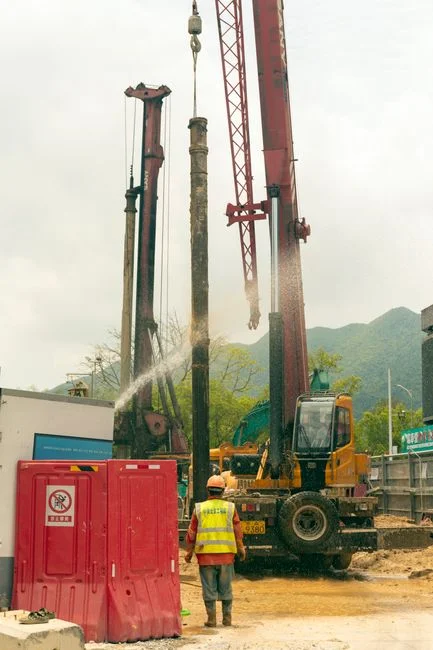
The process comparison should begin with verified project constraints rather than a general claim that one technology is superior. HydropureWater’s verified product catalog describes the WSZ as a buried package unit combining anoxic/aerobic contact oxidation, sedimentation and disinfection, with full automation and a capacity range of 1–80 m³/h. It can be installed below grade with the area above it landscaped or mounted on a trailer for mobile deployment.
The MBR system described in the product catalog combines activated sludge with submerged PVDF membrane filtration. Its reported filtration performance is below 1 μm, its footprint is reported as 60% smaller than conventional systems, and its capacity range is 10–2,000 m³/day. These are catalog figures. They should be matched to the project’s verified average and peak duties, required reuse quality, operating resources and permit conditions rather than used as general performance promises.
Sikatuna BLISS adds a local precedent for centralized SBR/IDEA activated-sludge treatment, but it does not establish that the same process is appropriate for a hotel, residential estate, government facility or isolated property. Vermifiltration is another decentralized option. An IntechOpen study, Application of Vermifiltration for Domestic Sewage Treatment, reports that the process is viable, requires less expertise and can be decentralized. That finding does not remove the need to establish local design parameters, operating requirements and compliance with applicable standards.
| Selection criterion | Buried WSZ A/O package | MBR membrane bioreactor | Other decentralized alternative |
|---|---|---|---|
| Process configuration | A/O biological contact oxidation, sedimentation and disinfection in one buried unit | Activated sludge with submerged PVDF membrane filtration | Vermifiltration is reported as viable and capable of decentralized operation |
| Published capacity range | 1–80 m³/h | 10–2,000 m³/day | Establish through project-specific design evidence |
| Land and installation | Designed for below-grade installation, with landscaping above the unit | Catalog reports a footprint 60% smaller than conventional systems | Compare civil works, access and operating arrangement |
| Reuse relevance | Must be matched to the confirmed reuse standard | Consider where membrane filtration and the required effluent basis justify the added process | Confirm applicable performance and health requirements |
| Operational attention | Full automation; owner still needs maintenance and monitoring arrangements | Plan membrane cleaning, aeration, controls and routine operation | Confirm local operating skill and performance responsibilities |
Use the comparison in this order: If the verified flow fits the required process range and the land-use objective is met, compare footprint, access and reuse needs. Then evaluate operating capability, sludge handling and permit conditions. The packaged sewage treatment plant selection guide provides a broader housing context, but the final choice must use current Quezon City inputs.
Size the Plant from Verified Wastewater Inputs
A defensible plant size begins with the project’s verified wastewater flow and characteristics, not a generic rule copied from an old project document. The Sikatuna BLISS flow calculation used 200 liters per capita per day of water demand and 70% wastewater discharge. These figures come from the December 2001 Manila Waterworks and Sewerage System document and apply to that historical project; they are not a universal Quezon City sizing standard.
Request the current population or occupancy, daily water demand, wastewater contribution, hourly flow profile, peak factor, wastewater characteristics and design horizon. Confirm whether the proposed collection system will receive stormwater, groundwater, roof runoff, infiltration or other uncontrolled inflows. If so, quantify them because they can change equipment loading, equalization needs and the discharge route.
- Establish the average flow basis: Reconcile occupancy and water demand with the wastewater contribution and collection-system data.
- Define the peak and loading conditions: Determine the flow and pollutant peaks that the biological process and equalization system must handle.
- Check non-flow constraints: Confirm the design temperature, wastewater characteristics and process parameters required by the selected equipment.
- Test resilience: Evaluate start-stop behavior, equalization, standby provisions and bypass or overflow controls.
- Match published ranges: Confirm that average and peak duties remain within the selected supplier’s stated operating basis.
| Required procurement input | Why it affects sizing | Evidence to request |
|---|---|---|
| Occupancy and water demand | Establishes the wastewater generation basis | Current occupancy schedule, water-demand assumptions and supporting utility or use data |
| Wastewater contribution | Distinguishes water consumption from sewage flow | Measured or defensibly estimated discharge fraction and collection losses |
| Average and peak flow | Determines hydraulic and biological loading | Hourly profile, peak factor and operating scenarios |
| Inflow and infiltration | Prevents understating collection-system flow | Monitoring data or site-specific analysis |
| Influent characteristics | Defines process loading and treatment objectives | Representative sampling and laboratory analysis |
| Design horizon and expansion | Prevents immediate or long-term capacity mismatch | Development schedule and reserved-capacity requirements |
For the WSZ, verify that the required average and peak duty falls within the published 1–80 m³/h range and confirm which flow basis the supplier guarantees. For the MBR membrane bioreactor, confirm that project demand fits the published 10–2,000 m³/day range and establish how peak conditions are represented. Do not convert either range into an assumed design capacity.
Set Effluent and Reuse Requirements Before Ordering
Effluent requirements must follow the receiving environment, sewer authority, reuse purpose and public-health authority before the treatment process is ordered. The Sikatuna BLISS document cites historical Class C targets of BOD5 50 mg/L, COD 100 mg/L, settleable solids 0.5 mg/L, TSS 70 mg/L, TDS 700 mg/L, oil and grease 5 mg/L, phenolic substances 0.10 mg/L, pH 6–9, and total coliforms 10,000 MPN/100 ml. These are December 2001 project values and must be distinguished from the current permit basis applicable in 2026.
The client should identify the receiving-water route or reuse application, then obtain the current requirements from the relevant authorities. For a sewer-connection project, confirm what the sewer authority accepts and whether local pretreatment is required. For direct discharge, establish the applicable DENR and receiving-environment requirements. For reuse, confirm the water-quality parameters and approval pathway specific to the intended application.
The Quezon City Government’s program provides a concrete local example: treated wastewater collected from residential areas is used for park irrigation and public-space cleaning, avoiding drinking water for those tasks, according to the Quezon City Government’s program page updated August 12, 2025. That example establishes an existing reuse practice, but it does not automatically establish the standard for a private property’s proposed reuse.
Keep the reuse-quality claim separate from the permit claim. A membrane process may support a high-quality treatment objective, but the MBR membrane bioreactor should not be specified solely because finer filtration is technically available. First document the required parameters and approved application; then select the process and guarantee scope that meet that basis.
| Question to resolve before ordering | Required answer | Procurement consequence |
|---|---|---|
| Where will the treated wastewater go? | Permitted sewer route, receiving water or defined reuse application | Establishes the applicable authority and documentation path. |
| Which parameters must be met? | Current discharge, sewer acceptance or reuse criteria | Defines the guaranteed effluent scope. |
| Is reuse part of the project? | Application, users, demand profile and approval pathway | Determines whether additional storage, treatment or monitoring is required. |
| How will residuals be handled? | Authorized destination, handling method and responsible party | Adds civil, operational and compliance scope to the equipment package. |
| What environmental trade-offs apply? | Whole-system assessment of water, energy, chemicals and nutrient recovery | Supports a life-cycle comparison rather than an equipment-only selection. |
A 2024 Scientific Reports life-cycle assessment of nutrient-recovery strategies for domestic wastewater used Laguna de Bay, Philippines, as its geographical boundary. Its central significance is methodological: nutrient recovery and reuse should be evaluated holistically for environmental performance and trade-offs, rather than judged only by the reuse volume delivered.
Plan Installation, Operations and Residual Management
A treatment package becomes an operable facility only when civil works, access, utilities, monitoring and residual management are assigned. For a buried installation, resolve excavation, geotechnical conditions, groundwater, construction access, lifting arrangements, the treatment of the area above the unit and long-term service access before freezing the layout. Underground installation can reduce above-ground construction, but it does not remove maintenance obligations.
The WSZ catalog reports full automation and below-grade installation. Automation can support consistent operation, but the owner still needs a defined maintenance and monitoring plan. For an MBR system, explicitly budget attention for membrane cleaning, aeration, controls and routine operational work. A membrane system should not be described as maintenance-free.
The Sikatuna BLISS environmental monitoring program provides a practical model for assigning responsibilities. The December 2001 document specifies daily effluent checks for BOD, COD and total coliform; weekly checks for sewer and communal septic-tank clogging; and regular maintenance of the sewer network and communal septic tanks. The historical schedule must be confirmed against the current regulatory program rather than copied unchanged.
- Operational lead: Name the party responsible for daily plant operation and escalation.
- Monitoring lead: Assign sampling, laboratory analysis, calibration and recordkeeping.
- Maintenance lead: Define service intervals, access requirements, spares and call-out response.
- Residual lead: Identify sludge or other waste characterization, storage, transport and authorized destination.
- Compliance lead: Maintain discharge records, reuse approvals, inspection records and corrective-action logs.
Residual handling should remain visible in the procurement scope. The plate-and-frame filter press is one equipment option for sludge dewatering, but specifying it does not resolve disposal authorization, logistics or operating responsibility.
Use This Procurement and Compliance Checklist
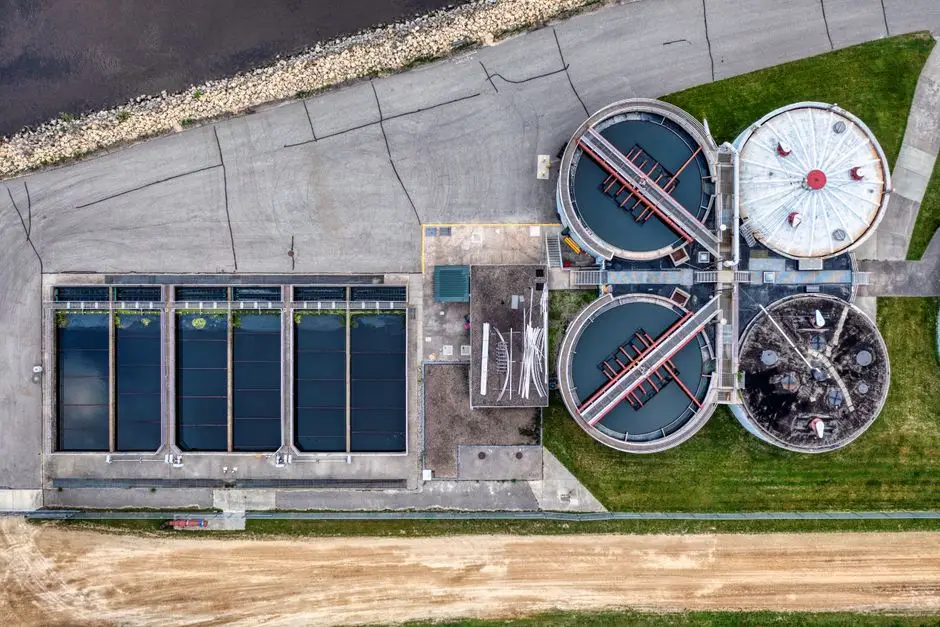
Comparable proposals require the same design basis, boundary conditions and performance definitions. Ask each supplier to state the design flow and its calculation basis, treatment process, effluent basis, footprint, utilities, installation conditions, control philosophy, monitoring scope, maintenance requirements and warranty support.
| Pre-order check | Require the bidder to provide | Why it matters |
|---|---|---|
| Capacity definition | Average and peak flow, flow basis, design horizon and operating scenarios | Prevents comparison of unlike capacity claims. |
| Performance | Guaranteed process performance clearly separated from reference values and optional features | Creates a verifiable procurement commitment. |
| Compliance | Current Philippine, Quezon City, sewer, discharge and reuse requirements, including the intended destination | Connects equipment selection to the approval pathway. |
| Installation | Civil works, utilities, groundwater or geotechnical assumptions, access and commissioning prerequisites | Exposes site and interface risks. |
| Operations | Monitoring, maintenance, training, spares, call-out response and residual responsibilities | Defines the owner’s operating burden. |
| Delivery and support | Site delivery schedule, commissioning plan, training scope, spare-parts list and post-commissioning support | Creates a contractual implementation path. |
| Life-cycle evaluation | Land, excavation, power, chemicals where used, maintenance, monitoring, residuals and replacement risk | Supports a total-life comparison rather than a purchase-price ranking. |
No defensible price or delivery lead time follows from the supplied evidence. Require site-specific quotations and schedules rather than inserting generic ranges. For a parallel view of current Philippine wastewater permitting and pretreatment issues, use the Philippine wastewater permitting and pretreatment guide, then apply the domestic-sewage requirements identified for the actual discharge or reuse route.
Before contract award, resolve any mismatch between the selected process, verified flow, available land, receiving or reuse authority, monitoring plan and residual route. A clear scope is more useful than an open-ended performance statement because it allows the owner, operator, supplier and regulator to test the same obligations.
Frequently Asked Questions
What is the cheapest practical sewage treatment system for a small property in Quezon City?
There is no defensible price comparison without verified flow, influent characteristics, site conditions, reuse requirements and current compliance criteria. Request like-for-like proposals and evaluate land, excavation, power, chemicals where used, maintenance, monitoring, residuals and replacement risk over the project life rather than comparing purchase prices alone.
Is a packaged sewage treatment plant suitable for a residential subdivision in Quezon City?
It can be. The WSZ is designed for residential communities and can be buried with landscaping above the installation, according to the verified product catalog. The project still requires collection-system design, verified sizing, site investigation, discharge or reuse approval, civil works, and an owner maintenance plan. Package status does not remove those project responsibilities.
How do I choose between A/O and MBR for domestic sewage?
Choose buried A/O when its integrated configuration satisfies the verified duty and land-use objective. Consider an MBR when the duty fits its published 10–2,000 m³/day range and the required reuse quality or footprint objective justifies membrane operation. Compare process guarantees, utilities, operator attention, monitoring, maintenance and residual handling; a finer filtration claim alone is not a sufficient basis for selection.
What information should I request from a sewage treatment supplier?
Request the design flow and calculation basis, process diagram, guaranteed effluent scope, civil and utility requirements, installation schedule, commissioning tasks, monitoring plan, training, spare parts, warranty, and sludge-management responsibilities. Also ask the supplier to distinguish guaranteed performance from cited reference values and optional features. Confirm that each proposal uses the same average-flow, peak-flow and compliance basis.
Can treated sewage from a Quezon City property be used for irrigation?
It may be feasible. The Quezon City Government already collects treated wastewater from residential areas for park irrigation and public-space cleaning, according to its program page updated August 12, 2025. A property project must nevertheless confirm the exact reuse application, required treatment standard and current approval pathway with the relevant authorities before selecting equipment or designing storage and distribution.
For a hotel, resort or mixed-use project, the same evidence discipline applies. Philippine wastewater technology selection for hotels and resorts provides a sector-specific reference, while the final Quezon City basis must reflect the property’s verified flows, reuse objectives, site constraints and discharge approval.