Which Rules Control a Spokane Sewer Discharge?
A Spokane sewer discharge is regulated as an indirect industrial discharge under Clean Water Act §307(b) and 40 CFR Part 403, not through an NPDES permit for the sewer connection. Spokane County administers its Industrial Pretreatment Program under state oversight. Federal categorical standards may apply to ore mining under 40 CFR Part 437 or metal finishing under 40 CFR Part 433, but the facility’s permit, prohibited-discharge rules, state requirements, local limits, and receiving sewer authority determine the actual controls. Where several standards apply, the county applies the most stringent requirement.
Do not design against a national number until its regulatory status is confirmed. For example, the zinc values cited in the HydropureWater pretreatment article—1.0 mg/L as a daily maximum and 0.5 mg/L as a monthly average—are identified there as 40 CFR Part 437 categorical values, not confirmed Spokane permit limits (HydropureWater, accessed 2026). The county’s Industrial Pretreatment Program materials state that permits contain customized discharge limits for Significant Industrial Users.
| Requirement | How it applies | Engineering consequence |
|---|---|---|
| Prohibited discharges | Apply to industrial users regardless of classification. | Identify incompatible process chemicals before finalizing a treatment train. |
| Federal categorical standards | Part 437 may cover ore mining and dressing; Part 433 may cover listed metal-finishing operations. | Confirm the applicable subcategory and production basis. |
| State and local requirements | Included in the county’s pretreatment framework and site-specific permit. | Use these limits as design targets after the county confirms them. |
| Direct surface-water discharge | Follows the separate NPDES pathway described by the EPA industrial wastewater program. | Do not use sewer-pretreatment approval as surface-water authorization. |
Confirm Permit Status Before Designing the Treatment Plant?
Spokane County classifies industrial users as Significant Industrial Users, Minor Industrial Users, or Domestic Equivalent Users, and every Significant Industrial User must obtain a wastewater discharge permit that determines the degree of pretreatment required (Spokane County, Industrial Pretreatment Program, accessed 2026). A permit is therefore the first design input, not an administrative document to be obtained after selecting equipment.
Request the current discharge permit, sewer-use requirements, categorical subcategory, prohibited-discharge standards, monitoring frequency, sampling point, reporting provisions, and enforcement language. Also identify whether any stormwater, surface-water, or process-water outfall leaves the site; an authorized sewer connection does not authorize those separate discharges.
Next, collect source-specific information rather than relying on one blended sample. Separate dump-leach water, mill clean-out water, process solutions, wash water, contaminated stormwater, and brines. Document flow variability, batch-generation events, pH, total suspended solids, metals, sulfate, total dissolved solids, and oil and grease. These inputs determine whether equalization alone is enough or whether chemical treatment, solids removal, and filtration are required.
The mining plant sewer pretreatment guide provides a useful process framework, but its treatment assumptions must still be checked against Spokane County requirements and the facility’s own wastewater data.
Characterize Each Wastewater Stream Before Treatment?
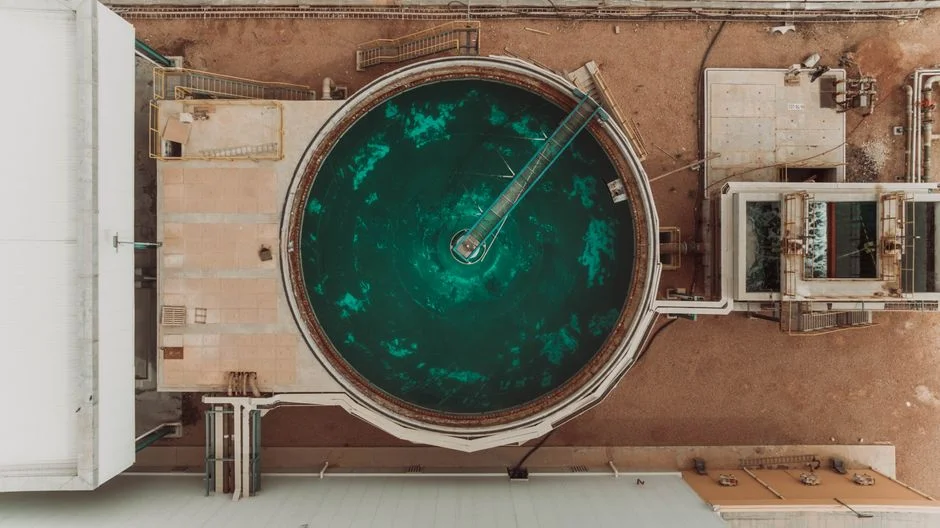
Representative influent data must establish the chemistry, hydraulic variation, and solids character that control equipment sizing. HydropureWater’s mining pretreatment profile identifies pH of 2–4 in raw acid mine drainage and spent process solutions, while TSS can range from hundreds to several thousand mg/L (HydropureWater, accessed 2026). These are screening references, not Spokane discharge limits, and they do not represent every mine stream.
Test the metals relevant to the process and permit, including Pb, Cu, Zn, Cd, Ni, and As. Those parameters are cited pollutant indicators, not automatic local limits. Include sulfate, TDS, temperature, and flow because elevated sulfate and TDS are associated with leach-pad runoff and brine streams in the same source.
| Investigation | Data to obtain | Decision supported |
|---|---|---|
| Source separation | Separate data for dump-leach, process, wash, stormwater, clean-out, and brine streams. | Identifies treatable and prohibited constituents. |
| Metal fractionation | Total and dissolved metals relevant to the permit. | Supports precipitation and polishing tests. |
| Solids characterization | TSS, settling behavior, particle size, and oil and grease. | Selects DAF, lamella, or filtration. |
| Hydraulic survey | Continuous flow, batch volumes, generation frequency, and peak duration. | Sets equalization and equipment capacity. |
| Operational sampling | Normal conditions plus shift changes, clean-outs, and dump-leach cycles. | Exposes events that could cause excursions. |
Separate clean stormwater from contact water and sample both normal operation and peak batches. Jar testing must establish parameter-specific precipitation conditions rather than selecting a reagent and pH setpoint from vendor literature. For biological alternatives, the comparison of biological treatment options for mining wastewater provides context, but metals-bearing streams must first be evaluated for toxicity and the need for physical or chemical pretreatment.
Build a Treatment Train Around the Most Restrictive Limit?
The treatment sequence should start with equalization, then control pH, precipitate metals, remove the resulting solids, and add polishing only where the permit requires it. HydropureWater’s engineering guidance specifies 8–24 hours of average daily flow for equalization and states that 4 hours is inadequate for some batch-driven mining streams (HydropureWater, accessed 2026). The selected basin must also contain or treat the credible batch volume without compromising downstream equipment.
Follow equalization with staged pH adjustment. The cited target range is pH 6.5–9.0, with two reactors recommended when influent pH swings exceed 2 pH units (HydropureWater, accessed 2026). Use automatic chemical dosing equipment for pH control and coagulant feed, but establish setpoints by jar test and permit review.
Hydroxide precipitation with lime or sodium hydroxide is the baseline because the chemistry is established and the reagent cost is lower. Properly controlled systems are cited at 85–95% total-metals removal (Fluence, 2024-11, as cited by HydropureWater, accessed 2026). Sulfide treatment is a polishing option when residual-metal requirements justify it. The cited residuals are 0.01–0.05 mg/L with sulfide versus 0.5–2.0 mg/L with hydroxide, while sulfide reagent cost is 2–4 times higher and requires H₂S controls including sealed reactors and scrubbed vents (HydropureWater, accessed 2026).
Select solids removal according to the waste. An industrial DAF system for mining wastewater is suited to oil, grease, and fine colloids; cited performance is 90–98% TSS removal and 85–95% oil and grease removal at 5–25 m/h hydraulic loading. A lamella clarifier for metal-hydroxide sludge is more appropriate for comparatively high flow and dense hydroxide flocs; the cited surface-loading range is 20–40 m/h, with roughly one-third the footprint of a conventional clarifier.
| Process stage | Principal function | Sizing or performance input |
|---|---|---|
| Equalization | Dampen batch discharges. | 8–24 hours of average daily flow in the cited mining guidance. |
| pH adjustment | Establish conditions for precipitation. | Cited range pH 6.5–9.0; staged control above 2-unit swings. |
| Metals precipitation | Convert dissolved metals to separable solids. | 85–95% total-metals removal in properly controlled hydroxide systems. |
| DAF | Remove floatable and colloidal solids. | 5–25 m/h loading; 90–98% TSS removal cited. |
| Lamella clarification | Settle metal-hydroxide flocs. | 20–40 m/h surface loading cited. |
| Filtration | Control residual solids. | 1–2 m/h operating rate and residual TSS below 10 mg/L cited. |
| Disinfection | Address sewer-system requirements where applicable. | Add only when required; chlorine dioxide range cited at 1–5 mg/L. |
| Sludge dewatering | Reduce sludge handling volume. | 25–35% dry-solids cake cited for a plate-and-frame press. |
Return filtrate only to the treatment-stream location approved during design review. No treatment stage should be omitted merely because it appears in a generic train; each must support a documented permit limit or operational requirement.
Choose DAF or Lamella Based on the Wastewater?
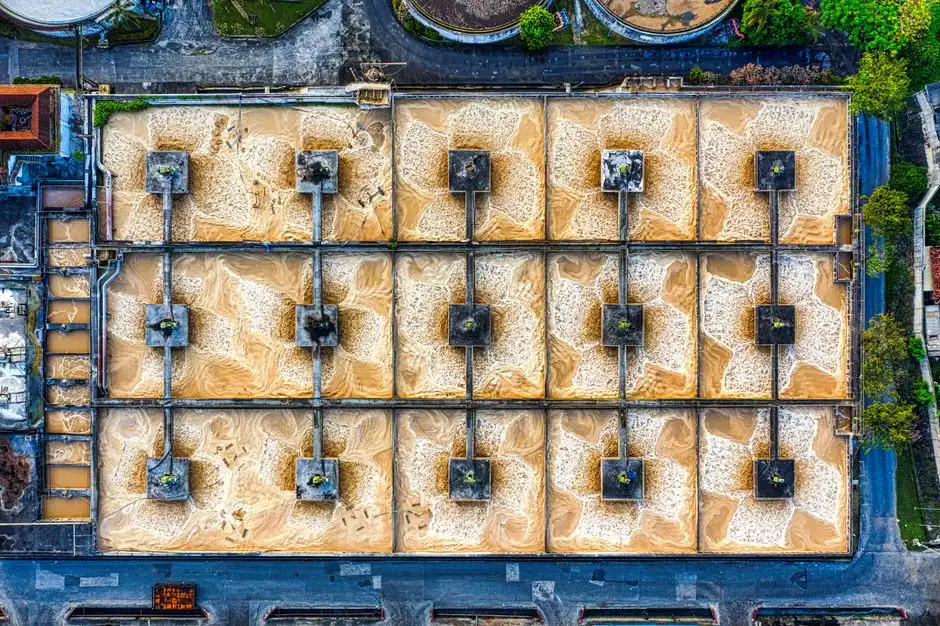
DAF is the better fit when oil, grease, or fine colloidal metals dominate; lamella clarification is the better fit when the principal solids are metal hydroxides, flow is comparatively high, and floor area is constrained. Neither device can be selected from average flow alone.
HydropureWater’s cited DAF range covers 4–300 m³/h across 13 standard models, with packaged skids common below 10 m³/h. Its guidance indicates that above 100 m³/h, parallel DAF trains or a lamella clarifier may become more economical, but that remains a screening rule requiring a site-specific hydraulic and capital-cost comparison (HydropureWater, accessed 2026).
| Decision factor | DAF | Lamella clarification |
|---|---|---|
| Primary waste characteristic | Oil, grease, or fine colloidal contamination. | Metal-hydroxide flocs. |
| Cited hydraulic basis | 5–25 m/h loading. | 20–40 m/h surface loading. |
| Flow-format indication | 4–300 m³/h across 13 cited models; packaged skids below 10 m³/h. | Comparative advantage above 100 m³/h requires project economics. |
| Footprint | Requires dedicated surface area and a float-sludge collection system. | Approximately one-third the footprint of a conventional clarifier in the cited guidance. |
| Chemical use | May require coagulant aid to aggregate material for flotation. | Cited HydropureWater catalog claim indicates up to 30% lower chemical consumption; verify this against the actual waste and reagent system. |
| Key checks | Turndown, peak response, float-sludge handling, and oil capture. | Floc settleability, sludge blanket, hydraulic loading, and carryover. |
Compare total installed cost, chemical use, sludge handling, maintenance, turndown, peak-flow response, and the permit’s solids criteria. The detailed DAF versus clarifier selection for metals wastewater comparison can support that review, but it cannot replace source-specific settling and flotation tests.
Automate Chemistry and Verify Compliance at the Sewer?
Compliance controls must reproduce the chemistry used in jar testing and preserve an auditable record at the permit’s sampling point. HydropureWater’s cited control strategy maintains pH within a ±0.2 band where discharge limits are sensitive to small excursions (HydropureWater, accessed 2026). That band should be treated as a control objective, not a substitute for the permitted pH limit.
Use PLC-controlled dosing for pH adjustment and coagulant feed, with interlocks, high-level alarms, chemical-inventory alarms, and defined fail positions. Monitor flow, pH, and turbidity continuously where installed; use the permit’s specified sampling protocol and laboratory analysis for metals. Preserve the required sampling and monitoring location rather than substituting a convenient upstream or process-control point.
Size the installation around peak flow while providing the cited 20–30% turndown requirement (HydropureWater, accessed 2026). Check that batching, chemical storage, power, washdown water, and backwash handling remain adequate during the least favorable operating condition.
Retain chemical usage, instrument calibration, laboratory results, flow records, operator logs, bypass alarms, and corrective-action records. Clean Water Act §309 civil penalties may reach $25,000 per day for each violation, according to the HydropureWater article (accessed 2026); that mechanism makes preventive control and documented response material to permit risk. The same article’s representative zinc and copper values are reference values only—not Spokane requirements—until confirmed in the site’s permit.
Prepare the Equipment and Compliance Plan for Approval?
Agency review should begin with evidence that connects each proposed treatment step to the applicable limit. Submit source-by-source characterization results, seasonal and operational variation, a process flow diagram, hydraulic calculations, mass balance, chemical-use estimates, sludge-generation estimate, control narrative, and utility requirements.
Identify the sampling stations, flow meters, pH instruments, turbidity monitoring, alarms, backup power, calibration provisions, and data-export requirements needed for compliance. Show preliminary equipment sizing against peak flow, credible batch events, and minimum operating flow. The permit, measured influent, and selected equipment must be reconciled before final design values are issued.
Use a plate-and-frame sludge dewatering press where its recovered handling and disposal route matches the waste. Define whether filtrate returns to equalization, process water, or another approved location, and evaluate the resulting hydraulic recycle rather than treating dewatering as an isolated endpoint.
The Spokane River and Coeur d’Alene basin context matters to regional metals planning, but the basin history described by The Spokesman-Review in 1997 does not replace a site’s sewer-pretreatment permit. For a metals project near Spokane, coordinate the sewer authority’s requirements with applicable basin-level discussions, while keeping final equipment compliance tied to the current county permit and receiving sewer controls.
Frequently Asked Questions
Does a mining plant near Spokane need an NPDES permit or a sewer discharge permit?
A sewer discharge is an indirect discharge governed by Clean Water Act §307(b) and 40 CFR Part 403; an NPDES permit applies to a direct surface-water discharge (EPA, Industrial Wastewater, accessed 2026). A Spokane County Significant Industrial User must obtain a wastewater discharge permit, and direct or stormwater outfalls may need separate authorization. Confirm the full permit scope with the Spokane County Industrial Pretreatment Program.
What source data should a supplier receive before pricing treatment equipment?
Request separate characterization for dump-leach, process, wash, stormwater, clean-out, and brine streams, including flow, batch volume, pH, TSS, relevant metals, sulfate, TDS, temperature, and oil and grease. Require jar-test results for precipitation conditions. Without these inputs, equipment capacity, chemical dosage, solids removal, and control architecture cannot be responsibly priced.
How should hydroxide and sulfide precipitation be evaluated for budget?
Compare reagent consumption, operating labor, instrumentation, H₂S controls, sludge production, and downstream solids handling. The supplied research reports sulfide reagent cost at 2–4 times hydroxide cost, but it does not provide a complete installed-cost estimate. Request a site-specific operating-cost comparison using measured chemistry and the permit’s residual-metal target.
Which supplier qualifications and delivery terms should be checked?
Require evidence of relevant wastewater experience, corrosion-compatible materials, control-system documentation, FAT or commissioning tests, installation support, spare-parts availability, and a written delivery schedule tied to permit approval, fabrication, FAT, utilities, and commissioning. The research supports no supplier-specific lead time, so do not treat an uncommitted delivery range as an equipment commitment.