Where Anaerobic Treatment Fits in a Hospital Wastewater System
An anaerobic digester for hospital wastewater should be evaluated as the organic-load reduction and potential biogas-producing stage of a treatment train, not as a complete disinfection system. In a 90-day pilot study of an integrated anaerobic-aerobic fixed-film reactor, hospital wastewater with influent COD of 700 mg/L was reduced to 34 mg/L, representing 95.1% COD removal (Rezaee et al., 2005). Separate research examined a small-scale anaerobic biogas digester for disinfecting ciprofloxacin-resistant Staphylococcus aureus from hospital wastewater (Journal of Advanced Biotechnology and Bioengineering, 2014). A defensible project must therefore address variable flows, solids, fats, pharmaceutical and antibiotic residues, and local discharge requirements, while providing aerobic polishing and validated final disinfection.
Anaerobic digestion uses microorganisms without oxygen to convert biodegradable organic matter, with methane-rich biogas as a potential by-product. In a hospital application, its role is to reduce the organic load before biological polishing and disinfection. It does not, by itself, establish compliance with pathogen, antimicrobial-resistance, pharmaceutical or discharge-quality requirements.
The practical treatment sequence is:
- Equalization and screening
- Solids or grit removal
- Dedicated pretreatment where required
- Anaerobic reactor
- Solids separation
- Aerobic polishing
- Final disinfection
- Compliance monitoring
This sequence should be adapted only after the hospital’s wastewater has been characterized. For comparison with permit, equipment and operating considerations, use the hospital wastewater treatment compliance and equipment checklist as a procurement framework, not as a substitute for site-specific engineering.
Rezaee et al. (2005) provide the strongest hospital-specific performance anchor in the supplied evidence. Their integrated anaerobic-aerobic fixed-film system operated for 90 days, reduced influent COD from 700 mg/L to 34 mg/L and achieved significant bacterial reduction. Because the result came from an integrated pilot configuration, it does not establish the performance of every anaerobic reactor, hospital wastewater composition or regulatory limit.
The 2014 Cameroon study also investigated a small-scale plastic anaerobic biogas digester against ciprofloxacin-resistant Staphylococcus aureus in hospital wastewater. That evidence supports further investigation of pathogen interactions during anaerobic treatment, but preliminary research is not equivalent to full-scale compliance certification. Final treatment selection should therefore preserve a compact medical wastewater treatment system downstream wherever the permit or facility risk assessment requires physical filtration, disinfection or controlled polishing.
Hospital Wastewater Risks That Change the Digester Design
Hospital wastewater cannot be specified from a single average COD value because intermittent clinical discharges, cleaning operations and pharmaceutical streams can change both the organic load and the chemical environment around the reactor.
Request a time-based characterization covering flow, COD, biochemical oxygen demand, suspended solids, fats and oils, pH, alkalinity, temperature and conductivity. The sampling programme should represent normal operations, peak discharges and atypical periods rather than relying on one grab sample.
Pharmaceutical and antibiotic residues, disinfectants, heavy metals and pathogens also require separate evaluation. The supplied studies do not establish that these contaminants are removed by anaerobic digestion. Their presence must therefore be addressed through source control, dedicated pretreatment, monitoring and downstream treatment where necessary.
| Design input | Why it matters | Information required before reactor selection |
|---|---|---|
| Flow and COD profile | Establishes hydraulic and organic loading variability | Time-based flow, COD and biochemical oxygen demand records across representative operating periods |
| Solids, fats and grit | Can increase blockage, foaming and solids-handling demands | Suspended-solids, fats-and-oils and grit data; proposed removal and flushing arrangements |
| pH and alkalinity | Influences acidification, microbial activity and gas production | Diurnal pH, alkalinity and buffering demand |
| Hospital-specific contaminants | May inhibit digestion or create unresolved discharge risks | Pharmaceutical, antibiotic, disinfectant and heavy-metal screening; pathogen indicators |
| Site operations | Determines maintainability and downstream integration | Available footprint, odor-control envelope, service access and waste-handling route |
Shock loads and intermittent flows can destabilize biological treatment, making equalization, flow control and mixing critical design questions. Equipment layout should also prevent unsuitable objects from entering the reactor. A rotary mechanical bar screen for upstream solids removal may form part of the pretreatment assessment, but the selected device must be matched to the measured solids and maintenance requirements.
Transferable evidence from the Durban University of Technology study shows why organic concentration and pH cannot be ignored. Increasing organic content from 4,320 mg/L to 18,770 mg/L increased biogas production by 30%, but coincided with more than a 40% decline in contaminant removal because the lower pH encouraged inhibitory long-chain fatty acids (Durban University of Technology, undated study accessed in 2026). More biogas did not translate into better treatment performance.
Before comparing purchase prices, ask each bidder how the proposed reactor will handle cleaning chemicals, medication-derived organic compounds and mixed wastewater streams. Their response should identify pretreatment, isolation or diversion arrangements, monitoring methods and demonstrated operating limits.
Choose the Right Anaerobic Reactor Configuration
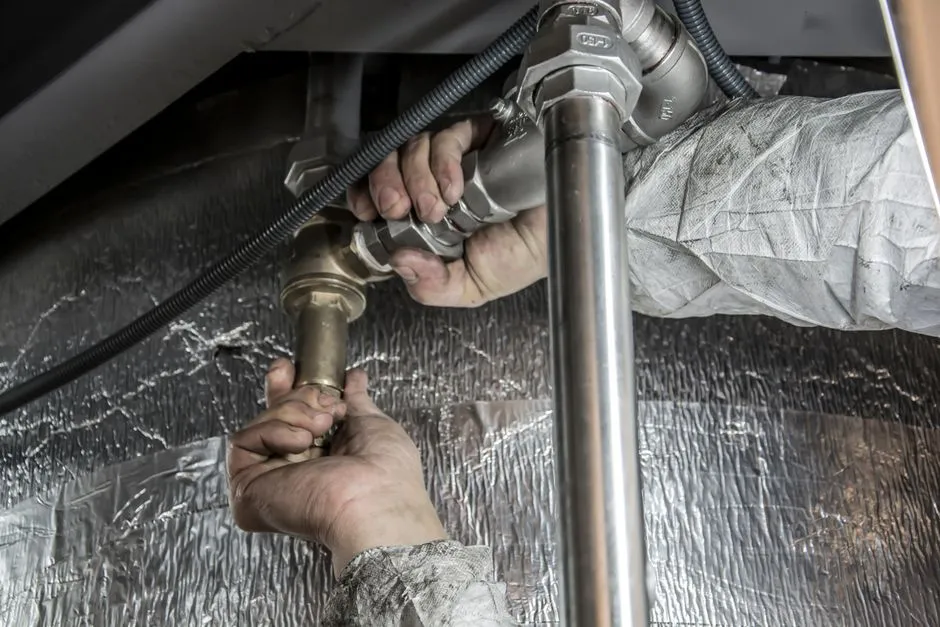
No anaerobic reactor type is universally appropriate for hospital wastewater because reactor selection depends on the measured organic load, hydraulic variability, solids behavior, available footprint, gas-handling requirements and downstream treatment objectives.
An attached-growth or hybrid configuration may be attractive where compactness, reduced sludge washout or simpler solids management are priorities. Those benefits remain conditional: attached media can foul, and hospital cleaning agents or other antimicrobial exposures may affect the microbial community. A pilot must therefore test the proposed media and operating conditions with actual hospital wastewater.
| Configuration | Selection considerations | Questions requiring site-specific evidence |
|---|---|---|
| Anaerobic lagoon | Simple reactor form; footprint and odor control remain important | Available land area, climate, liner requirements, mixing and effluent solids retrieval |
| Continuously stirred tank reactor | Requires defined mixing, heating and solids-management arrangements | Mixing energy, corrosion protection, gas capture and maintenance access |
| Upflow anaerobic sludge blanket reactor | Can provide compact treatment but requires controlled solids retention | Upflow conditions, sludge separation, granulation stability and clogging recovery |
| Anaerobic sequencing batch reactor | Offers cyclic control but depends on reliable automation and discharge routing | Cycle duration, equalization, decanting, odor control and downstream storage |
| Fixed-film or hybrid reactor | May suit sites needing a compact footprint or low solids washout | Media fouling, antimicrobial exposure, replacement method and demonstrated hospital-wastewater performance |
The evidence does not provide a universal hospital reactor selection. Final selection requires wastewater characterization, pilot evidence and site constraints. This is especially important when comparing a conventional suspended-growth design with an integrated package arrangement.
Rezaee et al. (2005) demonstrated 95.1% COD removal and significant bacterial reduction in the 90-day hospital pilot using an integrated anaerobic-aerobic fixed-film configuration. The aerobic stage was part of the tested system, so the result cannot be assigned to the anaerobic reactor alone.
The Journal of Advanced Biotechnology and Bioengineering (2014) provides a specific reference for a small-scale plastic anaerobic biogas digester used in hospital-wastewater disinfection research involving ciprofloxacin-resistant Staphylococcus aureus. Its small scale and preliminary nature mean it should guide test design and risk assessment, not serve as a regulatory performance guarantee.
When assessing an integrated treatment arrangement, distinguish anaerobic treatment performance from the final polishing and disinfection provided by the complete package. A supplier should identify each treatment barrier, its operating parameters and its tested performance independently. This separation is also relevant when comparing a packaged underground integrated sewage treatment system with a custom-designed digester train.
Size and Operate the Reactor Around Measurable Controls
Reactor sizing should be based on measured wastewater loading and controlled operating conditions, with hydraulic retention time, organic loading rate and mixing defined before equipment selection.
Ask each supplier to define hydraulic retention time, organic loading rate, applicable upflow velocity, mixing method, reactor volume, solids separation, heating requirements, biogas capture and safety systems. Require the design basis to state which values are guaranteed, which are assumed and which remain contingent on pilot results.
The Durban University of Technology study provides transferable operating evidence from a tested 50 L system, not hospital design values. Its statistically optimized conditions were an HRT of 21 days, pH of 7.01 and magnetite load of 0.42 g/L, with a reported desirability of 0.99. The two operating streams subsequently achieved over 85% and over 60% contaminant removal, respectively, under the study’s validation conditions.
The same study reported an initial poor response in biogas production and COD removal, followed by an exponential increase in biogas production between days 9 and 18. Production declined between days 19 and 22, with retardant or no production between days 22 and 30. The authors therefore identified an optimum HRT of 18–22 days.
| Research observation | Tested value or condition | Transferable engineering implication |
|---|---|---|
| Optimized 50 L reactor condition | HRT 21 days; pH 7.01; magnetite 0.42 g/L | Use as reference operating evidence only; validate with hospital wastewater |
| Observed biogas-response pattern | Increase during days 9–18; decline during days 19–22; negligible or retardant during days 22–30 | Evaluate sufficient retention and monitor gas-production trends for acidification or inhibition |
| Magnetite response | 0.4–0.6 g/L produced reported rates of 23 mL/d and 20 mL/d during days 9–12 | Higher additive loading is not automatically beneficial |
| Overloaded catalyst condition | 0.8 g/L; biogas declined to 2 mL/d after 9 days | Require a defined operating envelope and correction procedure |
These values came from a 50 L experimental system treating non-hospital industrial streams. They should not be inserted into a hospital design specification without characterization and pilot evidence.
Require continuous or scheduled monitoring of pH, alkalinity, temperature, gas production, methane content, COD and solids, with defined alarm and corrective-action responses. The monitoring concept may include an automatic chemical dosing system where chemical correction is part of the validated process, but dosing demand must be established from actual wastewater chemistry.
Each bidder should explain how start-up lag, shock loading, acidification, foaming, odor control and biogas safety will be managed. Include the response sequence, required operator actions, emergency isolation, gas detection, venting and restart criteria in the technical proposal.
Prove Performance with an Anaerobic-Aerobic Pilot
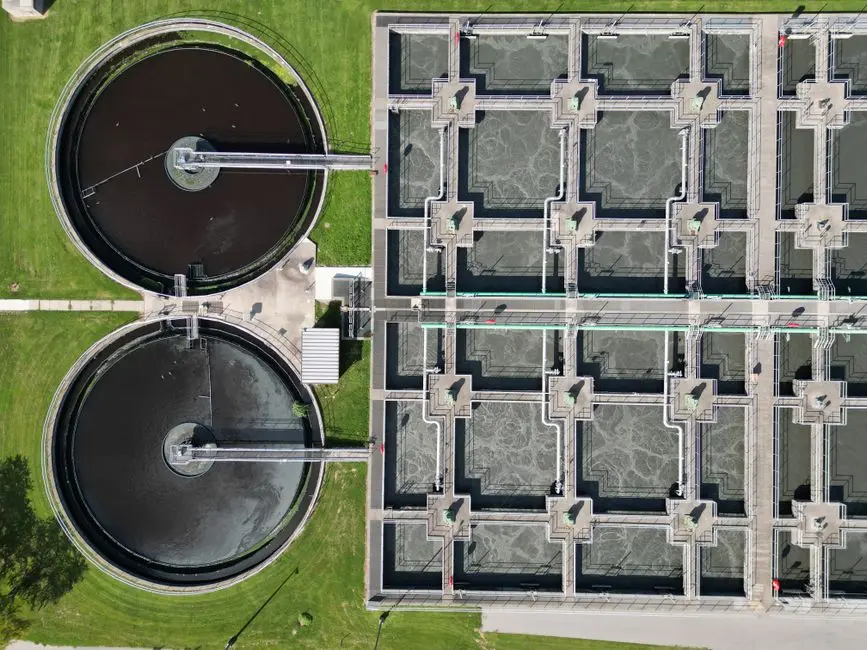
Pilot testing should use actual hospital wastewater because a synthetic feed cannot reproduce the interaction of pharmaceuticals, disinfectants, solids, fats and variable flow.
The pilot should cover startup and steady-state behavior. Rezaee et al. (2005) operated their hospital treatment pilot for 90 days, and paired influent and effluent COD measurements supported the reported reduction from 700 mg/L to 34 mg/L. That duration and sampling logic provide useful reference points, but the final test period must reflect the facility’s proposed operating cycle and seasonal variation.
Track influent and effluent COD, soluble and particulate COD, suspended solids, pH, alkalinity, temperature, methane content, biogas yield, pathogen indicators and relevant pharmaceutical or antibiotic residues. The analytical plan should define sampling frequency, flow-weighted composite samples, laboratory methods, detection limits and quality-control requirements.
- Define acceptance criteria before testing.
- Operate the pilot long enough to include startup, loading changes and stable operation.
- Compare every result with the proposed full-scale operating range.
- Verify that guarantees match the tested wastewater and loading conditions.
- Document failures, interventions and recovery before accepting the technology.
Set acceptance criteria around project objectives, including COD removal, solids separation, stable digestion, gas handling and downstream treatment performance. Where the hospital must demonstrate final-disinfection performance, that requirement should be tested in the complete train rather than inferred from reactor results.
The contingency plan should cover acidification, excessive foaming, inhibited digestion, blocked gas lines, odor complaints and disinfection failure. For each event, identify the trigger, immediate isolation or correction, responsible operator, notification route and restart criteria.
A compact medical wastewater treatment system can serve as the basis for the pilot or downstream barrier only where its specified treatment sequence matches the permit and project risk assessment. Supplier documentation should identify the actual barrier responsible for each required outcome.
Complete the Treatment Train with Polishing and Disinfection
Anaerobic effluent normally requires downstream treatment because the reactor is intended to remove biodegradable organic matter, not to serve as the final biological or disinfection barrier.
Sequence solids removal and aerobic polishing where residual biodegradable COD, nutrients or suspended solids require further treatment. UV, chlorine dioxide and ozone are possible technologies, but they should be evaluated as project-specific solutions rather than interchangeable claims. Where low suspended solids, a compact footprint and near-reuse-quality effluent are priorities, consider an MBR membrane bioreactor for hospital wastewater polishing.
| Downstream barrier | Engineering role | Project-specific verification required |
|---|---|---|
| Solids separation | Protects the aerobic stage and downstream equipment from carryover | Residual solids, sludge removal and maintenance access |
| Aerobic polishing | Removes residual biodegradable material and supports a stable final effluent | COD, nutrients, pH, dissolved oxygen and process stability under actual loading |
| UV | Provides a physical disinfection barrier | Transmittance, dose, fouling, lamp condition and performance under the permitted flow |
| Chlorine dioxide | Provides chemical oxidation | Controlled generation, dosing, residual management and chemical handling |
| Ozone | Provides chemical oxidation within a treatment package | Contact performance, off-gas or decomposition controls and treatment objectives |
| MBR | Combines membrane solids separation with biological treatment | Membrane flux, fouling, cleaning, solids concentration and end-of-life replacement cost |
UV offers a physical disinfection barrier without chemical generation, but its effectiveness depends on validated dose and optical conditions. Chlorine dioxide is a chemical oxidant and requires controlled generation, dosing, residual management and operator procedures. The appropriate choice depends on the wastewater matrix, downstream requirements and local rules.
The HydropureWater verified product catalog states that its Medical Wastewater Treatment System combines multi-stage filtration with ozone disinfection and reports a 99%+ kill rate. It also specifies an MBR system capacity of 10–2,000 m³/day and filtration below 1 μm. These are supplier-catalog specifications, not independent hospital field results, and should be substantiated for the proposed duty.
Equipment links should be assessed as part of the train: the chlorine dioxide generator, UV sterilizer for hospital wastewater disinfection and the linked compact medical wastewater treatment system require project-specific validation.
Final acceptance must be checked against the applicable discharge standard and any antimicrobial-resistance or pharmaceutical requirements legally applicable to the facility. The supplied research does not establish those local limits.
Evaluate Cost, Energy and Procurement Risk

The economic decision should cover the whole treatment train and should not assume that biogas revenue will offset capital and operating costs.
Compare bids using installed capital cost, civil works, pretreatment, solids handling, heating, gas treatment, controls, laboratory services, consumables, maintenance and end-of-life costs. Define the utility assumptions, staffing requirement, replacement intervals and treatment guarantees for each bidder.
The Durban University of Technology study provides a candid warning. In its optimized 50 L system, annual operating costs exceeded annual revenue. Net cash flow was -R8 506, net present value was -R121 016 and reported payback was 19.03 years. These results describe the tested arrangement and its cost basis, not a universal hospital-digester financial outcome.
| Economic measure reported by Durban University of Technology | Tested system | Procurement interpretation |
|---|---|---|
| Net cash flow | -R8 506 | Do not treat biogas as guaranteed income |
| Net present value | -R121 016 | Test whether the complete hospital train has a positive whole-life case |
| Payback period | 19.03 years for the 50 L system | Compare with actual financing and asset-replacement assumptions |
| Benefit-cost ratio | 0.05 at 1 L; 0.12 at 5 L; 0.13 at 10 L; 0.4 at 50 L | Scale alone did not make the tested arrangement economically viable |
Use anaerobic digester design for high-strength wastewater to structure the technical and cost questions, but populate them with hospital wastewater data rather than transferring values from another sector.
Require each supplier to provide guaranteed hydraulic capacity, organic-loading basis, COD-removal basis, availability target, performance-test protocol, spare-parts list, warranty scope and local service plan. Define how an anaerobic COD guarantee interacts with the aerobic polishing and disinfection guarantees.
Make full-scale purchase conditional on pilot results, permit acceptance, biogas safety review and validation of operating costs at actual facility loading. Model gas utilization as several scenarios: no revenue, partial use for heat, and sale or injection where technically and legally possible.
Use a Site-Specific Decision Framework
A hospital wastewater anaerobically digested project should advance to pilot testing when the wastewater has sufficient biodegradable organic load, reasonably stable flow characteristics, available reactor space and a credible downstream treatment route.
Refine the concept when flows are highly variable, the stream contains materials likely to inhibit digestion, or solids and odor controls are undefined. Treat pharmaceutical and antimicrobial-resistance risks as separate design and compliance workstreams rather than assuming the reactor resolves them.
Do not select anaerobic digestion as the sole treatment solution where the compliance strategy requires demonstrated final-disinfection performance. Polishing, disinfection and local permit acceptance remain unresolved outside the supplied pilot studies.
Request a site-specific mass balance covering COD loading, HRT, gas generation, solids production, reagent use, energy demand and reuse or discharge targets. For stream-specific pharmaceutical controls, use the pharmaceutical wastewater treatment considerations for hospital streams as a prompt for further investigation.
Use staged procurement:
- Wastewater characterization and source-control review
- Bench or pilot work with actual hospital wastewater
- Performance and operating guarantees
- Engineering, permit and safety validation
- Full-scale procurement after acceptance
Frequently Asked Questions
Can the 95.1% COD removal from the hospital pilot be used as a design guarantee?
No. The figure came from a 90-day pilot of an integrated anaerobic-aerobic fixed-film system treating hospital wastewater with influent COD of 700 mg/L; effluent COD was 34 mg/L (Rezaee et al., 2005). A guarantee should apply only to the tested wastewater, operating range, reactor configuration and acceptance protocol.
What should a supplier substantiate before accepting the reference operating conditions?
Ask the supplier to explain the Durban University of Technology reference data—an 18–22 day optimum HRT, pH 7.01 and magnetite load of 0.42 g/L—and demonstrate how its own design responds to changes from those conditions. These values came from a tested 50 L industrial-wastewater system, not hospital wastewater, so they should guide pilot design rather than become hospital specifications.
What remains unresolved before the treatment train can demonstrate compliance?
Final polishing, validated disinfection and local permit acceptance remain unresolved. The supplied studies do not establish every hospital discharge limit, pharmaceutical control or antimicrobial-resistance requirement. The acceptance plan should therefore test the complete treatment train against the applicable local standard and the facility’s site-specific risks.
How should cost and supplier selection be handled?
Request installed-cost breakdowns, civil works, heating, gas treatment, solids handling, controls, consumables, maintenance, warranty, spares and local service support. Evaluate biogas under no-revenue and partial-use scenarios. Make the award conditional on pilot acceptance, performance testing and permit review rather than relying on an unverified energy-credit forecast.