Start with the discharge decision, not the equipment catalogue
An industrial effluent treatment plant in Cebu is selected according to wastewater characteristics, discharge destination, reuse target, and applicable DENR requirements—not simply by plant capacity. The treatment train may combine screening, oil and solids removal, biological treatment, clarification, filtration, disinfection, and sludge handling. The supplied research identifies DENR DAO 2016-08 and 2021-19 as relevant Philippine compliance instruments, while academic work supports nanofiltration as an advanced polishing option for effluent reclamation. Final equipment and sizing require wastewater analysis, flow data, and regulator confirmation.
First, classify the project by its intended route:
- Discharge to a permitted receiving body: identify the receiving water, its classification, the discharge point, and the conditions that apply at that point.
- Discharge through a sewer or pretreatment system: obtain the sewer authority’s acceptance criteria, permitted flow range, pretreatment limits, sampling protocol, and prohibited constituents.
- Controlled reuse: define whether the treated effluent will be used for process dilution, washing, irrigation, cooling, or another application, and obtain the corresponding water-quality requirements.
- Higher-quality reuse: state the required effluent quality and end use explicitly; this may justify membrane or constructed-wetland polishing rather than a standard biological treatment package.
Request representative wastewater analysis covering current and peak flow, operating schedule, pH, BOD, COD, TSS, oil and grease, surfactants, temperature, and industry-specific contaminants. Composite and grab samples should reflect production cycles rather than only one convenient operating condition. Map each stream at source: a segregated oily drain, FOG-rich washdown, surfactant-bearing cleaning water, or variable process effluent can alter the process order and pretreatment boundary.
Confirm the governing discharge point, permit conditions, sampling requirements, and applicable DENR or local-authority requirements before quotations are issued. Kemique identifies DENR DAO 2016-08 and 2021-19 as relevant Philippine industrial-discharge compliance references and lists BOD, COD, TSS, oil and grease, and surfactants among the metrics assessed for industrial wastewater. These references do not replace confirmation of project-specific conditions from the issuing authority.
For sector context, review pharmaceutical wastewater treatment requirements in the Philippines. An industrial DAF system may become relevant after characterization establishes oil, FOG, colloidal, or suspended-solids loading.
How the industrial ETP process train should work
A complete industrial ETP process design removes material in a controlled sequence and gives every separated contaminant a destination. The sequence below is a review framework for supplier proposals, not a substitute for application-specific calculations.
| Stage | Primary function | Design question to ask |
|---|---|---|
| Headworks and screening | Remove rags, plastics, fibrous debris, and other material that could damage pumps, valves, or downstream biological processes. | What screen type, opening, transfer method, and bypass arrangement are proposed? |
| Equalization and pretreatment | Moderate flow and concentration variation; remove oil, grease, FOG, colloids, or excessive solids where necessary. | Which contaminants must be removed before the biological stage? |
| Biological treatment | Reduce biodegradable organic load. | How are hydraulic and organic loading, aeration, sludge age, and upset conditions addressed? |
| Clarification or membrane separation | Separate biological solids or control residual solids. | What solids concentration and separation duty define the selected stage? |
| Filtration and polishing | Remove remaining suspended solids, colloids, bacteria, or selected dissolved contaminants according to the reuse objective. | Which requirement justifies each polishing stage? |
| Disinfection and residuals management | Control pathogens where required and manage sludge, skimmings, and chemical wastes. | Where do sludge, oil, membrane washwater, and spent chemicals go? |
Use mechanical screening only where the screen and ancillary handling are appropriate for the waste character and debris loading. Use physical or chemical pretreatment when oil, grease, FOG, colloids, or suspended solids would interfere with biological treatment. Biological treatment then addresses biodegradable organics, followed by clarification or membrane separation for residual solids.
Add filtration, membrane polishing, and disinfection according to the required discharge or reuse outcome, not because they appear in a standard package. For advanced reuse, University of Twente research evaluated direct nanofiltration as a technique for polishing wastewater-treatment-plant effluent for reclamation; the thesis identifies its potential for agricultural and direct or indirect potable-use applications, but those outcomes require a validated project basis. Wageningen University and Research also published a 2022 thesis on micropollutant removal from treatment-plant effluent through constructed wetlands.
Do not omit sludge handling. An plate-and-frame filter press may dewater separated sludge, but the design must also establish sludge age, thickening, storage, transport, and final disposition. A treatment train that removes contaminants from water but leaves their concentrated residues undefined is incomplete.
Choose the treatment technology by the contaminant problem
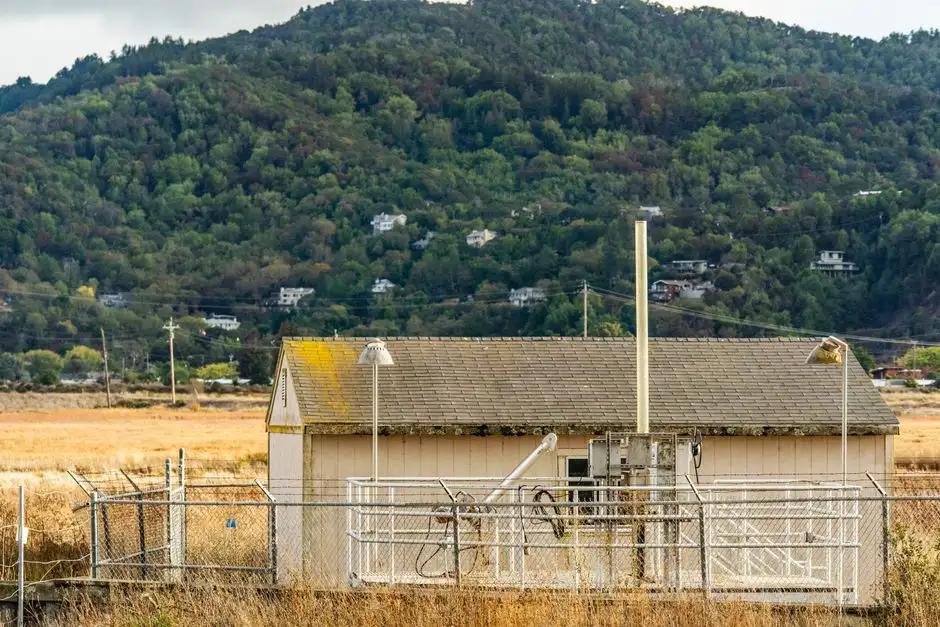
Technology selection follows the dominant contaminant and the required effluent outcome; catalog capacity is a screening filter rather than proof of application suitability.
| Technology | Best-fit role | Verified equipment information | Main limitation to verify |
|---|---|---|---|
| DAF | Suspended solids, oil and grease, FOG, and colloidal matter; applicable industrial wastewater pretreatment. | HydropureWater lists 13 models from 4–300 m³/h and identifies food processing, pulp and paper, textile, metalworking, petrochemical, and municipal pretreatment applications. | Applicable flow, contaminant loading, chemical demand, sludge characteristics, and required removal duty. |
| MBR | Compact biological treatment combined with fine solids separation. | The MBR catalog states 10–2,000 m³/day capacity and filtration below 1 μm. | Final flux and membrane area require application-specific design; upstream pretreatment still matters. |
| Package sewage treatment | Suitable domestic or mixed wastewater at decentralized sites. | The WSZ catalog lists 1–80 m³/h and combines anoxic/aerobic biological contact oxidation, sedimentation, and disinfection. | Whether the waste composition and discharge or reuse criteria fall within the package basis. |
| UF polishing | Post-primary removal of bacteria, colloids, and suspended solids. | The UF catalog lists 2,000–40,000 L/h capacity, 0.03 μm PVDF membranes, automatic backwash, and air scour. | Feed-water quality, flux, recovery, cleaning demand, and required pathogen or reuse performance. |
| Chemical dosing | pH adjustment, coagulation, flocculation, or specialty dosing. | HydropureWater describes a PLC-controlled, skid-mounted automatic system. | Chemical selection, storage, duty, control response, and compatibility with the process train. |
DAF is the appropriate first comparison point when oil, FOG, colloids, or suspended solids are the dominant problems. Biological treatment should follow only after the pretreatment boundary has been defined; otherwise, avoidable hydraulic and contaminant loading can reach the aeration system. An industrial DAF system should therefore be evaluated against the influent data and the required removal stage, not by nominal throughput alone.
MBR is relevant when compact biological treatment and fine solids separation are priorities. The integrated MBR wastewater treatment system may combine biological treatment and membrane separation, but the supplier must state the design flow, membrane configuration, final flux, cleaning method, and treatment objective. Package sewage treatment is a different proposition: it is mainly suited to suitable domestic or mixed wastewater, as reflected in the WSZ package arrangement.
UF is a polishing step after appropriate primary treatment, not a substitute for oil, FOG, bulk-organic, or solids removal. Chemical dosing is an enabling subsystem rather than a complete treatment process. Do not place a membrane as the first stage unless upstream analysis demonstrates that membrane feed quality is compatible with the intended duty.
Build a sizing and compliance checklist for a Cebu project
Wastewater plant sizing requires a documented design basis; catalog limits do not establish the required capacity for a Cebu facility.
- Establish flow. Obtain current average flow, peak flow, operating schedule, production variability, future expansion, and flow data that can be reconciled with utility or production records.
- Establish quality. Submit representative process-water and concentration data, including production events, batch discharges, cleaning cycles, and any regulated or hazardous constituents.
- Establish the endpoint. Define the receiving point or reuse application, required parameters, sampling point, monitoring frequency, and the authority responsible for acceptance.
- Define the design calculation. Require hydraulic and contaminant loading calculations, equipment sizing, retention-time assumptions, redundancy, and the operating envelope.
- Define operations. Require a process flow diagram, control philosophy, utilities demand, footprint, installation requirements, commissioning tests, preventive maintenance, and an O&M schedule.
| Bid item to request | Information the supplier must state | Buyer check |
|---|---|---|
| Design basis | Design flow, wastewater source and analysis, operating schedule, endpoint, and design assumptions. | Is it specific to this facility rather than copied from another project? |
| Equipment sizing | Calculation method, rated capacity, operating range, redundancy, and performance basis. | Do DAF, MBR, WSZ, and UF capacities use consistent flow units and comparable duty definitions? |
| Performance guarantee | Parameters, test method, sampling procedure, test duration, and correction conditions. | Can the guarantee be verified at commissioning? |
| Utilities and controls | Power, air, water, chemicals, drains, controls, alarms, and power-loss response. | Are peak demands and utility interfaces identified? |
| Residuals and compliance | Sludge, oil, washwater, chemical waste, storage, transport, and responsible parties. | Is there a defined route for every generated residue? |
| Permit interface | Discharge point, permit conditions, monitoring program, and authority correspondence. | Have project-specific conditions been confirmed rather than inferred? |
For DAF, MBR, WSZ, and UF proposals, convert every rated capacity to a common flow basis and state whether it is average, peak, instantaneous, or required operating capacity. Also ask how the system responds to flow or concentration variation, equipment failure, power interruption, high-strength discharge, and maintenance bypass.
Confirm the permit, discharge point, receiving-body requirements, monitoring program, sludge destination, and responsible parties with the relevant Philippine and Cebu authorities. For decentralized installations, compare decentralized sewage treatment options in the Philippines against the industrial waste characterization; a sewage package is not automatically an industrial ETP.
Compare supplier proposals on performance and lifecycle evidence
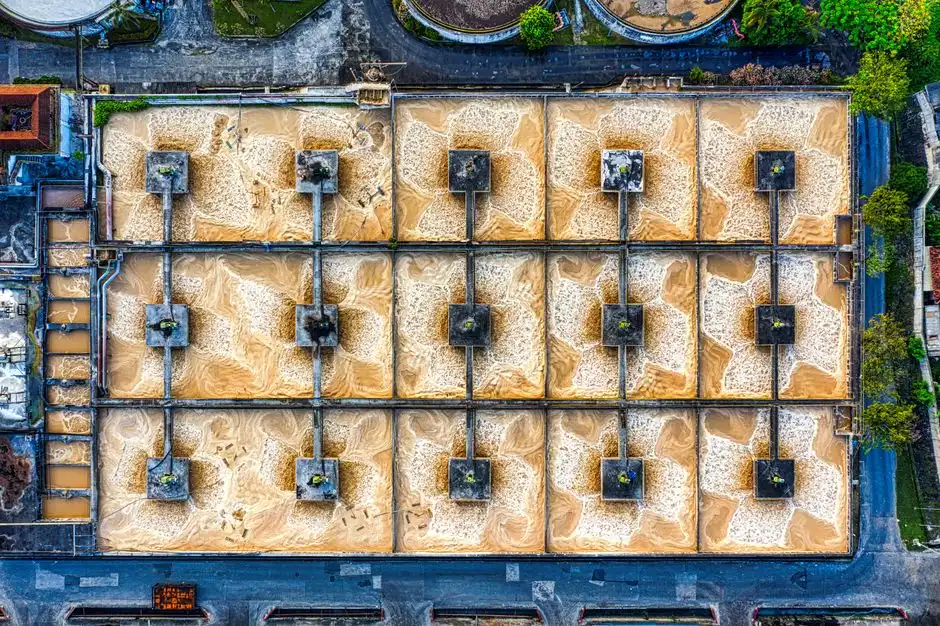
Comparable quotations must state the same design basis; otherwise price and capacity comparisons are not decision-grade.
| Evaluation field | Evidence required from every bidder | Procurement decision supported |
|---|---|---|
| Design basis | Design flow, wastewater analysis, operating schedule, treatment objective, and exclusions. | Whether the proposal addresses this project rather than a generic package. |
| Performance | Guaranteed parameters, test methods, sampling conditions, acceptance test, and remedy for non-performance. | Whether the supplier accepts measurable performance obligations. |
| Included scope | Civil works, tanks, pumps, blowers, controls, installation, commissioning, training, and O&M stated separately. | Whether quotations cover construction and equipment supply under the same boundaries. |
| Lifecycle | Equipment life, membrane or media replacement, chemicals, power, operator attention, spare parts, and local service support. | Operating cost exposure and maintainability after handover. |
| Handover | Commissioning plan, as-built documents, operating manual, operator training, warranty, and support contacts. | Whether the facility can be operated safely by the buyer's team. |
Philippine supplier content in the research promotes design-and-build and equipment supply, but a stronger buyer process requires comparable design bases and measurable acceptance criteria. Keep construction of a sewage treatment plant and supply of ETP equipment as separate scope lines unless a bidder explicitly accepts responsibility for the interface. For institutional or hospitality precedents, review wastewater treatment options for Philippine hotels and resorts and the beverage-wastewater supplier buyer guide, then apply the same documentation and acceptance checks.
Frequently Asked Questions
What capacity should an industrial ETP in Cebu have?
No defensible capacity can be stated without current and peak flow, wastewater analysis, operating schedule, and discharge or reuse criteria. Ask each bidder to show whether its quoted flow is average, peak, or instantaneous and to provide the hydraulic and contaminant calculations behind it.
How should an ETP supplier in the Philippines be selected?
Compare suppliers on design basis, guaranteed process performance, included scope, commissioning and acceptance tests, local service support, and O&M documentation. Also verify spare-parts access, operator training, warranty boundaries, and evidence of comparable installations; supplier identity alone does not demonstrate those capabilities.
Which regulations apply to DENR effluent discharge compliance?
DENR DAO 2016-08 and 2021-19 are relevant references identified in the supplied research. The applicable limits, monitoring conditions, discharge point, and permit requirements are project-specific and must be confirmed with the issuing authority before equipment performance is specified or procurement is finalized.
Should the project use DAF or MBR?
Use DAF when oil, FOG, colloids, or suspended solids are primary pretreatment concerns; use MBR when compact biological treatment and fine solids separation are priorities. DAF may also precede MBR if the wastewater demands both bulk floatation and compact biological treatment.
Are nanofiltration or constructed wetlands necessary?
They are context-specific polishing options, not default additions. University of Twente evaluated direct nanofiltration for effluent reclamation, while Wageningen University and Research published a 2022 thesis on micropollutant removal using constructed wetlands. Require validated influent and effluent requirements before including either technology.