Which packaged plant best fits a Sharjah housing development?
For a Sharjah housing development, a buried WSZ package plant usually fits where compact installation and preserved landscaping are priorities and surface-discharge quality is sufficient; an MBR fits larger or phased schemes requiring irrigation reuse or a smaller biological footprint. HydropureWater’s 2026 Sharjah buyer’s guide associates 200–2,000 m³/day residential projects with buried installations. MBR typically delivers BOD below 5 mg/L and TSS below 1 mg/L, whereas WSZ combines A/O contact oxidation, sedimentation and disinfection in one buried unit. Final selection requires verified peak flow, reuse criteria, site permits and civil design—not flow capacity alone.
The decision rule is therefore straightforward. Prioritize a buried underground WSZ package sewage treatment plant when the verified discharge route is surface disposal, the required quality falls within the WSZ design basis, and excavation can be controlled. Prioritize an integrated MBR wastewater treatment system when irrigation reuse, very low suspended solids or a compact biological footprint justifies the additional equipment, controls and civil interfaces.
HydropureWater’s 2026 Sharjah buyer’s guide places residential communities in Muwaileh and Al Rahmaniya within a 200–2,000 m³/day range and identifies buried installations as the preferred configuration for these projects. SBR remains viable where variable hydraulic loading can be handled and land is available: the same guide reports CAPEX 30–40% below MBR at equal flow, but a footprint 2–3 times that of a comparable MBR. MBBR’s tolerance of influent shocks relates mainly to variable industrial streams, so it should not be the default for standard housing sewage.
Eliminate or retain each option using the same four inputs: verified average and peak flow, the intended reuse or discharge route, available plot area and the site-specific Sharjah permit basis. Treat a process as shortlisted only when its hydraulic calculation, treatment guarantees and civil footprint can be demonstrated against those inputs.
Establish the flow, peak-load and reuse design basis
Residential wastewater flow varies substantially through the day, so a packaged plant cannot be selected from unit count or nominal capacity alone. Biocell Water documents that residential peak flow typically occurs in the mornings, late afternoon and evenings when residents leave for or return from work and school. The design must therefore handle both concentrated peaks and prolonged low-flow periods.
Request four distinct hydraulic inputs from the developer’s engineer: average daily flow, design peak flow, minimum flow and flow under each development phase. The 2026 HydropureWater UAE package wastewater treatment plant engineering guide states a 1.5–2.0× average-flow peaking factor for UAE package-plant design, but the project engineer should confirm that factor against occupancy schedules, water-use data and the agreed discharge basis. For a phased housing scheme, bids should show how treatment capacity expands without duplicating civil works or strand the first phase.
Next, fix the water destination. Surface discharge, landscape irrigation, industrial cooling makeup or a combination determines the treatment train. If landscape irrigation effluent is included, the design basis must address UAE Decree 178/2011. If cooling makeup is included, apply UAE Decree 161/2023. Request current influent data covering COD, BOD, TSS, ammonia, oil and grease, pH and conductivity, together with groundwater level, soil conditions, plot constraints and utility routes.
| Design input | What the RFQ should require | Why it affects selection |
|---|---|---|
| Average daily flow | Development-year estimate tied to occupancy and water demand | Establishes nominal capacity and operating basis |
| Design peak flow | Project-specific calculation, checked against the UAE guide’s 1.5–2.0× average-flow factor | Controls hydraulic and equalization requirements |
| Minimum flow | Low-flow condition under initial occupancy | Tests biological stability and disinfection performance |
| Phased flow | Capacity and civil interfaces for each occupancy stage | Prevents overbuilding or under-capacity at handover |
| Reuse or discharge route | Surface discharge, irrigation, cooling makeup or combined route | Sets the required treatment and disinfection train |
| Site data | Influent characterization, groundwater, soil, utilities and available plot area | Determines pretreatment, materials, excavation and layout |
Do not issue the process RFQ until these inputs are marked “issued for design” and referenced in the supplier’s calculations. A capacity quoted without them is not comparable.
Compare WSZ, MBR, SBR and MBBR for the site
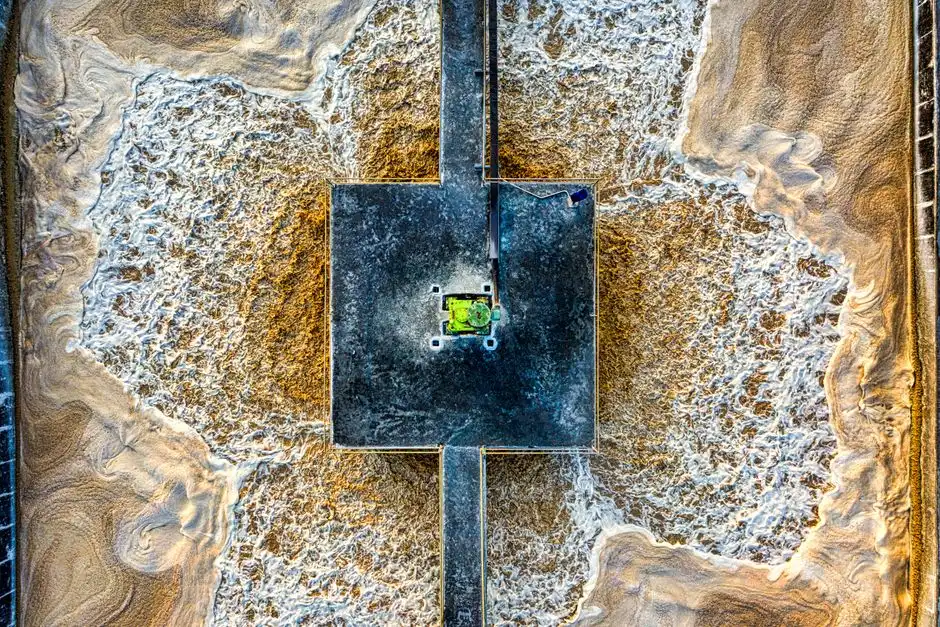
The four main configurations differ most clearly in footprint, treatment quality and hydraulic response. HydropureWater specifies the WSZ as a buried A/O biological contact-oxidation, sedimentation and chlorine-disinfection unit with a 1–80 m³/h range and no operator required. Its MBR product range is 10–2,000 m³/day, while the 2026 Sharjah buyer’s guide reports BOD below 5 mg/L and TSS below 1 mg/L.
| Configuration | Source-supported technical basis | Best housing-development position | Principal constraint |
|---|---|---|---|
| Buried WSZ | A/O contact oxidation, sedimentation and chlorine disinfection in one buried unit; 1–80 m³/h | Landscaped or surface-area-sensitive projects with an accepted surface-discharge basis | Excavation, groundwater management and reuse-grade treatment must be checked |
| MBR | 10–2,000 m³/day; reported BOD below 5 mg/L and TSS below 1 mg/L | Projects requiring irrigation reuse, very low solids or a compact biological footprint | Higher equipment cost and membrane, control and maintenance obligations |
| SBR | CAPEX 30–40% below MBR at equal flow; footprint 2–3× that of a comparable MBR | Sites with adequate land and variable hydraulic loading | Large plot requirement and cyclic operation |
| MBBR | 30–60% media fill; tolerance of 2–3× design-load shocks; COD typically 60–90 mg/L | Primarily a better fit for variable industrial influent than standard housing sewage | Reported COD does not establish unrestricted irrigation-reuse suitability |
SBR’s footprint penalty can dominate a housing project where landscaping has commercial or planning value. MBR’s smaller footprint can offset part of its higher equipment cost, but only if the site actually has a constrained plot. Biocell Water also identifies modular installation as a residential advantage because capacity can be added as development grows; this is a project-planning advantage, not evidence that every MBR package is cheaper or smaller than a comparable buried WSZ.
Commercial comparisons must also normalize build format. HydropureWater’s 2026 Sharjah guide estimates containerized or skid-mounted configurations at 12–18% above civil-erected plants. That is a source benchmark, not a quotation, and should be tested against the final foundation, enclosure and installation method.
Match the treatment train to the Sharjah permit basis
Surface-discharge compliance should be fixed in the RFQ before suppliers propose equipment. HydropureWater’s 2026 Sharjah buyer’s guide gives COD ≤200 mg/L, BOD ≤30 mg/L, TSS ≤30 mg/L, oil and grease ≤10 mg/L and total nitrogen ≤30 mg/L, together with site conditions of pH 6–9, residual chlorine below 1 mg/L and discharge temperature below 35°C.
| Compliance item | Requirement to fix in the design and RFQ | Supplier evidence required |
|---|---|---|
| Surface discharge | COD ≤200 mg/L; BOD ≤30 mg/L; TSS ≤30 mg/L; oil and grease ≤10 mg/L; total nitrogen ≤30 mg/L | Design calculations, performance guarantees and sampling plan |
| Sharjah site controls | pH 6–9; residual chlorine below 1 mg/L; discharge temperature below 35°C | Instrumentation, control philosophy and disinfection calculations |
| Permit route | Sharjah City Municipality environmental permit under the Decree No. 5/2018 framework and a Letter of Conformity | Permit-support documents and conformity statement |
| Federal compliance | UAE Federal Law No. 24 of 2025 conformity documentation | Letter of conformity; absence is a binary RFQ failure |
| Monitoring | Monthly self-monitoring through the Sharjah Municipality environmental portal | Sampling protocol, records format and responsible operator |
| Reuse, where applicable | UAE Decree 178/2011 for irrigation or Decree 161/2023 for cooling makeup | Reuse-specific calculation and residual-chlorine control at the reuse point |
If irrigation or cooling reuse applies, specify the relevant decree in the design basis and require disinfection that controls residual chlorine below 1 mg/L at the reuse point. The supplied guide identifies dedicated chlorine-dioxide equipment or sodium-hypochlorite skid dosing for this duty. Compare a chlorine dioxide generator or UV sterilizer against the selected reuse standard rather than treating disinfection as an interchangeable accessory.
Require each bidder to submit its design basis, process calculations, guarantees, membrane or media life terms, control philosophy and sampling plan. The 2026 guide also requires ISO 9001:2015, ISO 14001:2015, CE or equivalent electrical certification, and reference letters from operating UAE installations older than 24 months.
Budget for civil works, pretreatment and full project scope
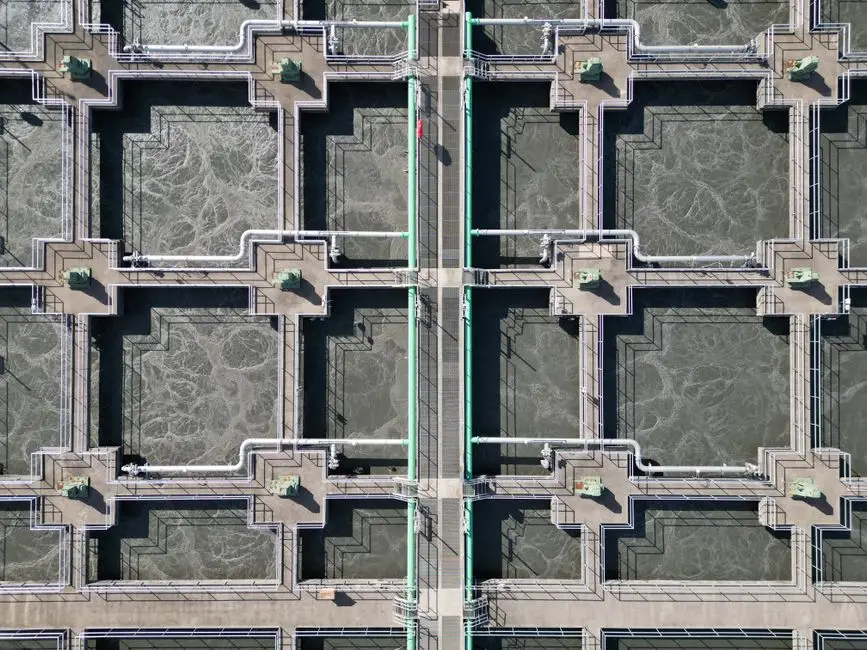
Equipment price alone will not establish the cheapest compliant bid. The source benchmarks must be normalized against civil works, pretreatment, pumping, controls, tanks, commissioning and permitting. HydropureWater’s 2026 Sharqh benchmark states SBR or MBBR at USD 500–1,000 per m³/day and MBR with irrigation reuse at USD 900–1,400 per m³/day.
| Cost item | Supplied benchmark | Commercial instruction |
|---|---|---|
| SBR or MBBR installed-capacity benchmark | USD 500–1,000 per m³/day | Confirm whether civil works and pretreatment are included |
| MBR with irrigation reuse | USD 900–1,400 per m³/day | Separate membrane, reuse disinfection and pretreatment allowances |
| 100 m³/day MBR equipment line | AED 330K–515K before civil works and Municipality facilitation | Do not treat this as a complete installed-project price |
| Broader 100 m³/day RFQ range | AED 180K–1.2M | Use a common bill of quantities to expose excluded scope |
| Buried-system premium | 15–20% above skid-mounted units | Attribute the premium to excavation, shoring and dewatering, then verify site conditions |
| Sharjah-specific additions | 8–12% | Check whether permit facilitation, EIA work and supervised commissioning are included |
The buried-system premium and Sharjah additions are stated benchmarks in HydropureWater’s 2026 UAE engineering guide and Sharjah buyer’s guide, not universal quotations. The wider AED 180K–1.2M range for the same nominal 100 m³/day flow shows why bidders must identify exclusions explicitly.
Domestic sewage still needs a defined headworks and solids route. Require pricing for a rotary mechanical bar screen, chemical dosing and sludge dewatering where applicable. The source links rotary mechanical screening, automatic chemical dosing and plate-and-frame filtration to specific package functions; obtain quotations against the actual process requirements rather than accepting them automatically.
Material selection is also site-specific. HydropureWater’s 2026 UAE engineering guide advises Stainless Steel 316 wetted parts and structural skids for sites within 5 km of the sea. Buried WSZ units commonly use reinforced FRP or epoxy-coated carbon steel. Confirm the selected material against soil, groundwater and chloride exposure.
Procure and commission without schedule surprises
Supplier selection should follow technical screening and begin with a binary regulatory check. HydropureWater’s 2026 Sharjah buyer’s guide requires a Letter of Conformity under UAE Federal Law No. 24 of 2025; absent that document, the supplier is disqualified regardless of price or technical score.
Use a seven-criterion scorecard covering regulatory documentation, FAT capability, a local Sharjah/UAE service partner, delivery schedule, commissioning and training, warranties, and active UAE references. The source assigns a 3.5/5.0 passing score and also requires at least three active UAE STP references older than two years. Its stated references and service expectations should be verified during prequalification rather than accepted as marketing claims.
For skid-built systems, specify a witnessed FAT; for remotely reviewed systems, the 2026 buyer’s guide permits a recorded video FAT with full input/output testing. The FAT should exercise alarms, interlocks, valves, control sequences, displays, power failure response and the agreed sampling points. Issue the shipping release only after technical acceptance.
Plan the schedule around two procurement routes. The source gives 90–120 days for a normal Sharjah cycle and 60–75 days when technical clarifications and civil works are parallelized. In the accelerated route, civil excavation and foundations should proceed while equipment fabrication and FAT proceed, but neither activity should bypass permit and design approval.
Commissioning requires protected time after installation. Allow 21–28 days from biological seeding to compliant discharge and at least 14 days of on-site engineer presence for operator training and handover, according to HydropureWater’s 2026 buyer’s guide. Include sludge dewatering in the commissioning plan; the same guide describes plate-and-frame presses producing 30–35% cake dryness, often paired with an upstream high-efficiency sedimentation tank.
- Issue the common flow, reuse, permit and site-data basis.
- Reject suppliers without the required federal conformity documentation.
- Score the remaining technical and commercial bids on the common scope.
- Complete witnessed or recorded FAT before shipment release.
- Install, test, seed, prove discharge quality and train operators.
- Complete handover only with permit documents, monitoring records, spares and warranties.
Frequently Asked Questions
What capacity does a Sharjah housing development package plant need?
HydropureWater’s 2026 Sharjah buyer’s guide places residential-community projects in a 200–2,000 m³/day band. That range does not determine the required capacity by itself. Verify average flow, design peak, minimum flow and each occupancy phase, then require the supplier’s hydraulic calculations to use the same values.
Is WSZ or MBR better for a housing development in Sharjah?
Choose WSZ when the verified discharge route and quality fit its A/O contact-oxidation, sedimentation and disinfection train, and buried installation protects the site plan. Choose MBR when irrigation reuse, very low solids or a smaller biological footprint is required. Compare plot area, civil works, treatment guarantees, membrane obligations and whole-life maintenance—not only equipment price.
How much should a packaged sewage treatment plant cost in Sharjah?
For 100 m³/day MBR, HydropureWater’s 2026 Sharjah buyer’s guide gives an equipment benchmark of AED 330K–515K before civil works and Municipality facilitation. Its wider RFQ range for the same nominal flow is AED 180K–1.2M. Request a line-by-line quotation covering pretreatment, pumping, controls, tanks, civil works, commissioning and permitting so that exclusions are visible.
Which permits and compliance documents should be required from the supplier?
Require the Sharjah City Municipality environmental permit under the Decree No. 5/2018 framework, a Letter of Conformity against UAE Federal Law No. 24 of 2025, and the supplier’s process calculations, guarantees, control philosophy and sampling plan. The 2026 guide also specifies monthly self-monitoring through the Sharjah Municipality environmental portal and requires supporting management and electrical certifications.
How long does procurement and commissioning take?
HydropureWater’s 2026 buyer’s guide gives 90–120 days for normal Sharjah procurement and 60–75 days for a parallelized route. After installation, allow 21–28 days from biological seeding to compliant discharge and at least 14 days of on-site engineer presence. Civil works, FAT, shipping and permit activities should appear as separate dependencies in the tender programme.