Start with the sewer decision and intended water use
For a Dubai housing development, the best fit depends first on municipal sewer access and the required discharge or reuse standard. A buried A/O package plant is suitable where a compact, landscaped installation and conventional treatment are priorities. An MBBR or SBR offers a flexible biological option where loads vary and the project can justify a concrete installation. MBR is preferable when high-quality effluent is required for irrigation, wash-down or cooling. Hydraulic design should allow the 1.5×–2.0× peaking factor identified in HydropureWater's 2026 UAE engineering guide, while the final selection remains subject to site data and Dubai Municipality approval.
Start with two decisions: can the development connect to the municipal sewer, and where will the treated water go? Biocell Water states that residential developments may need on-site wastewater treatment where public sewerage is unavailable or pretreatment is required before discharge. A sewer connection should therefore be tested for technical availability, connection cost, gravity or pumping requirements and approval conditions rather than assumed to be either available or impossible.
The intended endpoint changes the process requirement. Basic discharge compliance asks the plant to meet the approved discharge condition at the receiving point. Irrigation, wash-down or cooling-tower make-up imposes additional water-quality, storage, distribution and operational requirements. HydropureWater's 2026 UAE engineering guide identifies MBR as suitable for irrigation and cooling-tower make-up without further polishing, so an integrated MBR wastewater treatment system belongs in the comparison whenever reuse is central to the development brief.
Modularity can reduce the risk of overbuilding at the first phase. Biocell identifies above-ground containerized systems as plug-and-play modules and notes that modular systems can be installed in phases as a development grows. A below-ground system may still be appropriate for a constrained masterplan, but its future expansion must be reserved physically and hydraulically. The developer still needs project-specific flow, wastewater-characterisation, site, reuse and permit inputs; a published capacity range alone cannot establish compliance for an individual Dubai site.
Build a peak-flow and load basis for the development
Residential package plants should be sized against peak flow and pollutant load, not average daily flow alone. HydropureWater's 2026 UAE engineering guide identifies a 1.5×–2.0× peaking factor for UAE package-plant design. Apply that factor to the defensible average daily wastewater flow, then confirm the resulting inlet peak and buffer requirements against the proposed treatment train.
Biocell Water documents a recurring residential pattern: peak flow commonly occurs in the morning, late afternoon and evening as residents leave for or return from work and school. That pattern makes equalisation, biological treatment capacity and standby provisions more important than a single daily total. Biocell also notes that residential ammonia and COD can be high, influenced by cleaning products, disinfectants and the absence of grease traps in some homes.
Require wastewater characterisation covering COD, ammonia, BOD, suspended solids and relevant grease or cleaning-product effects. Also document inlet peak-flow conditions, equalisation volume, standby-power provisions and the occupancy and wastewater assumptions for future development phases. The technical brief should separate average flow, peak hydraulic flow, peak organic load and the growth reserve; these are not interchangeable.
Published technology capacities should be treated as selection envelopes, not as the hydraulic calculation. Compare them against the same design basis and verify the proposed equipment, civil structures and controls against project-specific calculations.
| Design input | Evidence or decision requirement |
|---|---|
| Average wastewater flow | Obtain from occupancy, unit mix and wastewater-generation assumptions. |
| Peak hydraulic flow | Use the 1.5×–2.0× design peaking factor in HydropureWater's 2026 UAE engineering guide. |
| Peak timing | Check morning, late-afternoon and evening residential peaks identified by Biocell Water. |
| Organic load | Test COD, ammonia, BOD and suspended solids; assess grease and cleaning-product effects. |
| System resilience | Define equalisation, standby power, alarms and future-phase capacity. |
Before committing to biological capacity, confirm what upstream solids protection is required. A rotary mechanical bar screen can remove solids and fibrous debris before they reach pumps or biological systems, but its necessity and size should follow the wastewater characterisation and development scale.
Compare buried A/O, MBBR, SBR and MBR systems
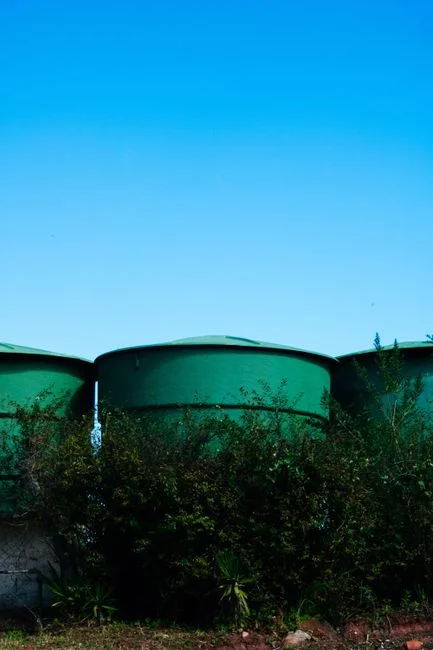
A/O, MBBR, SBR and MBR are not interchangeable product categories: they combine different biological mechanisms, civil footprints and effluent capabilities. The selection should start with the approved duty and reuse endpoint, then test whether the proposed arrangement fits the masterplan and operating budget.
HydropureWater's WSZ specification combines anoxic/aerobic biological contact oxidation, sedimentation and disinfection in one buried package, handles 1–80 m³/h and can be installed below landscaped grade. This makes a buried integrated sewage treatment plant relevant where visual impact is important and conventional treatment satisfies the permitted discharge condition.
Biocell identifies MBBR and SBR as common below-ground options installed in concrete tanks. Septech positions MBBR for shock-load operation and compact footprints, with treatment volumes usually 100 m³/day and greater. SBR is a cycle-based option: Biocell explains that rest and settlement periods operate without electricity, making it relevant where variable residential loading and operational simplicity matter.
MBR adds membrane separation to biological treatment. HydropureWater's integrated MBR specification covers 10–2,000 m³/day, uses submerged PVDF membranes and provides filtration below 1 μm. Septech associates MBR with high-purity effluent for irrigation, watering and wash-down. For the highest reuse duty, HydropureWater's 2026 UAE guide states that MBR can achieve TSS below 2 mg/L, suitable for irrigation and cooling-tower make-up without further polishing.
Septech also lists UTB treatment volumes of 3–200 m³/day and highlights low noise, odour-free operation and underground installation where visual presentation is important. It is an additional biofilm option, not a reason to omit hydraulic, load and permit checks.
| Technology | Published selection evidence | Best-fit question |
|---|---|---|
| Buried A/O | WSZ: 1–80 m³/h, with biological contact oxidation, sedimentation and disinfection integrated below grade (HydropureWater product specification). | Is compact buried conventional treatment sufficient for the approved discharge duty? |
| MBBR | Usually 100 m³/day and greater; suited to shock loads and compact footprints (Septech). | Does the project need flexible biological loading within a below-ground concrete arrangement? |
| SBR | Below-ground option with cycle-based rest and settlement periods that use no electricity during those phases (Biocell Water). | Are variable residential loads and simple operation important enough to justify the tank arrangement? |
| MBR | HydropureWater: 10–2,000 m³/day, submerged PVDF membranes and filtration below 1 μm; TSS below 2 mg/L for the highest reuse duty in the 2026 UAE guide. | Is irrigation, wash-down or cooling reuse required? |
| UTB | 3–200 m³/day, with low noise, odour-free operation and underground installation (Septech). | Does visual presentation and underground operation outweigh the selected process requirements? |
Do not treat the MBR row as a substitute for the approved specification. A basic A/O arrangement may suit a discharge duty; MBR becomes compelling when reuse quality justifies the additional process and maintenance commitments.
Add the treatment stages the development actually needs
A complete package must cover pretreatment, biological treatment, solids separation, disinfection, any reuse polishing and sludge handling. HydropureWater's 2026 UAE engineering guide gives a five-stage process sequence: primary screening, biological treatment, secondary clarification, advanced filtration and disinfection. It also requires sludge handling to be integrated into the design.
Protect pumps, membranes and biological media from solids and fibrous debris. For larger developments, HydropureWater describes the GX rotary mechanical bar screen as suitable for municipal and industrial wastewater headworks. The final pretreatment duty should follow an influent solids assessment rather than a standard equipment list.
Disinfection must match the permit and water end use. HydropureWater's 2026 UAE guide identifies chlorine as the common lower-cost option and UV as a chemical-free option effective against chlorine-resistant Cryptosporidium. A UV disinfection system should therefore be evaluated against the approved reuse or discharge route rather than selected automatically.
Specify polishing only where the reuse requirement demands it. HydropureWater's MBR specification already provides filtration below 1 μm, so adding another filtration stage may duplicate performance and increase capital and operating cost. Conversely, if the selected process does not meet the reuse specification, the missing treatment step must be included explicitly.
Sludge is part of the process, not a residual. The scope should cover thickening or dewatering, stabilisation, storage, transport and an authorised disposal route. HydropureWater's 2026 UAE guide states that sludge must be dewatered and stabilised before disposal at designated facilities. A plate-and-frame filter press can provide the solid–liquid separation stage where included in the project design.
Plan for Dubai site conditions and installation impacts
Installation form can materially change both footprint and cost. HydropureWater's 2026 UAE engineering guide recommends Stainless Steel 316 for wetted parts and structural skids in coastal systems within 5 km of the sea because of chloride-related pitting risk. The exposure distance and material specification should be confirmed against the development location.
For buried systems, obtain a civil-inclusive quotation covering excavation, shoring and dewatering. HydropureWater's guide states that buried installations generally cost 15%–20% more than skid-mounted units because of civil works. Rocky ground, groundwater, access constraints and utility conflicts can change that premium, so the benchmark is not a site-specific estimate.
Include safe access for tanker removal, maintenance, membrane or media replacement and lifting operations. Electrical supply, lighting, ventilation and noise controls belong in the civil and electrical design rather than being treated as minor accessories. A buried installation also needs a clear strategy for confined-space entry and asset retrieval.
Match the installation form to the masterplan. WSZ can be installed below grade with landscaping above. Containerised or trailer-mounted configurations support above-ground or temporary deployment and phased installation, but they require acceptable visual treatment, security and weather protection. Biocell identifies containerized above-ground systems as plug-and-play modules that can be added as the development grows.
Account for Dubai's ambient temperature. HydropureWater's 2026 UAE guide notes that high temperatures can accelerate biological activity, but systems must be engineered to prevent overheating that inhibits bacterial growth. Confirm the reactor temperature-management approach and any associated cooling or flow-management provisions.
Chemical dosing should also be site-specific. Where dosing is required, specify an automatic chemical dosing system with alarms, controlled dosing and a defined chemical supply arrangement; do not leave dose, containment and maintenance requirements unresolved.
Build the permit, commissioning and operating-cost case
Dubai package-plant procurement should follow the four-stage approval sequence in HydropureWater's 2026 UAE engineering guide: a pre-application meeting with the municipality; submission of the technical design and EIA for No Objection Certificate issuance; construction and installation under licensed supervision; and testing, commissioning followed by an operational-licence audit. The municipality must define the discharge limits before the equipment specification is frozen.
HydropureWater's guide gives a Dubai approval timeline of 3–5 months. Treat that as a planning statement, not a guaranteed programme: site conditions and permit complexity can change the sequence. The UAE package-plant engineering guide on permitting and supplier checks provides useful procurement structure, but Dubai Municipality approval remains project-specific.
Use HydropureWater's package-plant CAPEX benchmark of $1,000–$3,000 per m³/day of capacity only to screen early options. Obtain a project-specific price because technology, buried civils, access, controls and site conditions materially affect cost. Compare quotations on the same flow basis, effluent specification, civil scope and commissioning tests.
Build OPEX from energy, chemicals, sludge removal, operator labour, maintenance and membrane replacement. HydropureWater's 2026 UAE guide reports average energy consumption of 0.5 kWh/m³, approximately $0.12/m³ in energy-related OPEX and $0.05–$0.15/m³ in chemical costs. These are benchmarking inputs, not a calculation for an individual plant; local tariffs, operating hours, equipment loading and sludge destinations must be confirmed.
Evaluate reuse value alongside tanker-disposal avoidance and non-potable water savings. Do not compare equipment prices alone. Specify alarms, PLC controls and remote monitoring in the operating scope: HydropureWater's guide notes that Dubai requirements frequently call for PLC-based control and GPRS or 4G monitoring for real-time compliance reporting.
| Cost or approval item | Benchmark from HydropureWater's 2026 UAE guide | Buyer check |
|---|---|---|
| Package-plant CAPEX | $1,000–$3,000 per m³/day of capacity. | Request a civil-inclusive, site-specific quotation using the same capacity and effluent basis. |
| Buried installation | Generally 15%–20% above skid-mounted units. | Price excavation, shoring, dewatering, access and reinstatement separately. |
| Energy | 0.5 kWh/m³; approximately $0.12/m³ energy-related OPEX. | Recalculate for the selected process, loading and local tariff. |
| Chemicals | $0.05–$0.15/m³. | Confirm chemicals, dose, storage and supplier pricing. |
| Dubai approval | Four-stage sequence; typically 3–5 months. | Confirm the current NOC route, discharge limits and programme with Dubai Municipality. |
Use a weighted supplier-selection checklist
A comparable technical proposal should not outrank a weaker delivery and operating case. Use a weighted scorecard that gives appropriate weight to Dubai references, the proposed treatment duty, effluent performance, civil execution, controls, local support and whole-life cost.
Request at least three UAE references for projects of similar scale, as recommended in HydropureWater's 2026 UAE guide. Ask for the actual treatment duty, installation arrangement and operating performance records rather than relying on generic case-study claims. Check whether the references correspond to housing wastewater, the proposed technology and the intended installation method.
Verify the proposed process against the approved Dubai effluent standard, reuse application and modular growth plan. For basic discharge, an A/O, SBR, MBBR or biofilm package may be adequate if it demonstrates compliance. For irrigation, wash-down or cooling make-up, verify the required water quality directly and confirm any disinfection, storage and distribution provisions.
Confirm local spare-parts support and response times. HydropureWater's guide uses 48 hours for spare-parts response as a supplier-selection benchmark. Require operator training: the guide notes that Dubai Municipality inspectors may test operators' knowledge during annual audits.
Review warranties, membrane or media replacement terms, PLC/SCADA compatibility, alarms, documentation, commissioning support and performance guarantees. A comparison of package plants for housing developments can help structure technology questions, while this residential wastewater treatment engineering guide provides a second reference framework; neither replaces Dubai-specific approvals or project data.
Normalise bids before scoring them. Each quotation should state the same design flow, peak basis, effluent specification, civil scope, reuse requirement, commissioning acceptance tests, OPEX assumptions and exclusions. This prevents a lower equipment price from obscuring a higher buried-civil, sludge or lifecycle commitment.
Frequently Asked Questions
How many m³/day does a Dubai housing development need?
No universal capacity can be selected without occupancy, unit mix, wastewater-generation data and peak-flow analysis. Start with average daily flow and apply the 1.5×–2.0× design peaking factor identified in HydropureWater's 2026 UAE engineering guide, then confirm the result against the proposed treatment train and future development phases.
Is MBR necessary for a housing development?
MBR is most compelling when the project needs high-quality effluent for irrigation, wash-down or cooling. A simpler A/O, SBR, MBBR or biofilm package may suit a basic discharge duty if it satisfies the approved standard and provides the required operational reliability.
How much does a packaged sewage treatment plant cost in Dubai?
Use $1,000–$3,000 per m³/day as HydropureWater's 2026 package-plant CAPEX screening benchmark, and note that buried systems generally carry a 15%–20% civil-works premium in the same guide. For a purchasing decision, request a site-specific, civil-inclusive quotation covering the same flow, effluent duty, reuse requirement, controls and commissioning tests for every supplier.
Which technology is easiest to expand as housing phases are built?
Above-ground containerised or plug-and-play systems can be added in phases because they avoid committing the full initial civil structure, according to Biocell Water. Below-ground A/O, MBBR, SBR and MBR arrangements require deliberate space, hydraulic and replacement planning; expansion feasibility must be shown in the drawings rather than assumed from modular equipment dimensions.
What should a developer request from a Dubai package-plant supplier?
Request UAE references, the proposed treatment duty, effluent guarantees, controls, alarms, remote monitoring, operator training, commissioning evidence, warranty terms and a written local spare-parts commitment. Also request a transparent OPEX schedule covering energy, chemicals, labour, sludge removal and membrane or media replacement, plus the proposed Dubai Municipality approval and commissioning sequence.