What the Decanter Must Separate From Fish Processing Wastewater
A decanter centrifuge for fish processing wastewater is normally the solids-separation stage in a pretreatment train, not a complete biological treatment system. Fish blood can produce wastewater with high biochemical oxygen demand, while suspended residues create sludge, odor, and disposal loads. The centrifuge concentrates removable solids into cake and discharges clarified liquid for further treatment. A defensible design therefore starts with measured contaminant inventories and representative samples—not flow capacity alone.
The IAMURE International Journal of Mathematics Engineering & Technology study, “Wash Decanter: A Solution to Environmental Problem for Fish Processing Plant,” identifies fish blood as a cause of high biochemical oxygen demand that can affect discharge-water quality and endanger aquatic life. It also identifies wastewater, solid waste, excessive odor, and sludge generation as environmental impacts and sources of additional company overhead.
Define the separation boundary before selecting equipment. Suspended fish residues, blood solids, fines, and wash-water solids may be candidates for mechanical capture. Dissolved and finely divided organic material is different: the supplied research supports solids and sludge separation, but it does not establish that a decanter alone removes dissolved BOD. The project inventory should separate stream origin, contaminant type, and required removal route.
| Design input | Information required | Why it affects the design |
|---|---|---|
| Source streams | Wash-water origin, blood-bearing streams, fish residues, fines, blood solids, and cleaning chemicals | Separates bulk-solids, oil-bearing, and chemically conditioned duties |
| Operating conditions | Temperature, pH, daily production cycle, cleaning cycle, and downtime discharge | Defines feed conditioning, materials, equalization, and peak loading |
| Separation targets | Centrate solids limit, solids capture, and acceptable cake moisture or dryness | Prevents the centrifuge being specified only by throughput |
| Downstream route | Biological treatment objective, discharge permit, sludge collection, and disposal method | Determines whether clarified liquid or cake requires further treatment |
Obtain representative samples across production, cleaning, and downtime periods. Otherwise, a temporary solids or flow peak may be mistaken for the normal design duty. Where the project includes oil, FOG, or colloidal removal, an industrial DAF system for fish-processing wastewater may be evaluated as upstream protection or clarification rather than treated as a substitute for biological treatment.
How Continuous Solid-Liquid Separation Works
Decanter separation produces clarified liquid and continuously discharged solids by combining centrifugal migration with controlled solids transport. Alfa Laval states that the centrifugal-force effect in its decanter centrifuges can be up to 4,000 times the effect of gravitational force. This identifies the separation principle, but it does not guarantee fish-processing performance.
Denser particles migrate outward toward the rotating bowl wall. The less-dense liquid forms a concentric inner layer. Inside that liquid layer, a screw conveyor rotates at a different speed from the bowl and transports the separated solids along the conical beach toward the discharge end. The solids are compacted into cake, while clarified liquid overflows through an outlet at the opposite end of the bowl.
That arrangement separates two jobs: liquid clarification and sludge thickening. It also explains why feed consistency matters. Debris can damage the feed zone or interfere with continuous transport, excessive free oil can disrupt cake formation, and a highly variable solids load can drive conveyor torque outside the stable operating condition.
Liquid depth, commonly described as pond depth or pond level, can be adjusted to suit the separation duty. Alfa Laval describes fast and accurate adjustment as important for separation performance, cleanability, and start-up. That adjustment should be treated as an operating variable with defined limits, not left as an undocumented commissioning setting.
Dolphin Centrifuge, in its wastewater-centrifuge guide reviewed in May 2026, states that wastewater centrifuges operate at 3,100 Gs or higher. G-force is only one selection factor. Particle distribution, feed solids, feed rate, capture target, cake dryness, torque response, and representative-feed testing determine whether the selected machine can perform the specified duty.
Build the Treatment Train From Wastewater Characterization
A decanter should sit inside a controlled treatment train because fish-processing solids, oil, and dissolved BOD require different removal mechanisms. The correct sequence starts with characterization, protects the centrifuge from unsuitable feed, removes the target solids, and then routes the clarified water to the required biological or polishing stage.
- Characterize and equalize the streams. Separate blood-bearing wastewater, wash water, residue-bearing washings, and cleaning discharges. Equalize variable production flows and solids concentrations before feeding the centrifuge.
- Protect the feed path. Remove gross debris and, where present, bulk oil and grease before the bowl. A DAF can be used for upstream removal of suspended solids, FOG, oil and grease, and colloidal matter when that duty is part of the treatment design. HydropureWater specifies an industrial DAF system for fish-processing wastewater across 4–300 m³/h and 13 standard models, but the supplied information does not establish suitability for a specific fish-processing duty without representative testing.
- Concentrate solids in the decanter. Feed conditioned wastewater at a controlled rate. The target is continuous capture of the specified suspended solids into a manageable cake.
- Polish or biologically treat the clarified liquid. The IAMURE fish-processing study identifies high BOD as a key wastewater problem. Specify the biological stage from the treated-water objective and permit requirements rather than treating mechanical separation as final effluent treatment.
- Route the cake to a defined endpoint. Specify continuous collection, odor control, transport, and the selected downstream dewatering or disposal option. A plate-and-frame sludge dewatering system can be evaluated where batch polishing of the decanter cake is justified by the cake characteristics and operating schedule.
Use a three-phase separator only where the duty requires separate recovery of oil, water, and solids. Dolphin Centrifuge distinguishes three-phase oily-water treatment from ordinary high-sludge thickening. It also describes a staged arrangement in which a decanter removes heavy solids before a three-phase disc-stack machine removes residual oil; that is not the same equipment-selection question as selecting a single decanter.
| Process stage | Primary duty | Decision condition |
|---|---|---|
| Gross-solids and oil protection | Protect the centrifuge from debris and unsuitable free oil | Required where the feed inventory identifies these constituents |
| DAF | Remove suspended solids, FOG, oil and grease, or colloidal matter before the selected downstream process | Trial performance is required against the actual wastewater |
| Decanter | Continuous solid-liquid separation and cake production | Feed solids and loading are compatible with continuous bowl and conveyor operation |
| Three-phase separator | Separate oil, water, and solids where distinct oil recovery is required | Do not substitute it for a two-phase sludge-dewatering duty without an oil-recovery objective |
| Biological or polishing treatment | Address the treated-water objective, including BOD where required | Defined from permit and reuse criteria |
| Cake handling | Collect, contain, dewater further if required, and dispose | Must match continuous discharge and available handling logistics |
Conditioning chemicals should be included only where pilot evidence supports them. If flocculation or pH adjustment is required, use a PLC-controlled chemical dosing system with controlled dose, verification, and safe handling.
Size the Decanter From the Measured Design Duty
A fish-processing decanter should be sized from the measured hydraulic and solids duty, not from wastewater flow alone. Send suppliers the same design-basis worksheet and require each proposal to state how its selected machine meets every line.
| Sizing parameter | Supplier information required |
|---|---|
| Hydraulic duty | Average flow, peak flow, operating hours per day, and feed-control method |
| Solids duty | Suspended-solids concentration, maximum instantaneous solids loading, particle-size distribution, and expected variability |
| Performance targets | Centrate solids limit, required solids capture, and acceptable cake moisture or dryness |
| Residual losses | Expected solids remaining in the centrate and the basis for calculating total solids handled |
| Installation | Footprint, elevation, access, utilities, feed connection, cake discharge, and utilities |
| Materials and protection | Stainless-steel wetted parts and abrasion protection in the feed zone, bowl, scroll, and solids-discharge area |
| Controls | Feed VFD, conveyor differential-speed VFD, torque monitoring, overload protection, and operating sequence |
| Validation | Representative-feed pilot results or a justified basis for selecting without a pilot |
The supplied research does not provide a universal removal efficiency or cake-dryness target for fish-processing wastewater. Those values must come from the discharge objective, downstream treatment requirements, and representative-feed testing. Account for the complete solids load, including solids captured in the centrate, rather than calculating only from raw suspended-solids concentration.
Dolphin Centrifuge provides useful reference points, not guarantees for fish-processing service: 110 GPM for water-sludge thickening, 25 GPM for plant biomass ethanol slurry, and a typical NX-314 example processing up to 40 GPM at 5% sludge, in its May 2026 wastewater-centrifuge guide. The same guide gives NX-314 dimensions of 3 feet by 8 feet by 4 feet high. These figures show why machine selection must account for both duty and installation constraints.
Specify torque-controlled differential speed rather than fixed conveyor speed. Alfa Laval states that automatic differential-speed adjustment can prevent torque overload and maintain stable cake dryness as solids loading changes. The control objective is not simply to maintain maximum throughput; it is to remain inside a stable feed band while preserving the required cake and centrate performance.
For corrosive or abrasive service, require stainless-steel wetted components and project-specific wear protection in the feed zone, bowl, scroll, and discharge route. If variability or the required separation target cannot be predicted reliably from the initial samples, require a pilot test using representative wastewater before finalizing the machine.
Select Equipment, Controls, and Performance Acceptance
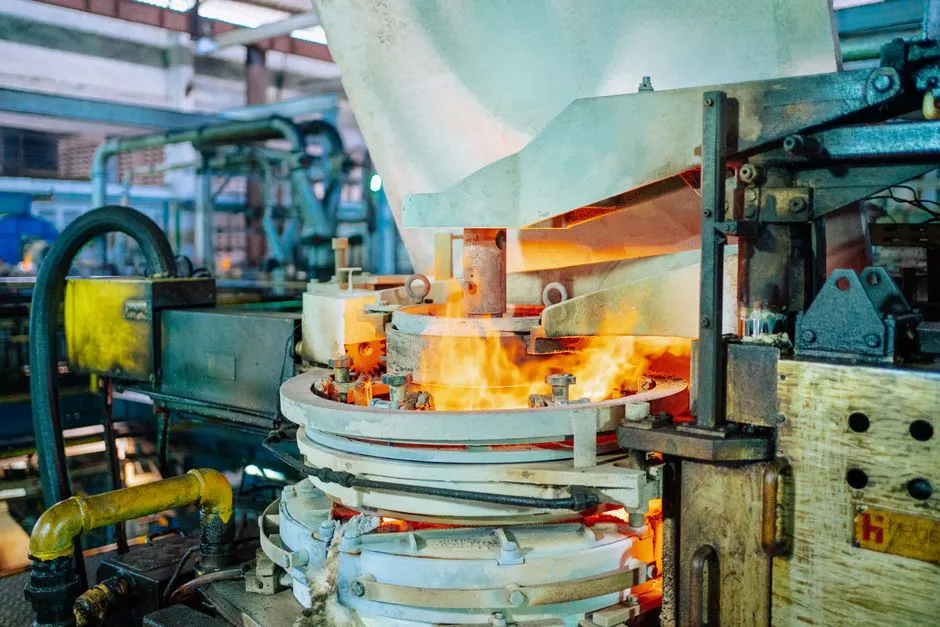
Supplier comparisons should distinguish equipment by separation duty and then evaluate the complete system against one acceptance schedule. Dolphin Centrifuge, in its May 2026 guide, positions decanters for high-sludge dewatering, disc-stack machines for polishing lower-solids or oily water, and three-phase machines for separate oil, water, and solids. The classification is more useful than comparing machines by maximum rotational force.
| Selection issue | Required evidence | Acceptance focus |
|---|---|---|
| Separation duty | Representative feed results and machine configuration | Centrate solids, solids capture, and cake dryness |
| Hydraulic capacity | Average, peak, and operating-hour basis | Stable throughput at representative peak loading |
| Feed and controls | Feed-pump VFD, level instrumentation, torque monitoring, and differential-speed control | Correct response to solids-loading changes without overload |
| Materials and hygiene | Stainless-steel wetted parts, cleanability, accessible drains, and abrasion protection | Documented construction and inspection access |
| System scope | Feed tank and pump, piping, valves, controls, discharge handling, utilities, and local service support | No excluded interface or utility required for safe operation |
| Validation | Pilot data from representative wastewater where required | Results transfer to the proposed feed and control settings |
Make hydraulic and process acceptance tests project-specific. For throughput, state the feed rate and duration. For centrate solids, state the sampling method and acceptance limit. For solids capture, state the mass-balance method. For cake dryness, state the moisture measurement method. For torque response, demonstrate operation through representative loading changes while maintaining the specified product quality.
Do not convert Alfa Laval’s statement of up to 4,000 times gravitational force or Dolphin Centrifuge’s 3,100 Gs-or-higher description into guaranteed fish-processing results. Neither statement replaces project-specific evidence. The same applies to complete skid scope: piping, valves, tanks, and controls can be excluded from a bowl-only quotation. Compare those exclusions against the water-treatment valves and filter-media scope needed by the installation.
Commission, Monitor, and Troubleshoot the Installation
Commissioning should confirm that the centrifuge receives the wastewater the design assumed. Before startup, verify feed consistency, calibrated flow and level instruments, overload protection, a continuous cake-discharge route, and safe access for inspection and cleaning.
Establish baseline readings for feed and centrate solids, feed and cake flow, bowl speed, conveyor differential speed, conveyor torque, and energy consumption. Compare those readings with the accepted operating envelope. A change in one variable should prompt investigation rather than an automatic increase in conveyor speed.
Rising torque is a process signal. Check feed solids, feed rate, and conveyor condition before changing the differential-speed setting. Excessive differential speed can increase wear or mask an unsuitable feed condition rather than correct it.
Schedule inspections of the feed zone, bowl, scroll, and solids-discharge components. Alfa Laval identifies these as wear-prone areas where abrasion-resistant materials may be required. Record wear findings, replacements, and operating changes so future troubleshooting can distinguish material wear from process upsets.
Use the selected PLC-controlled chemical dosing system only for a documented conditioning step. Verify dose, mixing, and feed sequence during commissioning, and connect chemical interlocks to the treatment train where loss of conditioning could compromise separation performance.
Frequently Asked Questions
How much fish-processing wastewater can a decanter centrifuge treat?
Capacity depends on average and peak flow, operating hours, suspended-solids concentration, maximum instantaneous solids loading, particle characteristics, capture target, and cake dryness. Dolphin Centrifuge’s 110 GPM water-sludge, 25 GPM biomass-ethanol-slurry, and 40 GPM-at-5%-sludge figures are vendor reference examples, not fish-processing guarantees. Before requesting a quotation, provide measured flow and solids data from production, cleaning, and downtime periods.
Can a decanter alone meet the discharge requirements for fish-processing wastewater?
Not on the supplied evidence. A decanter separates solids and concentrates them into cake, but the IAMURE study identifies fish-blood-driven high BOD as a wastewater problem. The clarified liquid still requires biological treatment or another validated polishing route where the discharge objective and permit require it. Size the biological stage from the clarified-water BOD and load conditions, not from raw wastewater flow alone.
When is a three-phase centrifuge required instead of a two-phase decanter?
Use a three-phase separator when the objective includes distinct recovery of oil from water and solids. Dolphin Centrifuge describes decanter-plus-three-phase-disc-stack arrangements for staged solids and residual-oil removal, while ordinary high-sludge thickening is a two-phase duty. Decide from the oil-recovery requirement, oil characteristics, residual-solids content, and required discharge quality.
What should a buyer request in a decanter-centrifuge quotation?
Request a priced, itemized scope covering the measured design duty, feed pump and tank, instruments, piping and valves, feed and differential-speed drives, torque controls, materials, wear protection, footprint, utilities, discharge handling, service, pilot evidence, and acceptance tests. Require explicit exclusions. Also define the downstream sludge route, because a complete quote cannot leave cake collection, odor control, transport, or disposal unresolved.
What are the main operating risks after installation?
The main risks are feed variability, abrasive solids, debris, free oil, torque overload, odors, excessive cake moisture, and biological overload after clarification. Control them through representative sampling, upstream protection, equalization, calibrated instruments, torque-control logic, a defined cake route, and a biological or polishing stage sized for the clarified-water load.