Which Packaged Sewage Treatment Plant Fits an Abu Dhabi Housing Development?
The best fit for a housing development in Abu Dhabi depends on measured sewage flow, peak demand, available land, treated-effluent reuse targets and the approved discharge route—not the number of housing units alone. A buried A/O package plant is a compact option where below-grade installation and recovery of the surface are priorities; the WSZ underground A/O package sewage treatment plant covers 1–80 m³/h. An MBR is preferable where space is tighter or reuse quality is more demanding: the MBR wastewater treatment system for housing reuse covers 10–2,000 m³/day, filters below 1 μm and is stated to use 60% less footprint than conventional systems. Final selection still requires wastewater testing, hydraulic calculations and the applicable Abu Dhabi EAD wastewater approval process.
No single architecture is universally correct. A buried A/O plant suits residential developments seeking a modest surface footprint, straightforward landscaping recovery and a conventional biological treatment train. Its WSZ configuration integrates anoxic and aerobic contact oxidation, sedimentation and disinfection below grade. It should be shortlisted where the site has sufficient excavation access, suitable groundwater conditions and a civil design capable of protecting the buried structure.
MBR should be evaluated where the development has limited above-ground space, a more stringent reuse specification or a duty that benefits from membrane separation. The supplied MBR information combines biological treatment with submerged PVDF membrane filtration, producing output described as below 1 μm. The MBR range of 10–2,000 m³/day is a catalogue envelope, not a recommendation to size from the unit count.
There is also useful local evidence that MBR technology is operating in Abu Dhabi. Almasa Environmental’s October 2025 plant-tour post describes an upgraded Abu Dhabi facility with 480 m³/day capacity and advanced MBR technology. Treat this as a local operating reference, not as a housing-development sizing precedent.
SBR, extended aeration and other modular processes should remain in the comparison when hydraulic variability, maintainability or an approved reuse route favours them. The decision should follow measured flow and wastewater characteristics, not process branding. This workflow provides a defensible structure for preparing an Abu Dhabi vendor brief, including housing-development packaged sewage treatment comparison principles that can be adapted to the emirate’s approval requirements.
Turn the Housing Design Brief into a Preliminary Capacity Request
A defensible capacity request must distinguish average daily flow, peak-hour flow and treatment-plant duty; one daily sewage figure cannot support a supplier quotation. Start with the design brief and site information, then commission wastewater sampling and hydraulic modelling before selecting a plant.
| Input | Evidence required | Why it changes the package plant |
|---|---|---|
| Average daily sewage flow | Occupancy-based estimate, verified against the approved development programme | Establishes the base hydraulic capacity and operating load |
| Peak wastewater flow factor | Hourly profile, pumping controls and an auditable hydraulic calculation | Determines peak treatment and equalisation requirements |
| Wastewater strength | Sampling for COD, BOD, suspended solids, nutrients and relevant industrial contaminants | Defines biological loading and pretreatment needs |
| Growth stage | Occupancy schedule, handover phases and expected expansion | Supports modular sizing and future capacity additions |
| Inflow and infiltration | Separate sewage inflow, groundwater infiltration and storm-water exclusions | Material changes treatment flow, pumping load and operating cost |
| Reuse demand | Landscaping, irrigation, flushing, cooling or other approved non-potable demand | Sets the required effluent quality and treatment intensity |
| Site constraints | Land, access, burial depth, groundwater, power and delivery route | Controls civil works, logistics and architecture |
HydropureWater’s 2026 UAE engineering guide cites a peak wastewater flow factor of 1.5×–2.0× average daily flow for UAE package plants. Use that as a preliminary design allowance only. It does not replace a project hydraulic model because occupancy patterns, pumping controls, infiltration and phased development can produce different hourly peaks.
Require the designer to show three separate outputs: average daily flow, peak-hour flow and selected treatment capacity. Also ask whether the development will be handed over in phases and whether additional treatment capacity can be installed later. Emvees states that its modular Abu Dhabi package plants permit additional treatment capacity as wastewater volumes increase; that expansion principle should be made contractual through defined interfaces, future flows and a future module price basis.
For every bidder, issue the same confirmed design basis, including inflow and infiltration assumptions, wastewater sampling results, reuse demand, operating hours and future-phase flows. This prevents a lower quotation based on an underestimated flow basis from becoming the apparent low bid.
Compare Buried A/O, MBR and Other Package-Plant Architectures
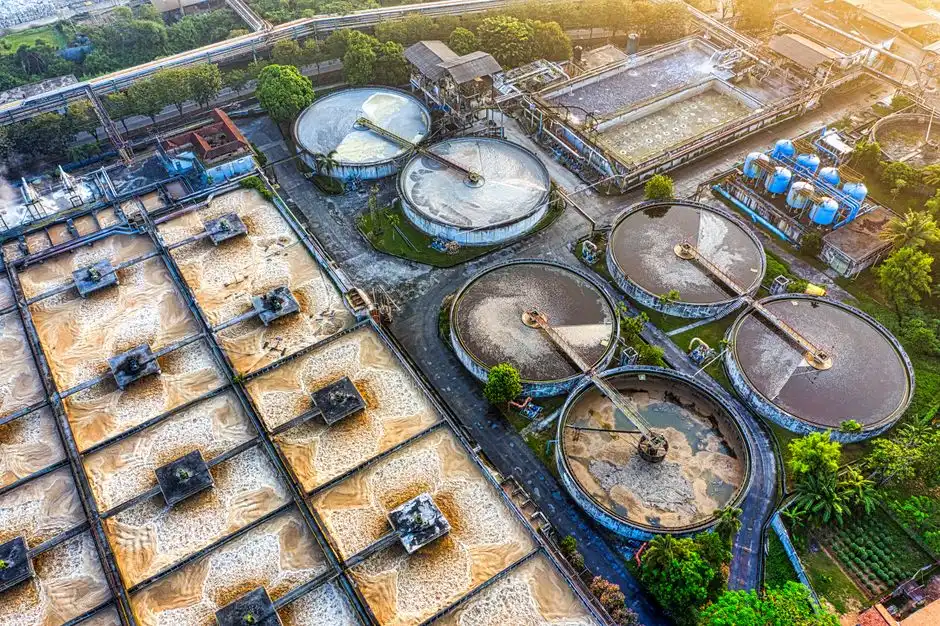
Abu Dhabi package plants should be compared by process architecture, installed footprint, reuse capability, maintenance obligations and civil-work boundary—not by the product name alone. A buried plant may save above-ground space but transfer more risk and cost into excavation, structural design, lifting and commissioning.
| Architecture | Process and site implications | Reuse and expansion considerations | Main procurement risks |
|---|---|---|---|
| Buried A/O | Integrated anoxic/aerobic contact oxidation, sedimentation and disinfection; below-grade installation with landscaping above | Suited to residential sites prioritising surface recovery; phased expansion depends on reserved reactor and pipework capacity | Groundwater, buoyancy, excavation, shoring, dewatering, access and buried commissioning |
| MBR | Biological treatment with submerged PVDF membrane filtration; catalogue capacity 10–2,000 m³/day and filtration below 1 μm | Space-efficient and suitable for demanding approved reuse; membrane replacement and module additions must be planned | Membrane fouling, energy demand, cleaning, replacement cost and specialist service |
| SBR | Fill-and-draw biological treatment suited to variable hydraulic loads | Can suit phased or variable applications; reuse suitability depends on downstream treatment and disinfection | Cycle control, settling performance, redundancy and operator attention |
| Other modular processes | Emvees lists MBBR, SAFF and extended aeration among UAE options | Selection should follow wastewater characteristics, reuse target, footprint and staged growth | Comparability of guarantees, civil scope, local support and long-term consumables |
The WSZ A/O architecture is attractive where below-grade installation is central to the development. Its integrated arrangement reduces the number of above-ground treatment structures, but it still requires a coordinated civil design. It should not be treated as an equipment-only installation.
The MBR architecture adds membrane separation to biological treatment. The supplied catalogue specifies submerged PVDF membranes, filtration below 1 μm and a 60% footprint reduction relative to conventional systems. Those are useful screening attributes, but the buyer still needs a defined influent duty, membrane design flow, cleaning regime, redundancy and replacement exposure.
HydropureWater’s 2026 UAE guide describes SBR as flexible for variable hydraulic loads and comparatively affordable, while noting that MBR is increasingly preferred for higher-quality reuse. Emvees independently lists MBBR, MBR, SBR, SAFF and extended aeration, reinforcing that process suitability should precede proprietary selection.
The evidence does not establish a universally compliant effluent limit or guarantee that one architecture will pass EAD review. The applicable discharge or reuse permit, current local requirements and project-specific wastewater data must control the process selection.
Design for Abu Dhabi Climate, Reuse and Site Constraints
High ambient temperatures can accelerate biological activity, but uncontrolled process temperatures may inhibit it; HydropureWater’s 2026 UAE engineering guide therefore recommends engineering measures that prevent biological-process overheating. The supplier should explain how temperature, aeration, recirculation and equalisation are managed under the project’s summer duty.
Material selection also needs a site-specific corrosion assessment. HydropureWater recommends Stainless Steel 316 for wetted parts and structural skids on systems within 5 km of the sea to resist chloride-induced pitting. For buried installations, its guide discusses reinforced fiberglass or epoxy-coated carbon steel. Final selection should reflect soil chemistry, groundwater, construction method and the manufacturer’s warranty conditions.
Define reuse routes before finalising the process. Landscaping, irrigation, flushing and cooling are distinct from potable production, and each may impose different monitoring, reliability and disinfection requirements. Obtain the EAD discharge or reuse permit conditions and present them as measurable acceptance criteria. Emvees identifies landscaping, irrigation, flushing and other approved non-potable applications as possible uses, subject to the applicable regulations.
Do not leave sludge handling outside the tender. The buyer must identify who will remove, dewater, stabilise, transport and dispose of waste, and where each responsibility begins and ends. Equipment for thickening, solids separation and sludge management should be scoped where necessary; a high-efficiency sedimentation tank can be evaluated where process design requires solids separation, while any filtration duty should be considered separately.
The climate and reuse decisions also affect redundancy. A single unit may satisfy the initial duty but create an unacceptable outage risk. Require the supplier to state installed capacity, treatment capacity, duty allocation, standby arrangements, storage strategy and behaviour during power or equipment outages.
Build the Permit and Commissioning Plan Before Ordering Equipment
Permitability and operational readiness should be contractual work packages, not post-order activities. HydropureWater’s 2026 guide describes four stages: a pre-application meeting to define limits; technical-design and EIA submission for No Objection Certificate issuance; supervised construction and installation; and testing, commissioning and an operational-licence audit.
| Stage | Buyer requirement | Evidence to place in the contract |
|---|---|---|
| Pre-application | Confirm the authority, discharge route, reuse destination and applicable criteria | Meeting record and agreed compliance basis |
| Design and approval | Align process selection, hydraulic calculations, civil design and EIA | Submission set, comments log and approved NOC |
| Construction | Define supervision, inspection, factory and site testing | Inspection and test plan, test certificates and site records |
| Commissioning and licensing | Demonstrate the agreed flow and effluent or reuse performance | Commissioning protocol, performance results, training records and acceptance certificate |
The same guide reports that Abu Dhabi approvals may take up to 9 months for complex industrial projects. That is not a universal housing-development approval period, so the project programme must be based on direct confirmation with the relevant authority rather than copied from the guide.
Require PLC-based controls and remote GPRS/4G monitoring, consistent with HydropureWater’s 2026 UAE specification guidance. Define the alarms, data retention, access permissions and interface with the development’s power and telemetry systems.
Before final acceptance, obtain factory test records, site commissioning results, performance verification, operator training, maintenance manuals, as-built drawings, electrical and control documentation and a complete spare-parts list. Specify chemical storage, dosing equipment and safety systems where relevant; a supplier can include an automatic chemical dosing system where the approved process requires it.
Disinfection must follow the approved route. HydropureWater’s 2026 guide gives screening costs of $0.02/m³ for chlorine, $0.05/m³ for UV and $0.10/m³ for ozone, but it does not establish that any one method is required for this housing project. Evaluate a UV sterilizer for water treatment against the permit, reuse application, site utilities and lifecycle risks rather than cost alone.
Compare Lifecycle Cost and Procurement Risk
Budget comparison should use the same flow basis, duty, effluent or reuse target, civil boundary, warranty and service scope for every bid. HydropureWater’s 2026 UAE guide gives screening CAPEX of $1,000–$3,000 per m³/day for UAE package plants, with MBR at the higher end because of membrane costs and A/O and SBR generally more affordable. These are market-screening benchmarks, not quotations for an Abu Dhabi housing project.
The guide also reports a 15–20% premium for buried systems over skid-mounted units because excavation, shoring and dewatering add civil cost. A buried bid should identify which of those works are included and the contractor’s risk position if groundwater or unsuitable soil is encountered.
For operating-cost screening, HydropureWater cites average energy use of 0.5 kWh/m³, approximately $0.12/m³ in energy-related OPEX, and chemical costs of $0.05–$0.15/m³. These figures should be tested against the proposed technology, local tariffs, reuse value, membrane cleaning and labour.
A project case in the same guide is relevant but not universal: HydropureWater field data for 2025 reports approximately $2 million in capital savings for a 200 m³/day MBR package plant in Abu Dhabi by eliminating a 4 km municipal pipeline extension, together with a 25% annual OPEX reduction from reuse for district cooling and landscaping. The buyer should verify whether the same network boundary, avoided infrastructure and reuse credits apply to the development under review.
| Cost element | Bid treatment |
|---|---|
| Equipment and installation | State duty, included ancillaries, freight, erection, testing and exclusions |
| Civil and site works | Separate excavation, shoring, dewatering, access roads, chambers, landscaping and connections |
| Utilities and services | Price power, backup power, water, laboratory support, operator labour and remote monitoring |
| Consumables and maintenance | Price membranes, media, chemicals, filter elements, lubrication, wear parts and disposal |
| Compliance and ownership | State permit fees, insurance, training, documentation, warranty and operator requirements |
For MBR bids, include RO and UF membrane and filter elements as an explicit replacement and consumables scope. For all bids, require a priced spares schedule covering water-treatment parts, valves and filter media, along with lead times and local availability.
Score Suppliers on Evidence, Support and Long-Term Performance
A supplier scorecard should reward verifiable technical fit and operating support rather than catalogue range. HydropureWater’s 2026 UAE guide recommends requesting at least three references for UAE projects of similar scale and verifying those references directly. Confirm wastewater characteristics, flow, reuse route, operating period, support arrangement and whether the reference was supplied by the manufacturer or operated directly by the client.
Use the confirmed design brief as the principal scoring basis. Assess the proposed process against measured flow, peak factor, wastewater characteristics, reuse target, footprint, delivery route and permit conditions. Require each bidder to identify non-compliance, unresolved assumptions and design margins in its technical response.
Evaluate local spares availability and contractual response commitments. HydropureWater highlights 48-hour spare-parts response as a procurement example, but it is not a universal supplier standard; make the applicable response time, call-out charge, parts availability and escalation route contractual.
Check membrane or biological-media warranties, operator training, maintenance support and sludge-handling responsibilities. For an MBR, require the cleaning schedule, membrane-fouling response, replacement interval assumptions and associated price basis. For every process, require a complete spare-parts list and recommended stock.
Finally, require a supplier-provided process guarantee, commissioning protocol, factory and site test results, and complete electrical, mechanical and control documentation. Use the UAE package wastewater treatment costs and supplier checklist to structure the tender, but require each bidder to complete it with project-specific evidence rather than accept generic compliance statements.
Frequently Asked Questions
How much does a packaged sewage treatment plant cost for a housing development in Abu Dhabi in 2026?
Use HydropureWater’s 2026 UAE screening estimate of $1,000–$3,000 per m³/day for package-plant CAPEX, with MBR generally at the higher end. This is not a project quotation. Ask bidders for itemised prices on the same design flow, duty cycle, reuse target, civil boundary, commissioning scope, warranty and exclusions. Request separate pricing for land, civils, power, sludge disposal, laboratory services, operator labour, membrane replacement, insurance and permit fees.
Should an Abu Dhabi housing development choose a buried A/O package plant or an MBR system?
Choose a buried A/O plant when below-grade installation, surface landscaping and a conventional treatment train are the priorities. Consider MBR where land is tighter or approved reuse quality is more demanding. Compare both against the same measured flow, wastewater characteristics, reuse permit, footprint, civil risk and lifecycle cost. The underground A/O package sewage treatment plant and MBR wastewater treatment system for housing reuse should be evaluated on those project criteria, not on capacity labels alone.
How do I size a packaged sewage treatment plant for an Abu Dhabi housing project?
Separate average daily flow, peak-hour flow and selected treatment capacity. Use HydropureWater’s cited 1.5×–2.0× peak-flow allowance only as an initial check, then complete an hourly hydraulic model using occupancy, phasing, pumping controls, infiltration and groundwater conditions. Add wastewater sampling, future growth and modular expansion. Ask each bidder to state its design flow, peak treatment duty, hydraulic and organic loading, redundancy and expansion interface.
What should a buyer request from an Abu Dhabi packaged-STP supplier before awarding the contract?
Request a compliant process design, confirmed duty basis, process guarantee, factory test results, commissioning protocol, operator training, maintenance manuals, as-built drawings, PLC and remote-monitoring specification, warranty and priced spares list. Obtain at least three UAE references of similar scale and verify them directly, as recommended in HydropureWater’s 2026 guide. Contractually define sludge handling, response times, membrane service and permit-submission responsibilities.
Can treated wastewater from an Abu Dhabi housing development be reused for landscaping?
Yes, if the treated-effluent route and quality are approved for the intended use. Emvees identifies landscaping and irrigation as approved non-potable reuse applications, subject to applicable UAE regulations. Before selecting the process, obtain the EAD reuse or discharge conditions and convert them into measurable acceptance criteria for flow, monitoring, disinfection, storage and reliability. Potable production requires a separate assessment and must not be inferred from ordinary reuse approval.