What Can Tho's 2026 wastewater targets mean for treatment projects
Domestic sewage treatment in Can Tho must be planned as both a collection and treatment project. Can Tho’s Plan No. 503/KH-UBND, dated October 22, 2026, sets a 2030 target for collecting and treating 70% of urban domestic wastewater to environmental standards and treating wastewater at 100% of industrial clusters. It also calls for reviewing investment needs and constructing or upgrading collection and treatment systems during 2026–2030. These city-wide indicators do not specify an individual plant’s capacity, outlet quality or permit conditions. Equipment procurement therefore needs a separate site-specific design basis and confirmation of the current discharge requirements, including the Vietnam wastewater compliance requirements.
| Plan item | 2030 target or requirement | What it means for a project |
|---|---|---|
| Urban domestic wastewater | 70% collected and treated to environmental standards | Collection infrastructure and treatment capacity must be developed together; the percentage does not allocate capacity to any individual site. |
| Industrial clusters | 100% treated to environmental standards | Industrial-cluster projects require a separate wastewater and discharge basis; this target does not establish the domestic-plant design flow. |
| Wastewater infrastructure | Review investment needs and construct or upgrade collection and treatment systems during 2026–2030 | Equipment RFQs should align with civil infrastructure, connection timing and an identified receiving route. |
The distinction matters. A 70% collection target is a city-wide service objective, not a process-performance specification. For a particular development, the buyer must establish the wastewater flow and load, the receiving sewer or receiving water, the applicable current standard, and the discharge permit conditions. A treatment unit cannot compensate for an incomplete collection network, while a collection program without treatment capacity cannot deliver the stated environmental outcome.
Start with the wastewater and septage actually reaching the site
The design flow must be based on verified flows and loads, not nominal population alone. A 2017 Can Tho septage-co-treatment presentation cited 1,240,000 residents, 205,000 households, estimated septage generation of 17,000 m³/month, or 566 m³/day, but only 200 m³/month actually collected. Those figures are historical city-scale context from March 2017, not current project inputs; they nevertheless demonstrate why separate septage and sewage streams cannot be treated as interchangeable.
Request current household, commercial and institutional flow records, meter histories and operating observations. Record average, peak and seasonal flows, then characterize BOD₅, COD, TSS, ammonia nitrogen, total nitrogen, total phosphorus, pH, fats and grease, sulfide and coliforms. Sampling points and sampling periods should be agreed before procurement because a single household sample will not represent a mixed sewer or a receiving septage stream.
| Design input | Evidence to obtain | Decision affected |
|---|---|---|
| Domestic sewage flow and load | Current household, commercial and institutional flow records; BOD₅, COD, TSS, nitrogen, phosphorus, pH, fats and grease, sulfide and coliform characterization | Process selection, biological loading, solids handling and final capacity |
| Septage stream | Independent volume and concentration measurements, including the settled-liquid fraction and delivery schedule | Receiving capacity, equalization, pretreatment and nutrient removal |
| Peak and infiltration | Peak-hour factor, stormwater ingress, groundwater infiltration and observed wet-weather variation | Equalization, hydraulic retention, pumping and overflow protection |
| Development plan | Septic desludging frequency, phased occupancy and future non-residential connections | Installed capacity, expansion provisions and receiving-station controls |
Where septage is delivered independently, its concentration and volume can impose a disproportionate nutrient and solids load. Specify a controlled reception route, not an assumption that the plant can absorb any tanker load. A mechanical wastewater screening system may form part of the pretreatment assessment, but the selected screen must be matched to the actual solids and septage-delivery conditions.
Choose a treatment process that matches the discharge route
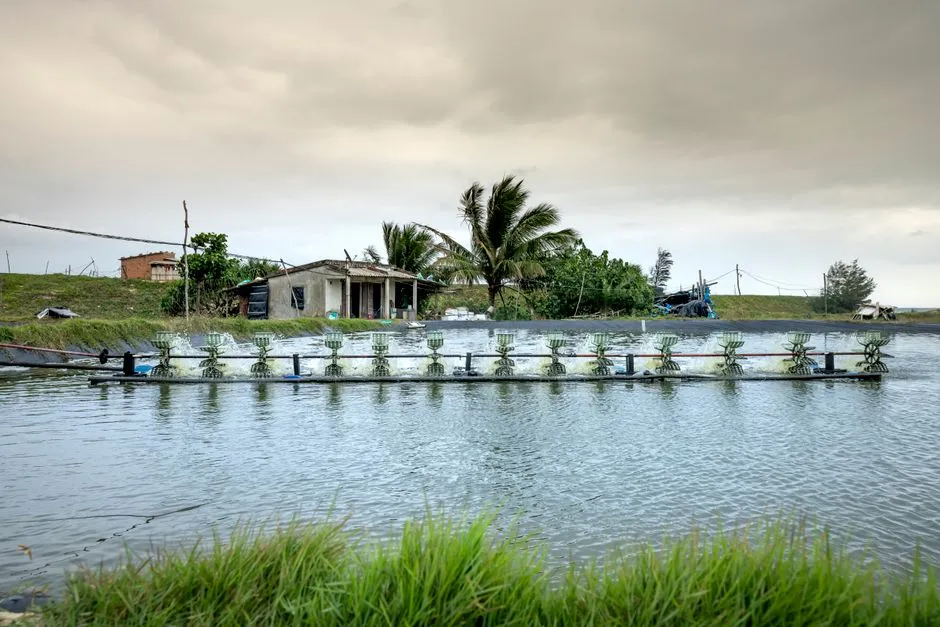
The first process decision follows the discharge route: connection to a municipal sewer with confirmed capacity, decentralized treatment for a defined estate or development, or a temporary package installation before permanent sewer connection. Each route has different constraints on pretreatment, biological retention, solids removal, disinfection, sludge handling and monitoring.
For a decentralized domestic sewage application, a buried A/O package sewage treatment plant follows a route of preliminary screening and flow equalization, anoxic and aerobic biological treatment, sedimentation, disinfection and controlled sludge removal. The WSZ catalog boundary is 1–80 m³/h, with anoxic/aerobic biological contact oxidation, sedimentation and disinfection integrated in one buried unit. Its small above-ground footprint can reduce installation disruption, but the unit still needs reliable headworks, power, sludge access, odor control and an approved discharge route.
For a larger decentralized project or a water-reuse-oriented application, an MBR membrane bioreactor combines activated sludge with submerged membrane filtration. The cited MBR catalog boundary is 10–2,000 m³/day and uses submerged PVDF membranes with a filtration boundary below 1 micrometre. That membrane boundary is a product characteristic, not an effluent guarantee.
| Decision condition | Architecture to assess | Core design checks |
|---|---|---|
| Municipal sewer has confirmed spare capacity | Connection to the receiving network | Connection approval, upstream headworks and ownership of downstream capacity |
| Defined estate requires decentralized treatment | Buried A/O package plant or MBR | Verified flow and loads, biological retention, solids separation, disinfection, sludge removal and outlet criteria |
| Permanent sewer connection is delayed | Temporary package installation | Installation duration, mobility, bypass route, final-connection interface and operating permit |
No catalog system automatically satisfies a Can Tho wastewater discharge permit. The selected design must be checked against current discharge limits, the receiving-water category, the permit conditions and site-specific performance tests.
Compare decentralized options before requesting a quotation
A buried A/O plant, an MBR system, a conventional decentralized plant and a temporary containerized or trailer-mounted unit should be compared against the same project constraints. Equipment price alone is not comparable: civil works, connections, lifting systems, pretreatment, sludge handling, controls, commissioning and monitoring may determine the installed outcome.
| Option | Main engineering strengths | Principal constraints to verify |
|---|---|---|
| Buried A/O package plant | Integrated biological treatment, sedimentation and disinfection; limited above-ground footprint; WSZ selection envelope of 1–80 m³/h | Geology, groundwater, burial depth, access for sludge removal, flood protection, power and outlet approval |
| MBR system | Activated sludge followed by submerged membrane separation; WSZ comparison reference from the separate packaged sewage treatment plant selection guide; MBR selection envelope of 10–2,000 m³/day | Membrane maintenance, energy demand, solids concentration, operator capability, cleaning and replacement provisions |
| Conventional decentralized plant | Separate civil stages can provide greater process visibility and site-specific flexibility | More land, civil interfaces, construction coordination and decentralized maintenance responsibility |
| Containerized or trailer-mounted unit | Can provide a temporary or relocatable treatment route | Duration of deployment, transport and lifting, noise and odor, temporary utilities, bypass and final connection |
Buried A/O units emphasize compactness and integrated biological retention. MBR adds membrane solids separation and is relevant where the project objective requires tighter solids control or reuse. Conventional systems allow more separation of civil and biological components but increase site and interface requirements. Temporary packaged systems are operationally distinct: they require a clear commissioning date, operating period, decommissioning obligation and plan for connection to the permanent network.
The comparison should also address odor control, operator attendance, automation, sludge handling, reuse potential, flood exposure, expansion and access. A compact unit reduces construction disruption; it does not remove the need for headworks, reliable power, sludge access, odor control or an approved discharge point. Treat all product capacities as selection envelopes, not design guarantees.
Design for Can Tho conditions, septage and operational resilience
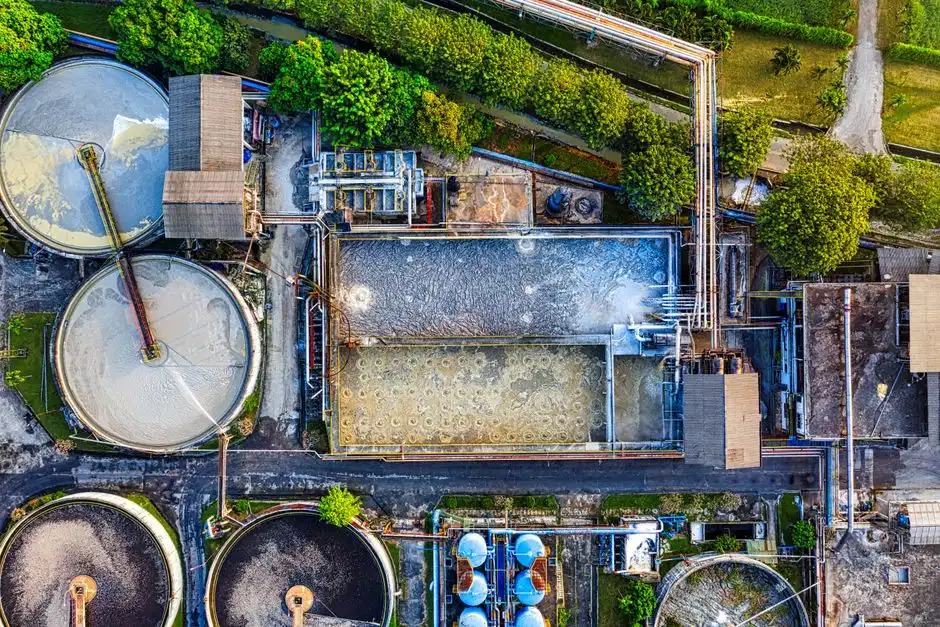
Flood exposure, high groundwater, intense rainfall and restricted access must be resolved through project-specific engineering. The supplied research does not provide a universal flood elevation, groundwater level or rainfall design return period for Can Tho, so none should be copied into an equipment specification. The buyer must obtain site survey, hydrological and flood-risk information and use the receiving authority’s current design criteria.
Provide screening or grit control where rags, plastics and grit could affect pumps, valves or biological stages. The receiving point also needs controlled septage admission and a defined response when incoming concentration or volume exceeds the operating envelope. Mechanical solids separation can be considered in the plate-and-frame sludge dewatering scope where the selected process and future septage duty require it.
The March 2017 Can Tho septage-co-treatment presentation proposed phased testing: begin with the liquid fraction of settled septage at 2%, then move upward toward about 5% while monitoring effluent parameters specified by the government regulation. It also anticipated mechanical dewatering when septage volume exceeded 2%. These are dated concept values, not current acceptance criteria. Actual septage acceptance must be set from the selected plant’s verified capacity, current approval and measured sewage and septage characteristics.
The same 2017 presentation quoted QCVN 14:2008 as its historical discharge table. Its listed Class A values included BOD₅ of 30 mg/L, TSS of 50 mg/L, ammonium nitrogen of 5 mg/L, total phosphorus of 6 mg/L and total coliforms of 3,000 MPN/100 mL. These values must not be presented as confirmed 2026 permit limits. Confirm the current applicable standard and receiving-water category before fixing guaranteed outlet parameters or a wastewater discharge permit.
Operational resilience also requires odor control, safe access, backup power, remote monitoring and preventive maintenance for pumps, aeration, membranes where applicable, sedimentation and disinfection. Energy and operating data should be included in handover; the wastewater-plant energy monitoring system can form part of the monitoring scope, but its claimed savings should not be substituted for site-specific validation.
Build an RFQ that suppliers can quote consistently
A comparable RFQ must specify the design basis and require bidders to close every interface. Asking only for “a complete treatment plant” and a unit price produces quotes with incompatible civil, pretreatment, sludge and commissioning assumptions.
- State the verified average and peak design flows, wastewater loads, septage contribution, service period, site constraints and intended outlet.
- Require the process description, hydraulic retention basis, biological loading basis and a bill of the supplied equipment scope.
- Request guaranteed inlet and outlet parameters, the applicable standard offered by the supplier, test procedures and commissioning tests.
- Define civil works, power, drainage, odor control, sludge handling, chemicals, controls, spare parts, training, warranty and maintenance exclusions.
- Price site-specific access, burial depth, flood protection, high groundwater, septic reception and temporary bypass arrangements.
| RFQ schedule | Required supplier response | Buyer check |
|---|---|---|
| Design basis | Average and peak capacity, hydraulic retention, biological loading and process flow diagram | Capacity follows verified site data and the selected outlet, rather than a catalog maximum |
| Performance | Guaranteed inlet and outlet parameters, applicable standard, sampling method and acceptance procedure | Values are tied to the current permit and receiving-water category |
| Installed scope | Equipment, civil interfaces, utilities, sludge route, controls, commissioning and training | Exclusions are explicit and priced as alternatives |
| Site and operating risk | Flood, groundwater, access, septic reception, bypass, spares, warranty and O&M support | Local operating evidence and clear responsibility for each interface |
Require an acceptance procedure and the proposed evidence package. Broad claims such as “automatic” or “unattended” should not substitute for defined alarm response, operator attendance, test results, O&M documentation and a method for demonstrating performance. The cost-basis lessons in this technical supplier guide reinforce the need to compare complete installed scope, while the engineering cost breakdown shows why civil and operating exclusions must be visible.
Frequently Asked Questions
What inputs are needed before choosing a domestic sewage treatment capacity in Can Tho?
Obtain verified average and peak flows, wastewater loads, septage volume and concentration, peak-hour conditions, stormwater or groundwater ingress, planned development, site constraints and the intended receiving route. Select capacity only after the supplier has explained how those inputs determine hydraulic retention, biological loading, pretreatment and sludge handling. Product capacity figures are selection envelopes, not design guarantees.
How should a buyer select a sewage treatment supplier?
Compare the complete installed scope, guaranteed performance tied to current discharge requirements, commissioning evidence, local operating references, O&M support, spare-parts availability and sludge-management provisions. Require exclusions to be identified and priced rather than treating a narrow equipment quotation as the full project. Verify who remains responsible for civil interfaces, power, drainage, monitoring, permits and performance testing.
What is the cost and budget implication of selecting a packaged treatment system?
Request a quotation based on the verified design basis and installed scope, including civil works, connections, lifting, pretreatment, sludge handling, controls, commissioning and monitoring. No supported market price is available in the supplied research, so a defensible budget cannot be calculated from equipment capacity alone. Ask suppliers to separate equipment, civil works, utilities, consumables, O&M, spares, warranty and site-risk allowances.
Can QCVN 14:2008 and the 2017 septage proposal be used for 2026 procurement?
Use QCVN 14:2008 only as the historical standard quoted in the March 2017 Can Tho presentation, and use the 2% starting point and movement toward about 5% only as the historical phased concept. Before procurement, confirm the current permit, receiving-water category and plant-specific septage acceptance with the competent authority. The selected design must be evaluated against those confirmed requirements, not the dated values alone.