
How to Choose Between DAF and a Clarifier
For mining and metals wastewater in Laceyville, factories should not choose between dissolved air flotation and a clarifier using TSS alone. Choose a lamella clarifier when dense mineral fines and metallurgical solids dominate and settle reliably; choose DAF when oil, grease, colloids, flotation reagents or buoyant precipitates are the main targets after conditioning. For combined streams, a clarifier can remove the settleable bulk load first, with DAF polishing the colloidal and buoyant fraction. In 2026, defensible selection requires representative wastewater testing, jar testing and a treatment-train review—not a generic TSS removal claim.
Total suspended solids combines particles that behave differently in water. It does not establish whether a particle will settle, float, require coagulation and flocculant dosing, or remain dissolved. The decision should separate three questions:
- Bulk solids: Are dense mineral fines and metallurgical solids dominant? Evaluate gravity settling, beginning with a conventional or high-efficiency lamella clarifier.
- Polishing: Are emulsions, conditioned colloids, residual flotation reagents or relatively buoyant precipitates significant? Evaluate an industrial DAF system for mining wastewater.
- Dissolved metals: Are metals present in solution rather than as particulate matter? Neither separation mechanism removes them without the necessary chemical treatment and downstream polishing.
A combined stream may justify a clarifier followed by a DAF polisher. The clarifier handles the dense, settleable bulk load; DAF captures the fraction that escapes settling after chemical conditioning. That approach must be assessed as a train with its own hydraulic, chemical and sludge-handling requirements.
| Decision basis | First mechanism to evaluate | Required site evidence |
|---|---|---|
| Dense, rapidly settling mineral solids | Clarifier or lamella clarifier | Particle-size distribution, settling behavior, TSS, flow profile and sludge-withdrawal requirements |
| Oils, emulsions, conditioned colloids, reagents or buoyant precipitates | DAF | Oil and grease, pH, temperature, chemical-response testing and flotation behavior |
| Both settleable solids and buoyant or colloidal material | Clarifier followed by DAF | Stream-specific mass balance, hydraulic loading, chemical demand and solids route |
| Dissolved metals | Chemical treatment plus downstream solids removal and polishing | Dissolved-metal concentrations, pH adjustment, precipitation or other treatment chemistry |
Match the Equipment to the Wastewater Stream
Tailings-thickener overflow, mill discharge and metallurgical sludge should first be evaluated as gravity-settling streams because their relevant contaminants are commonly dense mineral solids. A conventional or lamella clarifier can provide bulk-solids removal, with performance governed by settling behavior, hydraulic loading and underflow handling. This does not justify treating every mill stream as identical; reagent carryover, colloids and oil can change the balance between the required mechanisms.
Oil-bearing wash water, mobile-equipment runoff, flotation-reagent carryover and buoyant metal precipitates are stronger candidates for DAF. Equalization should be evaluated where batch discharges or variable chemistry would disturb chemical dosing and hydraulic loading. Hahn’s Fundamentals of Wastewater Flotation (2010), as summarized in the supplied research, states that equalization stabilizes wastewater characteristics and improves treatment efficiency.
Wash-water and finishing streams containing dense fines alongside emulsions, colloids or buoyant solids warrant a clarifier-to-DAF sequence. Requiring one unit to perform both functions can leave either hydraulic capacity or separation performance inadequate. Acidic drainage or neutralization overflow requires a fraction-specific review: if metals remain dissolved, particulate separation cannot satisfy the metal-removal objective. If metals have precipitated, their buoyant or settleable characteristics determine which downstream mechanism applies.
| Representative stream | Dominant fraction | Engineering direction | Key caveat |
|---|---|---|---|
| Tailings-thickener overflow | Dense mineral fines | Evaluate lamella or conventional clarification; consider DAF polishing if the analysis identifies a buoyant or colloidal escape fraction | TSS alone does not show settling velocity |
| Mill discharge and metallurgical sludge | Mineral solids, potentially with reagent carryover | Base the train on stream characterization and a solids mass balance | Do not assume mill streams have one stable composition |
| Oil-bearing wash water and equipment runoff | Free or emulsified oil and buoyant solids | Evaluate equalization, chemical conditioning and DAF | Emulsified oil may require a specific chemical program |
| Finishing or combined wash water | Dense fines plus colloids, emulsions or buoyant solids | Evaluate clarification followed by DAF | Both stages require independent hydraulic checks |
| Acidic drainage or neutralization overflow | Dissolved metals and/or precipitated solids | Define chemical treatment first, then select solids separation and polishing | Clarifier or DAF alone does not remove dissolved metals |
If the reuse objective requires removal of suspended contaminants beyond the flotation stage, evaluate UF polishing for clarified mining wastewater. If the objective is demineralized process water, assess whether conventional clarification or flotation is only pretreatment before a more rigorous purification step, such as the industrial RO water purification configuration.
Compare the Treatment Mechanisms
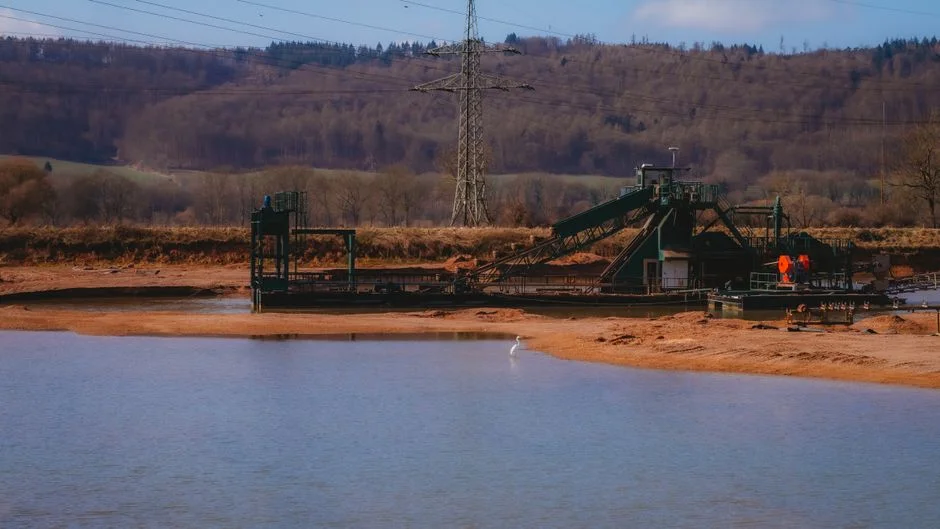
Clarification relies on gravity settling, and performance is controlled by particle settleability, tank geometry, allowable surface overflow rate and sludge withdrawal. Lamella plates increase effective settling area within a smaller footprint, but they do not change the underlying gravity-settling mechanism. They remain a compact choice for separable mineral solids while leaving colloidal, emulsified and dissolved fractions for downstream treatment.
DAF attaches micro-bubbles to conditioned floc, floats the aggregate and removes the resulting blanket with a skimmer. Clearwater Industries describes bubbles measuring 30–50 microns in the supplied research. Aries independently reports approximately 30 µm bubbles generated when recycle water is pressurized to approximately 100 psi. These are source-specific design descriptions, not guaranteed bubble sizes for every mining installation.
DAF performance depends on chemical pretreatment, recycle pressure and the flotation behavior of the actual contaminants. Fluence’s flotation guidance states that DAF is not well suited to sources with high levels of heavier, non-floating particles such as silt and clay. Bulk clarification is an important predecessor when dense mineral fines dominate.
| Design factor | Clarifier or lamella clarifier | DAF |
|---|---|---|
| Separation mechanism | Gravity settling; lamella plates increase effective settling area | Micro-bubble flotation of conditioned floc |
| Strongest fit | Dense mineral fines and metallurgical solids that settle reliably | Oils, conditioned colloids, flotation reagents and buoyant precipitates |
| Main performance variables | Surface overflow rate, settling velocity, feed arrangement and sludge withdrawal | Chemical condition, hydraulic loading, recycle pressure, recycle rate, air-to-solids ratio and flow rate |
| Principal limitation | Does not reliably remove emulsions, buoyant colloids or dissolved metals | Poor fit for heavy, non-floating silt and clay; does not remove dissolved metals without other treatment |
| Solids route | Underflow to thickening or dewatering | Floated sludge to collection, thickening or dewatering |
| Typical role | Primary bulk-solids removal or first stage of a combined train | Primary separation for suitable streams or polishing after clarification |
The chemical package should be part of the mechanical comparison. For a DAF train, specify an automatic chemical dosing skid capable of delivering the pH adjustment, coagulant and flocculant program established through testing. A supplier’s generic chemical consumption figure cannot substitute for jar-test results on Laceyville wastewater.
Build the Treatment Train Around the Permit and Reuse Goal
A treatment train should be designed around the discharge or reuse objective, not around a single tank. Sampling must cover production shifts, batch discharges, wash-water events and other operating conditions that materially change flow or chemistry. The characterization program should include TSS, particle-size distribution, pH, temperature and dissolved metals such as copper, lead and zinc, with oil and grease measured where equipment runoff or wash water is present.
- Characterize the stream: Establish constituent fractions and flow variation using representative samples, not one nominal TSS value.
- Stabilize the flow: Add equalization where variable flow or chemistry would destabilize dosing, settling or flotation.
- Condition where justified: Establish pH, coagulant and flocculant requirements through bench-scale testing.
- Separate the target fractions: Use clarification for settleable solids, DAF for suitable buoyant or conditioned material, or both in sequence.
- Handle the solids: Include collection, thickening, storage and dewatering in the design.
- Meet the final use: Add biological treatment, filtration, membrane polishing or other required steps if clarified or floated effluent does not meet the reuse or discharge objective.
For DAF, evaluate pH control, coagulation, flocculation, recycle pressure, hydraulic loading, flow rate and air-to-solids ratio. Clearwater Industries cites 15–45 seconds for dosing and flocculation contact, with actual contact time determined empirically. For a clarifier, evaluate surface overflow rate, particle settling velocity, feed arrangement, sludge-withdrawal design and underflow handling. These are supplier calculations that must be tied to site data, not adopted as generic operating values.
Where reclaimed water must be reused, plan filtration or membrane polishing and any biological stage in the initial RFQ. Do not assume DAF or clarified effluent alone is reusable. Fluence’s supplied research identifies process-water and material recycling as documented DAF applications in mining waste treatment, but it also notes that downstream solids removal is typically still required. Include sludge filter press for mining wastewater where the selected solids-handling route requires mechanical dewatering.
| Train element | Information required | Procurement consequence if omitted |
|---|---|---|
| Characterization and equalization | Flow profile, TSS, particle size, pH, temperature, dissolved metals, oil and grease | Unstable feed, unsuitable chemical doses and uncertain hydraulic loading |
| Clarifier, where selected | Surface overflow rate, settling velocity, effective area, feed and sludge withdrawal | Solids carryover or underflow instability |
| DAF, where selected | Hydraulic loading, recycle rate, air-to-solids ratio, operating pressure and chemical program | Poor flotation and unreliable performance |
| Solids handling | Sludge characteristics, target solids concentration and dewatering route | Separation equipment cannot be evaluated as an operating train |
| Reuse or final polishing | End-use quality requirements and subsequent treatment steps | Separated water remains unsuitable for the intended reuse or discharge route |
Set the Sizing, Testing and Supplier-Selection Requirements
The RFQ should require a wastewater-specific design basis and evidence that the proposed equipment will meet it. A single average TSS value is not enough because it cannot show particle settling behavior, oil flotation, chemical demand or dissolved-metal loading. Aries states that wastewater samples can be used in bench-scale jar testing to determine removal efficiencies, flotation characteristics, DAF design variables and the chemical program. Require the resulting laboratory report rather than accepting a proposed dose without supporting data.
For each DAF proposal, request the hydraulic loading, recycle rate, air-to-solids ratio, operating pressure, selected materials of construction, skimming arrangement and sludge-transfer provisions. For each clarifier proposal, request the surface loading rate, effective settling area, feed and sludge-withdrawal design, underflow solids target and treatment of variable flows. Published product figures must remain identified as product-specific; the supplied research does not establish universal 2026 design values for mining wastewater.
Qualification should include comparable metal-bearing effluents, pilot data where available, commissioning support, controls scope and automatic chemical-dosing support. Materials must be matched to the actual stream rather than selected from a generic metallurgy list. Ask each bidder to explain how equalization, chemical preparation, aeration or recycle, power, sludge transfer, dewatering and final polishing are integrated. That prevents a tank price from obscuring the cost of an incomplete train.
The supplied research provides no universal 2026 unit price for either option. Request an itemized quotation covering equipment, installation utilities, controls, chemicals, power, maintenance, commissioning and sludge handling. For a budget comparison, use the measured flow profile, constituent profile, utilities available and required sludge route. The 2026 DAF operating cost breakdown can help structure operating-cost questions, but it should not replace a stream-specific quotation.
Frequently Asked Questions
How much does a DAF or clarifier cost for mining wastewater in
Frequently Asked Questions
How much does a DAF or clarifier cost for mining wastewater in Laceyville?
Capital costs for mining wastewater treatment systems vary significantly based on flow rates and contaminant concentrations, but typical turnkey installations for a DAF unit range from $250,000 to $800,000 for mid-sized operations. Lamella clarifiers are generally less expensive in terms of initial procurement, often ranging from $150,000 to $500,000, though these figures exclude the necessary chemical dosing skids, sludge handling equipment, and site-specific civil works required for local Laceyville compliance.
Operational expenditures are the primary differentiator, with DAF systems requiring higher ongoing costs for compressed air, saturation pumps, and specialized flocculants compared to the lower power demand of gravity-based lamella settlers. Suppliers should provide a 10-year total cost of ownership (TCO) analysis that accounts for local utility rates and the specific chemical consumption rates required to meet effluent discharge standards.
Should a mining plant install DAF or a lamella clarifier first?
The decision depends on the density and settling velocity of the suspended solids. If the mining wastewater contains high concentrations of fine, low-density particles or oil and grease, a DAF system should be prioritized as the primary clarification stage to achieve effective separation through micro-bubble attachment. Conversely, if the influent has a high percentage of heavy, inorganic mineral tailings with high settling velocities, a lamella clarifier is the more efficient starting point to minimize energy intensity.
In many modern mining circuits, a hybrid approach is implemented where a lamella clarifier is utilized for primary bulk solids removal, followed by a DAF unit as a polishing step. This configuration minimizes sludge volume and reduces the chemical loading requirements for the more sensitive DAF unit, optimizing the overall process train for complex mineral matrices.
What wastewater data should I give a DAF supplier for accurate sizing?
To ensure proper equipment sizing, provide the supplier with a comprehensive water quality report including total suspended solids (TSS) measured in mg/L, particle size distribution, and chemical oxygen demand (COD) or total organic carbon (TOC). It is critical to specify the temperature range of the influent, as water viscosity fluctuations directly impact bubble rise velocity and saturation efficiency in DAF systems.
Additionally, provide the peak and average hydraulic loading rates (m³/h or GPM), pH levels, and the concentration of any heavy metals or surfactants present in the stream. Providing a representative jar test report, which documents flocculation time, dosage rates, and resulting turbidity levels, will allow the supplier to define the hydraulic retention time (HRT) and saturation pressure required to meet your specific discharge parameters.
Can DAF or a clarifier alone meet a zero-liquid-discharge requirement?
Neither a DAF unit nor a clarifier can achieve zero-liquid-discharge (ZLD) as a standalone technology, as both are primary separation processes designed to remove suspended solids rather than dissolved salts or minerals. ZLD systems require a multi-stage treatment train that includes primary clarification, followed by secondary processes such as membrane filtration (reverse osmosis), evaporation, and crystallization to recover clean water and leave a dry solid residue.
While DAF and clarifiers are essential for pre-treating influent to protect downstream membrane systems from fouling, they represent only the first phase of a ZLD facility. Achieving ZLD mandates a comprehensive balance of mass and energy, typically requiring advanced thermal or mechanical evaporation technologies downstream of the clarification stage to manage total dissolved solids (TDS) concentrations.
How do I evaluate mining wastewater treatment suppliers and compare their proposals?
Standardize your evaluation by requiring all suppliers to submit a proposal based on the same influent parameters and effluent discharge limits. Compare vendors by verifying their experience with specific mining waste streams, such as coal fines, precious metal tailings, or acid mine drainage, and request a detailed performance guarantee regarding the maximum allowable TSS and turbidity in the treated effluent.
Review the technical specifications for metallurgy and material compatibility, ensuring the wetted parts are rated for the corrosion profile of your specific wastewater chemistry, such as high chloride or sulfate content. Finally, compare the proposed chemical consumption rates, maintenance intervals for wear parts like saturation nozzles or scraper blades, and the availability of local technical support to ensure long-term operational reliability in your specific region.