What determines the right package plant for an Ankara housing development?
The best fit for an Ankara housing development depends on design population, peak flow, discharge route and reuse objectives—not simply the number of units. For a conventional estate without planned unrestricted irrigation reuse, evaluate a buried A/O package plant; where higher-quality effluent or irrigation reuse is required, evaluate an MBR skid. HydropureWater’s 2026 Turkish residential guidance uses 150–200 L per capita per day and a 2.0–2.5 peaking factor. Its MBR is catalogued for 10–2,000 m³/day, while the WSZ series is catalogued for 1–80 m³/h, so the comparison must begin with a consistent flow basis.
Arsistek’s Mebuskent Residences project in Ankara demonstrates the value of a defined procurement basis: 150 Persons / Day, completed in 2017, with design, equipment supply, installation and commissioning delivered by one company (Arsistek, 2017). The package was commissioned within 1–4 weeks and reported as 5–10 times faster to install than traditional concrete construction (Arsistek, 2017). That installation result does not remove the need to check the sewer connection or receiving-water permit, current SKKY conditions, expected occupancy and future expansion.
Use the process shortlist as a preliminary screen. A conventional-discharge site can be evaluated around a buried A/O sewage treatment package; a reuse-led or sensitive-discharge project around an MBR wastewater treatment system. Confirm whether the installation is permanent or temporary. Arsistek identifies mass housing and buildings, as well as construction sites and dormitories, as package-plant applications, while its modular approach supports phased expansion (Arsistek, 2017).
Calculate design flow before choosing equipment
Domestic sewage design flow for a housing estate should be calculated from expected occupancy, not inferred from unit count alone. HydropureWater’s 2026 Turkish residential guidance gives 150–200 L per capita per day for Turkish gated communities and a 2.0–2.5 peaking factor for morning and evening demand (HydropureWater, 2026). The calculation structure is:
Design population × selected per-capita daily flow × selected peaking factor = peak design flow.
Use one defensible occupancy case for tender comparison and test the plant against a future occupancy case. Ask each bidder to state whether quoted capacity is average daily flow, peak flow or both; otherwise, an hourly catalogue limit can be mistaken for daily treatment capacity.
| Parameter | Selection basis | Procurement application |
|---|---|---|
| Residential flow | 150–200 L/person/day | Convert design population to average daily sewage flow |
| Peak allowance | 2.0–2.5 times average flow | Check equalization, hydraulic capacity and overflow provisions |
| 200 PE anchor | 30–40 m³/day | Entry point for A/O package selection |
| 500 PE anchor | 75–100 m³/day | Compare A/O and MBR against the same duty |
| 1,000 PE anchor | 150–200 m³/day | Evaluate MBR where reuse is planned |
| Influent BOD₅ | 250–400 mg/L | Basis for biological loading and process guarantee |
| Influent TSS | 300–450 mg/L | Basis for solids capture and sludge handling |
These flow and loading values come from HydropureWater’s 2026 Turkish residential wastewater treatment engineering guide. Its A/O and MBR catalogue bases differ: the WSZ series is listed at 1–80 m³/h, whereas the MBR system is listed at 10–2,000 m³/day (HydropureWater, 2026). Require the supplier to convert the selected hydraulic duty into process treatment capacity, including the stated peak factor and any return sludge or backwash flows affecting the balance.
Compare A/O, SBR and MBR against the project requirements
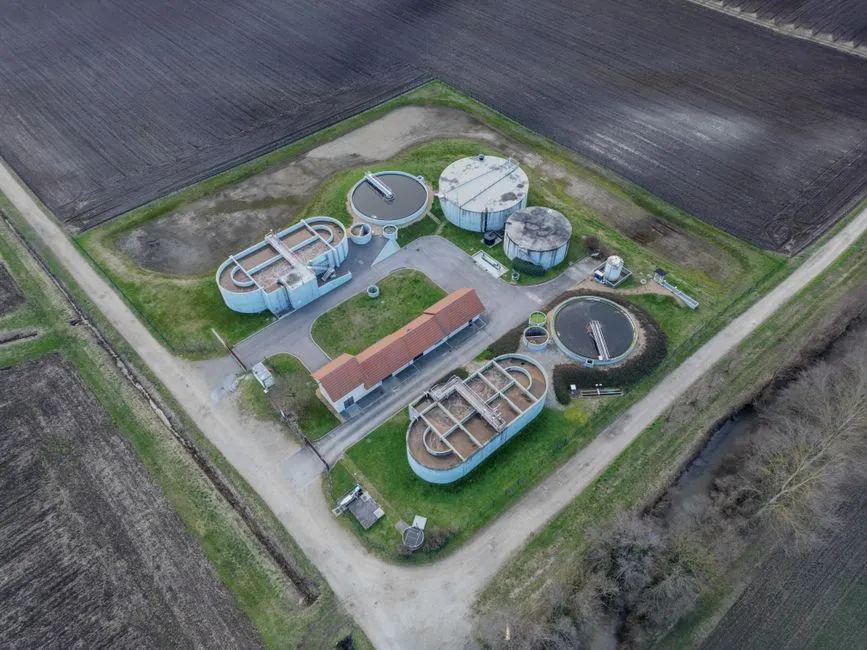
The buried A/O package is the conventional option for Turkish residential sites without planned unrestricted reuse, while MBR is the stronger candidate when the discharge route or reuse application demands more demanding effluent. HydropureWater’s 2026 guide describes the buried A/O process as anoxic and aerobic biological contact oxidation followed by sedimentation and disinfection, packaged as one buried unit. It identifies A/O as the workhorse for 50–500 PE residential sites and reports that it requires no operator presence.
SBR remains an alternative to test against the same site criteria. The Turkish supplier source describes package SBR systems as modular and automated and identifies mass housing and buildings as relevant applications, but the supplied evidence does not quantify SBR effluent performance for this project (sewagewastewater.com, 2026). Require site-specific confirmation of process configuration, treatment guarantees, reuse suitability and operating attendance before selecting SBR.
HydropureWater describes its MBR as activated sludge with submerged PVDF membrane filtration below 1 μm. The system is catalogued for 10–2,000 m³/day and a footprint reported as 60% smaller than conventional systems. Its 2026 guide states that MBR consistently meets the specified irrigation-reuse thresholds in a single process step and typically produces faecal coliform below 100 CFU/100 mL after membrane filtration and disinfection (HydropureWater, 2026). The trade-off is capital cost: the same guide gives an MBR premium of 1.8–2.5 times A/O.
| Decision criterion | Buried A/O package | SBR package | MBR system |
|---|---|---|---|
| Primary evaluation case | Conventional discharge where unrestricted reuse is not planned | Alternative requiring site-specific verification | Reuse, sensitive discharge or high-quality effluent |
| Process arrangement | Anoxic/aerobic contact oxidation, settlement and disinfection | Confirm supplier’s process configuration and guarantees | Activated sludge with submerged PVDF membrane filtration |
| Evidence-based capacity context | WSZ series listed at 1–80 m³/h | No comparable numeric duty supplied in the research | Listed at 10–2,000 m³/day |
| Reuse evidence | 2026 guide positions A/O at 50–500 PE where unrestricted reuse is not planned | No quantified reuse performance supplied | Reported below 100 CFU/100 mL faecal coliform after membrane filtration and disinfection |
| Cost position | Lower capital cost than MBR | Obtain comparable installed scope | 1.8–2.5 times A/O CAPEX |
| Buyer checks | Installation depth, odour, access, expansion and effluent guarantee | Configuration, guarantees, controls and reuse suitability | Membrane maintenance, footprint, reuse storage and capital scope |
Do not stop at process name. Compare modular expansion, footprint, automation, odour control, above- or below-grade installation, sludge handling and operator attendance. For a phased housing development, require identical modules or documented flow-splitting provisions so added capacity can serve later phases without redesigning the inlet works.
Match the plant to Ankara discharge and reuse conditions
Discharge route and reuse application determine the required treatment quality before a package plant is selected. HydropureWater’s 2026 Turkish guide identifies Official Gazette No. 26047 of 8 January 2006 as the primary instrument and states that settlements above 2,000 PE must meet secondary treatment standards. The guide also states that discharge into a sensitive zone requires tertiary polishing; its sensitive contexts include drinking-water reservoirs, closed basins and designated bathing waters (HydropureWater, 2026).
For unrestricted irrigation reuse, the supplied limits are 1,000 faecal coliform per 100 mL, TSS below 20 mg/L and turbidity under 5 NTU (HydropureWater, 2026). These values are design criteria, not authorization to reuse. Confirm the proposed discharge point, irrigation area, crop or landscape use and authority approval through the applicable permit.
Ankara requires particular attention to reuse planning. The 2026 regional matrix in HydropureWater’s guide identifies MBR plus reuse as the default for new buildings in Ankara, Konya and Kayseri, while A/O packages remain relevant elsewhere where unrestricted reuse is not planned. That is a regional technology-selection guide, not a site permit.
Where the approved treatment train specifies disinfection, use an on-site chlorine dioxide disinfection system as a reference. HydropureWater’s 2026 reference train applies chlorine dioxide after MBR filtration and before the reuse buffer tank; chlorine dioxide is not universally mandatory and must follow the permitted process specification. Review the current Turkey wastewater discharge permit requirements with the environmental consultant before fixing the treatment train.
Build a complete treatment and sludge-handling scope
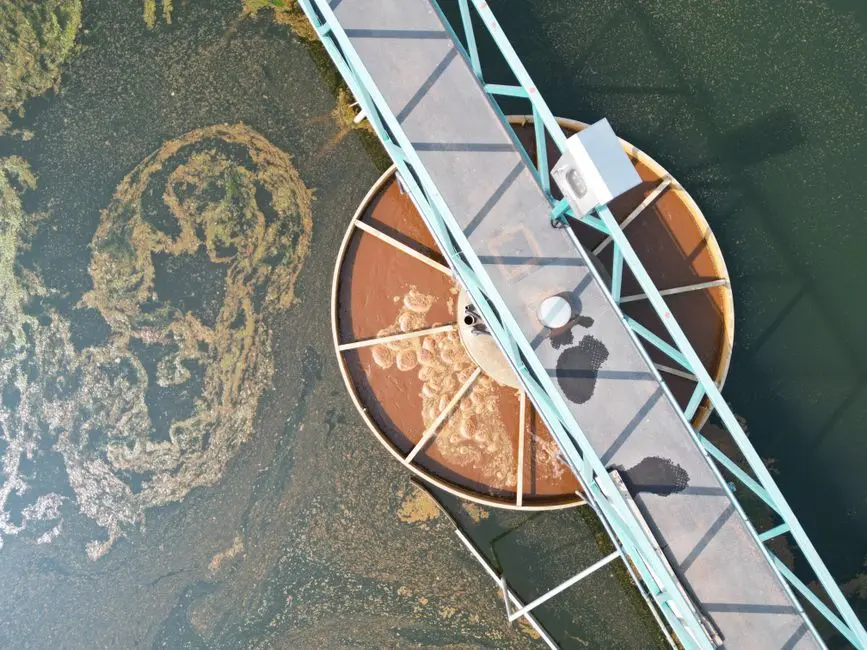
A complete treatment scope must include the systems that make the package operable, protect the biological process and support reuse. HydropureWater’s 2026 reference train for a 500–1,000 PE housing estate comprises a GX rotary mechanical bar screen, equalization, A/O biological treatment, MBR cassette, chlorine dioxide disinfection and reuse buffer tank, with a parallel sludge line (HydropureWater, 2026). That arrangement is a reference to adapt, not a universal requirement for every A/O installation.
The reference equalization basis is 6–8 hours HRT. Check it against the selected site’s peak-flow profile, incoming flow pattern, equalization volume and overflow strategy before adopting it. Pretreatment remains important where the wastewater contains rags, plastics, fibrous debris or other suspended material that could damage pumps or upset biological treatment. The rotary mechanical bar screen is catalogued for municipal and industrial headworks and removes suspended solids, rags, plastics and fibrous debris.
| Scope element | Reference basis | Buyer requirement |
|---|---|---|
| Pretreatment | GX rotary mechanical bar screen | Confirm aperture, approach condition and debris-removal duty |
| Equalization | 6–8 h HRT in the supplied reference train | Recalculate from the project peak-flow profile |
| Biological treatment | A/O stage before MBR in the reference train | Define the actual hydraulic and organic loading basis |
| Filtration | MBR cassette | State membrane type, cleaning method and replacement assumptions |
| Disinfection | Chlorine dioxide generator | Size and dose from the approved process and peak flow |
| Reuse storage | Reuse buffer tank | Confirm demand profile, storage and distribution interface |
| Sludge treatment | Plate-and-frame sludge dewatering press | Specify a delivered moisture basis of no more than 60% |
| Conditional additions | Automatic pH correction and lamella clarification | Include only where the project brief establishes the need |
The sludge line is not an optional accessory if the project requires dewatered residuals. HydropureWater’s 2026 reference specification uses a plate-and-frame sludge dewatering press and states a delivered sludge moisture target of no more than 60% (HydropureWater, 2026). Require the final flow diagram to show flow diversion, overflow, equalization, aeration, membrane cleaning, sludge withdrawal, drainage and sampling points. Also allocate civil works, utility connections, controls, commissioning and long-term spares explicitly.
Compare 2026 budget and lifecycle exposure
The 2026 budget comparison must use the same scope boundary; otherwise a package price can be made to look artificially low by excluding civil works or auxiliary treatment. HydropureWater’s 2026 guide gives CAPEX of $25,000–$60,000 for a 200 PE A/O package, $120,000–$250,000 for a 500 PE MBR skid and $400,000–$900,000 for a 1,500–2,000 PE MBR with dewatering and disinfection (HydropureWater, 2026). These are ballpark estimates, not quotations for an Ankara site.
| 2026 CAPEX case | Supplied range | Scope caution |
|---|---|---|
| 200 PE A/O package | $25,000–$60,000 | Establish whether civil works, pretreatment, sludge handling, disinfection, controls and commissioning are included |
| 500 PE MBR skid | $120,000–$250,000 | Do not compare directly with a fully equipped A/O package unless the scopes match |
| 500 PE MBR with dewatering and disinfection | Approximately $280,000–$400,000 | Use as the closer comparison against a complete reuse-ready scope |
| 1,500–2,000 PE MBR with dewatering and disinfection | $400,000–$900,000 | Confirm phased capacity, reuse storage and major civil interfaces |
The reuse case depends on actual demand and tariffs. In HydropureWater’s 2026 1,000 PE scenario, 150 m³/day is generated, 60–90 m³/day is typically reusable and 22,000–33,000 m³ per year of municipal water is displaced. The guide states that an MBR premium can pay back in 3–5 years at water-stressed sites, but the buyer should recalculate this using the project’s tariff, confirmed reuse volume, operating costs and capital scope (HydropureWater, 2026).
Include compliance exposure in the lifecycle assessment. The 2026 guide describes a possible 100,000 TL fine plus a 30-day shutdown for a non-conforming plant and gives the MBR CAPEX multiplier of 1.8–2.5 times A/O (HydropureWater, 2026). That exposure depends on the applicable permit and site conditions; it is not an automatic penalty for every development.
Issue a supplier-ready technical specification
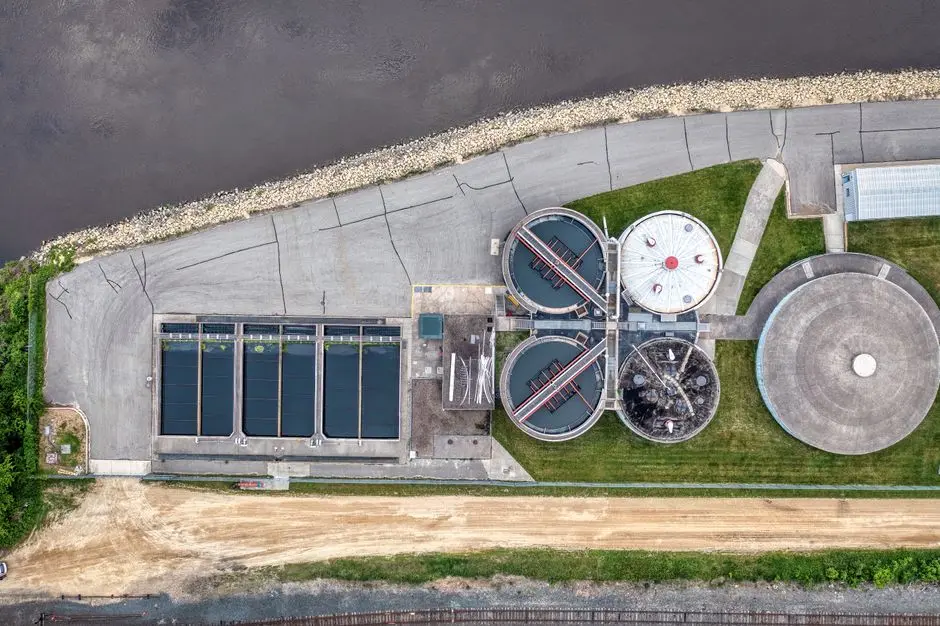
A comparable tender starts with one issued design basis, not separate narrative assumptions from each bidder. State design population, average daily flow, peak flow, influent BOD₅ and TSS, discharge route, reuse application, required effluent parameters and the expansion phase. Require each bidder to identify any design assumption that changes the offered capacity or guarantee.
Request a process flow diagram, general arrangement, installation depth, civil interface, electrical load, control philosophy, alarms, remote monitoring, odour-control provisions and maintenance access. Require guarantees tied to the stated influent and effluent basis. A generalized statement that the plant “meets SKKY” is insufficient without identifying the applicable discharge standard and permit.
Also request delivery and commissioning dates, site-survey availability, civil-work responsibility, operator training, recommended spares, membrane or media replacement costs and long-term O&M support. For phased developments, require parallel flow-splitting provisions and matching modules. This is the type of package scope represented by the buried A/O sewage treatment package, while pretreatment requirements may require a separately priced rotary mechanical bar screen.
Require each bid to separate process equipment, civil works, utility connections, pretreatment, disinfection, sludge treatment, controls, commissioning and long-term spare parts. Use the Mebuskent Residences project as a procurement precedent: Arsistek delivered design, equipment supply, installation and commissioning from one source for the 150 Persons / Day Ankara development completed in 2017. Single-source accountability is useful only when the tender defines the interfaces and performance obligations clearly.
Frequently Asked Questions
How should we size a packaged sewage treatment plant for a housing development in Ankara?
Start with expected occupancy, then apply 150–200 L per capita per day and the selected 2.0–2.5 peaking factor from HydropureWater’s 2026 Turkish residential guidance. Distinguish average daily flow from peak flow and from the hourly WSZ catalogue basis. Require the supplier to show its treatment duty in m³/day, peak hydraulics and any recycle flows rather than relying on a PE label alone.
How much should we budget for an A/O package compared with an MBR?
HydropureWater’s 2026 guide gives $25,000–$60,000 for a 200 PE A/O package and $120,000–$250,000 for a 500 PE MBR skid; with plate-and-frame dewatering and chlorine dioxide disinfection, the 500 PE MBR is approximately $280,000–$400,000. Ask each bidder for an installed scope with the same civil, pretreatment, sludge, disinfection, control and commissioning exclusions before comparing prices.
Does a 1–4 week package commissioning window mean the whole project can be delivered in one month?
No. Arsistek’s Mebuskent Residences source reports package commissioning within 1–4 weeks and installation 5–10 times faster than traditional concrete construction, but that does not include the full development schedule. Require separate dates for design approval, permits, site survey, civil works, utility connections, delivery, mechanical completion, biological start-up, performance testing and permit demonstration.
How should we assess a package-plant supplier’s capability and compliance?
Require a defined process guarantee, comparable installed projects, a complete flow diagram, an O&M scope and locally verifiable Ankara experience. Ask for the exact permit or discharge standard against which the guarantee applies. A reuse claim must identify the receiving environment, intended reuse application, effluent values and the authority approval process; reuse thresholds alone do not authorize reuse.