The 2026 Decision for FD-SOI Wastewater
For an FD-SOI foundry in 2026, choose DAF when the stream contains colloidal CMP fines, conditioned flocs, residual organics, oils, surfactants, or other low-density material; choose a lamella clarifier when testing confirms predominantly dense, reliably settleable solids with stable flow. HydropureWater states that its DAF systems handle 4–300 m³/h and use 30–50 µm microbubbles, while its lamella clarifiers use 20–40 m/h surface loading. Neither DAF nor clarification removes dissolved semiconductor chemicals, so the final selection must include chemical conditioning, materials, sludge handling, and UF, RO, or biological treatment where required.
FD-SOI wastewater is not a standardized product. Drain composition, batch timing, pH, temperature, flow, and chemical inventory can differ substantially between operations, so a bulk mixed drain cannot be used as a reliable design basis. The recommended sequence is to map drains, characterize representative samples, compare conditioning and settle or float behavior, pilot the credible configuration, and then price the complete treatment train.
| Decision condition | Provisional technology | Required evidence before purchase |
|---|---|---|
| Colloidal CMP fines, conditioned flocs, oils, surfactants, or low-density solids | DAF as the primary solids separator | Representative particle distribution, floatable-solids testing, conditioning tests, and pilot operation |
| Dense, reliably settleable solids with stable hydraulics | Lamella clarification | Settleable-solids loading, settling velocity, floc development, and sludge-removal design |
| Dissolved TMAH, DMSO, MEA, chelating agents, or fluoride | Additional biological, membrane, or chemical treatment | Stream-specific dissolved-contaminant analysis and an endpoint-specific treatment design |
| Potential UPW reuse | DAF followed by UF and RO as a source-supported configuration | UF-feed quality, RO pretreatment, concentrate handling, and reuse specification |
For a broader framework, use the broader semiconductor wastewater comparison guide. The procurement question is not whether DAF or a clarifier is universally superior; it is which mechanism matches the measured drain condition and the downstream treatment obligation.
Why FD-SOI Drain Composition Changes the Choice
FD-SOI drains can contain materially different separation problems because CMP slurries contribute colloidal silica, ceria, and alumina, while SC1/SC2 cleaning can leave residual hydrogen peroxide and IPA rinses can add organics; dilute HF or fluoride streams and photoresist debris create further differences (HydropureWater, 2026). The relevant separator therefore depends on the particle population within each drain, not on the fab name or a generic semiconductor wastewater profile.
Much of the CMP-derived fraction may be colloidal or below 100 nm. HydropureWater’s 2026 FD-SOI guide describes this material as having low effective density and a near-neutral surface charge after process chemicals are spent, which weakens ordinary gravity settling. In that condition, the mechanism favors flotation: DAF attaches microbubbles to flocculated particles and lifts them to the surface. Lamella clarification instead depends on particles reaching inclined plates and settling through the plate pack under gravity.
A clarifier remains rational when a segregated drain contains mainly heavier inorganic settleables, little colloidal material, stable flow, sufficient space, and solids with demonstrated settling behavior. The test is whether representative particles reliably leave the water phase within the proposed hydraulic loading; the name of the equipment does not establish that condition.
Surfactants introduce another failure mode. They can interfere with bubble-particle attachment and increase foam or carryover risk, so jar and pilot testing should precede equipment selection. The semiconductor wastewater pretreatment and sewer-compliance guide provides additional context for separating solids pretreatment from discharge obligations.
| Stream feature | Separation implication | Verification |
|---|---|---|
| Colloidal silica, ceria, or alumina from CMP | Weak gravity settling; flotation after successful conditioning is a credible primary option | Particle distribution, colloid behavior, and jar or pilot flotation |
| Hydrogen peroxide, IPA, or residual organics | May affect conditioning, foam behavior, and downstream biological compatibility | Residual oxidant, organics, foam observation, and batch testing |
| Fluoride, caustic, or solvent exposure | Creates corrosion and material-compatibility requirements | Stream-by-stream chemical and temperature review |
| Photoresist debris | May contribute buoyant or floatable material | Floatable fraction, oils and grease, and surfactant observations |
Compare the Two Separation Mechanisms
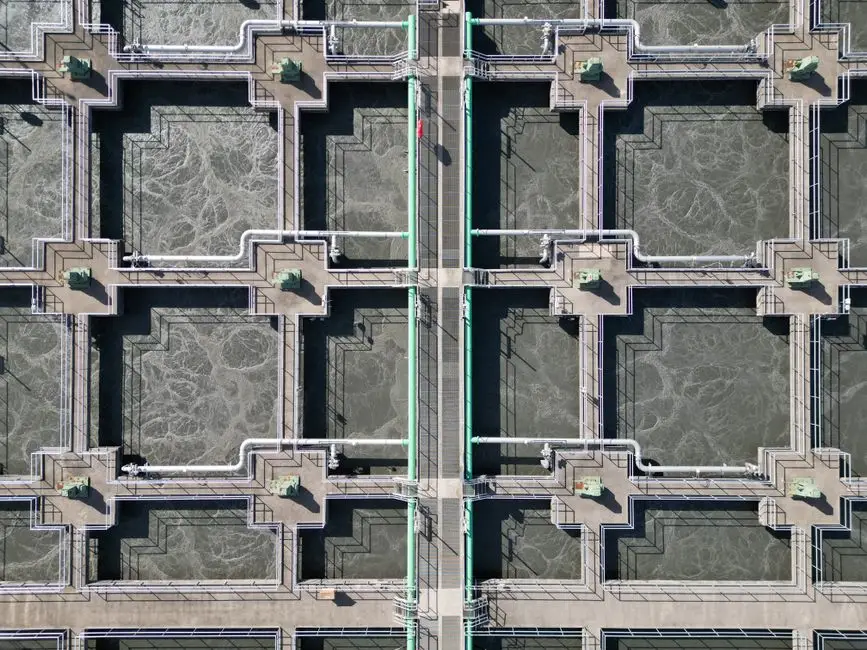
DAF captures particles by attaching conditioned flocs to microbubbles, floating the bubble-floc matrix, and skimming it; lamella clarification captures particles by gravity settling on inclined plates (HydropureWater, 2026). These mechanisms create different process dependencies and residuals, so they should be compared by system duty rather than by the number of tanks in a quotation.
DAF is the stronger candidate for floatable oils, surfactants, conditioned colloids, and suitable floc-prone solids. Lamella clarification is the stronger candidate for reliably settleable solids where gravity separation has been demonstrated. Neither technology should receive a universal removal-efficiency guarantee: the result depends on the stream, conditioning, hydraulic design, operating controls, and the performance basis defined in the contract.
DAF requires recycle saturation, bubble generation, a contact zone, skimming, and successful conditioning. It also requires powered recycle and compressed-air systems, with attention to pumps, saturation equipment, nozzles, and the float mechanism. Lamella clarification has fewer powered separation components, but it still depends on hydraulic distribution, settling area, floc development, sludge collection, and reliable withdrawal.
The residuals also require different handling assumptions. DAF produces float that may contain oils, surfactants, and conditioned solids. Lamella clarification produces settled sludge whose density and water content depend on the original solids and conditioning. Lower turbidity after either unit does not demonstrate removal of dissolved organics, fluoride, chelating agents, or other dissolved contaminants.
Scope the automatic chemical dosing system with the separator because dosing quality determines whether flotation or settling succeeds. The high-efficiency lamella sedimentation tank represents a gravity-separation scope that must still be evaluated against measured settleability.
| Comparison point | DAF | Lamella clarification |
|---|---|---|
| Primary mechanism | Microbubble attachment and flotation | Gravity settling on inclined plates |
| Best-fit solids | Conditioned colloids, flocs, oils, surfactants, and suitable low-density material | Dense, reliably settleable solids |
| Key operating dependencies | Conditioning, recycle, compressed air, bubble generation, contact zone, skimming | Hydraulic distribution, floc development, settling area, sludge withdrawal |
| Residual stream | Skimmed float | Settled sludge |
| Downstream limitation | Does not remove dissolved contaminants | Does not remove dissolved contaminants |
Size the Equipment Around Flow, Solids, and Chemical Conditioning
Catalogue capacity is an envelope, not a design basis: HydropureWater’s 2026 FD-SOI guide lists 13 standard DAF models spanning 4–300 m³/h, but each proposed arrangement still requires a solids-loading check. A unit can accept the nominal flow while still failing to capture the measured mass load or cope with batch peaks.
For the cited SigmaDAF COMPACT design, clearwaterind.com, April 2026, as reported by HydropureWater, flows of 66 GPM or less use one skid, while flows above 66 GPM require a two-skid modular build. The same source supports a DAF bubble range of 30–50 µm. Those bubbles do not attach automatically to every particle: reliable capture requires the correct coagulant, dose, mixing intensity, floc development, and recycle performance.
Chemical conditioning must therefore be inside the DAF scope. Specify chemical type, dose, mix intensity, automatic dosing, chemical storage requirements, and controls that respond to batch changes. Do not compare a DAF skid with chemical addition against a clarifier whose conditioning equipment has been excluded.
HydropureWater’s 2026 manufacturer information gives a lamella-clarifier surface-loading range of 20–40 m/h. This is a manufacturer-stated design reference, not proof of suitability for a particular FD-SOI drain. The supplier must verify it against measured settleable-solids loading, floc properties, hydraulic stability, and sludge-removal design. The industrial DAF system for colloidal semiconductor wastewater should therefore be selected against the stream’s particle and loading data, not against nameplate flow alone.
| Sizing parameter | Supported reference | Contractual information required |
|---|---|---|
| DAF flow envelope | 4–300 m³/h across 13 standard models; HydropureWater, 2026 | Design and peak flow, batch profile, solids-loading basis, and selected model |
| COMPACT skid arrangement | 66 GPM or less: one skid; above 66 GPM: two skids; clearwaterind.com, April 2026, as reported by HydropureWater | Actual flow units, duty/standby arrangement, and installed utilities |
| DAF bubbles | 30–50 µm; clearwaterind.com, April 2026, as reported by HydropureWater | Saturation method, recycle rate, contact-zone design, and performance basis |
| Lamella surface loading | 20–40 m/h; HydropureWater manufacturer information, 2026 | Measured settleable loading, floc properties, hydraulic stability, and sludge removal |
Match Construction Materials to Fluoride, Solvents, and Cleaning Chemicals
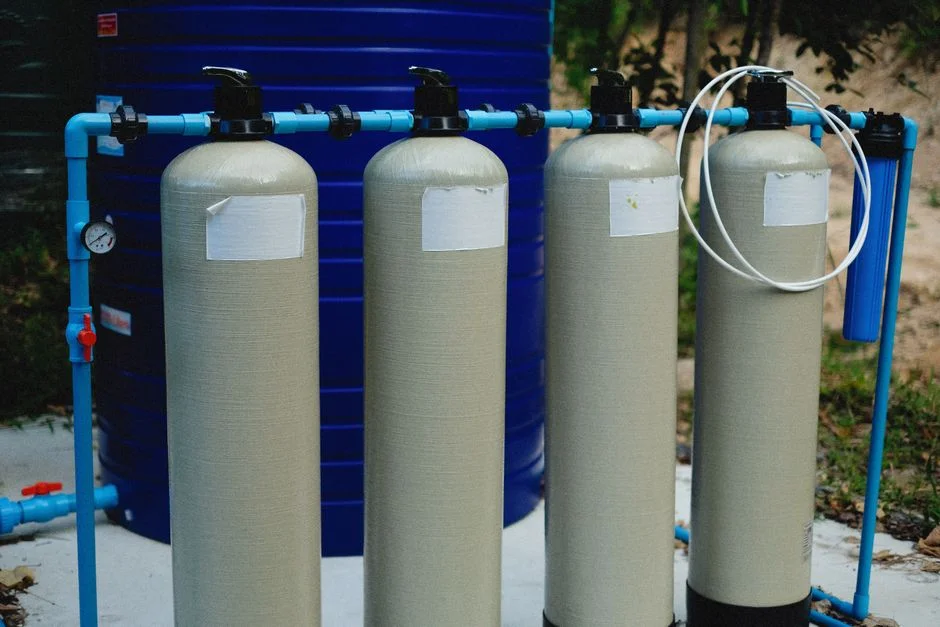
HydropureWater’s 2026 FD-SOI guide lists 304SS as standard, with optional 316SS or polypropylene where fluoride, IPA, or solvent exposure is expected. These are available configurations, not a universal material recommendation for every FD-SOI wastewater. A low-cost selection that is incompatible with a drain’s chemistry can become a corrosion, maintenance, or schedule risk.
Require a stream-by-stream compatibility review because cleaning chemistry and temperature vary with drain and production state. Ask each supplier to identify the materials used in seals, piping, float-collection equipment, chemical dosing components, and exposed wetted parts. Caustics, solvents, surfactants, fluoride, and temperature changes should all be included in the review.
The commercial consequence is straightforward: compare bids using the same project-specific material basis. A 304SS quote should not be compared directly with a 316SS or polypropylene quote without identifying the difference, and neither catalogue option substitutes for documented compatibility evidence.
Build the Treatment Train Around the Reuse Endpoint
A practical treatment train starts with source segregation and equalization, then chemical conditioning, the selected solids separation, necessary biological or membrane treatment, and final discharge or reuse. The separator protects downstream processes; it does not complete the treatment train by itself.
For an UPW-reuse project, HydropureWater’s 2026 FD-SOI guide identifies DAF as primary clarification followed by UF with 0.03 µm PVDF membranes before RO. A lamella clarifier can serve as a polishing step, but neither separator alone meets the reuse specification. Evaluate the 0.03 µm PVDF UF system for UPW pretreatment together with the separator and RO design.
The supporting LCD evidence must remain in its original scope. The cited MBR/RO study reported average COD removal above 97.3%, TOC removal of 97.8%, and BOD5 removal of 99.4%, with MBR effluent SDI below 3. These were TFT-LCD results, not semiconductor guarantees, and they apply to a biological and membrane treatment duty rather than flotation or clarification.
Dissolved TMAH, DMSO, MEA, and chelating agents require a separately designed stage. The cited A/O SBR study reported more than 99% biological removal at influent concentrations of 430, 800, and 190 mg/L for those respective compounds, but that result came from biological treatment under defined redox conditions. It cannot be transferred to a separator.
| Train stage | Primary duty | Procurement requirement |
|---|---|---|
| Segregation and equalization | Manage batch chemistry, flow, and treatment loads | Drain inventory, flow profile, and chemical inventory |
| Chemical conditioning | Develop captureable flocs | Chemical type, dose, mixing, storage, and automatic controls |
| DAF or lamella clarification | Remove suspended, colloidal, or floatable solids as applicable | Measured loading basis and stream-specific guarantee |
| Biological or membrane treatment | Address dissolved contaminants and reuse requirements | Endpoint-specific analysis, pilot basis, and concentrate or sludge route |
| Sludge handling | Stabilize and dewater DAF float or settled sludge | Representative solids, oil, surfactant, and dewatering characterization |
DAF float and clarified sludge can differ in solids concentration, free oil, surfactants, and dewatering behavior. Test both before selecting the plate-and-frame filter press; neither residue is automatically suitable for the same dewatering configuration.
Compare Vendor Scope Before Comparing Price
The supplied research publishes no price for either DAF or clarification equipment, so no universal budget figure is supportable. A comparable budget requires stream-specific design, utility tariffs, chemical quotations, sludge handling, installation assumptions, and a defined disposal route. Compare total installed scope, not separator hardware alone.
Require both suppliers to quote the same flow envelope, measured solids-loading basis, project-specific material option, chemical-conditioning scope, controls, utilities, sludge handling, guarantees, startup requirements, operator intervention, and spare-parts support. The quotation should identify what is included and what is excluded, especially biological treatment, UF, RO, sludge dewatering, piping, and installation.
Also distinguish a turnkey COMPACT skid from built-in-place FPAC, FPBC, or FPHF configurations. HydropureWater’s 2026 guide describes COMPACT as a turnkey option; installation time and field integration can therefore change the commercial comparison. Its cited configuration logic assigns FPAC to high-solids service, FPBC to low-buoyancy service, and FPHF to high-flow service. Confirm those labels against measured TSS and floatable-solids profiles rather than selecting from configuration names alone.
Risk allocation should cover feed variability, foam and carryover, chemical dosing, recycle and compressed-air availability, sludge removal, bypass strategy, controls, performance guarantees, and unresolved dissolved-contaminant treatment. The cost comparison should follow this scope definition rather than precede it.
| Quotation line | Comparable information | Unresolved risk to close |
|---|---|---|
| Process and equipment | Selected model, flow, solids basis, configuration, materials | Peak batch load and demonstrated settling or flotation behavior |
| Conditioning | Chemicals, dosing equipment, mixers, controls, storage | Chemical demand and batch-responsive operation |
| Utilities | Power, compressed air, water, drainage, recycle assumptions | Available capacity and utility tariffs |
| Residuals | Float or sludge removal, transfer, storage, dewatering | Final disposal route and representative residue tests |
| Commercial performance | Guarantees, acceptance test, startup, training, spares, exclusions | Who carries feed-variability and dissolved-treatment risk |
Validate the Selection with Representative Testing
A defensible selection converts catalogue choices into a measured design basis. Start with a drain inventory covering source, composition, pH, temperature, flow, batch profile, chemicals, and whether segregation is appropriate. Do not infer representative behavior from one bulk sample.
Sample representative production states for TSS, settleable and floatable fractions, particle distribution, oils and grease, surfactants, colloids, conductivity, and dissolved process chemicals. The chemical inventory should include TMAH, DMSO, MEA, chelating agents, and fluoride where relevant.
Run jar tests to compare chemical conditioning, floc development, settle or float behavior, chemical demand, sludge characteristics, and downstream impacts. A low turbidity result alone is insufficient because unstable flocs, emulsions, or chemically precipitated contaminants can create downstream loading.
Pilot the credible configurations and examine hydraulic response, control response, foaming, carryover, scaling, sludge removal, and variability between batches. Convert the results into a written design basis covering guarantees, monitoring points, controls, utilities, materials, startup, operator intervention, and remaining risks.
- Map drains, production states, and segregation boundaries.
- Characterize representative solids, floatables, colloids, dissolved chemicals, and batch hydraulics.
- Compare conditioning and separation behavior in jar tests.
- Pilot DAF and lamella alternatives where both remain credible.
- Price the full treatment train and convert test results into contractual criteria.
Frequently Asked Questions
What should an FD-SOI foundry choose by default in 2026: DAF or a clarifier?
Default to DAF when testing confirms colloidal CMP fines, conditioned flocs, oils, surfactants, or other low-density material. Choose lamella clarification when a segregated drain contains predominantly dense, reliably settleable solids with stable flow. This is a conditional starting point, not a substitute for representative testing, because FD-SOI drain composition and batch behavior are not standardized.
How should DAF and lamella clarifier capacity be sized?
HydropureWater’s 2026 guide lists 4–300 m³/h across 13 standard DAF models as a preliminary catalogue envelope, not proof of treatment capacity. For SigmaDAF COMPACT, clearwaterind.com, April 2026, as reported by HydropureWater, flows of 66 GPM or less use one skid and flows above 66 GPM require a two-skid modular build. HydropureWater’s manufacturer information gives 20–40 m/h lamella surface loading; require the supplier to verify that reference against measured settleable loading, floc properties, hydraulic stability, and sludge removal.
Can DAF or clarification alone provide ultrapure-water reuse treatment?
No. HydropureWater’s 2026 guide identifies DAF as primary clarification followed by UF with 0.03 µm PVDF membranes before RO for an UPW-reuse configuration. A lamella clarifier can provide polishing, but neither separator alone meets the reuse specification. The treatment train must also address dissolved contaminants and define the RO pretreatment and concentrate-handling basis.
What should buyers request when comparing DAF and clarifier cost?
No universal DAF or clarifier price is supported by the supplied research. Request line-item quotations using the same design flow, solids-loading basis, project-specific material option, chemical-conditioning scope, utilities, controls, sludge handling, installation assumptions, guarantees, startup, and exclusions. Also request chemical quotations, utility tariffs, and the final sludge-disposal route; otherwise the bids will not be commercially comparable.
How should suppliers be qualified for an FD-SOI wastewater package?
Require documented experience with the relevant wastewater chemistry, a performance basis tied to representative testing, and a complete scope statement covering conditioning, materials, controls, utilities, sludge removal, startup, and exclusions. The supplier must identify feed-variability limits, foam and carryover controls, recycle and compressed-air assumptions, sludge-removal provisions, and any downstream treatment left outside the quotation. Pilot evidence should be tied to the same feed characterization used in the final design basis.