Industrial wastewater treatment systems in Doha cost about QAR 5M to QAR 50M at flows of 50–1,000 m³/h using DAF, MBR, or chemical dosing. Sewer limits are pH 6–9, BOD under 30 mg/L, and oil and grease under 10 mg/L.
The Integrated Industrial Wastewater Treatment Works (IIWWTW) Phase I sits about 2 km southwest of the Doha Industrial Area. Earlier project notes put completion in 2024 and capacity near 50,000 m³/day. According to Ashghal's project page, the works remain in progress, with expected completion in the third quarter of 2025 and a design capacity of 10,000 m³/d.
Process benchmarks carried in this guide are 92-97% COD removal and 95%+ TSS reduction on petrochemical, food, and textile duties. The sewer limits repeated through the tables are pH 6–9, BOD under 30 mg/L, and oil and grease under 10 mg/L. Those three numbers are the pass-fail line most Doha factories we review actually write into the permit. A plant that only hits them is legal for sewer; it is not yet a reuse plant.
Industrial Wastewater Treatment Systems in Doha
Industrial wastewater treatment systems in Doha are sized on tanker or sewer flow, oil and grease, and the discharge or reuse limit the plant must hit. Ashghal's Phase I plant, about 2 km southwest of the Doha Industrial Area, is listed at 10,000 m³/d and QAR 692,952,097. On-site plants in this guide span 50–1,000 m³/h.
Why Doha Factories Cannot Rely on the Municipal Sewer Alone
Doha's manufacturing output rose by 12% a year according to the Qatar Planning and Statistics Authority (2023), and that growth is what fills the industrial sewer with hydrocarbons, heavy metals, and organic solids. The Doha Industrial Area and Mesaieed both add flow that a municipal plant is not designed to take. Untreated effluent from the Industrial Area was tied, in the record used here, to contamination of the Al-Karaana Lagoons. That episode is what pushed the Ministry of Municipality and Environment to tighten discharge enforcement.
Factories in Doha still have to meet wastewater discharge standards, and the notes used here set the pressure date at 2025. Penalties in those notes include fines up to QAR 1M and shutdowns enforced by the Public Works Authority (Ashghal). Petrochemical and food plants carry the highest COD and fats, oils, and grease (FOG) risk if the stream reaches the sea or the sewer. One petrochemical case in these notes had to cut oil from 450 mg/L to under 10 mg/L to keep the industrial license.
A Doha food plant in the same notes cut BOD from 1,200 mg/L to less than 30 mg/L with dissolved air flotation. The cut avoided QAR 500,000 a year in non-compliance fines. It also cut demand for desalinated water by 40% by reusing treated water on non-potable duties. That result sits inside the Qatar National Vision 2030 aim of using water more than once.
According to an Ashghal drainage presentation, high-quality treated sewage rose from 55 million cubic meters in 2005 to 283 million cubic meters in 2023. Industrial wastewater is a different pipe from that municipal TSE. Ashghal states that Phase I will receive industrial wastewater by tanker from the Doha Industrial Area and other areas. Most plants we size for Mesaieed still need on-site oil removal before a tanker is worth calling.
Construction on the Ashghal page is with Larsen & Toubro Limited, and consultancy is with Egis International. The recorded start date is 24 January 2021. The page still shows expected completion in the third quarter of 2025. Do not plan a 2024 handover on the older note.
Doha's Wastewater Treatment Standards for Industrial Effluent
Doha industrial effluent that enters a public sewer is still checked against the limit table below: pH 6.0–9.0, BOD5 under 30 mg/L, COD under 150 mg/L, TSS under 30 mg/L, and oil and grease under 10 mg/L. According to an Ashghal drainage presentation, wastewater quality criteria sit in Annex (3/2nd) of the Executive Bylaws of Environmental Protection Law No. 30 of 2002. The presentation states that those bylaws were issued under Law No. 4 of 2005. The sewer table below keeps the earlier label, Emiri Decree No. 4/2018, and every cell value is unchanged.
The Ashghal deck lists sewage-works TSE targets of BOD at or below 5 mg/L, COD at or below 50 mg/L, TSS at or below 5 mg/L, and pH 6–9. Ammonia is at or below 1 mg/L, total nitrogen at or below 10 mg/L, and total phosphorus at or below 2 mg/L. According to Manawi and co-authors in Desalination and Water Treatment (2017), an earlier Ashghal TSE table set TDS at 2,000 mg/L, with a future aim of 500 mg/L. The later deck instead shows TDS moving from under 1,000 mg/L toward under 800 mg/L.
Ministry of Environment irrigation limits in that 2017 paper are BOD5 10 mg/L, COD 150 mg/L, TSS 50 mg/L, oil and grease 10 mg/L, and phenols 0.5 mg/L, at pH 6–9. The amenity-irrigation column in the same table raises BOD5 to 50 mg/L and keeps COD at 150 mg/L, oil and grease at 10 mg/L, and phenols at 0.5 mg/L. A Doha plant that only meets the sewer table (BOD under 30 mg/L, TSS under 30 mg/L) still misses both the irrigation BOD5 of 10 mg/L and the TSE BOD of 5 mg/L. Most reuse cases we see fail on TSS and oil, not on pH.
Doha's limits in the earlier notes are described as aligned with GCC Standardization Organization (GSO) 171/2015 for manufacturers who also operate elsewhere on the Arabian Peninsula. Use the sewer table for a public-drain discharge. Use the TSE numbers when the water must go to cooling, irrigation, or a process reuse point. Mixing the two specs is how a compliant sewer plant still fails a reuse test.
The permitting path in these notes is a wastewater treatment plan to Ashghal: influent data, the chosen process, and a test schedule from an accredited lab. Approval is written here as three to six months, so equipment lead time of 10–14 weeks has to start before the stamp, not after. Early ordering is what meets a 2025 pressure date. A late order misses the test window even if the process was right.
| Parameter | Maximum Allowable Limit (Ashghal/Decree 4/2018) | Typical Industrial Influent (Pre-Treatment) | Required Removal Rate |
|---|---|---|---|
| pH | 6.0 – 9.0 | 4.0 – 11.0 | Neutralization required |
| BOD5 (mg/L) | < 30 | 400 – 1,500 | > 93% |
| COD (mg/L) | < 150 | 800 – 3,000 | > 90% |
| TSS (mg/L) | < 30 | 200 – 1,000 | > 95% |
| Oil & Grease (mg/L) | < 10 | 50 – 500 | > 98% |
| Total Chromium (mg/L) | < 0.5 | 2.0 – 10.0 | > 75% |
| Phenols (mg/L) | < 0.5 | 5.0 – 20.0 | > 90% |
Missing the table brings a tiered penalty in these notes. A minor breach can mean a third-party audit and a 30-day remediation window. Repeated breaches, or heavy metals past 0.5 mg/L, can suspend the environmental permit at once. Expansion plans should start from the table, not from a vendor sketch.
DAF System for Industrial Wastewater in Qatar
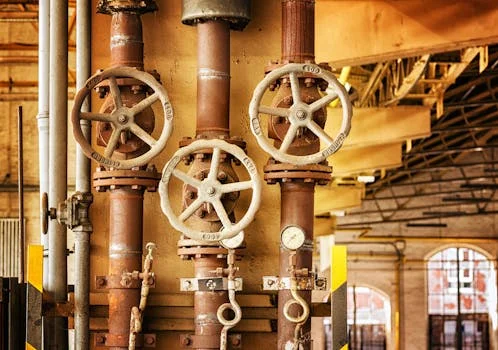
A DAF system for industrial wastewater in Qatar is the unit to put first when oil and grease in a Doha factory sit between 50 and 500 mg/L. Micro-bubbles attach to oil and solids, the float is skimmed, and the table in this guide rates the duty at 95% TSS and 99% FOG. Energy on that row is low, 0.2-0.4 kWh/m³. The same notes also quote 92-97% COD removal and 95%+ TSS reduction when the DAF is chemically assisted on food and petrochemical streams.
Buyers on a food or petrochemical duty shortlist DAF systems for high-efficiency removal of oils, grease, and suspended solids in Doha's food processing and petrochemical sectors as the primary skid. Most plants we size at the lower end of 50–500 mg/L oil still need polymer, or the float stays thin. Do not send raw FOG above 50 mg/L into an MBR and hope the membrane survives. DAF first, biology second, is the sequence that holds a license.
MBR System for High-Strength Wastewater Doha
An MBR system for high-strength wastewater in Doha is the biological step when BOD is above 500 mg/L, or when a clarifier will not fit the plot. The guide figure is a 0.1 μm pore, 98%+ BOD and COD removal, and a footprint about 60% smaller than a secondary clarifier. Energy is the penalty, at 0.8–1.2 kWh/m³. Dairies and pharmaceutical plants are the duties where that trade is usually worth making.
Engineering teams specify MBR systems for high-strength organic wastewater in Doha's pharmaceutical and dairy industries when the sewer COD limit of 150 mg/L cannot be reached by DAF alone. The dairies we size in Doha often sit at the high end of 0.8–1.2 kWh/m³ once the blowers fight hot ambient air. Membrane replacement in these notes is every 5–7 years, and that cost belongs in the 10-year ownership sum. Activated sludge, at 85-90% BOD and 0.5-0.7 kWh/m³, remains the row for a large mixed industrial flow with room for a clarifier.
COD Removal Industrial Effluent Treatment Doha
COD removal for industrial effluent treatment in Doha means taking 800–3,000 mg/L influent to under 150 mg/L, a cut above 90% on the sewer table. BOD5 on the same table must fall from 400–1,500 mg/L to under 30 mg/L, a cut above 93%. TSS must fall from 200–1,000 mg/L to under 30 mg/L, above 95%. Oil and grease must fall from 50–500 mg/L to under 10 mg/L, above 98%.
Total chromium on that table must drop from 2.0–10.0 mg/L to under 0.5 mg/L, a removal above 75%. Phenols must drop from 5.0–20.0 mg/L to under 0.5 mg/L, above 90%. pH can arrive anywhere from 4.0 to 11.0 and must leave at 6.0–9.0, so neutralization is not optional. When we back-calculate a textile or metal-finishing line, chromium and pH decide the chemical skid before COD does.
Chemical dosing is the skid that holds pH and drops metals. Plants use automated chemical dosing for pH adjustment, coagulation, and disinfection in Doha's industrial wastewater treatment to meter ferric chloride or sodium hydroxide. Removal in these notes is 50–80% of heavy metals and up to 90% of phosphorus on textile and metal-finishing effluent. Hand dosing misses the 0.5 mg/L chromium cap the moment the influent swings.
Engineers should follow this decision order before they name a vendor:
- Step 1: Does the influent contain Fats, Oils, or Grease (FOG) > 50 mg/L? If yes, prioritize a DAF system.
- Step 2: Is the BOD concentration > 500 mg/L or is space limited? If yes, integrate an MBR system.
- Step 3: Are heavy metals or pH fluctuations the primary concern? If yes, install an automated chemical dosing and sedimentation unit.
- Step 4: Is water reuse required for cooling towers or irrigation? If yes, a combination of DAF followed by MBR or RO is necessary.
| Technology | Primary Target | Removal Efficiency | Energy Demand | Best Fit Industry |
|---|---|---|---|---|
| DAF (Dissolved Air Flotation) | Oils, Grease, TSS | 95% TSS, 99% FOG | Low (0.2-0.4 kWh/m³) | Petrochemical, Food Processing |
| MBR (Membrane Bioreactor) | Organic Matter, Bacteria | 98% BOD/COD | High (0.8-1.2 kWh/m³) | Dairy, Pharmaceutical |
| Chemical Dosing | pH, Metals, Phosphorus | 80% Heavy Metals | Minimal | Textiles, Metal Finishing |
| Activated Sludge | General Organics | 85-90% BOD | Medium (0.5-0.7 kWh/m³) | Large Municipal/Industrial Mix |
Industrial Wastewater Treatment Cost in Doha
Industrial wastewater treatment cost in Doha, on the capacity table in this guide, runs from QAR 2.5M–4.5M at 50 m³/h to QAR 35.0M–50.0M at 1,000 m³/h. A plain 50 m³/h DAF, before the table's dosing package, is noted from QAR 2M, and a 1,000 m³/h MBR can pass QAR 50M. The QAR 5M to QAR 50M band in the opening is the same span, read across technologies. SS304 or SS316 is the default metal once salinity and heat are in the spec.
Installation and commissioning add 15–20% of equipment cost for civil works, piping, and the performance test Ashghal asks for. Energy in Doha on these notes is 0.5 to 1.5 kWh per cubic meter treated. Coagulant and polymer on a DAF average QAR 0.5–2/m³. Maintenance, including membrane cleaning and skimmer upkeep, is budgeted at 2–5% of capital each year.
A cost comparison of DAF and sedimentation for industrial wastewater treatment is the side calculation when the clarifier looks cheaper on day one. Over a 10-year period the smaller DAF footprint often wins if land inside the Industrial Area is the scarce item. The 200 m³/h food plants we cost usually land in the QAR 8.0M–12.0M band, not at the bottom of the DAF-only row. Read OPEX per cubic metre on the table before you freeze CAPEX.
| System Capacity | Technology Type | Estimated CAPEX (QAR) | Estimated OPEX (QAR/m³) | Estimated Payback (Years) |
|---|---|---|---|---|
| 50 m³/h | DAF + Chemical Dosing | 2.5M – 4.5M | 1.20 – 1.80 | 2.8 – 3.5 |
| 200 m³/h | DAF + MBR | 8.0M – 12.0M | 2.50 – 3.50 | 3.2 – 4.0 |
| 500 m³/h | Full Integrated Plant | 18.0M – 25.0M | 2.00 – 3.00 | 4.5 – 5.5 |
| 1,000 m³/h | MBR + Tertiary Treatment | 35.0M – 50.0M | 3.50 – 4.50 | 6.0 – 7.5 |
The worked example is a 200 m³/h DAF at QAR 8M capital and QAR 1.2M annual OPEX. Avoided fines plus cooling reuse are put at about QAR 2.5M per year, which is a payback of about 3.2 years. The table's payback band for that row is 3.2–4.0 years, so 3.2 years is the fast end, not a promise. Qatar Development Bank green finance is noted here at 2–4%, and Ashghal technical grants are noted for SMEs, but both are financing routes to confirm, not a rate locked in this page.
- Flow band: 50 m³/h, 200 m³/h, 500 m³/h, or 1,000 m³/h.
- Oil and COD load, because they pick DAF, MBR, or both.
- Sewer table versus TSE reuse (BOD 30 mg/L versus 5 mg/L).
- Metallurgy: SS304 or SS316 in saline air.
- Tanker haul to IIWWTW versus a sewer connection.
- Energy at 0.5 to 1.5 kWh per cubic meter and chemicals at QAR 0.5–2/m³.
- Membrane life of 5–7 years on an MBR duty.
Selecting a Wastewater Treatment Equipment Supplier for Doha's Industrial Sector
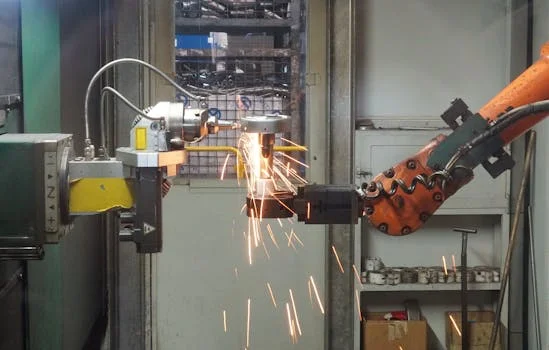
Equipment selection for a Doha industrial plant starts with removal duty and flow, then with whether the vendor can document an Ashghal submission, not with the brochure price. High salinity and heat are why the spec names SS304 or SS316 or a reinforced polymer. Buyers sometimes cross-check Saudi Arabia's industrial wastewater treatment standards and equipment selection for materials practice. A Doha permit still uses Qatar's sewer table, not another country's schedule.
Compliance paperwork is the first filter: a wastewater treatment plan, a process flow diagram, and a third-party effluent test that matches the sewer table. ISO 14001 and OHSAS 18001 are the certificates procurement teams in these notes ask to see. Petrochemical teams sometimes read Yanbu's industrial wastewater treatment solutions and compliance requirements as an equipment benchmark only. Do not copy a non-Qatar limit into a Doha submission.
| Selection Criterion | Turnkey International Supplier | Local Modular Provider | HydropureWater (Industrial Specialist) |
|---|---|---|---|
| Technical Expertise | High (Global standards) | Moderate | High (DAF/MBR focus) |
| Ashghal Approval Support | Varied | Strong | Comprehensive documentation |
| Lead Time | 16 – 24 weeks | 8 – 12 weeks | 10 – 14 weeks |
| After-Sales Support | Limited (Remote) | Strong (Local) | Regional field service |
| Cost Efficiency | Premium Pricing | Competitive | High ROI/Optimized OPEX |
Total cost of ownership beats the lowest skid price. Lead time on the comparison table runs 16–24 weeks for a turnkey international supplier, 8–12 weeks for a local modular provider, and 10–14 weeks for the industrial-specialist column. Spare parts that actually stop a Doha plant are membrane modules, air compressors, and dosing pumps, and they need to be inside the GCC. The delays we see are parts, not brochures.
Who Should Buy, and the Next Step
This sizing guide is for Doha and wider Qatar factories that haul tankers to the industrial area or discharge to an Ashghal sewer. It fits petrochemical, food, textile, metal-finishing, dairy, and pharmaceutical loads. It is the wrong page for a municipal house connection and for a hospital ward. A hospital stream is a different permit, so use the separate brief in the next paragraph rather than this sewer table.
Where the plot is tight, an Underground Package Sewage Treatment Plant (WSZ Series) keeps the tanks below grade and leaves the yard for truck turning. Ashghal's 2023 asset slide already counts 19 package plants at 53,545 m³/d combined, up from 37,545 m³/d, so the package class is normal in Qatar's drainage stock. That slide is municipal and industrial package plants together, not a certificate for any one model. Match the package to the sewer table before you bury it.
Readers who also hold a hospital project can open Hospital Wastewater Treatment in Salalah: Systems, Compliance & Costs for that stream. It is not Qatar law, and it does not change a Doha factory permit. Keep this page on Doha industrial effluent only. Do not paste a hospital limit onto a petrochemical sewer.
Next step: send flow, COD, oil and grease, metals, and the discharge point, sewer or tanker, through a process sizing request before the P&ID is frozen. Ask for a mass balance against the sewer table and, if reuse is real, against BOD at or below 5 mg/L. A quote without those numbers is a catalogue, not a design.
Frequently Asked Questions
What are the penalties for non-compliance with Doha's wastewater discharge standards?
Industrial facilities in Doha face fines up to QAR 1M for violating the discharge limits cited under Emiri Decree No. 4/2018. Ashghal can also order a shutdown or a third-party audit. Minor breaches in the notes used here draw a 30-day remediation window. Repeat discharge of heavy metals past the 0.5 mg/L threshold can suspend the environmental permit. Budget the audit and the downtime, not only the fine.
How much does a wastewater treatment plant cost in Doha?
A Doha wastewater plant in this guide costs from QAR 5M for a 50 m³/h DAF train to QAR 50M for a 1,000 m³/h MBR train. The capacity table sets 50 m³/h DAF plus dosing at QAR 2.5M–4.5M, and 1,000 m³/h MBR plus tertiary at QAR 35.0M–50.0M. Operating cost is quoted between QAR 1.5 and QAR 3.0 per cubic meter, inside a wider band of QAR 1.20–4.50 per cubic meter.
What is the largest industrial wastewater facility planned for the Doha Industrial Area?
The Integrated Industrial Wastewater Treatment Works (IIWWTW) Phase I is the dedicated industrial plant for the Doha Industrial Area. Earlier notes called it a 50,000 m³/day works. Ashghal's project page instead lists an initial capacity of 10,000 m³/d, tanker intake, a contract value of QAR 692,952,097, status in progress, and expected completion in the third quarter of 2025. Larsen & Toubro Limited is the contractor and Egis International is the consultant.
Can treated industrial wastewater be reused in Doha?
Yes. Treated industrial wastewater in Doha can be reused for irrigation, district cooling, and some process duties when it meets the reuse spec, not only the sewer table. Earlier notes set reuse eligibility near TSS under 10 mg/L and BOD under 10 mg/L. According to Manawi and co-authors (2017), Ministry of Environment irrigation limits were BOD5 10 mg/L, COD 150 mg/L, and oil and grease 10 mg/L at pH 6–9.
What are the key differences between DAF and MBR systems for industrial wastewater?
DAF is the physical-chemical step for oil, grease, and suspended solids, and the comparison table rates it at 95% TSS and 99% FOG with energy near 0.2-0.4 kWh/m³. MBR is the biological step for dissolved organics, rated here at 98% BOD/COD, with energy of 0.8–1.2 kWh/m³ and membrane replacement every 5–7 years. Put DAF first when FOG exceeds 50 mg/L, and add MBR if BOD stays above 500 mg/L or space is short.