Industrial Wastewater Treatment in Yanbu: Core Facts Buyers Need
Industrial wastewater treatment in Yanbu is governed by RCJY and delivered via Marafiq, including a $500M Amiral spent-caustic facility. For 2025, projects typically need 95%+ COD removal from 500–5,000 mg/L influent and SASO 2857:2020 reuse quality. CAPEX spans SAR 50M for small DAF trains to SAR 500M+ for MBR reuse plants, with 3–7 year payback at 40–80% recovery.
Yanbu petrochemical and refining sites generate about 120,000 m³ of industrial wastewater each day, according to Marafiq 2023 operational reports. Spent caustic often carries COD between 3,000 and 10,000 mg/L. A typical Yanbu refinery profile is harsh: pH 12–14, TDS 10,000–30,000 mg/L, plus chromium and nickel from desalting and catalytic units. Most plants we size for Yanbu oily trains sit at the lower end of that COD band until turnaround peaks arrive.
New industrial projects face a Zero-Liquid Discharge (ZLD) mandate effective as of 2024. Facilities must recover at least 80% of water for reuse inside plant utilities. Missing those rules creates financial and operational exposure. One Yanbu chemical plant faced about SAR 20M per year in non-compliance fines and discharge surcharges. After adding a DAF systems for Yanbu’s oily wastewater and an MBR stage, the site cleared those penalties and cut freshwater procurement cost by 65%. Treated water now functions as a utility asset under Saudi circular-economy targets rather than a disposable stream.
Discharge into Marafiq’s common collection system still requires stable oil, COD, and pH control before truck or pipeline transfer. Equalization volume, shock-load buffering, and redundant skimming usually separate a compliant brownfield upgrade from chronic exceedance. Sampling programs that miss weekend batch dumps understate peak COD, so design data must cover at least one full production cycle.
Saudi Compliance Standards for Industrial Wastewater in Yanbu: What You Must Meet
RCJY Industrial Wastewater Discharge Standards (IWDS-2024) require treated effluent entering the common collection system to stay below COD 100 mg/L and BOD 30 mg/L. Those limits rank among the strictest in the Middle East because of Red Sea sensitivity and Marafiq’s centralized treatment requirements. Any facility aiming for internal reuse must also meet SASO 2857:2020: turbidity below 2 NTU and fecal coliform below 10 CFU/100 mL.
Compliance is a legal requirement enforced through permitting, not a soft design target. New projects need RCJY approval of discharge designs, including process flow diagrams and mass balances. Once online, plants face quarterly sampling and reporting. The National Water Strategy 2030, managed by the Ministry of Environment, Water and Agriculture (MEWA), aims for 70% industrial wastewater reuse by 2030. Yanbu’s reuse rate stands near 45% today, so a large upgrade wave is still ahead for local manufacturers.
| Parameter | RCJY IWDS-2024 (Discharge) | SASO 2857:2020 (Reuse) | Typical Raw Influent (Yanbu) |
|---|---|---|---|
| COD (mg/L) | < 100 | < 50 | 500 – 5,000 |
| BOD5 (mg/L) | < 30 | < 10 | 200 – 1,500 |
| TSS (mg/L) | < 50 | < 5 | 100 – 1,000 |
| pH (Standard Units) | 6.0 – 9.0 | 6.5 – 8.5 | 2.0 – 13.0 |
| Oil & Grease (mg/L) | < 10 | < 2 | 50 – 500 |
| Turbidity (NTU) | N/A | < 2 | 50 – 200 |
Penalties for exceeding these limits are severe, with fines ranging from SAR 50,000 to SAR 500,000 per violation. Persistent non-compliance or illegal discharge of hazardous streams such as spent caustic can trigger RCJY plant shutdowns. Procurement teams should require equipment documented against these Saudi limits to avoid emergency retrofit cost. For a parallel RCJY hub with a different industrial mix, compare Yanbu’s wastewater treatment options with Jubail’s.
Permit packages that lack a clear sludge and spent-caustic pathway usually stall in review. RCJY reviewers expect residual oil and grease below 10 mg/L on discharge routes, and below 2 mg/L when water is booked for reuse. Heavy-metal spikes from catalyst changeouts need segregated holding, not dilution into the main oily sewer. Build those hold-up volumes into the civil plot early; retrofits on operating jetties cost far more.
Treatment Technologies for Yanbu’s Industrial Wastewater: Process Parameters and Efficiency
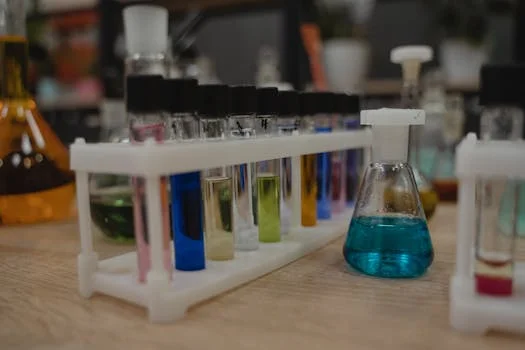
Dissolved Air Flotation (DAF) units achieve 85% to 95% Total Suspended Solids (TSS) removal and up to 80% Fat, Oil, and Grease (FOG) removal in pre-treatment for Yanbu refineries. These trains protect downstream biology from hydrocarbon shock loads. In petrochemical service, micro-bubbles float emulsified oils for mechanical skimming. That step matters for heavy Arabian crude processing, where oil-in-water can swing sharply between shifts.
For secondary treatment, Membrane Bioreactors (MBR) are the common Yanbu choice for compact footprint and effluent quality. MBR systems for Yanbu’s high-strength industrial wastewater provide 95–99% COD removal and 99%+ pathogen removal. Effluent is often suitable for cooling-tower makeup or site irrigation. Versus conventional activated sludge, MBR needs about 60% less space—critical on brownfield refinery plots. Spent caustic and other refractory streams still need Advanced Oxidation Processes (AOP). AOP can reach 90–98% COD removal on those streams, but OPEX is typically 3–5 times higher than biological methods because of hydrogen peroxide or ozone demand.
| Technology | COD Removal Efficiency | TSS Removal Efficiency | Primary Application | Relative OPEX |
|---|---|---|---|---|
| DAF | 30% – 50% | 85% – 95% | Oily Water Pre-treatment | Low |
| MBR (Integrated) | 95% – 99% | 99%+ | High-Strength Bio-treatment | Medium |
| AOP (Fenton/Ozone) | 90% – 98% | N/A | Spent Caustic / Refractory COD | High |
| Reverse Osmosis (RO) | 99%+ (Dissolved) | 99%+ | Water Reuse / TDS Removal | Medium-High |
A typical Yanbu petrochemical flowsheet runs DAF for primary oil removal, equalization for pH and flow, MBR for organics, then RO systems for Yanbu’s water reuse projects for dissolved salts. When influent TDS exceeds 30,000 mg/L, standard RO faces high osmotic pressure and fouling. Evaporative crystallization or high-pressure RO is then required to hit RCJY ZLD recovery targets. Engineers can learn how DAF systems are deployed in similar industrial hubs when sizing oily pre-treatment under high salinity.
Hydraulic retention and recycle ratios decide whether MBR sludge stays stable through catalyst dumps. On Yanbu sites, we usually keep a dedicated spent-caustic branch so AOP oxidant dose tracks sulfide, not average plant COD. Skipping that split forces the biological stage into chronic toxicity and membrane fouling. Redundant blowers and CIP skids pay for themselves the first time a weekend exceedance would otherwise halt production.
Cost Breakdown for Yanbu Wastewater Projects: CAPEX, OPEX, and ROI
Capital expenditure for Yanbu industrial wastewater projects typically starts at SAR 50M for localized Dissolved Air Flotation systems and can exceed SAR 500M for integrated MBR-RO reuse facilities. Phenols, sulfides, and high salinity drive that spread. For a mid-sized refinery treating 1,000 m³/day to SASO 2857:2020 reuse standards, turnkey plants generally fall in the SAR 250M to SAR 350M range. Those figures cover engineering, procurement, construction, and initial commissioning.
Operational expenditure is dominated by energy and chemicals. Energy typically accounts for 30–40% of total OPEX in Yanbu, especially where aerobic MBR aeration runs continuously. Chemicals, including DAF coagulants and membrane cleaners, represent 20–30%. Membrane replacement for MBR and RO should be budgeted at 15–25% of annual OPEX, assuming a 3-to-5-year membrane life. ROI still tracks desalinated water cost: Marafiq industrial tariffs range from SAR 5 to SAR 15 per m³, while treated wastewater OPEX often sits at SAR 1 to SAR 3 per m³.
| Cost Category | Percentage of Total OPEX | Key Drivers |
|---|---|---|
| Energy | 30% – 40% | Aeration blowers, high-pressure RO pumps |
| Chemicals | 20% – 30% | Polymer, NaOH, H2SO4, Antiscalants |
| Membrane Replacement | 15% – 25% | Fouling rates, CIP frequency |
| Labor & Maintenance | 10% – 15% | Skilled technicians, spare parts |
Procurement managers often use: Payback (Years) = Total CAPEX / (Annual Water Savings + Annual Fine Avoidance). Moving from evaporation ponds to a DAF + MBR reuse train commonly pays back in under 4 years on Yanbu refinery loads. That math includes avoided RCJY surcharges, which can exceed SAR 1M per month for large emitters. Similar water-scarcity ROI patterns appear in wastewater treatment solutions in neighboring UAE markets, where utility tariffs also push reuse.
Budget contingencies should cover membrane CIP frequency under high oil carryover and antiscalant use when TDS sits above 10,000 mg/L. Vendors that quote only clean-water power figures understate real OPEX on Yanbu brine-leaning streams. Ask for guaranteed specific energy (kWh/m³) at your design TDS and oil load, not at municipal averages. Spare-parts lead time from outside the Kingdom can erase a paper payback if a critical blower sits offline for weeks.
Fine avoidance alone can dominate ROI when monthly RCJY surcharges approach SAR 1M. Pair that with freshwater savings at SAR 5–15 per m³ versus treated-water OPEX at SAR 1–3 per m³, and the cash case for reuse becomes clear on high-volume petrochemical sites. Keep the payback model conservative: assume membrane life at the short end of 3–5 years until your own CIP data proves longer.
Equipment Selection Framework for Yanbu’s Industrial Wastewater Projects
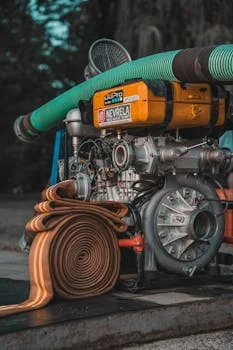
Equipment selection for a Yanbu facility starts by matching the raw wastewater profile to the required end use. The six-step checklist below is what environmental engineers and procurement managers typically walk through before issuing an RFQ:
- Step 1: Characterize Wastewater: Run at least 30 days of composite sampling for average and peak COD, TSS, pH, TDS, and heavy metals. Capture batch-process variability typical of petrochemical campaigns.
- Step 2: Match to Compliance Standards: Decide discharge to Marafiq under RCJY IWDS-2024 versus internal reuse under SASO 2857:2020. That choice sets whether RO or UV polishing is mandatory.
- Step 3: Select Pre-treatment: Use DAF on oily streams. For sanitary or low-oil industrial loads, an Underground Package Sewage Treatment Plant (WSZ Series) can cover primary solids removal and equalization in a compact footprint.
- Step 4: Choose Biological Treatment: Compare MBR with Moving Bed Biofilm Reactors (MBBR) or activated sludge. MBR is preferred for reuse quality; MBBR often tolerates toxic shocks better on discharge-only duties.
- Step 5: Add Polishing Steps: For reuse, integrate RO systems for Yanbu’s water reuse projects to manage TDS. For refractory COD biology cannot digest, add AOP (Fenton’s reagent or ozone).
- Step 6: Evaluate Vendors: Weight local Saudi experience, turnkey EPC capability, RCJY compliance track record, and spare-parts support inside the Kingdom.
Following this framework reduces undersizing and technology mismatch on high-salinity Yanbu streams. Modular stages also leave room to expand as production grows or as MEWA 2030 reuse targets tighten further. Keep a written decision log that ties each unit process to a numbered limit in IWDS-2024 or SASO 2857:2020; auditors ask for that trail during commissioning.
Vendor bid comparison should normalize on the same influent envelope: COD 500–5,000 mg/L, oil and grease 50–500 mg/L, and TDS up to 30,000 mg/L where applicable. Without that lock, a low CAPEX bid often shifts cost into OPEX through fouling and chemical use. Require Saudi-based commissioning support in writing before award.
Who This Guide Is For and Next Step
This guide is for plant engineers, EPC contractors, and procurement managers sizing Yanbu petrochemical, refining, or manufacturing wastewater trains against RCJY IWDS-2024 or SASO 2857:2020. Teams chasing only sanitary package plants without oily or high-TDS loads should look at lighter municipal scopes instead. If you need a capacity and compliance check against your influent data, request a process review through our request-quote form with COD, TDS, and reuse targets listed.
Frequently Asked Questions
What are the key compliance standards for industrial wastewater in Yanbu?
The primary standards are RCJY Industrial Wastewater Discharge Standards (IWDS-2024) for discharge into the centralized system and SASO 2857:2020 for reuse. Discharge COD is typically held below 100 mg/L, with BOD under 30 mg/L and TSS under 50 mg/L. Reuse adds turbidity below 2 NTU and fecal coliform below 10 CFU/100 mL. RCJY permitting, quarterly sampling, and possible shutdown authority enforce those limits.
How much does industrial wastewater treatment cost in Yanbu?
CAPEX ranges from SAR 50M for small specialized pre-treatment such as DAF to over SAR 500M for full MBR-RO reuse plants. A 1,000 m³/day mid-sized reuse train often sits at SAR 250M–350M turnkey. Treated-water production OPEX is commonly SAR 1–3 per m³, while Marafiq industrial freshwater tariffs run SAR 5–15 per m³. Energy, chemicals, and membrane replacement dominate annual cost.
What are the best technologies for treating spent caustic in Yanbu?
Spent caustic usually needs Advanced Oxidation Processes to break sulfur compounds and phenols, then MBR for biological polishing. If the water will be reused, RO follows to cut residual TDS. AOP COD removal can reach 90–98% on refractory loads, but OPEX is typically 3–5 times biological treatment because of peroxide or ozone use. Design always starts from measured COD, sulfide, and phenol peaks.
Can treated industrial wastewater be reused in Yanbu?
Yes. RCJY and MEWA encourage reuse, and new projects face an 80% recovery ZLD-style mandate from 2024. Cooling and irrigation reuse must meet SASO 2857:2020, including turbidity below 2 NTU. Kingdom-wide MEWA targets aim for 70% industrial wastewater reuse by 2030, while Yanbu currently reuses about 45%. That gap is driving MBR-RO upgrades across manufacturing sites.
How do I select a wastewater treatment vendor in Yanbu?
Prioritize vendors with documented RCJY-approved projects and local spare-parts support in Saudi Arabia. Score turnkey EPC capability, high-salinity petrochemical experience, and evidence that equipment can meet IWDS-2024 or SASO 2857:2020 limits on your influent. Ask for PFDs, mass balances, and membrane life assumptions before award. Avoid suppliers that cannot show local commissioning support.