Top Sewage Treatment Equipment Suppliers in Jubail: 2025 Engineering Specs, Costs & Decision Framework
Jubail’s industrial sector requires sewage treatment equipment that meets Saudi Aramco’s S-1000 standards (TSS <10 mg/L, COD <50 mg/L) and NEOM’s zero-liquid-discharge (ZLD) mandates. Top suppliers like JAAZL and OGAPCO offer MBR systems with 95–99% removal rates and DAF units for oily wastewater, but costs vary widely: MBR systems average $1,200–$2,500/m³/day CAPEX, while DAF units start at $800/m³/day. This guide compares 2025 technical specs, compliance data, and vendor selection criteria for Jubail projects.Why Jubail’s Industrial Sector Needs Specialized Sewage Treatment Equipment
Jubail Industrial City generates 300,000 m³/day of industrial wastewater, with 60% from petrochemical plants requiring advanced treatment (per Royal Commission for Jubail and Yanbu 2023 data). This significant volume, coupled with the complex nature of industrial effluents, necessitates specialized sewage treatment equipment. For instance, plants dealing with petrochemicals often require Dissolved Air Flotation (DAF) units for efficient FOG (fats, oils, and grease) removal, while those aiming for water reuse frequently employ Membrane Bioreactor (MBR) systems. Regulatory pressures further drive the demand for sophisticated solutions. Saudi Aramco’s S-1000 standard mandates stringent discharge limits, specifically TSS <10 mg/L and COD <50 mg/L, for any treated effluent released into the environment. Simultaneously, NEOM’s ambitious ZLD policy requires over 90% water recovery, as outlined in NEOM’s 2024 sustainability guidelines, pushing industries towards technologies capable of maximizing water reuse. Common wastewater contaminants prevalent in Jubail include oil & grease (typically ranging from 50–500 mg/L), heavy metals like Chromium (Cr) and Nickel (Ni), and high salinity with Total Dissolved Solids (TDS) often between 5,000–15,000 mg/L, particularly from desalination brine discharges (data from JAAZL’s project reports). These contaminants directly influence equipment selection. Oily wastewater streams, common in refineries, demand robust DAF units. High TDS levels necessitate advanced reverse osmosis (RO) systems, often as part of a comprehensive Zero Liquid Discharge (ZLD) solution. the goal of water reuse, especially for NEOM-aligned projects or within Aramco facilities, strongly favors MBR systems for their superior effluent quality. These specialized requirements make selecting the right `sewage treatment equipment supplier in Jubail` a critical engineering and procurement decision.Key Sewage Treatment Technologies for Jubail Projects: Specs, Costs, and Use Cases
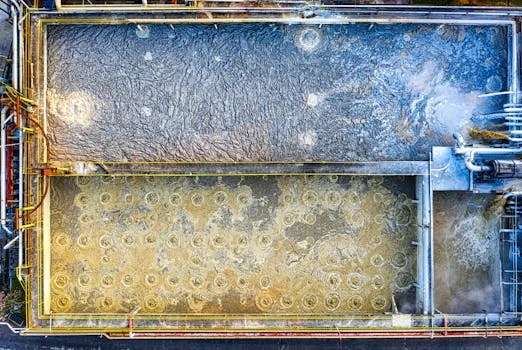
MBR (Membrane Bioreactor) Systems: These advanced systems utilize PVDF flat-sheet membranes with a 0.1 μm pore size, achieving 95–99% TSS and COD removal rates. Their compact design typically results in a footprint 60% smaller than conventional activated sludge systems. For `MBR systems for Jubail’s high-TSS wastewater`, the CAPEX ranges from $1,200–$2,500/m³/day, with OPEX at $0.15–$0.30/m³, primarily driven by energy for aeration and membrane cleaning. MBR is best suited for water reuse projects, aligning with stringent NEOM and Aramco standards.
DAF (Dissolved Air Flotation) Units: `DAF units for oily wastewater in Jubail refineries` employ micro-bubble flotation (40–70 μm) to achieve 92–97% FOG removal and 60–80% TSS reduction. The CAPEX for DAF systems is generally $800–$1,500/m³/day, with an OPEX of $0.10–$0.20/m³, covering chemical consumption and energy for air compression. DAF is ideal for pre-treatment of oily wastewater from refineries, food processing, and petrochemical plants.
ZLD (Zero Liquid Discharge) Systems: ZLD solutions typically combine Reverse Osmosis (RO) for initial recovery (up to 95%) followed by evaporators and crystallizers to minimize liquid discharge. This technology has a higher CAPEX, ranging from $3,000–$5,000/m³/day, and a substantial OPEX of $0.50–$1.00/m³ due to high energy consumption. ZLD is mandatory for NEOM projects and inland industrial facilities where no liquid discharge is permitted.
MBBR (Moving Bed Biofilm Reactor): MBBR systems utilize plastic media with a high surface area (e.g., 600 m²/m³) for biofilm growth, enabling 85–95% COD removal. Their modular design makes them suitable for space-constrained sites, such as Jubail port expansions or existing industrial facilities. CAPEX for MBBR systems typically falls between $900–$1,800/m³/day. For sites requiring `wastewater treatment plant costs Saudi Arabia` that balance efficiency with footprint, MBBR offers a viable option.
A notable example is JAAZL’s MBR project for SABIC, a 300 m³/day facility that achieved 98% water recovery with a CAPEX of $1.8M, demonstrating the practical application and performance of these technologies in the region. Understanding the distinct capabilities of `industrial sewage treatment systems Jubail` is crucial for project success.
| Technology | Key Specs | CAPEX ($/m³/day) | OPEX ($/m³) | Best Use Case |
|---|---|---|---|---|
| MBR (Membrane Bioreactor) | PVDF 0.1 μm, 95–99% TSS/COD removal, 60% smaller footprint | $1,200–$2,500 | $0.15–$0.30 | Water reuse (NEOM, Aramco) |
| DAF (Dissolved Air Flotation) | 40–70 μm micro-bubbles, 92–97% FOG removal, 60–80% TSS reduction | $800–$1,500 | $0.10–$0.20 | Oily wastewater pre-treatment (refineries) |
| ZLD (Zero Liquid Discharge) | RO + Evaporators/Crystallizers, 95%+ water recovery | $3,000–$5,000 | $0.50–$1.00 | No discharge permitted (NEOM, inland sites) |
| MBBR (Moving Bed Biofilm Reactor) | 600 m²/m³ media, 85–95% COD removal, modular | $900–$1,800 | $0.10–$0.25 | Space-constrained sites, moderate loads |
Top 5 Sewage Treatment Equipment Suppliers in Jubail: Technical Capabilities and Project Track Records
Identifying the leading `sewage treatment equipment supplier in Jubail` requires assessing their technical capabilities, proven project track records, and adherence to stringent local compliance standards. The market features a mix of local specialists and global players, each with unique strengths.JAAZL Industrial Company: This supplier specializes in MBR and MBBR systems, particularly for the oil & gas sector, boasting over 30 successful projects. Their client roster includes major entities like SABIC, Aramco, and NEOM, demonstrating strong compliance with `Saudi Aramco S-1000 compliance` and `NEOM ZLD requirements`. JAAZL’s strengths lie in providing turnkey solutions and leveraging AI-driven process optimization for enhanced operational efficiency, as highlighted by their 'Technical Consultancy & AI' service. They are a prominent `Jubail wastewater treatment vendor` for complex industrial needs.
OGAPCO: Primarily focusing on DAF and `chemical dosing for Jubail’s high-salinity wastewater` for petrochemical wastewater applications, OGAPCO has a strong local presence in Jubail. While they frequently undertake their own projects, their public track record for external clients is less detailed. A key strength is their local stock and fast delivery for spare parts, which is crucial for minimizing downtime. However, their experience with comprehensive ZLD solutions is comparatively limited.
EMCO Group: EMCO Group has a significant project with SWCC’s Jubail desalination plant, where they implemented a backwash recovery system achieving 90% water recycling. Their expertise is particularly strong in desalination-related water treatment and modular package systems. While highly capable in water recycling, their focus on general industrial wastewater treatment, especially for oil & gas, is less pronounced compared to other specialized `Jubail wastewater treatment vendors`.
Veolia Middle East: A global leader, Veolia has been instrumental in reuse plant operations in Jubail, including a notable 2023 project. Their strengths include extensive global expertise, advanced oxidation processes (AOP) for refractory COD removal, and robust operational capabilities. However, their solutions often come with higher costs, with MBR systems potentially exceeding $2,500/m³/day, which can be a consideration for budget-sensitive projects.
Al-Baha Water Systems: This supplier is known for sustainable solutions primarily targeted at municipal projects, often in rural applications. Their strengths include developing low-energy systems suitable for less demanding environments. A notable weakness, however, is their limited experience with large-scale industrial projects, particularly those requiring `Aramco S-1000 compliance` or `NEOM ZLD requirements`, as they have fewer projects with major industrial players like Aramco or SABIC.
| Supplier | Key Technologies | Project Examples | Compliance Certifications | CAPEX Range (MBR/DAF, $/m³/day) |
|---|---|---|---|---|
| JAAZL Industrial Company | MBR, MBBR, ZLD, Oily Water Treatment | SABIC MBR (300 m³/day), Aramco, NEOM | Aramco S-1000, NEOM ZLD | $1,200–$2,500 (MBR), $800–$1,500 (DAF) |
| OGAPCO | DAF, Chemical Dosing, Pre-treatment | Petrochemical wastewater projects (self-reported) | General industrial standards | $800–$1,500 (DAF) |
| EMCO Group | Desalination water recovery, Package systems | SWCC Jubail backwash recovery (90% recycling) | SWCC approvals | N/A (Specialized in desalination) |
| Veolia Middle East | MBR, AOP, Reuse plants, ZLD | Jubail reuse plant operations (2023) | Global & local standards | $2,500+ (MBR) |
| Al-Baha Water Systems | Municipal treatment, Low-energy systems | Rural municipal projects | Local municipal standards | N/A (Limited industrial focus) |
Cost Breakdown for Sewage Treatment Equipment in Jubail: CAPEX, OPEX, and ROI Timelines
| Technology | CAPEX ($/m³/day) | OPEX ($/m³) | ROI (Years) | Key Cost Drivers |
|---|---|---|---|---|
| DAF | $800–$1,500 | $0.10–$0.20 | 2–4 | Chemicals, energy, sludge disposal |
| MBR | $1,200–$2,500 | $0.15–$0.30 | 3–5 | Energy (aeration), membrane replacement, labor |
| ZLD | $3,000–$5,000 | $0.50–$1.00 | 5–7 | High energy (evaporation), specialized chemicals, maintenance |
How to Select a Sewage Treatment Equipment Supplier in Jubail: A Step-by-Step Decision Framework
Selecting the most suitable `sewage treatment equipment supplier in Jubail` requires a systematic, multi-criteria evaluation process to ensure technical compliance, cost-effectiveness, and long-term operational reliability. This structured approach minimizes risks and optimizes project outcomes.Step 1: Define Project Requirements. Begin by thoroughly outlining your project’s specific needs, including the type of wastewater (e.g., municipal, oily industrial, high TDS), the required flow rate, and the target discharge or reuse standards. For an Aramco project, this would primarily mean ensuring `Saudi Aramco S-1000 compliance` with strict TSS <10 mg/L and COD <50 mg/L limits.
Step 2: Shortlist Suppliers Based on Technology Fit. Utilize the technology comparison table provided earlier to identify suppliers whose core offerings align with your defined wastewater type. For instance, if your project involves high concentrations of oily wastewater, prioritize `DAF suppliers for refineries` or those with strong MBR capabilities for advanced treatment and reuse.
Step 3: Request
Related Equipment
The following HydropureWater products are engineered for the wastewater challenges discussed above:
- MBR systems for Jubail’s high-TSS wastewater — view specifications, capacity range, and technical data
- DAF units for oily wastewater in Jubail refineries — view specifications, capacity range, and technical data
- chemical dosing for Jubail’s high-salinity wastewater — view specifications, capacity range, and technical data
Need a customized solution? Request a free quote with your specific flow rate and pollutant parameters.