Determine Which Limits Apply Before Designing Equipment
Petroleum plants near Delaware City meet sewer pretreatment limits by identifying the controlling permit, characterizing each wastewater stream, and treating to the applicable standards before the point of connection to the municipal collection system. EPA states that POTW local limits are site-specific and may be numeric or narrative requirements, including best management practices, and are enforced at the industrial user’s end-of-pipe discharge point. A defensible train therefore starts with source segregation and free-oil recovery, followed by flotation or another polishing process when emulsified oil is present. Monitoring, reporting, and permit-specified records complete the compliance chain.
The first engineering task is to establish whether the Delaware City facility is an industrial user or a significant industrial user, and which agency administers the applicable permit. Start with New Castle County’s Industrial Waste Pretreatment Program and the receiving POTW, rather than assuming that Delaware discharge requirements alone control the connection. The Delaware industrial wastewater permit and equipment guide identifies New Castle County’s pretreatment program as the local enforcement route for industrial discharges entering municipal systems.
Separate the legal basis into three layers: federally applicable categorical or prohibited-discharge standards, applicable Delaware requirements, and the receiving POTW’s adopted local limits. Where a categorical standard applies, its applicability must be established from the plant’s actual industrial process rather than inferred from the word “petroleum.” EPA’s Pretreatment Standards and Requirements—Local Limits explains that local limits protect the POTW, its sludge, and receiving waters against pass-through and interference.
Before selecting equipment, obtain the current industrial-user permit, adopted local-limit worksheet, pollutant list, averaging periods, monitoring frequency, analytical methods, BMPs, and any approved allocation based on the Maximum Allowable Headworks Loading and Maximum Allowable Industrial Loading. EPA’s Local Limits Development Guidance describes the MAHL-to-MAIL process and notes that an indirect discharger’s controlling obligations are determined by the POTW’s permit or other control mechanism.
| Compliance item | Evidence to obtain | Why it controls design |
|---|---|---|
| Industrial-user status | Current permit and written POTW/New Castle County determination | Establishes applicable rules, reporting, and enforcement authority |
| Applicable standards | Categorical determination, Delaware requirements, and adopted local limits | Separates categorical, state, and site-specific controls |
| Effluent basis | Permit concentrations, averaging periods, BMPs, and mass allocations | Defines the required performance rather than a generic treatment target |
| Monitoring basis | Parameters, methods, sample type, frequency, and reporting deadlines | Determines sampling equipment, laboratory work, and recordkeeping |
The available research does not establish a Delaware City petroleum-discharge permit, a confirmed local numerical limit for a particular facility, or a verified allocation for the receiving POTW. Accordingly, HydropureWater’s 2026 industry examples of 100–200 mg/L HEM and approximately 250 mg/L TSS are planning references only. They are not Delaware City limits and must not be used as permit values without written confirmation.
Characterize Each Petroleum Wastewater Stream
Treatment sizing must start with stream-by-stream flow, pollutant, and droplet-size data because petroleum wastewater can contain free oil, emulsified oil, solids, and dissolved contaminants in the same facility. Daily averages alone are inadequate because tank drops and coalescer dumps can create short, high-load events that overwhelm a unit sized only for mean flow.
Inventory tank-bottom water, API or coalescer dumps, truck and rail loading drip, vehicle wash-rack wastewater, hydrostatic-test water, and stormwater that contacts product-handling areas. Keep clean stormwater outside the contaminated treatment train where practicable. The DAF versus clarifier comparison for petroleum wastewater distinguishes free oil, which can be separated by gravity or coalescing equipment, from emulsified oil, which requires chemical conditioning and flotation or another polishing mechanism.
Use the sampling type required by the permit. Where a 24-hour flow-proportional composite is required, sample across the full operating cycle rather than collecting only a convenient grab. Analyze oil and grease or hexane extractable material, TSS, and any petroleum parameters listed locally, such as BTEX or TPH. EPA Method 1664A is the n-hexane extraction method identified in the HydropureWater 2026 petroleum pretreatment article for HEM analysis.
| Stream | Characteristic to verify | Design implication |
|---|---|---|
| Tank-bottom water | Free oil, settled solids, peak dump flow | Primary separation, solids handling, and peak-flow capacity |
| API or coalescer dump | Slug frequency, oil concentration, droplet condition | Equalization and upstream free-oil control before flotation |
| Truck or rail loading drip | Flow variability and product type | Segregated collection and controlled dump routing |
| Vehicle wash rack | Emulsification, detergents, TSS, oil concentration | Chemical conditioning and flotation or equivalent polishing |
| Hydrostatic-test water | Volume, hydrocarbon content, release pattern | Retention or treatment routing based on characterization |
| Contaminated stormwater | Contact area, rainfall-driven flow, episodic pollutants | Segregation, containment, and peak-capacity review |
HydropureWater’s 2026 petroleum pretreatment article states that slug loads from coalescer dumps or tank drops can spike 3–5 times the daily mean. Record instantaneous peaks and event duration, then calculate daily pollutant mass from measured flow and concentration. Compare both concentration and loading against the permit: a concentration limit alone does not show whether a permitted mass allocation is being exceeded. The test basis for procurement should include the proposed design flow, measured oil loading, representative emulsion properties, and the residual required by the actual permit.
Build a Layered Treatment Train
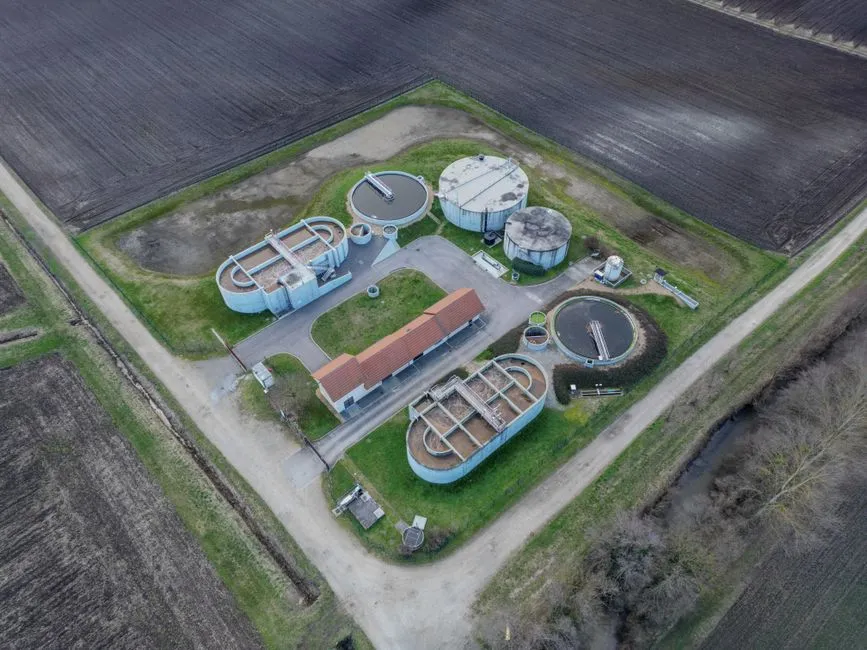
A layered train is more defensible than a single overloaded unit because each stage has a distinct contaminant-removal function. The sequence is: segregate sources, recover free oil, polish emulsified oil and suspended solids, and add biological or adsorption treatment only when characterization and permit requirements justify it.
- Source segregation: Route hydrocarbon-contaminated streams separately, cover dump valves, contain loading-area spills, and keep clean stormwater out of the train.
- Primary free-oil control: Use an API separator, corrugated plate interceptor, or suitable coalescer to recover separable oil and solids.
- Emulsion and solids polishing: Use DAF with chemical conditioning when representative testing shows emulsified oil or suspended solids exceed the required residual.
- Dissolved-pollutant treatment: Add biological treatment or adsorption where the permit or characterization identifies ammonia, sulfide, dissolved hydrocarbons, or another residual parameter requiring it.
An API unit or CPI protects downstream flotation from gross free oil, but neither breaks every emulsion. A DAF system for petroleum wastewater can polish smaller droplets and suspended solids after that upstream control. HydropureWater’s 2026 petroleum article identifies the specific failure mode: free oil from coalescer dumps and tank drops can blanket DAF micro-bubbles, reduce effective air-to-solids transfer, and cause carryover. DAF alone therefore remains vulnerable to slug loads.
Use an automatic chemical dosing system for DAF conditioning where jar or pilot testing shows that pH adjustment, coagulant, or demulsifier is necessary. The dose must be tied to actual wastewater chemistry and residual performance; it is not a substitute for upstream free-oil removal or a basis for assuming a guaranteed HEM result.
| Stage | Primary function | Key design evidence | Common failure to prevent |
|---|---|---|---|
| Source segregation | Reduces contaminated volume and isolates sources | Stream inventory, sewer map, containment records | Diluting contaminated flow with clean stormwater |
| API separator or CPI | Recovers free oil and settled solids | Peak flow, oil loading, vendor droplet-removal curve | Turbulence, bypassing, or transferring oil directly to DAF |
| DAF | Removes emulsified oil and suspended solids | Representative emulsion test, hydraulic and air-to-solids basis | Micro-bubble blanketing by upstream free oil |
| Biological or adsorption polishing | Reduces dissolved pollutants | Permit residual and compound-specific treatability | Adding capital equipment without a demonstrated need |
HydropureWater’s 2026 petroleum pretreatment article recommends a 20–30% safety margin for DAF hydraulic and air-to-solids loading. Apply that reference to the project’s verified peak and loading basis, then have the equipment manufacturer confirm it against project data. Vendor performance should be tied to a representative wastewater test and a confirmed droplet-removal curve, not a generic efficiency statement.
Select Equipment Using a Permit and Operating Basis
Equipment selection should follow the permit and operating envelope, not a preferred machine name. Three design inputs are required before requesting a proposal: peak instantaneous flow, daily oil-and-grease loading, and the required residual concentration in the facility’s permit. The buyer should also provide the analysis results and operating scenarios that show whether the wastewater is free, emulsified, or dissolved.
| Option | Removal mechanism | Best fit | Principal procurement concern |
|---|---|---|---|
| API separator | Gravity separation of free oil and settled solids | Primary control with substantial free-oil loading | Peak-flow capacity and oil/solids removal verification |
| CPI | Plate coalescence and gravity separation | Compact primary separation at suitable sites | Turbulence sensitivity and emulsified-oil limits |
| Coalescer | Media-assisted droplet coalescence | Free-oil recovery before polishing | Dump handling, media condition, and slug tolerance |
| DAF | Air bubbles and floc flotation | Emulsified oil and TSS polishing | Free-oil blanketing and peak hydraulic loading |
| Clarifier | Sedimentation of flocculated solids | Solids-heavy flow with suitable chemistry | Performance on emulsified oil and footprint |
| Automatic dosing | pH control, coagulation, or demulsification | Conditioning before flotation | Chemical storage, control logic, and verified dose range |
HydropureWater’s 2026 field reference gives DAF surface hydraulic loading as 2–5 gpm/ft² in oilfield service. Treat this as an initial comparison range and confirm the final value with the manufacturer and project data. For strict residual requirements, the same source describes pH adjustment to 6.5–7.5 before DAF and a 50–200 mg/L coagulant or demulsifier dose. These are design references, not guarantees or Delaware City requirements.
Evaluate downstream sludge handling as part of the equipment package. Oil removal transfers hydrocarbons and solids into a waste stream requiring an approved handling route. A supplier proposal should therefore state guaranteed residual performance against the actual permit basis; flow and loading basis; instrumentation and alarms; utilities; chemical storage; controls; spare parts; verification tests; installation boundary; and available service support. A low equipment price is not comparable if sludge disposal, chemical consumption, or a performance test shifts cost or risk to the owner.
Prove Compliance With Monitoring and Reporting
Compliance begins with operating records that demonstrate both treatment performance and adherence to the permit’s monitoring and reporting requirements. A satisfactory sample is not enough if its location, representative basis, analytical method, chain of custody, or reporting deadline is defective.
Follow the Delaware City plant’s permit rather than substituting an industry monitoring template. HydropureWater’s 2026 petroleum example uses daily visual free-oil inspections, weekly TSS grabs, monthly 24-hour flow-proportional HEM composites under EPA Method 1664A, and BTEX/TPH composites where locally required. These are example frequencies, not confirmed requirements for a Delaware City facility.
| Control | Records to retain | Audit question answered |
|---|---|---|
| Representative sampling | Sample-point map, flow record, composite script, laboratory worksheets | Was the sample representative of permitted discharge? |
| Traceable analysis | Chain of custody, method, laboratory identification, results | Can analytical results be defended? |
| Operating control | Daily logs, chemical use, alarms, flow, maintenance, corrective actions | Was the treatment train operated as intended? |
| BMP implementation | Containment, drip control, dump-valve, segregation, and tagging inspections | Were source-control commitments implemented? |
| Reporting control | Submission confirmations and correspondence | Were reports provided by the permit deadline? |
Maintain accessible sample points, calibrated flow measurement, and defensible chain-of-custody procedures. Retain daily operating logs, laboratory results, flow records, chemical-use data, maintenance records, and corrective-action records. Best management practices should include spill containment, drip control, covered and locked dump valves, segregated laterals, and visible sample-point tags. Connect the Spill Prevention and Countermeasure Plan with the sewer map so emergency responders can identify the correct isolation and discharge points.
Reporting is part of the compliance record. HydropureWater’s 2026 petroleum pretreatment article states that failure to provide required reports within 30 days can trigger Significant Noncompliance under the National Pretreatment Program. Its compliance sequence also indicates that one late monthly report can lead to a Notice of Violation and that two late reports within twelve months can escalate the issue. The New Castle County pretreatment coordinator should confirm the applicable Delaware City reporting and enforcement procedures.
Frequently Asked Questions
What permit does a petroleum plant near Delaware City need before discharging to a municipal sewer?
Obtain confirmation from New Castle County’s Industrial Waste Pretreatment Program and the receiving POTW on industrial-user or significant-industrial-user status, permit coverage, applicable categorical standards, Delaware requirements, and adopted local limits. The research does not identify a verified Delaware City petroleum-discharge permit or facility-specific numerical limits, so both must be confirmed in writing before design.
Which wastewater parameters should be tested before sizing treatment equipment?
Test each stream for flow, oil and grease or HEM, TSS, and every petroleum parameter listed in the permit, including BTEX or TPH where applicable. Include instantaneous peak flows and droplet condition because free oil and emulsified oil require different removal mechanisms. EPA Method 1664A is the HEM method identified in HydropureWater’s 2026 petroleum article.
How much should a petroleum wastewater treatment system cost?
Request a proposal based on peak flow, daily oil loading, required residual, treatment train, utilities, chemical consumption, controls, sludge handling, installation, and verification testing. HydropureWater’s 2025 Delaware article gives broad equipment and operating-cost examples, but these are not Delaware City quotations; the buyer should require current vendor pricing and local sludge-disposal costs.
How should a supplier be selected for pretreatment compliance?
Require project-specific performance criteria, a confirmed droplet-removal curve, the design flow and loading basis, instrumentation and alarms, utility and chemical requirements, sludge-handling responsibilities, and a witnessed or documented performance test. Check that the proposed capacity addresses the peak event documented during characterization, not only average daily flow.
What evidence should be ready for a pretreatment audit?
Assemble the current permit, local-limit basis, monitoring results, flow and laboratory records, chain-of-custody forms, operating logs, maintenance and corrective-action files, BMP inspection records, SPCC/sewer map, and report-submission confirmations. Organize the file by permit condition so each requirement can be traced to dated evidence.
Related Equipment
- industrial DAF system for petroleum wastewater — specifications, capacity range, and technical data