What Streams Does a Trujillo Data Center Need to Treat Separately?
A data center in Trujillo, Peru, should treat cooling blowdown, domestic sewage, equipment-room wash water and other process wastewater as separate design streams until sampling shows that combining them is technically and legally appropriate. Cooling blowdown requires characterization for conductivity, pH, suspended solids, residual chemicals, cooling tower cycles of concentration, temperature and the required discharge or reuse quality. A modular treatment train can begin with metering and physical pretreatment, then add treatment for the contaminants and reuse route that actually apply. Discharge compliance, toilet flushing or washdown reuse, and cooling-tower makeup reuse are different objectives and should not be treated as one system.
Start with a source-by-source inventory rather than a facility-wide “wastewater” flow. Cooling-tower makeup enters the cooling circuit; some becomes evaporation, while the remainder concentrates dissolved solids and exits through controlled blowdown, leakage or dumps. Domestic sewage follows a different regulatory and reuse pathway. Equipment-room wash water may contain cleaning chemicals, suspended dirt or oil, while process wastewater depends on the particular process. Stormwater that enters the drainage network also requires its own assessment because runoff quality and rainfall exposure differ from continuous process streams.
Cooling blowdown is not ordinary wastewater. North Carolina State University’s 2026 resource article reports that evaporation leaves minerals and salts behind. Blowdown may also contain biocides or anti-scalants, and warm discharge can create thermal pollution. These characteristics make the destination central to treatment design rather than an afterthought.
| Stream | Principal design issue | Treatment objective |
|---|---|---|
| Cooling blowdown | Concentrated dissolved solids, suspended matter, residual chemicals and temperature | Meet discharge authorization or a defined non-potable or cooling-makeup specification |
| Domestic sewage | Organic load, nutrients, pathogens and hydraulic variability | Separate sanitary treatment or controlled reuse route |
| Equipment-room wash water | Cleaning residues, dirt, oil and intermittent discharge | Pre-treatment plus the destination’s water-quality requirements |
| Process wastewater | Process-specific contaminants | Barrier selected from verified composition and reuse or disposal route |
| Stormwater in the drainage network | Variable flow and site-specific contaminants | Segregate where practical and apply the applicable discharge controls |
Direct discharge, non-potable water reuse and cooling-tower makeup reuse are not equivalent. The first depends on the applicable Trujillo discharge authorization and sewer-entry conditions. Toilet flushing or equipment washing may permit a different quality standard, while cooling makeup demands control of dissolved solids and scaling risk. The supplied research did not quantify Trujillo’s discharge limits, sewer-entry conditions, water-source quality or reuse rules; a site design must obtain those inputs from the relevant authorities rather than infer them from another jurisdiction. The Latin American data center blowdown treatment guide offers a useful geographic comparison, but it does not replace Trujillo-specific regulatory review.
Build a Water Balance Before Choosing Equipment
A defensible equipment selection starts with measured flows and water quality, not the cooling system’s nameplate capacity. Genesis Water Technologies’ stage-one monitoring list calls for makeup water, blowdown volume, evaporation, conductivity, pH and suspended solids. These measurements establish the data center water balance and distinguish water consumed through evaporation from water that can potentially be recovered.
Cycles of concentration, or CoC, are calculated by comparing dissolved-solids concentrations in circulating water and makeup water. CoC is an operating control, not a treatment-performance specification: it tells the operator how concentrated the cooling water becomes, but it does not define the treated effluent quality. Genesis Water Technologies gives the relationship blowdown ratio = 1/(CoC−1). On that basis, the theoretical blowdown ratio is 25% at 4 CoC and 20% at 6 CoC.
That relationship exposes a common procurement error. Moving from 4 to 6 CoC reduces blowdown volume by 20%, not 50%. The same source reports that biological and scaling risks rise above 5–6 CoC without advanced treatment, so increasing CoC cannot substitute for source control, chemical control or blowdown treatment.
Install dedicated flow meters and log emergency dumps. Genesis Water Technologies reports that actual blowdown can exceed theoretical calculations by 15–30% because of unmeasured losses and emergency discharges. Sizing from theoretical flow alone can therefore understate both treatment demand and expected recovery.
Request at least one representative chemical analysis of each stream. The initial parameter set should include conductivity, pH, suspended solids, temperature and total hardness, together with information about residual biocide, antiscalant and other cooling chemicals. The purchaser should also obtain the target parameter set for the selected reuse route and a schedule for confirming variability with subsequent samples. A basic starting point for the cooling circuit is a water-treatment parts and filtration reference for field monitoring and pretreatment planning.
| Water-balance input | How to obtain it | Decision supported |
|---|---|---|
| Makeup-water flow | Meter the supply to each cooling system | Baseline withdrawal and water-use effectiveness |
| Controlled blowdown and emergency discharge | Separate flow measurement and operator logs | Actual treatment flow and recovery yield |
| Evaporation | Derive from the measured water balance and validate against operating data | Separation of consumption from recoverable discharge |
| Conductivity | Continuous measurement or representative chemical analysis | CoC calculation and salinity control |
| Suspended solids, pH and temperature | Representative analysis matched to the reuse decision | Physical-treatment and discharge-barrier selection |
Match the Treatment Objective to the Water Quality Barrier
Use a five-step decision ladder: characterize the stream, remove suspended material, control contaminants relevant to the destination, verify reuse quality, and provide continuous monitoring with diversion to a safe route when quality fails. The required barrier follows from the destination; “reuse” alone is not a design specification.
For a physical-treatment-first approach, Genesis Water Technologies describes a modular sequence of media filtration or dissolved air flotation followed by targeted treatment. The source reports makeup-demand reductions of 15–25% where the facility and application support that outcome. This sequence can suit non-potable water reuse when the destination tolerates the residual dissolved solids, chemistry and temperature after physical separation. A modular DAF pretreatment for cooling blowdown is relevant where suspended solids, oil and grease or colloidal material are part of the measured design basis.
Advanced membranes or evaporation should be justified by the required water quality, recovery objective, local energy availability, operator competency and the value of the recovered water. They should not be selected simply because they are associated with reuse. North Carolina State University’s 2026 article explains why conservative controls are necessary: concentrated salts, chemical additives and elevated temperature can increase receiving-water impacts and the treatment burden placed on municipal systems.
The 2026 Open Engineering study provides a trade-off rather than a universal result. Its wastewater scenario had about twice the global warming potential of the freshwater case, and treatment energy explained roughly 80% of that difference. In the UF+RO scenario, wastewater energy use exceeded five times the freshwater case, although improved cycles of concentration partly offset blowdown and chemical demand. The study also found an indirect water penalty of approximately 0.93 L/m³, less than 0.1% of the direct displacement benefit in that analysis. The lesson is to report freshwater displacement and treatment energy together, not to declare one route universally preferable.
| Destination | Minimum design logic | Equipment implication |
|---|---|---|
| Direct discharge | Apply the Trujillo discharge authorization, including any temperature, solids and chemistry controls | Physical pretreatment plus contaminant-specific control; do not size for reuse without a reuse demand |
| Toilet flushing or equipment washing | Confirm the permitted non-potable use and obtain its water-quality specification | Filtration or DAF followed by targeted treatment where required |
| Cooling-tower makeup | Control dissolved solids, hardness, suspended matter, temperature and chemical compatibility | Consider an UF system for higher-quality blowdown reuse, with further treatment if the makeup specification requires it |
Size a Modular Treatment Train for Trujillo Conditions
Size the treatment train from the measured peak blowdown rate, selected recovery fraction, operating schedule and required redundancy—not from the data center’s nameplate cooling capacity. A modular arrangement can isolate pretreatment from advanced treatment, support bypass or diversion, and allow capacity to follow verified demand.
Choose dissolved air flotation when the design basis includes suspended solids, oil and grease or colloidal material. The specified DAF range covers 4–300 m³/h across 13 standard models and includes automatic skimming. These are catalog specifications, not a claim that a Trujillo facility needs the largest configuration. Final selection should follow stream analysis, peak-flow measurement and the selected recovery fraction.
Use hollow-fiber ultrafiltration where chemical-free solids and bacteria removal is required before a sensitive reuse route or reverse osmosis. The specified UF range is 2,000–40,000 L/h, with 0.03-micron PVDF membranes, automatic backwash and air scour. Confirm actual recovery, flux behavior, cleaning requirements and compatibility with residual cooling chemicals before accepting the system as a fit-for-purpose solution.
Add automatic chemical dosing only where analysis shows it is necessary. PLC-controlled injection can be used for coagulants, flocculants, pH adjusters or specialty chemicals, but the control strategy must remain compatible with the cooling-water chemical program and the receiving reuse system. A PLC-controlled chemical dosing system should therefore follow a written contaminant and dosing basis rather than a general desire for more treatment.
Consider advanced liquid-discharge or salt-recovery equipment only after a scale-specific energy and maintenance review. The supplied evaporator-crystallizer information describes modular systems with self-diagnosis, self-cleaning and automation, but that does not establish suitability for a local facility. A conventional RO water purification system also requires evidence that the recovered water quality, pressure, recovery rate and residual handling justify its energy and maintenance burden.
| Design input | Why it affects selection | Buyer evidence required |
|---|---|---|
| Measured peak blowdown and recovery fraction | Sets hydraulic capacity and storage requirements | Trend data, emergency-dump log and scenario calculations |
| Representative stream analysis | Determines filtration, flotation, chemical and membrane barriers | Laboratory results and chemical inventory |
| Recovery destination | Sets the required water-quality specification | Written reuse approval and recipient requirements |
| Operating redundancy | Controls whether duty units, standby capacity or bypass are needed | Availability target and maintenance philosophy |
| Trujillo site conditions | Determines footprint, power, access and installation feasibility | Temperature, seismic and site data, electrical supply, available area and operator competency |
Implement Recovery in Controlled Stages
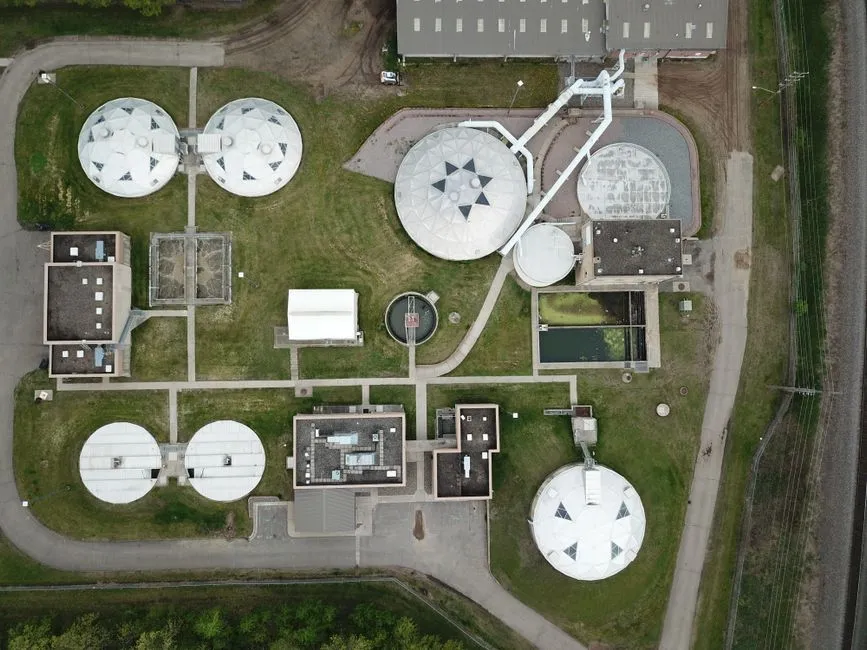
Implement the project as a sequence of measured decisions. The modular versus centralized treatment system comparison is useful for framing this decision, but the operating evidence should determine the architecture.
- Establish the baseline. Complete the data center water balance, install metering, sample each stream, document current discharge and reuse, and reconcile theoretical and actual blowdown.
- Control losses before adding treatment capacity. Repair leaks, remove unnecessary once-through cooling, correct premature blowdown triggers and identify suspended-solids-related losses.
- Add physical pretreatment and one defined reuse. Route treated water to a permitted non-potable demand, with continuous monitoring and automatic diversion when the target specification is not met.
- Test deeper treatment for cooling makeup. Proceed only after operating reliability, chemical control, energy supply and the economics of recovered water have been demonstrated.
The operating dashboard should track discharge volume, freshwater withdrawal, recovered-water volume, water quality, energy consumption, chemical use, downtime and cost per cubic metre treated. These metrics distinguish actual recovery from a theoretical treatment claim and expose deterioration in membrane, filter or DAF performance.
Make permit and reuse approval a design gate. The supplied research did not provide numeric Trujillo discharge limits, so no equipment should be judged compliant on the basis of the generic examples cited here. A site-specific design should also establish who owns the reclaimed water, what constitutes off-specification flow, and what discharge or reuse route remains available during equipment maintenance.
Build the Business Case Without Hiding Treatment Costs
Build the financial case from total cost of water rather than the blowdown percentage alone. Calculate avoided freshwater, wastewater-discharge, chemical and sludge costs separately from treatment energy, maintenance, membrane or media replacement and operator requirements. Report capital cost, operating cost, recovered-water value, recovery yield and implementation schedule as distinct inputs.
Use measured or verified blowdown and freshwater displacement in the model. Genesis Water Technologies reports a 15–30% gap between theoretical and actual blowdown because of unmeasured losses and emergency discharges, so generic assumptions can materially distort expected savings. The data center cooling blowdown treatment guide for Ilorin provides a comparable framework, but no Trujillo tariff or project cost should be imported from it.
Include energy intensity in the investment decision. The 2026 Open Engineering study found treatment energy to be the largest source of the environmental difference in its wastewater scenario, while UF+RO carried an energy use more than five times the freshwater case. At the same time, the study showed that recovered water can provide a direct displacement benefit. The procurement comparison must therefore show both value and penalty, rather than presenting recovered volume as the sole result. A Trujillo payback period cannot be calculated responsibly until the buyer supplies local tariffs, measured flows, energy costs, chemical consumption, disposal charges and proposed reuse value.
Frequently Asked Questions
What is the cheapest practical way to reduce cooling blowdown in a Trujillo data center?
Start with a measured water balance and operating controls rather than purchasing advanced treatment. Genesis Water Technologies’ sequence places measurement and baseline work first, followed by leak repair, elimination of unnecessary once-through cooling, control of premature blowdown triggers and self-cleaning filtration. A buyer should request metered makeup and blowdown data, the emergency-dump log and representative water analyses before accepting a savings estimate.
Should a small data center buy reverse osmosis or evaporator-crystallizer equipment for blowdown recovery?
Not until the required effluent quality, recovery fraction and receiving destination are documented. The 2026 Open Engineering study found that treatment energy accounted for roughly 80% of the environmental difference between its wastewater and freshwater scenarios, and that its UF+RO scenario used over five times the freshwater energy. For a smaller Trujillo facility, ask the supplier for scale-specific energy, chemical, maintenance and residual-handling data, then compare that with a simpler pretreatment and non-potable reuse option.
How much capacity should a modular blowdown treatment system be sized for?
Size it from measured peak blowdown, the selected recovery fraction, operating redundancy and maintenance conditions—not from facility nameplate capacity. Request the peak flow basis, normal operating profile, emergency-discharge assumptions, duty/standby philosophy and demonstrated turndown. The supplier should show how the proposed modules accommodate the selected recovery route without relying on a theoretical flow calculation.
Can cooling blowdown be reused for toilet flushing or cooling-tower makeup?
Potentially, but the destinations require different controls. Genesis Water Technologies identifies toilet flushing and outdoor equipment washing as process-water applications and advanced treatment as the route to cooling makeup. Before ordering equipment, obtain the applicable Trujillo reuse approval, the recipient’s water-quality specification and a chemical-compatibility review. Verify the result continuously and provide a safe disposal route for off-specification flow.
What water-quality data should be requested before selecting treatment equipment?
Request representative analysis of each candidate stream: conductivity, pH, suspended solids, temperature, total hardness and residual biocide or antiscalant information. Also require the target parameter set for the intended discharge or reuse route, representative variability, chemical inventory, metering data and the operating schedule. If these inputs are not available, equipment selection should remain at a conceptual stage rather than proceed to a guaranteed-duty order.