How Maputo’s Sanitation Conditions Change the Treatment Choice
Domestic sewage treatment in Maputo must be selected around the site’s sanitation context, wastewater characteristics, available land and reuse requirements. A sewer-connected project needs a receiving network and sufficient treatment capacity; a non-sewer site may need an onsite system. The Greater Maputo study found that pit-latrine and faecal-sludge standards were incomplete, regulatory responsibilities were not clearly divided, and public support may be needed in lower-income areas. HydropureWater’s WSZ package plant combines anoxic/aerobic contact oxidation, sedimentation and disinfection in a buried 1–80 m³/h unit, while MBR systems address higher-capacity or reuse-oriented projects from 10 to 2,000 m³/day.
Start by classifying the sanitation chain. A sewer-connected project receives wastewater through a collection network and depends on adequate sewer capacity, pumping arrangements and downstream treatment or discharge capacity. A non-sewer project may receive septic-tank effluent, pit-latrine contents, or faecal sludge that has been transported from elsewhere. These are not interchangeable influents: concentration, solids content, emptying frequency and collection logistics must be established before selecting a biological process.
The Greater Maputo research found that standards for pit-latrine construction and faecal-sludge management were incomplete, while responsibilities among sanitation organizations had not been clearly divided (ScienceDirect, 2019). The same study reported that regulation may be ineffective in lower-income areas when all implementation costs are passed to users, requiring public support or cross-subsidy mechanisms. These findings make onsite sanitation part of the treatment design basis rather than a separate issue.
Before comparing equipment, identify five project facts: the wastewater source, collection method, discharge or reuse route, available footprint and intended reuse. A developer with a new sewer connection, a hotel with an existing network and a facility served by septic-tank emptying face different hydraulic, sludge and compliance obligations. The broader domestic sewage treatment engineering guide for Mozambique provides the wider planning context.
Match the Treatment Route to the Wastewater Source
Treatment selection should follow a five-step sequence: document the source, characterize the wastewater, define the treatment objective, establish site and discharge constraints, then size and verify the process.
- Document the source. Determine whether the project receives sewer-connected domestic wastewater, septic-tank effluent, pit-latrine waste or transported faecal sludge.
- Characterize the wastewater. Obtain flow, peak-flow, solids, organic loading and relevant wastewater-quality data, using sampling where project records are insufficient.
- Define the objective. State whether the required outcome is sewer discharge, environmental discharge, irrigation, process water, or another reuse, and identify the applicable receiving requirements.
- Establish site and discharge constraints. Confirm footprint, power, access, drainage, receiving capacity and sludge-disposal arrangements.
- Size and verify. Compare the selected process at the documented design basis and confirm performance, maintenance and residual-management requirements.
For sewer-connected projects, the design basis must include incoming flow, storm-derived peak flow, pumping requirements and available downstream treatment or discharge capacity. The US EPA explains that separate sanitary sewers normally exclude widespread stormwater drainage, but cracks, faulty seals and improper connections can admit infiltration and inflow during wet weather (US EPA, Municipal Wastewater). That is a network-design consideration; it does not establish the condition of any particular Maputo sewer.
For septic-tank or onsite-sanitation projects, request the emptying frequency, faecal-sludge characteristics, pretreatment requirements and the intended reuse or disposal route. The engineer must also establish how the collection and holding system will behave during peak arrivals and how residuals will be removed. For a broader view of the process sequence, use the wastewater treatment stages and equipment matching guide.
| Project input | Why it affects route selection | Evidence required |
|---|---|---|
| Daily flow and peak factor | Sets hydraulic and biological loading conditions | Measured or verified flow records and the agreed peak basis |
| Wastewater characteristics | Distinguishes dilute sewer wastewater from concentrated faecal-sludge or septic-tank effluent | Representative sampling and analytical results |
| Required effluent use | Defines the treatment and disinfection objective | Written reuse or discharge requirement and applicable receiving conditions |
| Available footprint | Limits buried packages, plant layout, access and future expansion | Surveyed site constraints |
| Power and controls | Affects process selection, automation and outage response | Supply reliability, electrical requirements and control preferences |
| Sludge-handling route | Prevents an unresolved residual stream after treatment | Collection, storage, dewatering, transport and final-use plan |
| Receiving requirements | Sets the discharge or sewer-acceptance conditions | Confirmation from the relevant authority or receiving party |
Compare Packaged, MBR and Decentralized Treatment Systems
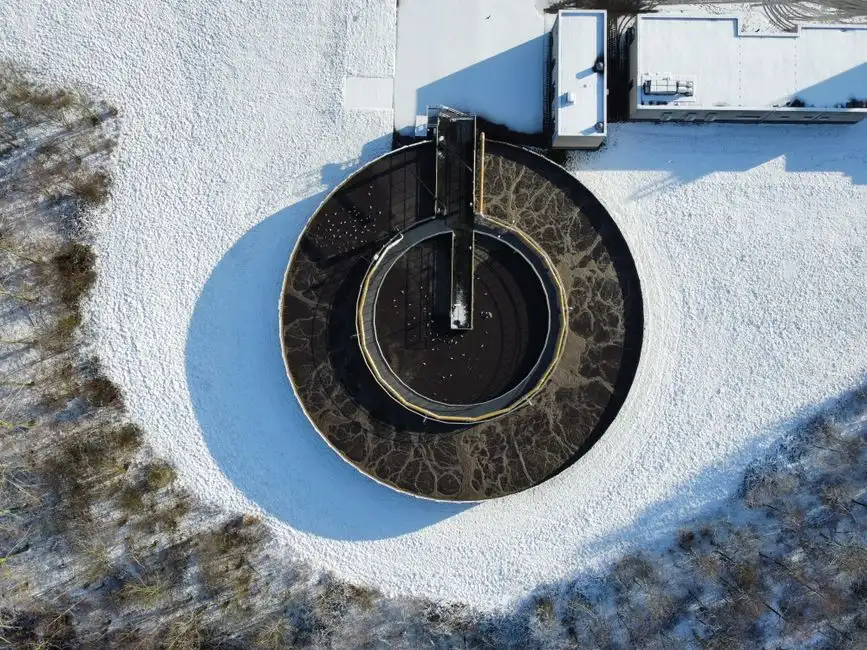
The WSZ underground package sewage treatment plant is a compact option for projects requiring biological treatment, sedimentation and disinfection in an integrated unit. The verified product catalogue states that it handles 1–80 m³/h, is fully automated without a required operator, and can be installed below grade with landscaping above or mounted on a trailer for mobile deployment (HydropureWater verified product catalogue, current catalogue). It combines anoxic/aerobic biological contact oxidation with sedimentation and disinfection in one buried package.
The MBR membrane bioreactor wastewater treatment system is the higher-capacity and reuse-oriented comparison. Its verified catalogue specification gives a capacity range of 10–2,000 m³/day, submerged PVDF membrane filtration below 1 μm and a claimed 60% smaller footprint than conventional systems (HydropureWater verified product catalogue, current catalogue). Those are equipment claims, not a guarantee of site performance: hydraulic loading, pretreatment, membrane fouling, reuse requirements and operating support still require verification.
Decentralized wastewater treatment remains relevant where dependable sewer access is absent. The treatment route must combine an appropriate local collection or pumping arrangement, treatment, sludge management and a defined reuse or disposal destination. Package equipment can be part of this system, but it cannot remove the need to engineer the surrounding sanitation chain.
Constructed wetlands integrated with microbial fuel cells are also a research-informed concept for domestic wastewater treatment and electricity production. The IntechOpen chapter was published as an academic treatment concept; it should not be treated as a standard commercial package configuration without further engineering, site evidence and commercial validation (IntechOpen, 2017).
| Selection factor | WSZ package plant | MBR system | Decentralized route |
|---|---|---|---|
| Verified capacity basis | 1–80 m³/h | 10–2,000 m³/day | Defined by the complete collection and treatment design |
| Process configuration | Anoxic/aerobic contact oxidation, sedimentation and disinfection in a buried package | Biological treatment with submerged PVDF membrane filtration below 1 μm | Technology-neutral until source, loading and site constraints are defined |
| Footprint | Buried installation; footprint details require supplier confirmation | Claimed 60% smaller footprint than conventional systems | Must include collection, access and residual-management space |
| Primary decision driver | Compact, integrated treatment for a defined project capacity | Higher-capacity or reuse-oriented application requiring process verification | Absence of dependable sewer access or a decentralized development model |
| Checks before purchase | Peak-flow method, automation, access, power-failure response and local support | Membrane pretreatment, fouling control, cleaning, reuse testing and service support | Collection, pumping, holding, sludge route, power and receiving arrangement |
For every option, compare hydraulic capacity, footprint, process complexity, automation, sludge handling, effluent objective, maintainability and local operating support. Product selection should follow those checks, not the process name alone.
Design for Seasonal Flow, Overloads and Operational Resilience
Wet-weather flow increases can challenge treatment-plant hydraulics and process control, even where the collection system is nominally separate. The US EPA states that significant wet-weather flow increases can create operational challenges and adversely affect treatment efficiency, reliability and control of unit processes (US EPA, Municipal Wastewater).
The same source identifies overflow contributors including sewer infiltration and inflow, blockages, equipment failures, broken pipes and vandalism. The engineer should therefore distinguish between more flow entering the network and a genuine increase in treatable domestic wastewater. Each has a different design response: the first may require collection-system investigation, storage or hydraulic staging; the second requires verified biological and solids-handling capacity.
Require the supplier to state its design flow, peak-flow strategy, process redundancy, power-failure response, alarm functions, access arrangements and critical-spares availability. “Fully automated” does not remove the need for inspection, housekeeping, sampling, preventive maintenance and a defined operating response. A buried installation can also limit access unless hatch, lifting, drainage and maintenance arrangements are included in the civil design.
For septic-tank and faecal-sludge systems, receiving capacity and emptying logistics belong in the resilience design. Treatment equipment cannot correct an inadequately sized collection system or holding vessel, and a missed emptying can redirect the project’s entire sanitation risk to storage and transport. The engineer should document containment provisions, standby arrangements and the response to an unavailable receiving facility.
Do not promise zero discharge or guaranteed reuse without wastewater testing, a defined reuse standard and site-specific engineering. A reuse claim must identify the receiving water or use, the water-quality basis, sampling requirements and the consequences of non-compliance. This is particularly important where no verified Maputo-specific effluent limit is supplied in the available research.
Plan Sludge, Disinfection and Reuse Before Finalizing Equipment
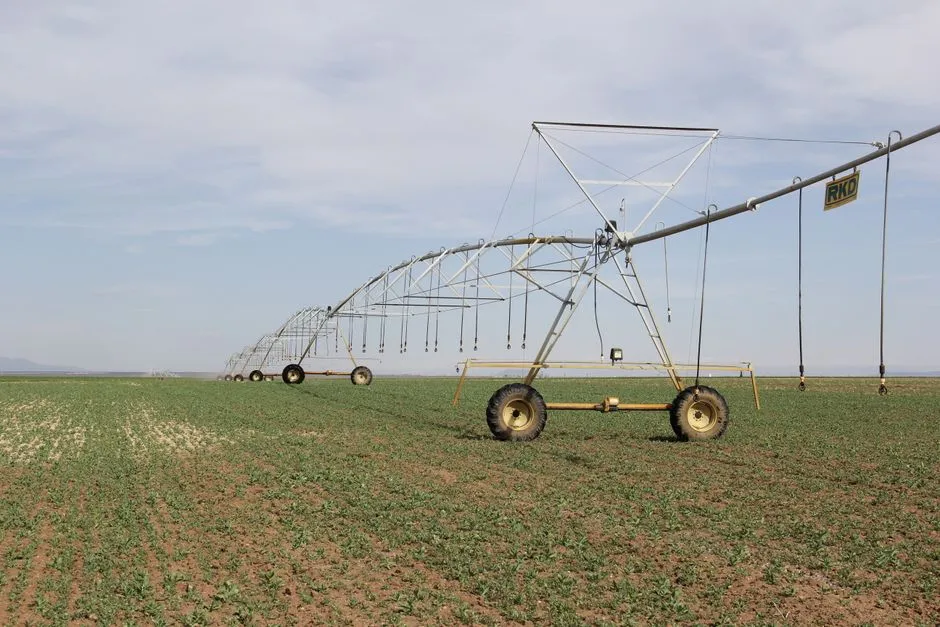
A treatment unit does not complete the sanitation solution unless its residuals have a defined route. Put collection, storage, dewatering, containment, transport, treatment and final use or disposal into the initial design brief. The required route depends on the influent, process configuration, site access and receiving arrangement; it cannot be selected from the treatment-equipment brochure alone.
Where compact sludge dewatering is required, evaluate the plate and frame filter press for sludge dewatering. Its verified catalogue range covers filtration areas from 1 m² to 500 m² (HydropureWater verified product catalog, current catalogue). Plate area should not be selected without feed-solids characteristics, batch or continuous operating mode, filtrate destination, cake handling and cleaning requirements.
Disinfection should be tied to the intended effluent use rather than treated as an automatic assurance of suitability. The US EPA notes that NPDES permits establish discharge limits and conditions for municipal wastewater facilities in the United States (US EPA, Municipal Wastewater). That is not a Maputo permit, but it demonstrates why discharge conditions must be defined contractually and confirmed with the receiving authority rather than assumed from a product feature.
Water-safety evidence also requires caution. A Lund University study of Maputo found that 75% of participants did not feel safe drinking the water, only 40% treated it, and only 20% of that treatment group used Certeza (Lund University, 2014). The study also reported that Certeza may not suit every water source and that disinfection by-products warrant monitoring. Although it concerns domestic drinking-water treatment rather than sewage reuse, the practical lesson is relevant: disinfection choice and reuse claims need water-specific evidence.
Require site-specific sampling and verification before defining potable, irrigation, process-water or environmental reuse. The test programme should be agreed against the intended receiving requirements and include confirmation of the treatment unit’s performance under the documented influent.
Build a Maputo Procurement and Compliance Checklist
A procurement document should expose design assumptions and unresolved responsibilities before a supplier is selected. The packaged sewage treatment plant procurement lessons for a housing development illustrate why implementation details belong in the specification, not only in the equipment schedule.
Request the treatment process, guaranteed design basis, hydraulic calculations, equipment drawings, controls narrative, commissioning plan and O&M manual. Ask the supplier to identify what local authority approval, environmental permit, sewer-acceptance condition or reuse approval applies to the intended discharge, and what evidence it can provide. Where responsibility remains unclear, record that gap and assign it to the relevant project party before award.
Request lifecycle information for media, membranes, lamps, chemicals, wearing parts and sludge-handling equipment. The supplied research contains no verified Maputo prices or service-life values, so the buyer should require current quotations and manufacturer-specific replacement information instead of accepting generic estimates. Pricing should be separated into equipment, civil works, installation, commissioning, training, controls integration, chemicals, maintenance and residual handling where applicable.
Confirm installation civil works, commissioning, training, remote support, spare parts, warranty boundaries and response arrangements in Mozambique. These items determine whether a technically suitable package remains operable after handover.
Finally, include public support, subsidy and stakeholder acceptance in feasibility review. The Greater Maputo study reported incomplete standards, divided responsibilities and the risk that regulation will not work where users cannot afford compliance without public support (ScienceDirect, 2019).
| Procurement area | Information to request before award | Decision or risk addressed |
|---|---|---|
| Design basis | Verified flow basis, peak-flow method, wastewater characteristics, effluent objective and sludge route | Prevents equipment selection outside its stated application |
| Engineering submission | Hydraulic calculations, process description, equipment drawings, controls narrative and commissioning plan | Allows technical review of capacity and integration |
| Approvals and discharge | Identified authority, applicable approval, sewer-acceptance condition and evidence of compliance | Reduces discharge and permit risk |
| Operations | O&M manual, training scope, remote support, local spares and response arrangements | Tests maintainability after handover |
| Lifecycle | Replacement items, current quotations, consumables and sludge-handling requirements | Supports a defensible budget without invented prices |
| Warranty | Performance boundary, exclusions, defect response and local support responsibilities | Prevents gaps between supplier, contractor and operator |
Frequently Asked Questions
How much does a domestic sewage treatment plant cost in Maputo?
There is no defensible price without the wastewater flow, treatment objective, site conditions, civil works and sludge-handling route. The supplied research contains no verified Maputo price, so a buyer should request a current itemized quotation covering equipment, civil works, installation, commissioning, training, controls, consumables, maintenance and residual management. Compare offers on the same design basis rather than accepting a headline package price.
Should I choose a WSZ package plant or an MBR system in Maputo?
The verified ranges provide the first screen: the WSZ underground package sewage treatment plant handles 1–80 m³/h, while the MBR membrane bioreactor wastewater treatment system is specified for 10–2,000 m³/day. The final choice depends on footprint, reuse objective, peak-flow basis, automation, maintenance capability and local lifecycle support. Ask each supplier to demonstrate the proposed arrangement against the same verified influent and effluent requirements.
What size sewage treatment system does a hotel, hospital or residential development in Maputo need?
No universal size can be assigned without verified flow data, peak conditions, wastewater characteristics, reuse goals and applicable receiving requirements. A development phase or occupancy schedule may affect the design basis, but it cannot replace measured or otherwise verified wastewater data. Obtain those inputs, define the treatment objective, and then size both the treatment process and the collection, power and sludge-handling systems.
Can a packaged sewage treatment plant work without a sewer network?
Yes, provided the local collection, pumping or septic-tank route is engineered with it. The package treats the wastewater delivered to it; it does not solve an absent sewer, undersized holding vessel, blocked access, unavailable power or an undefined sludge destination. Those elements must be included in the design, commissioning plan and operating responsibilities.
What compliance risks should be checked before discharging treated sewage in Maputo?
Confirm the receiving authority, discharge route, permit conditions and faecal-sludge responsibilities with the relevant authority and environmental specialists. Ask the supplier for evidence of applicable approvals and sewer-acceptance requirements, while the project owner confirms whether those requirements match the intended reuse. The Greater Maputo study’s finding of incomplete standards and divided responsibilities makes this verification a project obligation, not an assumption that can be transferred silently to the equipment supplier.
Related Equipment
- WSZ underground package sewage treatment plant — specifications, capacity range, and technical data
- MBR membrane bioreactor wastewater treatment system — specifications, capacity range, and technical data