MBR vs Activated Sludge for EV Wastewater in Crothersville
For EV and automotive manufacturing wastewater in Crothersville, an MBR is usually the stronger choice when low suspended solids, a compact installation, reuse readiness, or retrofit constraints justify higher capital and operating costs. Conventional activated sludge generally requires less initial capital and simpler equipment but depends on clarifier performance and sludge settling. MBRs require dependable screening, oil and grease control, equalization, fouling management, and membrane replacement planning. Selection should follow wastewater characterization, pretreatment and equalization design, treatment objectives, and life-cycle cost—not a generic process comparison.
EV manufacturing wastewater cannot be evaluated reliably from flow alone. Production streams may contain suspended solids, oils and grease, detergents, coolants, and batch discharges that vary in duration and concentration. The comparison below therefore connects process architecture to the pretreatment needs of automotive plants. A 2026 MBR wastewater cost guide is useful for developing a capital request, but it cannot replace site-specific wastewater data.
The decisive split is straightforward. MBR favors effluent consistency, footprint, automation, and readiness for polishing or reuse. Conventional activated sludge favors established equipment, simpler operation, and lower initial capital exposure where space and effluent requirements permit. Confirm the applicable pretreatment requirements, discharge route, permit, and any sewer authority rules before selecting either process; the supplied research does not establish Crothersville-specific limits.
What Changes When EV and Auto Production Wastewater Enters the System
EV and automotive wastewater requires a process-by-process audit because a plant’s average daily flow can conceal short, concentrated releases from paint, machining, washing, cooling, or coating operations. The audit should establish flow, batch duration, pH, oil and grease, suspended solids, COD, BOD, nitrogen, metals, detergents, coolants, and process cleaners.
Free oil can foul membrane surfaces and interfere with biological treatment. AUC Group advises removing oil and grease before MBR treatment, making a DAF system for oil and solids pretreatment a relevant option to evaluate. Its suitability still depends on the measured wastewater characteristics and the treatment objective.
Fine screening is also mandatory upstream of membranes. The EPA fact sheet, published June 2021, requires 1- to 3-mm-cutoff screens immediately before MBR membranes. Hollow-fiber systems typically require 1- to 2-mm screening, while plate systems require 2- to 3-mm screening; the selected requirement must come from the membrane manufacturer.
Membranes remove solids rather than every dissolved contaminant. The EPA fact sheet states that dissolved wastewater components may require additional treatment. Segregating production wastewater, sanitary sewage, and roof runoff before design also prevents an inappropriate combined loading assumption.
| Audit item | Why it changes the process decision | Required evidence |
|---|---|---|
| Flow and batch duration | Daily averages can conceal membrane and equalization peaks. | Continuous flow record plus production batch discharge profile |
| Oil and grease | Free oil can foul membranes and disrupt biological treatment. | Representative samples, including batch releases |
| Suspended solids and debris | Determines screening, solids loading, and membrane area. | TSS data and solids characterization |
| COD and BOD | Controls biological reactor and oxygen requirements. | Coordinated influent and effluent sampling |
| pH, detergents, coolants | Can affect biological treatment and membrane compatibility. | Process-stream sampling with chemical identification |
| Metals and dissolved contaminants | Membrane separation alone may not meet reuse or discharge requirements. | Target analyte analysis and receiving-water or reuse assessment |
How the Two Treatment Architectures Work
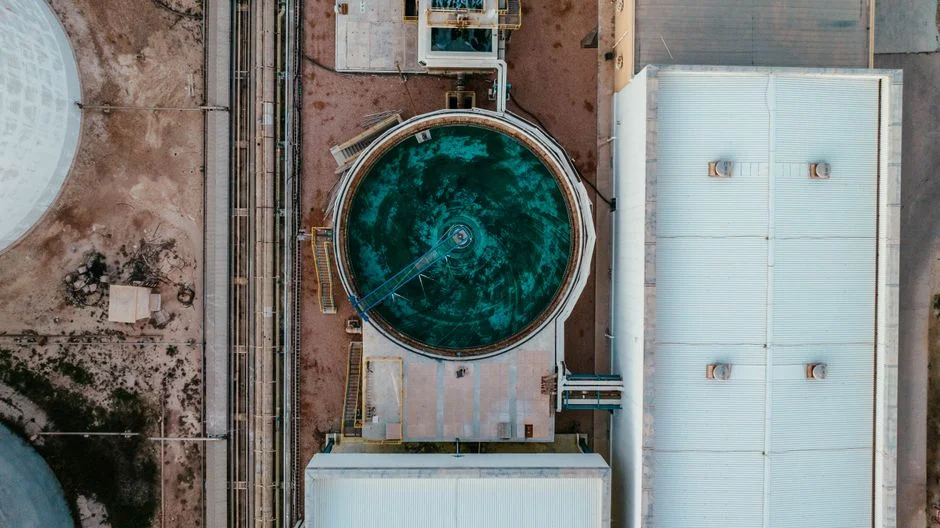
Conventional activated sludge uses microorganisms to remove biodegradable organics, then separates the biological solids from the treated liquid in a secondary clarifier. MBR retains biomass in a suspended-growth bioreactor and replaces the clarifier with membrane filtration, producing permeate with very low suspended solids.
Submerged MBR membranes draw permeate through vacuum while remaining inside the bioreactor. Side-stream MBR membranes separate mixed liquor outside the biological reactor using pressure-driven cross-flow filtration. In a submerged system, solids separation depends on membrane integrity, flux, cleaning, and fouling control. In conventional activated sludge, it depends on clarifier hydraulic and solids loading, floc formation, and sludge settling.
Both routes can use the same upstream sequence:
- Segregate streams and characterize wastewater.
- Equalize flow and batch concentrations.
- Remove oil, grease, debris, and material harmful to biology or membranes.
- Apply biological treatment.
- Separate solids with an MBR or secondary clarifier.
- Disinfect or polish to the required discharge or reuse specification.
| Design element | Conventional activated sludge | MBR |
|---|---|---|
| Biological stage | Suspended-growth reactor | Suspended-growth reactor |
| Solids separation | Secondary clarifier | Microfiltration or ultrafiltration membranes |
| Primary operating risk | Clarifier overload, poor floc formation, and settling losses | Fouling, membrane damage, cleaning demand, and replacement exposure |
| Hydraulic arrangement | Clarifier area follows hydraulic and solids loading | Submerged or external membrane train |
| Effluent path | Clarified effluent proceeds to disinfection or polishing | Permeate proceeds to disinfection or polishing |
For a preliminary layout, an integrated MBR membrane bioreactor system can establish the required equipment relationships. It should not be treated as a final selection until the membrane manufacturer reviews the actual EV wastewater.
Effluent Quality, Reuse Readiness, and Treatment Limits
MBR’s principal value is reliable solids separation, not universal removal of every contaminant. The EPA fact sheet, published June 2021, states that MBR effluent contains low concentrations of bacteria, TSS, BOD, and phosphorus, facilitating high-level disinfection and reuse applications. PCI Membranes likewise reports lower suspended solids and reduced bacterial and viral content than conventional activated sludge, but that is a supplier comparison rather than a Crothersville performance guarantee.
The EPA’s Calls Creek case provides configuration and performance context, not an industrial guarantee. The municipal Georgia facility had an average flow of 0.35 million gallons per day, a design flow of 0.67 million gallons per day, and a 2-mm fine screen. BOD and TSS were around the detection limit in the reported results. The case used membrane filters to replace secondary clarifiers downstream of an oxidation ditch, so its flows, influent, and treatment objectives cannot be transferred directly to an EV plant.
Water reuse must be defined by the receiving process. Manufacturing reuse may require lower conductivity, metals, surfactants, or process-specific contaminants. Depending on the constituent and target quality, precipitation, adsorption, activated carbon, reverse osmosis, or another polishing step may be necessary. An reverse osmosis system for further contaminant removal or ultrafiltration system for solids separation should therefore be evaluated against a written reuse specification, not added merely because the upstream process is called MBR.
| Objective | What MBR contributes | Remaining decision |
|---|---|---|
| Low suspended solids | Filtration replaces secondary clarification. | Confirm membrane flux, solids loading, and cleaning frequency. |
| Disinfection readiness | Low TSS and bacteria can support downstream disinfection. | Apply the actual permit or reuse microbial requirement. |
| Process-water reuse | Produces permeate suitable for evaluation as an RO or UF feed. | Define conductivity, metals, surfactants, and end-use limits. |
| Dissolved contaminant removal | Membrane separation is not the primary removal mechanism. | Select polishing only after analytical results identify the target. |
Footprint, Equalization, and Peak-Flow Design
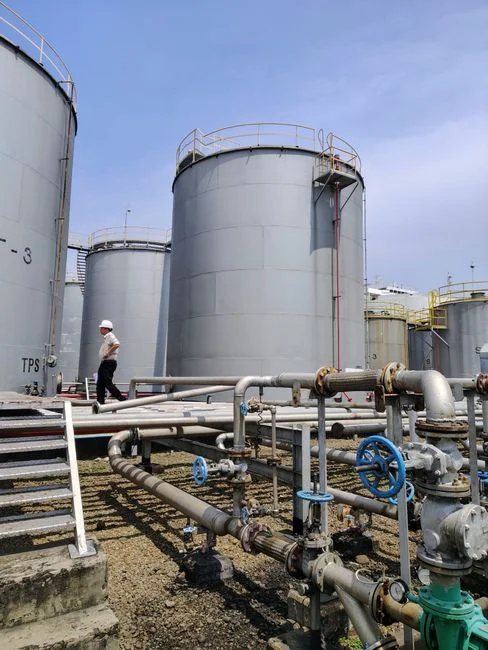
The footprint advantage of MBR applies to the treatment process, not the entire installation. The EPA fact sheet, published June 2021, identifies smaller space requirements as a major MBR advantage because higher biomass concentrations can be maintained and the bioreactor can be smaller. Equalization, pretreatment, membrane modules, cleaning access, and maintenance provisions still consume space.
Published footprint claims require careful attribution. PCI Membranes states that its membrane arrangement can produce up to 50% smaller footprints. The HydropureWater verified product catalog claims 60% smaller footprints for its integrated MBR system. Neither figure is a universal MBR outcome; the installed result depends on the selected configuration, solids loading, retention time, and site design.
The EPA peak-flow rule is more useful for preliminary selection: peak design flow should be no more than 1.5 to 2 times average design flow. If it exceeds that range, the EPA recommends additional membrane capacity or internal or external equalization. For EV production, the relevant scenario is the shortest batch discharge superimposed on the operating baseline, not simply the plant’s daily average.
| Space and peak-flow question | Conventional activated sludge | MBR |
|---|---|---|
| Secondary solids separation | Requires a secondary clarifier. | Replaces the clarifier with membrane modules. |
| Peak discharge | Clarifier hydraulic and solids capacity must accommodate the event. | Membrane area or equalization must accommodate the event. |
| Complete footprint | Includes reactors, clarifiers, aeration, piping, and sludge handling. | Includes reactors, membranes, pretreatment, equalization, cleaning access, and bypass or redundancy. |
| Supplier footprint claim | No universal percentage in the supplied research. | PCI Membranes: up to 50%; HydropureWater catalog: 60%; neither is a universal result. |
MBR is attractive where the clarifier cannot fit, but adding membranes does not remove the need to size the complete plant for the worst credible batch.
Operating Cost, Maintenance, and Supply-Chain Risk
MBR total cost must include membrane life, not just equipment purchase price. The EPA fact sheet, published June 2021, identifies membrane cleaning, fouling control, eventual replacement, and air-scour energy as operating-cost drivers. It also states that MBRs generally have higher capital and operating costs than conventional systems for the same throughput.
Conventional activated sludge instead carries the familiar aeration, clarifier, recycle, and sludge-handling requirements. The supplied research provides no comparable project costs, so a percentage cost difference would be misleading. Obtain a site-specific estimate covering:
- Equalization, pretreatment, biological reactors, and secondary treatment;
- Membrane modules, cleaning chemicals, energy, and eventual replacement;
- Sludge conditioning, dewatering, and disposal;
- Controls, redundancy, service, and membrane warranty terms.
AUC Group states that submerged systems consume less energy than pressure-driven side-stream systems because they use vacuum rather than high-pressure cross-flow pumping. Configuration choice should still follow the wastewater characterization and supplier design.
Sludge is not automatically a hidden MBR advantage. EPA notes that MBR waste sludge can settle slowly because of colloidal material and filamentous bacteria, sometimes requiring chemicals, although conventional biosolids-handling technologies can remain applicable. A plate-and-frame filter press for sludge dewatering should therefore be evaluated on actual solids properties rather than assumed to eliminate the need for chemical conditioning.
| Procurement item | Required supplier commitment | Acceptance evidence |
|---|---|---|
| Membrane sizing | State flux or loading basis, design flow, peak scenario, and safety margin. | Calculation traceable to the wastewater audit. |
| Cleaning | Define cleaning chemistry, frequency basis, recovery, and operator steps. | Site-specific cleaning protocol and acceptance test. |
| Replacement | Provide membrane life, replacement price, and terms. | Warranty and lifecycle cost schedule. |
| Spare parts and service | Identify stocking, response coverage, and technical support. | Named support plan with escalation path. |
| Redundancy | State whether critical capacity remains during cleaning or repair. | Single-failure and maintenance-mode review. |
Which Process Fits the Crothersville Project
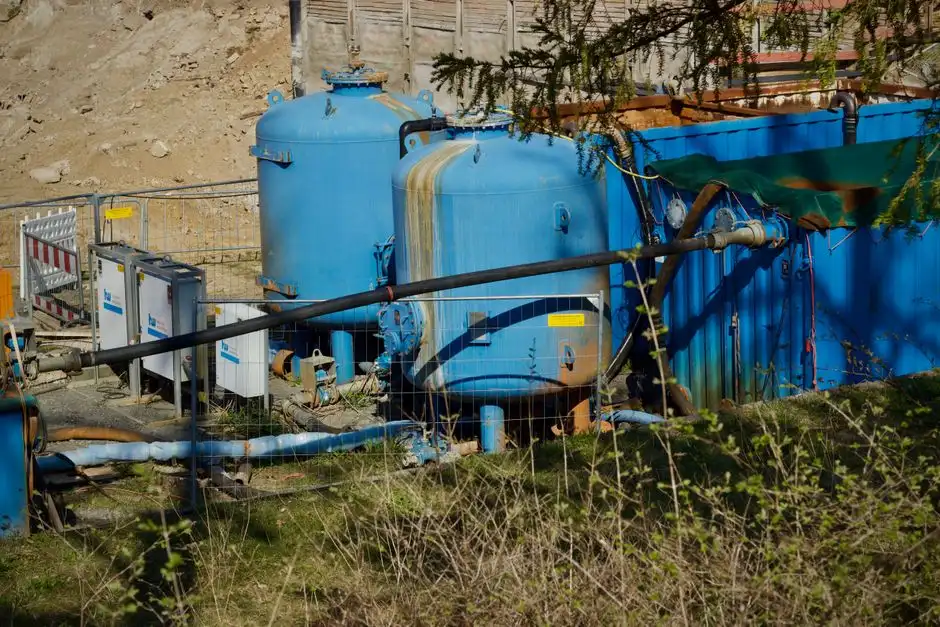
Choose MBR when low suspended solids, reuse readiness, restricted footprint, expansion within an operating plant, or dependable solids separation justify added capital and maintenance. Choose conventional activated sludge when adequate land is available, treatment and discharge objectives can be met comfortably, simpler operation has greater value, and lower initial capital exposure controls the decision.
For variable EV batches, do not choose immediately. First establish equalization, oil control, screening, and biological loading. A hybrid path may then be best: conventional treatment with added equalization and clarification, or MBR with dedicated pretreatment and peak capacity. The right result depends on the actual batch profile and required effluent, not on a catalog flow range alone.
- Obtain a process-by-process wastewater characterization and continuous flow record.
- Define the discharge route, reuse target, and applicable permit or sewer requirements.
- Develop the pretreatment and equalization basis, including worst-case batches.
- Prepare matched MBR and conventional activated sludge designs with the same treatment objectives.
- Compare lifecycle cost, operator workload, redundancy, cleaning, replacement, and service support.
- Require membrane-area, mass-loading, and peak-flow calculations before final selection.
| Selection condition | Preferred direction | Mandatory engineering check |
|---|---|---|
| Low-SS effluent or reuse is essential | MBR, with polishing if required | Constituent-specific reuse analysis and membrane-area calculation |
| Space is constrained | MBR | Complete installed footprint, access, bypass, and equalization |
| Simple operation and lower initial cost dominate | Conventional activated sludge | Clarifier performance at the worst batch and discharge target |
| Large or irregular production batches | Evaluate both with equalization | Mass loading and shortest-duration peak scenario |
| Uncertain wastewater composition | Neither process should be fixed yet | Representative sampling, pilot work if needed, and pretreatment verification |
Score at least three proposals on demonstrated treatment of the actual EV wastewater, pretreatment responsibility, peak-flow basis, footprint, cleaning program, replacement cost, redundancy, controls, and service support. A supplier may ask for site-specific wastewater data, membrane sizing calculations, cleaning and replacement protocols, guarantees, service support, and redundant capacity. These requirements distinguish a project-specific proposal from a catalog selection.
Frequently Asked Questions
Is MBR more expensive than conventional activated sludge for an EV plant in Crothersville?
MBR generally has higher capital and operating costs for the same throughput, according to the EPA fact sheet published June 2021. Obtain a quote covering equalization, pretreatment, biological treatment, membrane modules, cleaning, energy, sludge handling, controls, and eventual membrane replacement. A defensible cost comparison needs the same wastewater basis, flow profile, treatment target, and ownership assumptions for both alternatives; no universal per-cubic-meter price applies.
How should MBR capacity be sized for batch automotive wastewater?
Size from average flow, the peak factor, batch discharge duration, organic loading, pretreatment performance, and required solids removal—not average flow alone. The EPA fact sheet, published June 2021, states that peak design flow should be no more than 1.5 to 2 times average design flow and recommends added membrane capacity or equalization above that range. Require the provider to show the membrane-area calculation and worst-case batch scenario.
What should a buyer request when selecting an MBR supplier?
Request the supplier’s treatment basis for the actual EV wastewater, membrane-area and mass-loading calculations, cleaning and replacement protocols, warranty terms, spare-parts availability, service coverage, and redundant-capacity strategy. Also require a maintenance-mode concept that addresses what happens when a membrane train is unavailable. A demonstrated treatment record on comparable industrial wastewater is more useful than a generic flow range.
What compliance risks remain after selecting MBR or activated sludge?
Confirm the actual discharge permit, sewer authority requirements, pretreatment obligations, and reuse standard before finalizing the process. The EPA evidence used here does not establish Crothersville-specific limits, and MBR does not remove every dissolved contaminant. Have the receiving authority and applicable reuse customer review the anticipated flow, batch profile, analytical results, and polishing requirements. The related EV and auto wastewater pretreatment requirements provides a useful framework, but the Crothersville permit and discharge route must be verified directly.