What Makes Meat Processing Sludge Difficult to Dewater
A screw press for meat processing wastewater design must begin with the sludge leaving the treatment train, not with plant wastewater flow alone. A screw press for meat processing wastewater should be sized from the sludge leaving the actual treatment train—not from plant wastewater flow alone. First remove free oil, fats, oils, and grease and suspended solids, normally through an appropriate DAF or clarification stage, then characterize the resulting sludge before conditioning and selecting the screw press. In a 2026 poultry-processing study, ferric chloride at 38% m/m produced treated-effluent turbidity below 30 NTU and sludge moisture of 55–65% in a 100 m³/h DAF system. The screw press must therefore be specified against measured dry-solids load, cake target, FOG risk, polymer demand, operating hours, and odor-control requirements—not an assumed processing capacity.
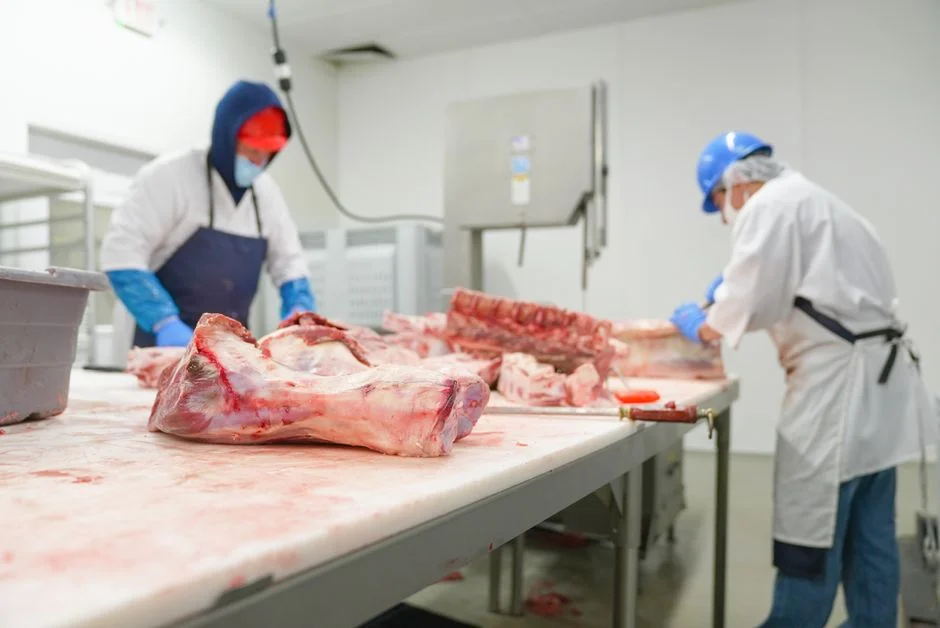
Map slaughterhouse, processing, washdown, blood-handling, rendering, and animal by-product streams separately before combining their flows. Their solids, organics, and FOG fractions can differ substantially within one plant, so a blended wastewater average may conceal the batch that determines dewatering performance. Blood can add a high solids load, while fibrous material, hair, animal by-products, and variable cleaning discharges can affect feed consistency, wear, and cake release.
Wastewater characteristics and dewatering characteristics are not interchangeable. The screw press receives treated sludge, so source flow must be converted into measured sludge flow, dry-solids concentration, and dry-solids loading. Fats, oils, and grease removal is an upstream design requirement; an industrial DAF system for FOG removal can be evaluated where suspended oil and colloidal material must be separated before dewatering.
The 2026 study, “Evaluation of Coagulants and Polymers for Optimizing Wastewater Treatment and Acid Oil Extraction in a Poultry Processing Plant” in Polymers, supports the importance of upstream treatment: it reported treated-effluent turbidity below 30 NTU and sludge moisture of 55–65% in a 100 m³/h DAF installation. That 55–65% result is study-specific and must not be presented as guaranteed screw-press cake output.
Build the Screw Press Design Basis from Real Plant Data
The screw press should be sized in dry-solids mass per operating hour, with hydraulic feed and downstream cake handling checked separately. Start by collecting wastewater flow, oil and grease load, suspended-solids load, process temperature, pH, and discharge or reuse requirements. These inputs define the required upstream treatment; they do not, by themselves, establish press capacity.
Measure the dewatering feed after DAF or clarification across normal production, startup, shutdown, and cleaning cycles. Record sludge flow, total suspended solids or total solids, and the resulting dry-solids load. The basic design relationship is:
Dry-solids load per operating hour = sludge flow × solids concentration × operating fraction
Use site measurements in that calculation; do not insert assumed values or convert plant wastewater flow directly into press capacity. Where wastewater flow is intermittent, document when sludge is generated and whether the press will run continuously, in batches, or during extended operating periods. A nameplate processing rate is not meaningful without the associated solids concentration and operating schedule.
| Design input | Information the buyer must obtain | Why it affects selection |
|---|---|---|
| Feed and solids | Measured sludge flow, suspended or total solids, dry-solids load, and variability | Sets the mass duty and turndown requirement |
| Cake target | Required moisture, transportability, and maximum discharge condition | Determines whether the press can meet the handling route |
| Conditioning | Polymer type, dose, mixing requirements, and residual-chemical limits | Establishes the chemical system and operating labor |
| Installation | Feed-pump duty, torque, filtrate handling, cake-discharge height, and utilities | Prevents a press rating from becoming an incomplete installation |
| Compliance and safety | Odor boundary, washdown containment, access clearances, and permitted chemicals | Defines the physical and operating envelope |
Also specify the cake destination, maximum cake thickness or transportability condition, odor-control connection, washdown demand, and permitted chemical types. Request trial results from actual meat-processing sludge or a comparable FOG-bearing feed. A general dry-solids capacity rating does not demonstrate how a press handles variable fats and organics. For chemical application, evaluate a PLC-controlled coagulant and polymer dosing system as part of the complete duty rather than as an accessory.
Remove FOG and Improve Conditioning Before the Screw Press
FOG removal and sludge conditioning are the control points that determine whether the screw press receives a treatable feed. DAF should be evaluated where suspended oil, fats, oils, and grease, and colloidal material must be removed before sludge dewatering. The available industrial DAF range covers 4–300 m³/h across 13 standard models and is intended for industrial FOG and suspended-solids removal; final selection still requires the measured wastewater and sludge duty.
Coagulation is not a substitute for upstream oil capture or conditioning validation. In the 2026 Polymers poultry-processing study, ferric chloride at 38% m/m produced the best reported technical results, including treated-effluent turbidity below 30 NTU, oil yield of 360 L/day, oil moisture below 2% at the tridecanter outlet, and sludge moisture of 55–65%. The same study found no statistically significant effect of polymer type on oil recovery and reported a coefficient of variation above 50% during PAC tests. These results argue for testing the actual feed rather than selecting a chemical from generic supplier information.
Base polymer selection on jar and pilot tests using the actual conditioned sludge. Compare dosage, capture performance, cake release, filtrate quality, and residual chemical demand. A PLC-controlled coagulant and polymer dosing system should reproduce the tested sequence, mixing conditions, and feed rate rather than merely meter a fixed chemical volume.
Include solids-disintegration pretreatment only where the project objective justifies it. A meat-processing sludge study in the Brazilian Journal of Chemical Engineering reported that 30 MJ/kg TS was efficient for ultrasonic cell lysis. A separate 2019 study in the Journal of Urban and Environmental Engineering reported 13% sludge disintegration at 90 g H₂O₂/kg dried solids and 3 g Fe(III)/kg dried solids, with 33% higher methane production. These studies concern biodegradability and filterability; they do not establish a universal screw-press pretreatment requirement.
| Decision | Evidence to request | Engineering interpretation |
|---|---|---|
| DAF before dewatering | Measured oil, FOG, solids, and flow | Use where free or suspended oil would impair conditioning or cake release |
| Coagulant selection | Jar and pilot results on plant sludge | Do not transfer a poultry-study chemical result without site testing |
| Polymer selection | Dose, capture, cake release, filtrate, and variability | PAC test variability above 50% in the 2026 study requires replication |
| Disintegration | Project-specific filterability and downstream objective | Consider only when the treatment objective supports the added chemical and energy burden |
| Oil handling | Moisture and condensate-control design | Protect recovered-oil quality from storage-system defects |
Protect recovered oil and odor-control systems from condensate. In the 2026 poultry study, oil moisture was below 2% at the tridecanter outlet but rose above 30% during storage because condensate entered through an inefficient exhaust system. The lesson is process-specific: design the exhaust, drainage, and storage boundary so that condensate cannot contaminate the recovered oil or discharge untreated into the odor-control system.
Select Screw Press Capacity, Construction, and Automation
Select the screw press from dry-solids throughput and feed characteristics, then check the feed pump, screw torque, filtrate handling, and cake discharge as one system. A press that can meet the solids duty is not adequate if its feed pump cannot deliver the required consistency, its torque limit is exceeded at peak FOG or solids loading, or its discharge cannot handle the resulting cake.
Specify stainless-steel contact surfaces and corrosion-resistant wetted components where the washdown and sludge chemistry require them. Enclose the feed and discharge arrangement and define the odor-control interface appropriate to the meat-processing installation. For variable production loads, assess turndown, adjustable feed, sludge-thickening control, and the maximum expected solids load. Do not rely only on a nameplate processing rate.
Define automatic-operation requirements before selecting the control package. The procurement specification should cover PLC controls, differential-pressure or torque monitoring, overload protection, automatic flushing, cake-breakage or discharge logic, and remote alarms. It should also state who can override the sequence, how alarms are recorded, and what happens when the sludge contains an abnormal oil or solids surge.
Ask each supplier to state the feed-solids range, maximum hydraulic load, maximum dry-solids load, expected cake-moisture range, polymer consumption, drive rating, noise level, flush-water demand, and guaranteed performance-test conditions. These are acceptance inputs, not optional marketing attributes. If a supplier cannot state the tested feed characteristics behind a moisture guarantee, the guarantee is not technically usable.
| Specification area | Minimum information to request | Buyer check |
|---|---|---|
| Capacity | Hydraulic feed, dry-solids load, operating hours, feed-solids range | Match to measured peak and average duties |
| Materials | Contact-surface material, wetted-component corrosion protection | Match to sludge chemistry and cleaning regime |
| Drive | Torque limit, drive rating, overload response | Check against difficult sludge and startup conditions |
| Automation | PLC functions, monitoring, flush, alarms, discharge logic | Define normal and abnormal operating responses |
| Performance | Cake moisture, polymer demand, filtrate quality, test conditions | Require evidence from representative feed |
| Utilities and access | Flush water, noise, maintenance clearances, odor connection | Include in the installed layout and operating cost |
Use a plate-and-frame filter press as the comparison point when batch operation, difficult FOG sludge, or maximum dewatering performance justifies additional manual or hydraulic handling. The available plate-and-frame sludge dewatering alternative covers filtration areas from 1 m² to 500 m² with manual, hydraulic, or fully automatic PLC-controlled operation. The correct choice depends on the complete duty and site operating model, not on filtration area alone.
Design Cake Handling, Odor Control, and Maintenance Access
Define the complete post-press route before ordering the equipment: cake destination, belt-conveyor or container route, discharge height, access clearances, washdown containment, and odor-control connection. A press that meets its cake-moisture target but cannot discharge or transport the cake does not deliver a usable dewatering system. The layout should also prevent cake accumulation, uncontrolled spillage, and air pathways from the discharge point.
The poultry study provides a specific warning about condensate. In the 2026 Polymers study, recovered-oil moisture was below 2% at the tridecanter outlet but exceeded 30% after storage because condensate entered through an inefficient exhaust system. For the screw-press installation, that finding translates into a clear engineering requirement: capture vapors at cake discharge, sludge storage, and condensate drainage points, and prevent condensate from entering the recovered-oil or odor-control equipment uncontrolled.
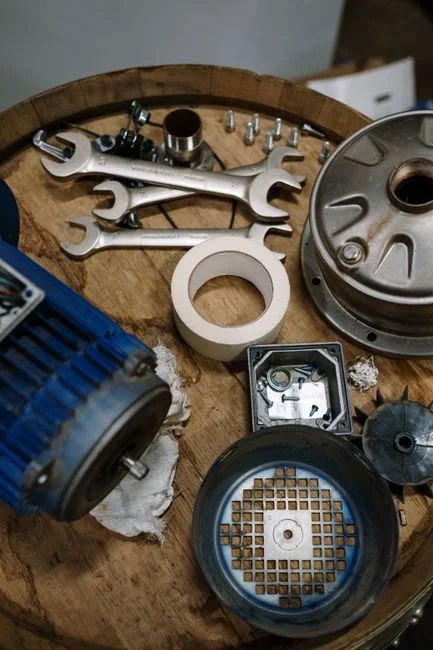
Specify accessible inspection points for the screw, flights, inlet, filter elements, drive, hydraulic system, and flush assembly. The maintenance plan should reflect the actual FOG and abrasive-solids loading, cleaning frequency, and chemical exposure. Personnel access, noise, cleaning chemicals, and washdown water should be included in the operating-cost assessment; a stand-alone press rating does not represent the whole installed cost.
Also verify how the cake-discharge arrangement interacts with the valves, filter media, and related treatment parts used for routing, isolation, or washdown. The procurement package should identify replacement items, service access, and the boundary between the screw press and the downstream handling system. This is preferable to leaving the connection details to installation improvisation.
Validate Performance Through a Pilot and Acceptance Plan
Validate the selected screw press with plant-conditioned sludge and define the acceptance criteria before the trial. A representative pilot or full-scale trial should document feed flow, solids concentration, dry-solids throughput, polymer dose, cake moisture, filtrate quality, running hours, interruptions, and operating adjustments. The test should expose the press to normal production and cleaning-cycle variability rather than only a controlled laboratory sample.
The 2026 poultry study recommends future work using standardized test durations of at least 72 hours and automated monitoring to reduce variability. For this equipment purchase, the practical implication is to specify a representative test duration and record operational interruptions rather than accepting a short run with unexplained stops. The test feed must be characterized: a moisture result without feed solids, polymer dose, and operating history is not transferable to another plant.
Set acceptance criteria before the trial, including sustained load, permitted moisture variation, cake transportability, washdown time, odor performance, and the conditions under which the performance test is valid. Require the supplier to document polymer demand and operating adjustments instead of promising a fixed cake moisture without stating the tested feed characteristics. If the plant expects FOG variability, include that variability in the test basis and define how the press responds to excursions.
| Acceptance item | Record during the trial | Decision rule |
|---|---|---|
| Sustained solids duty | Feed flow, solids concentration, dry-solids load, running time | Must meet the agreed design basis |
| Cake quality | Moisture, thickness, transportability, discharge behavior | Must match the specified handling route |
| Conditioning | Polymer type, dose, mixing, adjustment frequency | Must be operationally reproducible |
| Filtrate and washdown | Filtrate quality, flush demand, washdown time | Must fit the treatment and utility limits |
| Odor control | Discharge capture, condensate management, alarm response | No uncontrolled air or condensate pathway |
| Reliability | Interruptions, torque or pressure events, corrective actions | All deviations recorded and dispositioned |
Evaluate life-cycle economics without assuming that recovered-oil revenue will carry the project. The 2026 poultry study reported simple payback of 60.7 months and discounted payback of 64.1 months at a 12% annual discount rate. It also reported a negative NPV of USD 21,727 under a 20% oil-price decline. Those figures are specific to the studied poultry project; they demonstrate why the business case should include disposal cost, chemical use, labor, utilities, maintenance, and compliance value rather than oil revenue alone.
Compare Screw Presses with Plate and Frame Filters
The choice between continuous screw dewatering and batch plate-and-frame filtration follows from the duty, the FOG risk, and the plant’s operating model. A screw press is generally more appropriate where continuous operation, enclosed handling, and lower routine labor align with production, subject to a successful representative trial. A plate-and-frame press may be more appropriate where batch treatment, maximum solids recovery, or difficult sludge handling outweighs the benefits of continuous operation.
Do not compare the two routes by machine capacity alone. Include upstream DAF, sludge conditioning, feed pumping, filtrate handling, cake transport, washdown, utilities, maintenance access, odor control, and the labor model in the comparison. Press performance cannot be evaluated independently of the upstream train.
| Decision criterion | Screw press | Plate-and-frame filter press |
|---|---|---|
| Operating pattern | Continuous operation is the principal design case | Batch operation is available |
| FOG and variable feed | Requires demonstrated feed tolerance, torque margin, and reliable conditioning | May suit difficult batch sludge where handling effort is acceptable |
| Labor | Lower routine labor is generally the design objective | Manual or hydraulic operation can increase routine handling effort |
| Automation | PLC control, monitoring, flushing, and discharge logic can be specified | Automatic PLC operation is also available |
| Cake handling | Continuous discharge must connect to a defined transport route | Batch cake removal and handling must be included in the layout |
| Quotation basis | Measured sludge characteristics, dry-solids load, hours, cake condition, utilities | Same measured duty basis, plus filtration area and operating mode |
Ask both equipment routes to quote the same duty basis: measured sludge characteristics, dry-solids load, operating hours, required cake condition, and utilities. For the plate-and-frame comparison, the plate-and-frame sludge dewatering alternative should be evaluated with the same upstream treatment and downstream handling assumptions as the screw press. A supplier that can explain the operating consequences of the duty is more useful than one offering only a capacity statement.
Frequently Asked Questions
How much wastewater flow should a screw press handle for a meat-processing plant?
Do not size the press from wastewater flow alone. First determine the treated-sludge flow, solids concentration, dry-solids load, operating fraction, and variation across production and cleaning cycles. The relevant capacity is the measured dry-solids load entering the press after DAF or clarification. The plant wastewater flow remains an input to the upstream treatment design, not an automatic press-sizing value.
What dry-solids load should be included in a screw-press supplier request?
Request the measured average and maximum dry-solids load per operating hour, together with sludge flow, suspended or total solids, feed-solids range, operating hours, polymer dose, and the expected cake condition. A supplier should state whether the rating refers to hydraulic feed, dry-solids throughput, or both, and identify the test conditions behind any performance guarantee.
Is a screw press or plate-and-frame filter press better for FOG-rich slaughterhouse sludge?
Choose according to the measured feed and operating requirement. A screw press is the stronger candidate where continuous operation, enclosed handling, and lower routine labor are priorities, but only after a representative trial with the conditioned FOG-bearing sludge. A plate-and-frame press may be preferable for batch treatment, maximum solids recovery, or difficult sludge where additional manual or hydraulic handling is acceptable. Both routes must be quoted on the same measured duty.
How much does a screw press for meat-processing wastewater cost?
Request a project quotation rather than a generic price. The supplier needs the measured sludge flow, solids concentration, dry-solids load, operating hours, feed-solids range, cake-moisture target, polymer consumption, utilities, odor-control arrangement, and cake-discharge requirements. Ask for itemized pricing, installation scope, commissioning, spares, wear-part assumptions, and any performance-test conditions. Recovered-oil revenue should not be deducted from the investment case without a documented oil price and recovery assumption.
Which tests should be included before accepting a screw press?
Require a representative pilot or full-scale trial with the plant’s conditioned sludge. Agree in advance on sustained solids load, feed variability, polymer dose, cake moisture and transportability, filtrate quality, washdown time, odor capture, interruptions, and operating adjustments. The 2026 poultry study recommends standardized test durations of at least 72 hours and automated monitoring to reduce variability; use that as a reference point when defining a robust test, not as a universal acceptance period. Final acceptance should require the supplier to document the tested feed and all deviations.