Why battery-plant wastewater in Brookshire is its own treatment problem
Storage-battery manufacturing does not behave like a generic industrial wastewater stream, and Brookshire, Texas plants run into that fact fast. A lead-acid line produces rinse water rich in sulfate and dissolved lead, with pH swinging from acidic formation rinses to near-neutral wash water across a single shift. A lithium-ion line adds lithium, cobalt, and nickel to the metals load, plus NMP and other solvent residues from electrode coating and drying.
Conventional activated sludge (CAS) separates biomass from effluent by gravity settling in a secondary clarifier, and that mechanism breaks first when floc formation is shocked by pH or sulfate swings — a recurring pain point that the PCI Membranes commercial reference identifies as a structural weakness of clarifier-based trains in variable industrial service. Brookshire sits inside TCEQ Region 12, and plants discharging to the city of Brookshire or to the San Jacinto watershed must satisfy TPDES permit limits and pretreatment standards, which means a suspended-solids excursion is not just an operational nuisance — it is a compliance event. The combination of punishing influent chemistry and a tightening regulatory frame separates a battery-plant decision from the generic MBR-versus-CAS question most articles answer.
How a conventional activated sludge system treats battery wastewater
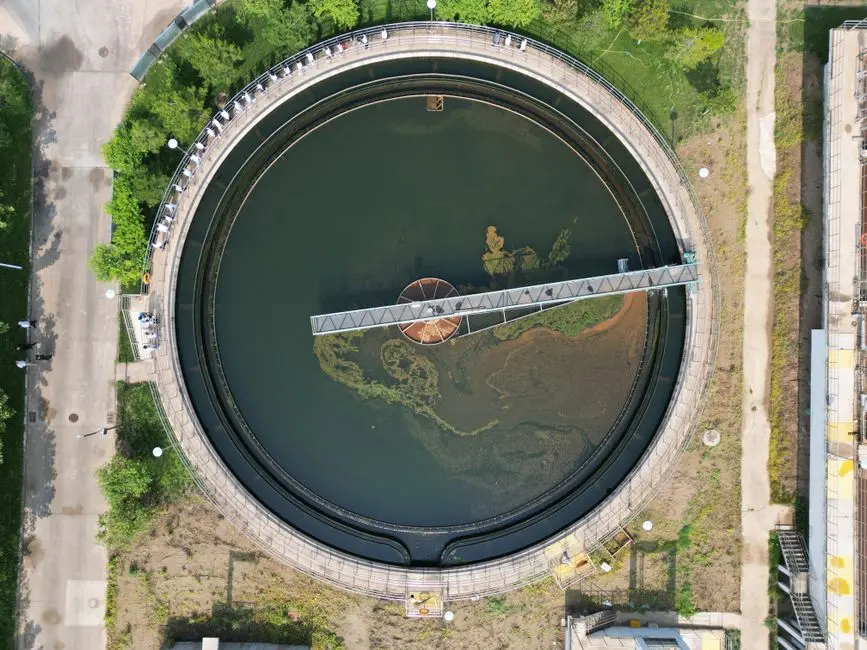
A CAS train pairs an aeration tank with a secondary clarifier to separate biomass from treated water. Mixed liquor is held in the aeration basin long enough for bacteria to oxidize organics and nitrify ammonia, then flows to the clarifier where biomass settles by gravity and a thickened sludge return keeps the population in the reactor. Clarifier sizing is governed by hydraulic and solids loading — a relationship the PCI Membranes commercial reference makes explicit. The weakness is mechanical: when floc fails to settle, suspended solids carry over and the effluent TSS barrier breaks. CAS effluent typically needs a tertiary filtration step plus disinfection to meet reuse-quality or sensitive-discharge limits, and the system is forgiving of intermittent operation when the plant runs batch campaigns, which is one of the reasons it remains the default low-capex choice. For a Brookshire battery plant with a permitted sewer discharge and conventional limits, CAS is still a defensible baseline — provided the clarifier can hold solids through the influent swings described above.
How an MBR treats battery wastewater
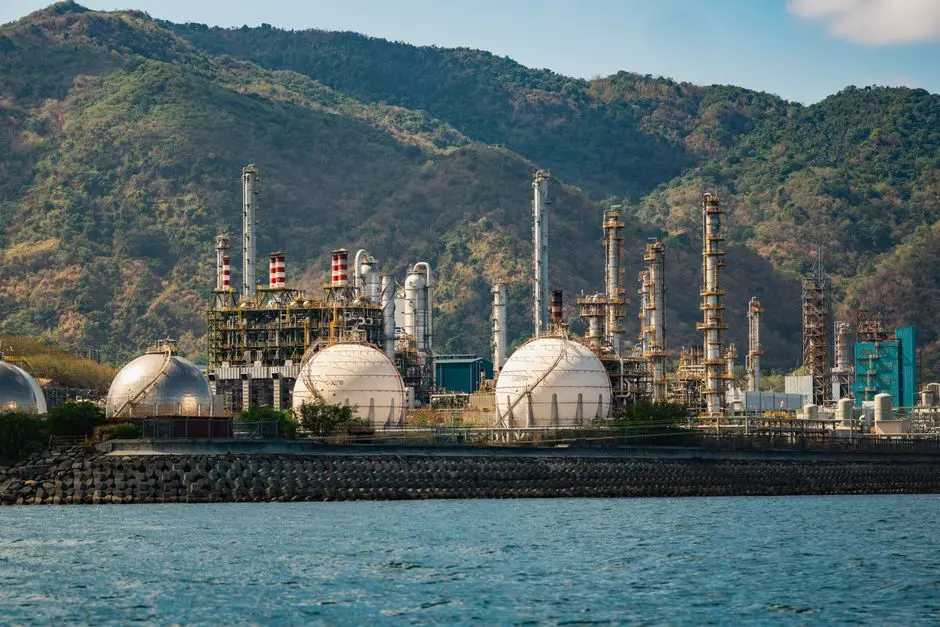
A membrane bioreactor combines a suspended-growth bioreactor with a microfiltration or ultrafiltration membrane unit, which acts as the solid–liquid separation device in place of the clarifier (PCI Membranes, commercial reference). Both MF and UF are used, but UF is generally preferred because of better separation of colloids and viruses and a lower pore-clogging tendency (PCI Membranes, commercial reference). The HydropureWater integrated MBR system uses submerged PVDF membranes rated at less than 1 μm filtration, is documented to deliver 60% smaller footprint than conventional systems, and is offered in capacities from 10 to 2,000 m³/day (HydropureWater verified product catalog, 2026). The HydropureWater DF-series flat-sheet MBR module uses 0.1 μm PVDF with an integrated aeration box for continuous scouring, with supplier documentation of 10–20× lower energy consumption than external cross-flow designs (HydropureWater verified product catalog, 2026). Because the membrane retains all biomass, mixed liquor suspended solids run far higher than in CAS, the same total mass of solids is stored in a smaller tank, and the source notes that footprint reductions of up to 50% are achievable at equivalent biomass mass (PCI Membranes, commercial reference). The permeate leaves the reactor essentially solids-free, with reduced bacterial and viral content, so minimum downstream disinfection is required and the stream is of high enough quality to feed a reverse osmosis unit directly for reuse (PCI Membranes, commercial reference).
MBR vs CAS for battery wastewater: side-by-side comparison
The following comparison details the engineering and commercial dimensions a Brookshire buyer evaluates. Two caveats belong in this section up front. First, the supplied research does not contain numeric metals-removal efficiencies for either train, so the metals row is qualitative and the buyer must request site-specific jar and pilot data. Second, the energy row reflects the specific geometry comparison documented in the supplier catalog rather than a generic CAS-versus-MBR kWh figure.
| Dimension | Conventional Activated Sludge (CAS) | Membrane Bioreactor (MBR) |
|---|---|---|
| Solid–liquid separation | Gravity settling in a secondary clarifier; clarifier size governed by hydraulic and solids loading (PCI Membranes) | Submerged MF/UF membrane cassette replaces the clarifier; essentially 100% biomass retention (PCI Membranes) |
| Footprint | Larger aeration basin plus clarifier | Up to 50% smaller at equivalent biomass mass (PCI Membranes); 60% smaller documented for the integrated MBR in the supplier catalog (HydropureWater verified product catalog, 2026) |
| MLSS operating range | Limited by clarifier settleability | Higher MLSS supported by full biomass retention (PCI Membranes) |
| Effluent TSS | Suspended solids can carry over on upset; tertiary polish usually required to meet reuse limits (PCI Membranes) | Permeate is essentially solids-free and RO-ready (PCI Membranes) |
| Reuse readiness | Usually needs polishing before RO feed | Suitable for direct RO feed for industrial reuse (PCI Membranes) |
| Microbial diversity | Limited by washout of slow-growing species | Full biomass retention supports broader bacterial and protozoan community, beneficial for recalcitrant organics (PCI Membranes) |
| Automation and decentralised operation | Operator-intensive | Can be fully automated with minimal operator intervention, viable at smaller or unmanned sites (PCI Membranes) |
| Energy use | Aeration only | Aeration plus membrane scouring; the DF-series flat-sheet geometry is documented at 10–20× lower energy than external cross-flow designs (HydropureWater verified product catalog, 2026) |
| Metals (Pb, Ni, Co, Li) | Neither train provides numeric metals removal in the supplied research; both require a dedicated upstream precipitation or ion-exchange step — request site-specific data from the supplier | |
Which system fits your Brookshire battery plant?
The decision rule is short. Choose MBR when footprint is constrained by an existing brownfield pad, when water reuse is a project requirement, when the influent is variable enough to threaten clarifier performance, or when downstream RO polishing is already in scope. Choose CAS when the plant is small, the discharge is to a permitted sewer with conventional limits, and capex is the dominant constraint — provided a clarifier-based train can be demonstrated to meet the site's suspended-solids limits under the realistic pH and sulfate swings seen at a lead-acid or lithium-ion line. Either way, the metals load (lead, nickel, cobalt, lithium) must be addressed upstream of the biological step with precipitation or ion exchange, and the PCI Membranes source notes that MBR systems are typically paired with additional steps such as RO for inorganics and heavy metals. Brookshire plants expecting tighter TCEQ effluent limits in 2026 — including any future PFAS-related expectations for stack air scrubber wastewater — should weight MBR plus RO more heavily because permeate quality is the enabler of the polishing step. For a deeper cost discussion, the MBR cost per m³ guide is a useful next read.
What a Brookshire battery plant should ask a supplier before specifying
The supplied research does not contain numeric cost or metals-removal data, so the only honest move is to convert that gap into a structured list of supplier questions. Request documented metals-removal performance on the same influent matrix (Pb, Ni, Co, Li), since the research confirms MBR systems are typically paired with additional steps such as RO for inorganics and heavy metals but does not provide the underlying removal figures (PCI Membranes, commercial reference). Request guaranteed effluent TSS, turbidity, and SDI at the membrane outlet to confirm RO feed viability, because the membrane permeate quality is the key enabler of reuse (PCI Membranes, commercial reference). Request the membrane air-scour rate in Nm³/m²·h and the cleaning frequency, since these drive OPEX more than membrane replacement. Confirm the automated controls scope — the PCI Membranes source notes MBR can be fully automated, but alarm, CIP, and remote-monitoring scope should be written into the spec. Finally, for a Brookshire site, confirm TCEQ Region 12 permitting experience and prior battery-sector references, and ask for pilot data on the actual plant effluent rather than analog streams.
Frequently Asked Questions
What is the realistic cost of an MBR versus CAS for a Brookshire battery plant?
The supplied research does not contain a numeric MBR or CAS capital or operating cost figure for a Brookshire site, so any quotation you receive from a vendor must be backed by a written scope that lists tankage volume, membrane area, air-scour rate, and assumed membrane replacement interval. Ask each bidder to normalise the bid to the same flow and influent matrix and to break out civil works, instrumentation, and lifecycle membrane cost separately.
How do I choose a supplier for a battery wastewater MBR in Brookshire?
Shortlist suppliers who can show TCEQ Region 12 permitting experience, prior battery-sector references, and pilot data on a comparable influent (Pb, Ni, Co, Li, plus high sulfate and pH swings). The integrated MBR system should be evaluated on documented PVDF membrane rating, air-scour design, and automation scope, not on a headline footprint claim alone.
Which technology handles lead and lithium better — MBR or CAS?
Neither train is rated for metals removal in the supplied research, so the answer is that both require a dedicated upstream precipitation or ion-exchange step for lead, nickel, cobalt, and lithium, and the biological step is sized for organics and ammonia load. The MBR's advantage is that the permeate is essentially solids-free and RO-ready, so the polishing train downstream of the biological step has a stable feed (PCI Membranes, commercial reference).
Is an MBR worth it for a small Brookshire lead-acid line under 50 m³/day?
At that scale, CAS is usually the lower-capex default, but MBR becomes attractive if the site is footprint-constrained, if reuse is required, or if the plant expects tighter TCEQ effluent limits in 2026. The HydropureWater catalog documents integrated MBR capacities starting at 10 m³/day, so the smaller end of the market is covered (HydropureWater verified product catalog, 2026). The decision should be driven by site footprint, reuse targets, and the influent variability that a clarifier-based train can be guaranteed to handle, not by a generic technology preference.
Related Equipment
- industrial RO system — specifications, capacity range, and technical data