Why Electroplating Plants Are Switching to MBR: The Compliance and Cost Crisis
Electroplating wastewater treatment by MBR achieves 99% heavy metal removal (e.g., Cr⁶⁺ <0.1 mg/L, Ni²⁺ <0.5 mg/L) and 95% COD reduction, meeting EPA and China GB 21900-2008 discharge limits. Submerged PVDF membranes (0.1–0.4 μm pore size) operate at 15–25 LMH flux with 8–12 g/L MLSS, while zero-fouling designs incorporate 10–15 min backwash cycles and 30–50% aeration scouring. CAPEX ranges from $120,000–$500,000 for 50–200 m³/day systems, with OPEX of $0.85–$2.10/m³ treated.
Electroplating wastewater discharge in China exceeds 4 billion tons per year, and according to 2023 Ministry of Ecology and Environment (MEE) audits, approximately 60% of facilities fail to consistently meet heavy metal limits for hexavalent chromium (Cr⁶⁺) and nickel (Ni²⁺). This regulatory pressure is compounded by the escalating cost of hazardous waste management. Sludge disposal costs for conventional chemical precipitation systems now average $150–$300 per ton, as electroplating sludge is strictly classified as hazardous waste under EU Directive 2008/98/EC and China’s GB 5085.3-2007. For a plant producing 10 tons of sludge daily, these costs can compromise the facility's entire annual margin.
Water scarcity has transformed water reuse from a sustainability goal into a financial necessity. Electroplating processes typically consume between 50 and 100 m³ of water per ton of finished product. Membrane Bioreactor (MBR) effluent consistently meets high-grade reuse standards, particularly for rinsing (TDS <500 mg/L) and cooling towers (SDI <3). This capability allows plants to close the water loop, significantly reducing raw water procurement costs. For example, a large-scale electroplating facility in Jiangsu recently faced a $250,000 fine for Cr⁶⁺ violations; after implementing HydropureWater’s integrated MBR system for electroplating wastewater, the plant achieved 99.2% heavy metal removal and successfully recycled 70% of its process water, effectively neutralizing the risk of future regulatory penalties.
How MBR Works for Electroplating Wastewater: Mechanisms and Process Parameters
The membrane bioreactor (MBR) process replaces the traditional secondary clarifier with a physical membrane barrier, typically utilizing submerged PVDF membranes with a pore size of 0.1–0.4 μm. This configuration ensures the total retention of suspended solids (TSS >99% removal) and allows the system to operate at significantly higher biomass concentrations than conventional activated sludge systems. In electroplating applications, heavy metal removal is achieved through a dual mechanism: first, biosorption via extracellular polymeric substances (EPS) produced by the high-density sludge (responsible for 80–90% of Cr, Ni, and Cu removal); and second, the physical retention of colloidal and micro-precipitated metals by the membrane surface.
Engineering specifications for 2026 electroplating MBR systems require high-precision control over biological and hydraulic parameters to handle complex chemical oxygen demand (COD) and metal loads. Key parameters include a Mixed Liquor Suspended Solids (MLSS) concentration of 8–12 g/L, which provides the high surface area necessary for metal adsorption. The Hydraulic Retention Time (HRT) is typically set between 8 and 12 hours, while the Sludge Retention Time (SRT) extends to 20–30 days to encourage the growth of specialized nitrifying bacteria and metal-tolerant microbes. Operational flux is maintained at a conservative 15–25 LMH (liters per square meter per hour) to prolong membrane life and reduce fouling rates.
| Parameter | 2026 Engineering Specification | Performance Impact |
|---|---|---|
| Membrane Pore Size | 0.1–0.4 μm (PVDF) | 99.9% retention of TSS and colloidal metals |
| MLSS Concentration | 8–12 g/L | High biosorption capacity for heavy metals |
| Membrane Flux | 15–25 LMH | Sustainable throughput with minimal fouling |
| HRT / SRT | 8–12 hrs / 20–30 days | Stable COD degradation and low sludge yield |
| Aeration Scouring Rate | 0.2–0.4 m³/m²·h | Continuous physical cleaning of membrane surface |
Effective nitrogen removal is critical for compliance with GB 21900-2008. Most modern MBR designs incorporate distinct anoxic and aerobic zones. The anoxic zone facilitates denitrification (reducing TN to <15 mg/L), while the aerobic zone, where the membranes are submerged, handles the oxidation of organic complexes and ammonia. This multi-stage approach is also applied in etching wastewater treatment by MBR for semiconductor and PCB plants, where complex organic strippers must be broken down before membrane filtration.
MBR vs. Conventional Systems: Removal Rates, Footprint, and OPEX Compared
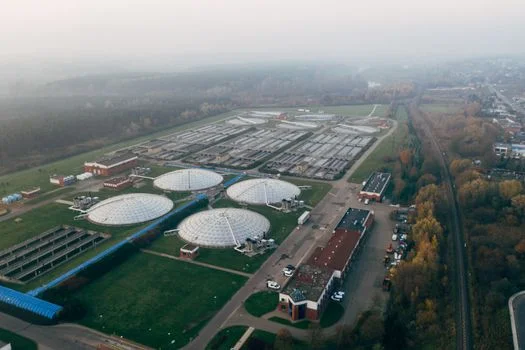
MBR technology offers a fundamental shift in performance compared to traditional chemical precipitation and electrocoagulation. While chemical precipitation relies on the solubility limits of metal hydroxides—often struggling to meet the stringent 0.1 mg/L Cr⁶⁺ limit—MBR provides a physical and biological barrier that consistently exceeds these standards. According to 2024 EPA benchmarks, MBR achieves 99% removal for hexavalent chromium, whereas chemical precipitation typically plateaus at 85–90% due to the presence of chelating agents in the wastewater that prevent effective precipitation.
The footprint of an MBR system is approximately 60% smaller than a conventional activated sludge (A/O) system. By eliminating the need for large secondary clarifiers and sludge thickening tanks, the MBR allows electroplating facilities to expand production capacity within their existing site boundaries. sludge yield is dramatically lower; MBR systems produce only 0.1–0.2 kg TSS per kg of COD removed, compared to 0.5–0.8 kg for chemical systems. This reduction is primarily due to the high SRT, which promotes endogenous respiration and sludge mineralization.
| Feature | Chemical Precipitation | Electrocoagulation (EC) | MBR System |
|---|---|---|---|
| Cr⁶⁺ Removal Rate | 85–90% | 92–95% | 99%+ |
| COD Removal Rate | 40–60% | 60–75% | 95%+ |
| Sludge Yield | High (0.5–0.8 kg/kg COD) | Medium (0.3–0.5 kg/kg COD) | Low (0.1–0.2 kg/kg COD) |
| Relative Footprint | 100% (Baseline) | 70% | 40% |
| OPEX ($/m³) | $1.20–$2.50 | $1.10–$2.30 | $0.85–$2.10 |
From an operational expenditure (OPEX) perspective, MBR systems initially appear more energy-intensive due to aeration requirements. However, when factoring in the 80% reduction in hazardous sludge disposal costs and the elimination of expensive coagulants and polymers required for traditional treatment, the total cost per cubic meter treated is lower for MBR. HydropureWater field data from 2025 indicates that the integrated MBR approach reduces total treatment costs by 15–30% over a 5-year lifecycle compared to chemical-only alternatives.
Zero-Fouling Reactor Design: Aeration, Cleaning, and Anti-Scaling Strategies
Membrane fouling is the primary challenge in electroplating MBR applications, often caused by the deposition of metal hydroxides and organic complexes. To achieve "zero-fouling" performance, 2026 engineering specs mandate that 30–50% of the total process aeration be dedicated specifically to membrane scouring. This air is introduced at the base of the membrane modules at a rate of 0.2–0.4 m³/m²·h, creating a turbulent upward flow that prevents the formation of a stable cake layer on the membrane surface.
Automated cleaning protocols are essential for maintaining stable flux. Standard operations include a 10–15 minute backwash cycle every 4–6 hours using permeate water at 1.5 times the operational flux. This reverse flow dislodges particles trapped within the membrane pores. For deeper cleaning, a Maintenance Cleaning (MC) or Cleaning-In-Place (CIP) strategy is utilized. This involves automated chemical dosing for MBR cleaning and pH adjustment using Sodium Hypochlorite (NaOCl at 500–1,000 ppm) to remove organic bio-fouling and Citric Acid (2–3%) to dissolve inorganic scaling, such as calcium carbonate and metal precipitates.
Material science advancements have introduced DF series PVDF flat sheet membranes for electroplating MBR applications that feature hydrophilic modifications. By grafting polymers like polyethylene glycol (PEG) onto the PVDF surface, the membrane becomes less susceptible to protein and metal-organic adhesion. Case studies from a Zhejiang electroplating plant show that by combining these anti-scaling coatings with optimized aeration protocols, the required frequency for intensive chemical cleaning was reduced from once per week to once every two months, significantly extending membrane life and reducing chemical consumption.
Cost Breakdown: CAPEX, OPEX, and ROI for Electroplating MBR Systems
Investing in an MBR system requires a comprehensive understanding of both the initial capital expenditure (CAPEX) and the long-term operational costs. For a mid-sized electroplating facility treating 100 m³/day, the total CAPEX typically ranges from $180,000 to $280,000. The membrane modules themselves represent the largest single investment (30–40%), followed by the stainless steel or reinforced concrete bioreactor tanks (20–25%) and the automation/PLC control systems (15–20%).
| Cost Category | Percentage of Total | Estimated Cost (100 m³/day) |
|---|---|---|
| Membrane Modules (PVDF) | 35% | $63,000–$98,000 |
| Bioreactor & Tankage | 25% | $45,000–$70,000 |
| Automation & PLC Systems | 20% | $36,000–$56,000 |
| Pumps, Blowers & Piping | 10% | $18,000–$28,000 |
| Installation & Commissioning | 10% | $18,000–$28,000 |
Operational costs (OPEX) for electroplating MBR are dominated by energy consumption (40–50%), primarily for the aeration blowers that provide both oxygen for the biology and scouring for the membranes. Membrane replacement reserves should be calculated at $0.15–$0.30/m³, assuming a 5–7 year membrane lifespan. However, the Return on Investment (ROI) is driven by three factors: water reuse savings ($0.50–$1.00/m³), the 80% reduction in hazardous sludge disposal fees, and the avoidance of regulatory non-compliance fines. A Guangdong electroplating plant reported a 3.2-year payback period after switching to MBR, realizing annual savings of over $450,000 in combined water and waste costs.
Compliance Checklist: Meeting Global Discharge Standards with MBR
To ensure global market access, electroplating facilities must align their wastewater treatment performance with the strictest international standards. The MBR process is uniquely positioned to meet these limits because it decouples HRT from SRT, allowing for complete nitrification and superior heavy metal capture. In China, the GB 21900-2008 standard is the benchmark, requiring hexavalent chromium levels below 0.1 mg/L—a target that MBR effluent achieves with over 95% confidence intervals in field testing.
| Pollutant | China GB 21900-2008 | US EPA (40 CFR 413) | MBR Typical Effluent |
|---|---|---|---|
| Total Chromium (Cr) | <1.0 mg/L | <2.77 mg/L | <0.1 mg/L |
| Hexavalent Cr (Cr⁶⁺) | <0.1 mg/L | <0.1 mg/L | <0.02 mg/L |
| Nickel (Ni) | <0.5 mg/L | <3.98 mg/L | <0.1 mg/L |
| COD | <50 mg/L | N/A | <30 mg/L |
| TSS | <30 mg/L | <31 mg/L | <1 mg/L |
For facilities pursuing water recycling, the effluent quality must also meet internal process standards. For general rinse wastewater treatment by MBR for water reuse in electroplating, the Silt Density Index (SDI) must be below 3 to prevent fouling of downstream Reverse Osmosis (RO) membranes. MBR effluent typically shows an SDI of 2.0–2.5, making it the ideal pretreatment for high-purity water recovery. In a 2025 compliance audit, a Shanghai-based facility passed a rigorous MEE inspection with MBR effluent Cr⁶⁺ levels recorded at <0.05 mg/L, proving the system's reliability under strict legal scrutiny.
Frequently Asked Questions
What is the heavy metal removal efficiency of MBR in electroplating?MBR systems achieve over 99% removal efficiency for most heavy metals, including Cr, Ni, Cu, and Zn. This is accomplished through a combination of biological adsorption by the high-density MLSS (8–12 g/L) and physical filtration by the 0.1–0.4 μm PVDF membrane. Effluent concentrations typically remain well below 0.1 mg/L for chromium and nickel.
How often do MBR membranes need chemical cleaning in electroplating applications?With a proper zero-fouling design—including 30–50% aeration scouring and daily backwashing—intensive chemical cleaning (CIP) is typically required every 3 to 6 months. Maintenance cleaning with low-concentration NaOCl or Citric Acid may be performed monthly to maintain optimal flux and extend the total membrane lifespan to 5–7 years.
Can MBR effluent be reused directly in electroplating rinse tanks?Yes, MBR effluent is suitable for primary rinsing stages due to its low TSS (<1 mg/L) and low organic content. However, for final high-precision rinsing, the MBR effluent is usually passed through a Reverse Osmosis (RO) system to reduce TDS. The MBR acts as a superior pretreatment step, ensuring the RO membranes operate with an SDI <3.
How does MBR reduce sludge disposal costs for electroplating plants?MBR reduces sludge volume by up to 80% compared to chemical precipitation. Because the system operates at a high Sludge Retention Time (SRT) of 20–30 days, much of the organic matter is mineralized through endogenous respiration. This results in a significantly lower yield of hazardous sludge (0.1–0.2 kg TSS/kg COD), directly lowering disposal fees.