A silicon carbide wastewater treatment plant removes 95-99% COD and 99%+ TSS at 50-500 L/m²/h flux, with CAPEX of $2M-$20M for 10-1,000 m³/h trains. pH 0-14 tolerance and 10-15 year membrane life cut OPEX about 30% versus polymeric systems.
Why Semiconductor and Pharmaceutical Plants Are Switching to SiC Wastewater Treatment
SiC ceramic membranes last 10-15 years on aggressive industrial streams where polymeric modules survive 6-18 months, and they hold flux at 50-500 L/m²/h with far fewer CIP cycles. Facilities switch to cut unplanned downtime—about $500,000 per year at a typical fab—and to keep effluent compliance stable.
Polymeric membrane fouling costs semiconductor fabrication facilities an estimated $500,000 per year in unplanned downtime and chemical cleaning expenses, according to 2026 industry benchmarks. Oils, surfactants, and abrasive particles pore-clog organic polymers, and that risk is unacceptable where process water continuity is critical. The result is a rapid shift toward silicon carbide (SiC) technology as a robust option for SiC applications in semiconductor wastewater treatment.
The Biofos wastewater treatment plant in Avedøre, Denmark, is a primary technical benchmark for this transition. After repeated failures with polymeric membranes on abrasive secondary effluent, the facility implemented SiC ceramic membranes and achieved a 99% TSS removal rate. SiC is naturally hydrophilic—it attracts water while repelling organic foulants—and its roughly 40% porosity, against 5-10% for most polymeric membranes, supports significantly higher flux and far fewer Clean-in-Place (CIP) cycles.
For a typical fab manager or EHS director, the frustration usually traces to a predictable cycle of performance degradation. Conventional membranes can require replacement every 6 to 18 months on aggressive industrial streams, while silicon carbide membranes have demonstrated lifespans beyond 10 years in similar conditions with zero performance drop. SiC's extreme hardness—second only to diamond—prevents the physical erosion common in high-solids food processing and pharmaceutical manufacturing duty.
By switching to a SiC wastewater treatment plant, facilities also mitigate the risk of regulatory non-compliance caused by membrane breakthrough. The mechanical stability of the SiC crystal lattice keeps pore sizes consistent under pressure and temperature swings, holding a reliable barrier against pathogens and suspended solids that polymeric alternatives cannot match over long-term operation.
SiC Membrane Flux Rate 2027 Specs: Pores, Pressure, and Chemical Resistance
Silicon carbide membranes operate at flux rates of 50 to 500 L/m²/h, roughly three times the throughput of standard PVDF or PES membranes in industrial service. That permeability comes from the material's high surface energy and interconnected pore structure. Engineers designing 2027 deployments should size tanks and pump capacities around these numbers early. High-efficiency components are typically integrated into SiC-compatible MBR membrane modules for submerged filtration to maximize surface area-to-volume ratios.
Chemical resistance is the most decisive engineering advantage. Polymeric membranes are typically restricted to pH 2-12 and stay sensitive to oxidizer concentrations, whereas SiC membranes are chemically inert across the entire pH 0-14 spectrum. They withstand chlorine concentrations up to 2,000 ppm, permitting aggressive "shock" cleanings that would dissolve organic membranes. Pharmaceutical plants with complex organic synthesis waste and food processors running high-temperature caustic washes both benefit directly.
| Parameter | SiC Ceramic Membrane (2027 Spec) | Polymeric Membrane (PVDF/PES) |
|---|---|---|
| Pore Size (μm) | 0.1 – 1.0 (Adjustable) | 0.03 – 0.1 |
| Operating Flux (L/m²/h) | 50 – 500 | 15 – 150 |
| pH Resistance | 0 – 14 (Full Range) | 2 – 12 |
| Chlorine Tolerance (ppm) | 2,000+ | < 500 |
| Temperature Limit (°C) | Up to 150°C | < 45°C |
| Typical Lifespan (Years) | 10 – 15 | 2 – 5 |
Operating pressures run notably below traditional cross-flow ceramic systems. Because the material is highly hydrophilic, trans-membrane pressure (TMP) typically stays between 0.1 and 1.0 bar, and that low-pressure requirement translates directly into energy savings across the permeate pump assembly. Thermal tolerance up to 150°C lets plants treat hot process water without expensive heat exchangers, a common burden in textile and pharmaceutical "hot-waste" streams.
Backpulsing deserves equal attention in the design review. SiC membranes handle high-frequency, high-pressure backwashing up to 5 bar, physically dislodging surface cake layers. Combined with the material's low affinity for oil, that capability keeps the zero-fouling design principle intact even when influent TSS exceeds 5,000 mg/L.
Silicon Carbide Membrane Lifespan vs Polymeric in Aggressive Streams
Membrane lifespan on aggressive streams separates the two material classes by an order of magnitude: 10-15 years for SiC against 2-5 years for polymeric, with conventional modules sometimes needing replacement in 6-18 months. Erosion, not chemistry, drives most premature polymeric failures in high-solids service. SiC's hardness prevents that erosion mode entirely, which is why most refurbishment budgets we review for abrasive streams end up specifying ceramic. The replacement math alone often justifies the CAPEX premium before energy and chemicals enter the picture.
Hybrid SiC DAF RO MBR Process Flow: Multi-Barrier Design
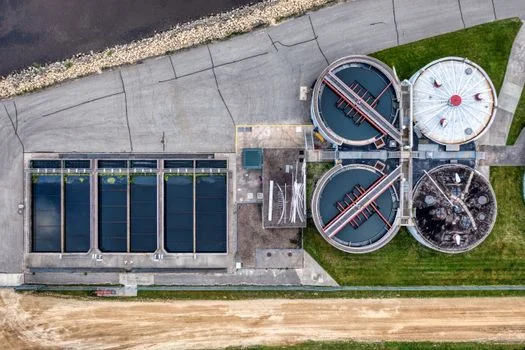
A hybrid architecture combining Dissolved Air Flotation (DAF), silicon carbide membranes, Reverse Osmosis (RO), and Membrane Bioreactors (MBR) delivers a multi-stage barrier against fluctuating industrial loads. The train holds effluent quality constant even when influent swings. The process begins with pre-treatment DAF systems for SiC membrane protection, which strip up to 90% of fats, oils, and greases (FOG) plus heavy suspended solids before they can overwhelm the biological stage.
The SiC membrane acts as the primary separation engine. Configured as a submerged MBR or an external loop, the modules filter particles down to 0.1 μm and deliver a silt density index (SDI) below 2.5, extending downstream RO membrane life by 300%. Facilities targeting Zero Liquid Discharge (ZLD) or high-grade process reuse then apply RO polishing for SiC effluent to achieve <10 mg/L TDS.
Process Flow Sequence:
- Influent Equalization: Buffering of hydraulic and organic surges.
- DAF: Removal of bulk TSS and FOG via micro-bubble flotation.
- MBR (Biological Treatment): Aerobic/anaerobic digestion of dissolved organic matter (COD/BOD).
- SiC Membrane Filtration (DF Series): Ultra-fine separation of biomass and solids; 99% TSS removal.
- RO Polishing: Removal of dissolved salts and trace heavy metals.
- Effluent Discharge/Reuse: Meeting 40 CFR Part 433 and local reuse standards.
SiC Ceramic Membrane Zero Fouling Design Principles
Zero-fouling, in this design context, means the system maintains stable flux without irreversible membrane scaling. SiC membranes do not undergo the pore constriction polymers suffer when exposed to cleaning chemicals, so clean permeability returns after every backwash. That stability allows a 40% reduction in pump energy consumption compared with traditional cross-flow systems, since the pumps never fight a permanently fouled layer. Where silica recovery matters more than flux, a ceramic membrane water route built on ultrafiltration fits dicing and grinding streams better.
SiC MBR System for Semiconductor Wastewater Duty
An SiC MBR system for semiconductor wastewater handles hydrofluoric acid, CMP slurries, and abrasive particles that destroy organic membranes inside a year. The SDI < 2.5 permeate it produces protects downstream RO polishers, keeping fab water loops closed. For wafer-line sourcing teams benchmarking +ceramic membranes wstewater quotations against SiC, comparable PVDF-versus-ceramic CAPEX data appears in the silicon-wafer supplier breakdown. Fab-scale cost benchmarks are compiled in Chip Fab Wastewater Treatment: 2026 Engineering Specs, Zero-Fouling Design.
Silicon Carbide Wastewater Treatment Plant CAPEX and OPEX: 2027 Benchmarks
Silicon carbide wastewater treatment plant capex typically ranges from $2M to $20M, set by flow capacity (10 m³/h to 1,000 m³/h) and influent complexity. SiC modules cost more upfront than polymeric equivalents, yet total cost of ownership (TCO) over a 10-year period lands significantly lower. For a line-by-line financial breakdown, procurement managers should consult a detailed OPEX savings analysis for SiC vs polymeric membranes.
ROI is driven by three factors: membrane longevity, reduced chemical consumption, and lower sludge disposal costs. A $15M SiC installation in a Singapore industrial park demonstrated annual OPEX savings of $2.3M against a neighboring conventional polymeric MBR plant. The savings came from a 90% reduction in chemical cleaning frequency and the elimination of membrane replacements, which had averaged $400,000 every two years for the conventional system. The figures track the regional compliance and cost benchmarks for SiC plants.
| Cost Category | SiC Ceramic System | Conventional Polymeric System |
|---|---|---|
| Initial CAPEX (Relative) | 1.4x – 1.8x | 1.0x (Baseline) |
| Annual OPEX (Relative) | 0.7x | 1.0x (Baseline) |
| Energy Use (kWh/m³) | 0.3 – 0.5 | 0.6 – 0.9 |
| Chemical Use (CIP) | Low (Weekly/Monthly) | High (Daily/Weekly) |
| Membrane Replacement | Every 10–15 Years | Every 2–4 Years |
Beyond direct costs, sludge volume delivers a secondary financial benefit. SiC membranes operate at Mixed Liquor Suspended Solids (MLSS) concentrations up to 20,000 mg/L, so the biological process runs more efficiently and produces more concentrated sludge. Large-scale facilities can save up to $100,000 annually in off-site hauling fees as a result. For CFOs, the break-even point on the higher SiC CAPEX typically arrives within 3.5 to 5 years of operation.
Effluent Quality and Compliance: EPA, EU, and WHO Standards
Silicon carbide plants produce effluent that consistently meets or exceeds the world's strictest discharge and reuse standards. SiC provides a "hard" physical barrier that holds COD, TSS, and heavy metals below detection even during process upsets—reliability that is non-negotiable for medical wastewater treatment.
In the pharmaceutical sector, a German plant recently moved to SiC to strip trace API (Active Pharmaceutical Ingredient) residues from effluent before discharge. Pathogen and particulate barriers of this kind increasingly decide permit renewals in both EU and US jurisdictions. Plants sizing for the 2027 compliance horizon should therefore specify online monitoring interfaces alongside the membrane trains.
Next Steps: Sizing and Budgeting a SiC Train
Start with a verified influent profile—TSS, FOG, TDS, metals, and temperature spikes—then map it against the hybrid process flow above to fix stage count. Request quotes anchored to the $2M-$20M CAPEX brackets and a 10-year TCO model covering energy at 0.3-0.5 kWh/m³, CIP chemicals, and sludge hauling. To size a DAF-SiC-RO-MBR train for your stream, send the inquiry form with your water analysis.
Frequently Asked Questions
How much does a SiC wastewater treatment plant cost?
Expect $2M to $20M installed, set by flow capacity from 10 m³/h to 1,000 m³/h and influent complexity. SiC CAPEX runs 1.4x-1.8x a polymeric baseline, while annual OPEX drops to roughly 0.7x. Break-even on the premium typically lands within 3.5 to 5 years of operation.
Why do SiC membranes resist fouling better than polymers?
SiC is naturally hydrophilic, so organic foulants repel rather than anchor, and its roughly 40% porosity against 5-10% for polymers keeps permeability high. Backpulsing at up to 5 bar physically dislodges cake, restoring clean permeability after every cycle. The design holds stable flux even above 5,000 mg/L influent TSS.
What effluent standards can a SiC plant meet?
The 0.1 μm barrier holds COD, TSS, and metals below detection limits even during upsets. With RO polishing, effluent reaches reuse-grade quality below 10 mg/L TDS.
Is SiC worth the premium for a semiconductor fab?
For fabs, yes: polymeric fouling costs an estimated $500,000 per year in downtime and cleaning, while SiC membranes run beyond 10 years with zero performance drop. SDI below 2.5 from the SiC stage also protects RO polishers, extending their life by 300%. Combined with 99% TSS removal on abrasive streams, the TCO case is usually decisive.