Why Luanda Needs a Sector-Specific ETP in 2026
Luanda's industrial base spans oil & gas services, food & beverage, textiles, pharmaceuticals, hospitality, and pulp & paper — and each sector produces a different effluent profile that a generic packaged plant cannot treat properly (APK Aquatech Angola, sector list). The clearest field evidence comes from a textile ETP study in Bangladesh (RSIS International, 2024), where biological treatment took inlet COD from 400.67 mg/L and 217 mg/L down to 47 mg/L and 26 mg/L respectively — a 78–88% reduction that only satisfied the ECR-1997 textile COD standard of 200 mg/L because the biological stage was sized and selected for that specific wastewater, not pulled off a generic shelf.
For a Luanda buyer in 2026, the lesson is that the influent characterization step — pH, COD, BOD, TSS, FOG, salinity, heavy metals, and flow regime — must be the project's first deliverable, not the supplier's afterthought. Tertiary polishing options also carry academic support: University of Twente research (Schrader PhD, doi 10.3990/1.9789036523325) on direct nanofiltration of WWTP effluent to EU WFD reuse standards, and Wageningen University research (Lei 2022, doi 10.18174/575408) on constructed-wetland removal of micropollutants from WWTP effluent — both relevant where Luanda buyers target water reuse or polishing.
Angolan Compliance and Discharge Reality for 2026
The supplied research does not contain Angola-specific numeric effluent limits, so any Luanda buyer who sees a quoted threshold in a supplier brochure should treat it as unverified. The correct procurement behaviour is to request the current discharge parameter list directly from Angola's environmental authority and to obtain a written compliance opinion from each shortlisted ETP supplier, covering the specific site and the specific influent characterization. Where Angolan numeric limits are not formally published, Anglophone engineering teams typically reference internationally recognized frameworks as design benchmarks: the EU Urban Waste Water Directive (91/271/EEC) and the EU Industrial Emissions Directive (2010/75/EU) for municipal and industrial discharges, and — where the reuse target is potable-grade water — the WHO Guidelines for Drinking-water Quality and the EU Drinking Water Directive (98/83/EC). These are reference frameworks, not the binding local rule, and the supplier's compliance statement must say which Angolan instrument it has been checked against. Documentation the Luanda operator should keep on file and be able to produce in any future audit: the influent characterization report, the mass balance, the design basis, the commissioning report, and the operator training records. Without these, even a well-built plant is exposed during an enforcement visit.
Matching the Treatment Train to the Influent
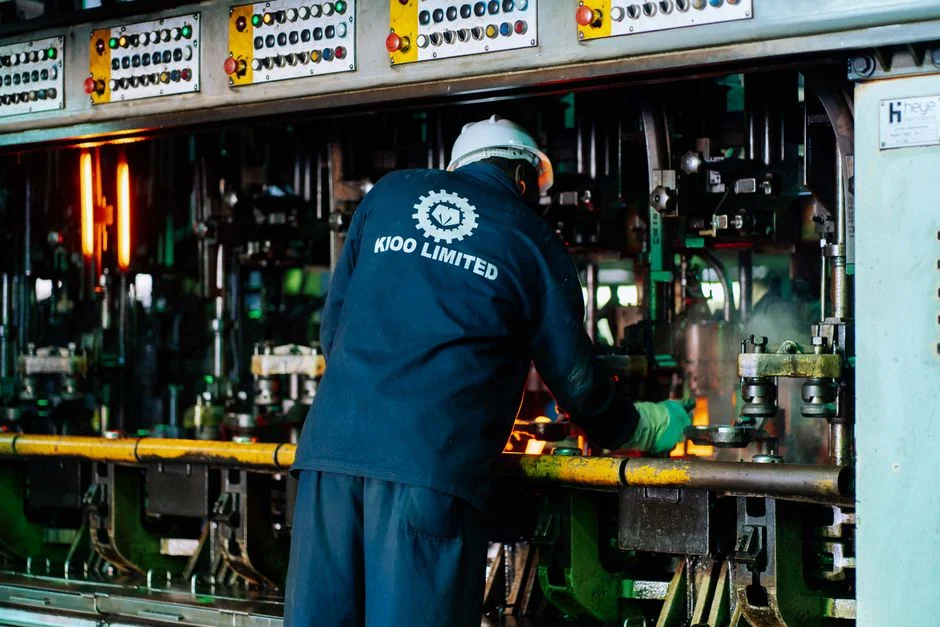
Every ETP is a sequence of unit operations, and each stage has a defined job that the buyer should be able to name. Screening removes rags, plastics, and debris so they do not damage downstream equipment. Equalization buffers hydraulic and load shocks so the biological stage sees a steady feed. Physico-chemical primary treatment — typically a DAF primary treatment system — targets suspended solids, colloids, oils, and FOG. Biological secondary treatment (aerobic or anaerobic) targets dissolved organics and is, in practice, the workhorse for high-COD industrial effluents. Tertiary polishing — an MBR membrane bioreactor system, nanofiltration, or constructed wetlands — targets residual organics, nutrients, and micropollutants where reuse or strict discharge limits apply. ZLD with multi-effect evaporation (MEE) handles high-salinity and zero-discharge duties.
The Bangladesh textile case is a concrete proof-point for the biological stage: with secondary treatment alone, textile COD fell from 400.67 to 47 mg/L at one site and from 217 to 26 mg/L at the other, both below the ECR-1997 textile standard of 200 mg/L (RSIS International, 2024). For tertiary polishing, the University of Twente PhD (Schrader, doi 10.3990/1.9789036523325) found that direct nanofiltration can polish WWTP effluent to EU WFD standards for agricultural or potable reuse, and the Wageningen thesis (Lei 2022, doi 10.18174/575408) showed constructed wetlands as a viable polishing step for micropollutants from WWTP effluent. The sequencing logic for a Luanda project is therefore driven by the influent: a food & beverage plant typically needs screening + DAF + biological + disinfection; an oil & gas services site with produced water may need oil/water separation + DAF + biological + tertiary; a high-salinity chemical or fertilizer site may add ZLD with MEE evaporation (APK Aquatech Angola, sector scope).
| Stage | Removes | Typical unit operation | Why it matters to a Luanda buyer |
|---|---|---|---|
| Screening | Rags, plastics, debris | Bar screens / fine screens | Protects downstream equipment from mechanical damage |
| Equalization | Flow and load spikes | EQ tank with mixing | Stabilizes feed to biological stage |
| Physico-chemical primary | Suspended solids, colloids, FOG, oil & grease | DAF, coagulation/flocculation | Front-loads removal so biological stage is not overloaded |
| Biological secondary | Dissolved organics (COD/BOD) | Aerobic or anaerobic bioreactor | Workhorse for high-COD industrial effluents (RSIS 2024 textile case) |
| Tertiary polishing | Residual organics, nutrients, micropollutants | MBR, nanofiltration, constructed wetlands | Required where reuse or strict discharge applies |
| ZLD / brine concentration | High-salinity streams | Multi-effect evaporation (MEE) | Reduces liquid waste to solid residue; high water recovery (APK Aquatech Angola) |
Technology Selection Matrix for Luanda Conditions
The matrix below is the one-pager a Luanda buyer can take into a supplier meeting. Each row is anchored to either the supplied research or the HydropureWater product catalog; no row invents a numeric range beyond what those sources state.
| Technology | Typical duty | Strengths | Key constraints |
|---|---|---|---|
| DAF (dissolved air flotation) | Primary removal of suspended solids, FOG, oil & grease, colloids | High removal efficiency on FOG and colloids; wide flow envelope of 4–300 m³/h per unit | Needs consistent coagulant dosing and sludge handling downstream |
| MBR (membrane bioreactor) | Biological treatment with submerged PVDF membranes, sub-1-µm filtration | Near-reuse-quality effluent; ~60% smaller footprint than conventional systems; 10–2,000 m³/day envelope | Membrane cleaning, aeration energy, operator skill |
| ZLD / MEE | High-salinity effluent concentration; zero liquid discharge | High water-recovery with minimum solid waste; multiple-effect evaporation reduces steam consumption (APK Aquatech Angola) | High CAPEX and energy use; justified only where discharge is constrained or salinity is high |
| Nanofiltration polishing | Polish WWTP effluent to EU WFD standards for agricultural or potable reuse | Documented effluent reclamation potential (Schrader PhD, University of Twente, doi 10.3990/1.9789036523325) | Membrane fouling control; pre-treatment quality must be specified |
| Constructed wetlands | Micropollutant polishing from WWTP effluent | Low-Opex polishing step; documented removal of micropollutants (Lei 2022, Wageningen University, doi 10.18174/575408) | Requires land area; climate sensitivity |
The DAF and MBR entries above are taken from the HydropureWater product catalog and describe the equipment envelope, not a price. The ZLD/MEE row is drawn from the APK Aquatech Angola scope, which describes multi-effect evaporation as efficient for high-salinity industrial effluents with reduced steam consumption.
Sizing, Site Constraints, and Logistics in Angola
Sizing must be driven by peak hourly flow and peak pollutant load, not by the daily average — because biological and physico-chemical stages are routinely tripped by spikes the average figure hides. A Luanda buyer should require the supplier to state both average and peak design values in the design basis, and to identify the design safety factor. Beyond flow, three Luanda-specific execution risks decide whether the ETP actually performs in year one: power supply stability, ambient temperature, and operator skill. The supplier must confirm generator backup, specify control panels rated for the local conditions, and ship skids sized for the port-to-site road constraints. Logistics into Angola are dominated by sea freight to the Port of Luanda plus overland transport, and the buyer should request a shipping split (container count, weight, dimensions) and clarify who handles customs clearance and inland haulage. Finally, an ETP only delivers design performance if the supplier provides structured operator training, an English/Portuguese manual set, and a defined service-call response time — these are not optional extras but operational prerequisites for a plant that must run continuously.
Luanda ETP Supplier Evaluation Checklist
The six criteria below can be weighted by the buyer and copied directly into an RFP. For each, the table states what evidence to request so the scoring is auditable, not subjective.
| Criterion | What to ask for as evidence | Why it matters |
|---|---|---|
| 1. Proven Luanda or African project references | Project list with reference contacts and site locations | Confirms the supplier has actually shipped and commissioned in West Africa |
| 2. Sector-matched influent experience | Case-study data with inlet and outlet parameters for a similar industry | Prevents the supplier learning on your wastewater |
| 3. Local service and spare parts | Service-level agreement with response time and parts list held in-region | Downtime cost in Angola routinely exceeds any equipment price saving |
| 4. Documentation in English/Portuguese | Sample O&M manual, datasheets, electrical drawings | Operator comprehension and audit-readiness |
| 5. Operator training programme | Training agenda, duration, certification, post-training support | Plant performance is set by the operator, not the equipment |
| 6. Compliance documentation support | Written compliance statement referencing the standards the design meets and the Angolan instruments checked | Protects the operator during any future environmental audit |
The most common procurement pitfall in this market is choosing a supplier on lowest equipment price without verifying local service presence — this typically costs more in downtime and lost production than the price saving. The checklist also ties back to the four-pillar scope outlined for Angola (ETP, STP/ETAR, ZLD, MEE), so the buyer can confirm the supplier's offering actually matches the site's needs rather than selling a single unit operation.
Budget Framing: What to Ask the Supplier Before You Sign
The supplied research does not contain Angola-specific CAPEX or OPEX figures, and any quotation a Luanda buyer receives must therefore be broken out before it is compared. Request a written split of CAPEX into equipment, freight, installation, commissioning, and training, and a separate annual OPEX view covering energy, chemicals, membranes, spares, labour, and sludge disposal. The single most useful procurement behaviour is to ask for an itemized quote and a 5-year lifecycle cost projection — membrane replacement, chemical consumption, energy use, and sludge handling — and to compare at least two supplier quotations on the same basis. The equipment-relevant ranges carried on this site (MBR systems 10–2,000 m³/day, DAF systems 4–300 m³/h, ClO₂ generators 50–20,000 g/h, plate & frame filter presses 1–500 m²) are size-scope indicators drawn from the HydropureWater product catalog and from the sludge dewatering filter press and PLC-controlled chemical dosing system product lines — they tell the buyer what scope a line item covers, not what it costs. The buyer should also ask the supplier to confirm whether lifecycle numbers are based on the same design influent the plant will actually see, because OPEX driven by an underestimated load is the most common cause of a plant running over budget in year two.
Frequently Asked Questions
Which ETP technology should a Luanda industrial buyer choose in 2026?
Technology choice is driven by influent, not by catalogue. For high-COD industrial effluents like textiles, biological secondary treatment is the workhorse — the Bangladesh textile ETP case reduced COD from 400.67 and 217 mg/L to 47 and 26 mg/L respectively using biological treatment alone (RSIS International, 2024). For FOG, oil, and suspended solids across food, pulp & paper, and petrochemical pre-treatment, a DAF unit is the standard primary step. Where reuse or strict discharge applies, MBR or nanofiltration polishing is added; for high-salinity streams, ZLD with MEE is the documented route (APK Aquatech Angola). A Luanda buyer should therefore request a treatment-train diagram tied to their own influent characterization, not a generic package.
What Angolan environmental standards does an ETP need to meet in 2026?
The supplied research does not contain Angola-specific numeric effluent limits, so the buyer should request the current parameter list from Angola's environmental authority and obtain a written compliance opinion from the ETP supplier for the specific site. Internationally recognized reference frameworks used by Anglophone engineering teams in this market include the EU Urban Waste Water Directive (91/271/EEC) and the EU Industrial Emissions Directive (2010/75/EU) for discharge, and the WHO Guidelines and EU Drinking Water Directive (98/83/EC) where the reuse target is potable-grade. The supplier's compliance statement must state which Angolan instrument it has been checked against, and the operator must keep the design basis, mass balance, and commissioning report on file.
How does a Luanda buyer select the right ETP supplier?
Select on six auditable criteria rather than headline price: proven Luanda or African references, sector-matched influent experience, local service and spare parts, English/Portuguese documentation, a structured operator training programme, and compliance documentation support. The evidence to request for each is listed in the supplier evaluation table above — project lists, inlet/outlet case-study data, an SLA with response time, a sample O&M manual, a training agenda, and a written compliance statement. Choosing on lowest equipment price without verifying local service presence is the most common cause of avoidable downtime.
What should a Luanda buyer ask for in an ETP quotation to control lifecycle cost?
Ask for an itemized CAPEX split (equipment, freight, installation, commissioning, training) and a separate annual OPEX view (energy, chemicals, membranes, spares, labour, sludge disposal), then a 5-year lifecycle cost projection. Compare at least two suppliers on the same basis and confirm that the OPEX assumptions match the actual design influent. The supplied research gives no Angola-specific price, so the inputs a buyer must request from each supplier are the line items above — not a single headline number. A sludge dewatering filter press line item and a PLC-controlled chemical dosing system line item should both appear in the OPEX discussion because they are recurring-cost drivers, not one-time purchases.