
Why Sendai Changes the Cooling-Water Math
A 100 MW facility can require up to 2 million liters of cooling water per day, but in the Sendai region cold winters and Pacific seawater access let hybrid loops cut that demand relative to arid-region peers (IDE Tech, 2026). Cooling towers still account for 20–30% of water demand at power-generation equivalents, so even a hybrid Sendai loop produces a non-trivial blowdown stream that must be reused or discharged (Open Engineering Inc., 2026). Because Sendai is not water-stressed the way inland arid sites are, the primary driver for treatment is discharge compliance and operating-cost reduction, not freshwater survival — and that reframes the entire case.
Sendai's coastal sites (Matsushima, Sendai-Bay industrial belt) have direct access to Pacific seawater cold enough to support free-cooling for a meaningful portion of the year, which materially changes the cycles-of-concentration calculus. Inland Sendai sites, by contrast, pull municipal water and run a closed evaporative loop that produces a continuous blowdown stream. Edge sites that already receive reclaimed municipal water carry a modest indirect water penalty of ~0.93 L/m³ from the higher upstream electricity and chemical inputs in the reuse train — a number that is nearly negligible at less than 0.1% of the direct displacement benefit (Open Engineering Inc., 2026).
The decision framework is therefore: coastal site with seawater intake → once-through or hybrid; inland Sendai site on municipal water → closed evaporative loop with maximum reuse; edge site on reclaimed municipal water → higher treatment energy and a small indirect water penalty. The treatment train that follows is identical in chemistry terms, but the blowdown volume it must handle is very different.
Blowdown Chemistry: What Has to Be Removed
At 4 cycles of concentration (COC), cooling-tower blowdown sits at 1,200–6,000 mg/L total dissolved solids — typically 4–8× the makeup water — with elevated calcium, magnesium, silica, and alkalinity (Genesis Water Technologies). Suspended solids in blowdown run 10–50 mg/L even with basin filtration, dominated by corrosion products, biofilm fragments, and airborne particulates. Treatment chemicals (biocides, corrosion/scale inhibitors, dispersants) accumulate proportionally with COC, and legacy chromate or high-phosphate chemistries will block reuse and discharge outright.
Blowdown volume at 4 COC is 25–30% of makeup water — for a facility using 10 million gallons per month, that is 2.5–3 million gallons per month of water currently lost (Genesis Water Technologies). In water-stressed regions, direct discharge fees now exceed $5–$15 per thousand gallons, and some jurisdictions have implemented total dissolved solids limits below 1,500 mg/L, effectively prohibiting discharge of concentrated blowdown without treatment. Japanese regulators are tightening discharge thresholds along the same trajectory.
Biological content is the third axis: even well-maintained systems contain planktonic bacteria, algae, and biofilm-forming organisms that must be addressed in any recovery system (Genesis Water Technologies). The chemistry is the reason simple filtration is not enough — any reuse train has to handle dissolved hardness, silica scaling potential, suspended solids, and biological loading simultaneously. That is why the recommended train stacks side-stream filtration, UF, and RO in series rather than relying on any single barrier.
Sendai Cooling Topology Decision Matrix
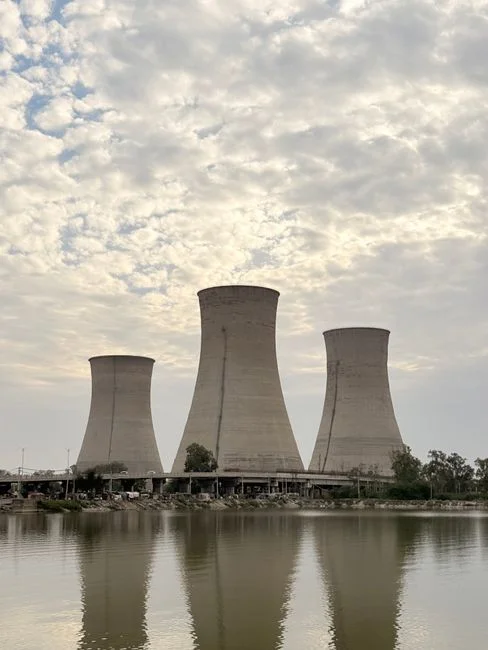
Every Sendai site picks one of three cooling topologies, and that choice sets the blowdown volume and treatment intensity before any equipment is selected. Option A is seawater once-through at a coastal Sendai-Bay site: lowest CAPEX, near-zero blowdown, but subject to Sendai-Bay thermal and chlorine discharge rules plus intake-screen ecology constraints. Option B is hybrid seawater plus closed evaporative tower: balances freshwater withdrawal, still produces blowdown at the same 4–8× TDS profile, so the treatment train is identical to a closed-loop site. Option C is closed evaporative loop on municipal makeup — the inland Sendai default — where blowdown volume is highest, reuse value is highest, and the full treatment train in the next section is required.
Cycles of concentration drive the calculus. Every COC increment from 4 to 6–7 reduces blowdown volume but pushes silica and hardness closer to the 75–80% recovery wall of conventional brackish reverse osmosis (BWRO) (IDE Tech, 2026; Genesis Water Technologies). Conventional BWRO is typically limited to 75–80% recovery before scaling becomes unmanageable; pushing recovery higher with traditional designs usually requires additional stages, booster pumps, and recirculation loops, making the system more complex and expensive. Use this matrix to choose the right COC target before specifying membranes.
| Topology | Best-fit site | Makeup source | Blowdown volume | Treatment intensity required | Key Sendai constraint |
|---|---|---|---|---|---|
| A — Seawater once-through | Coastal Sendai-Bay / Matsushima | Pacific seawater | Near zero | Low (intake screening, discharge monitoring) | Bay thermal/chlorine rules; intake ecology |
| B — Hybrid seawater + closed tower | Coastal with high-density IT load | Seawater + tower makeup | Moderate (tower-only) | Full reuse train | Same discharge rules as closed loop |
| C — Closed evaporative on municipal water | Inland Sendai / Akiu / urban infill | Sendai City municipal | High (25–30% of makeup at 4 COC) | Full reuse train + ZLD optional | Sewerage ordinance + seismic spec |
Recommended Blowdown Reuse Train for Sendai
A spec-ready treatment train stacks four stages, with an optional fifth for zero-liquid-discharge (ZLD) sites. The train assumes the topology chosen in the previous section is either B or C — any closed evaporative loop that produces a real blowdown stream.
Stage 1 — Side-stream self-cleaning spiral filtration at 10–25 µm, on 1–5% of circulation flow, drops suspended solids in blowdown to manageable levels for downstream membranes. Capital cost for typical data center installations ranges from $50,000–$200,000, with minimal operating expense beyond occasional solids disposal (Genesis Water Technologies). Stage 2 — UF pretreatment at 0.01–0.1 µm pore size, 10–30 psi operating pressure, 90–95% recovery, removes bacteria, colloids, and high-MW organics that would foul RO. Chemical cleaning is required every 1–3 months depending on feed water quality. Hollow-fiber UF pretreatment sized to Sendai ambient biological loading is the standard pick here.
Stage 3 — Brackish RO at 150–400 psi with antiscalant, 50–85% recovery on blowdown, 95–99% dissolved-solids removal, permeate 10–50 mg/L TDS — suitable for direct return to the cooling tower (Genesis Water Technologies). An industrial RO train with up to 95% recovery is the workhorse of this train. Where COC must exceed ~6, push recovery beyond the 75–80% conventional ceiling using controlled precipitation of silica, calcium carbonate, and calcium sulfate as solids, so the remaining brine is dominated by NaCl, plus dynamic RO cycling that holds operation inside the induction phase of crystallization (IDE Tech, 2026). PLC-controlled antiscalant and biocide dosing should be specified up front to stabilize scaling chemistry.
Stage 4 — Mechanical vapor compression (MVC) on the RO concentrate: 95–98% recovery of distillate, less than 10 mg/L TDS distillate, 15–25 kWh per 1,000 US gallons; pairs with RO to hit 85–95% overall system recovery. Optional Stage 5 — Crystallizer for full ZLD: 95–99% overall water recovery, solid salt cake for disposal; only economic in Sendai when reuse water has a hard cost floor or discharge is fully prohibited (Genesis Water Technologies). Disinfection polish closes the loop — on-site chlorine dioxide generation or chemical-free UV polishing, sized to Sendai ambient biological loading. Spare RO and UF membrane elements should be stocked locally to keep mean time to repair inside the facility's SLA.
| Stage | Function | Key parameters | Recovery | Output quality |
|---|---|---|---|---|
| 1. Side-stream spiral filter | Drop suspended solids | 10–25 µm; 1–5% of circulation flow | Continuous | Solids manageable for membranes |
| 2. UF pretreatment | Remove bacteria, colloids, organics | 0.01–0.1 µm; 10–30 psi | 90–95% | SDI low enough for RO feed |
| 3. BWRO with antiscalant | Dissolved-solids removal | 150–400 psi; controlled precipitation / dynamic RO above 80% | 50–85% (up to ~95% with high-recovery design) | 10–50 mg/L TDS permeate |
| 4. MVC on RO concentrate | Concentrate volume reduction | 15–25 kWh/1,000 gal | 95–98% of concentrate | Distillate <10 mg/L TDS |
| 5. Crystallizer (optional ZLD) | Solid salt cake | Thermal | 95–99% overall system | Solid cake; <1% liquid waste |
Japanese Compliance, Seismic, and Procurement Considerations
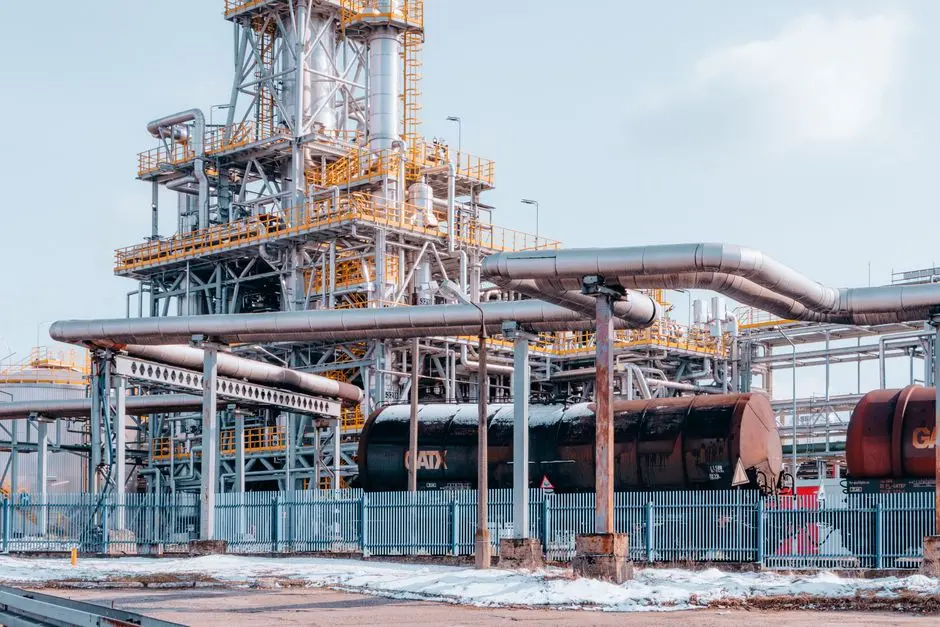
Discharge to sewer must meet Japan's Water Pollution Control Act and the receiving Sendai City sewerage ordinance; reuse streams should target permeate less than 50 mg/L TDS to stay comfortably under typical effluent thresholds (Genesis Water Technologies). Seismic-rated skids, FRP or stainless pressure vessels, and JIS- or JWWA-aligned components are typically required; specify these in the RFQ up front to avoid redesign during permitting. Confirm that the supplier can provide IOQ documentation, seismic anchoring drawings, and local service coverage before contract award.
On cost: published data centers in U.S. terms put a 50,000 GPD blowdown RO at $250,000–$500,000 installed with $1.50–$3.00 per 1,000 gallons OPEX; MVC adds $1–3 million for 10,000–30,000 GPD; ZLD reaches $3–8 million with $5–$15 per 1,000 gallons OPEX — request ¥-denominated quotes from Japanese system integrators (Genesis Water Technologies). These dollar benchmarks are starting points; the final Sendai CAPEX depends on seismic skid design, local labor rates, and whether the system integrator carries JIS pressure-vessel certification in-house.
Energy and carbon accounting shifts the case. A fully electrified, decarbonized Sendai grid materially lowers the GWP penalty of reuse — a cooling system commissioned today and operated through 2050 would spend the majority of its service life under grid conditions where the GWP penalty of reuse is negligible, while its water savings accrue at full value (Open Engineering Inc., 2026). For a Sendai operator reading NPDES and POTW pretreatment compliance for data center discharge from a U.S. lens, the equivalent compliance question is whether the Sendai City sewerage ordinance will accept the proposed permeate quality and the brine-stream handling plan.
Frequently Asked Questions
What is the right cycles-of-concentration target for a Sendai data center?
Start at 4 COC and push to 6–7 only if the reuse train can handle the silica and hardness scaling load. Beyond 6 COC, conventional BWRO hits its 75–80% recovery ceiling (IDE Tech, 2026), so any COC above that needs a controlled-precipitation or dynamic-RO design and a higher antiscalant budget. The right answer for your site depends on the receiving sewerage ordinance's TDS limit and the cost of municipal makeup water — request both from Sendai City before setting the COC target.
How much does a blowdown reuse system cost in Japan?
U.S. benchmarks put a 50,000 GPD blowdown RO at $250,000–$500,000 installed with $1.50–$3.00 per 1,000 gallons OPEX; MVC adds $1–3 million for 10,000–30,000 GPD; full ZLD reaches $3–8 million with $5–$15 per 1,000 gallons OPEX (Genesis Water Technologies). These are starting points — request ¥-denominated quotes from Japanese system integrators and ask for a line-item breakdown that separates the seismic-rated skid cost from the membrane and instrumentation cost.
Which Sendai-specific discharge rules apply to a cooling-tower blowdown reuse train?
Discharge to sewer must meet Japan's Water Pollution Control Act and the Sendai City sewerage ordinance; reuse streams should target permeate less than 50 mg/L TDS to stay comfortably under typical effluent thresholds (Genesis Water Technologies). For a coastal site, also check Sendai-Bay thermal and chlorine discharge rules before selecting a once-through or hybrid topology. Confirm the exact effluent thresholds and the brine-disposal classification with Sendai City's water authority before locking the design.
What should I check in a Japanese system integrator before awarding the contract?
Verify that the supplier can provide IOQ documentation, seismic anchoring drawings, JIS- or JWWA-aligned pressure-vessel certification, and local service coverage in the Sendai region. Also confirm that spare RO and UF membrane elements are stocked domestically to keep mean time to repair inside the facility's SLA. For a parallel reference point, the Aba, Nigeria data center blowdown treatment guide outlines the same supplier-selection discipline in a different regulatory environment.
Related Equipment
- hollow-fiber UF pretreatment — specifications, capacity range, and technical data
- industrial RO with up to 95% recovery — specifications, capacity range, and technical data
- on-site chlorine dioxide generation — specifications, capacity range, and technical data
- chemical-free UV polishing — specifications, capacity range, and technical data
- PLC-controlled antiscalant and biocide dosing — specifications, capacity range, and technical data
- spare RO and UF membrane elements — specifications, capacity range, and technical data